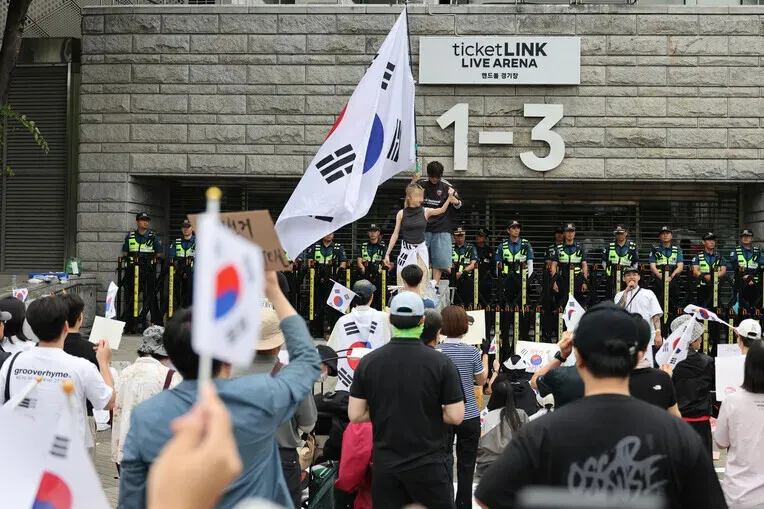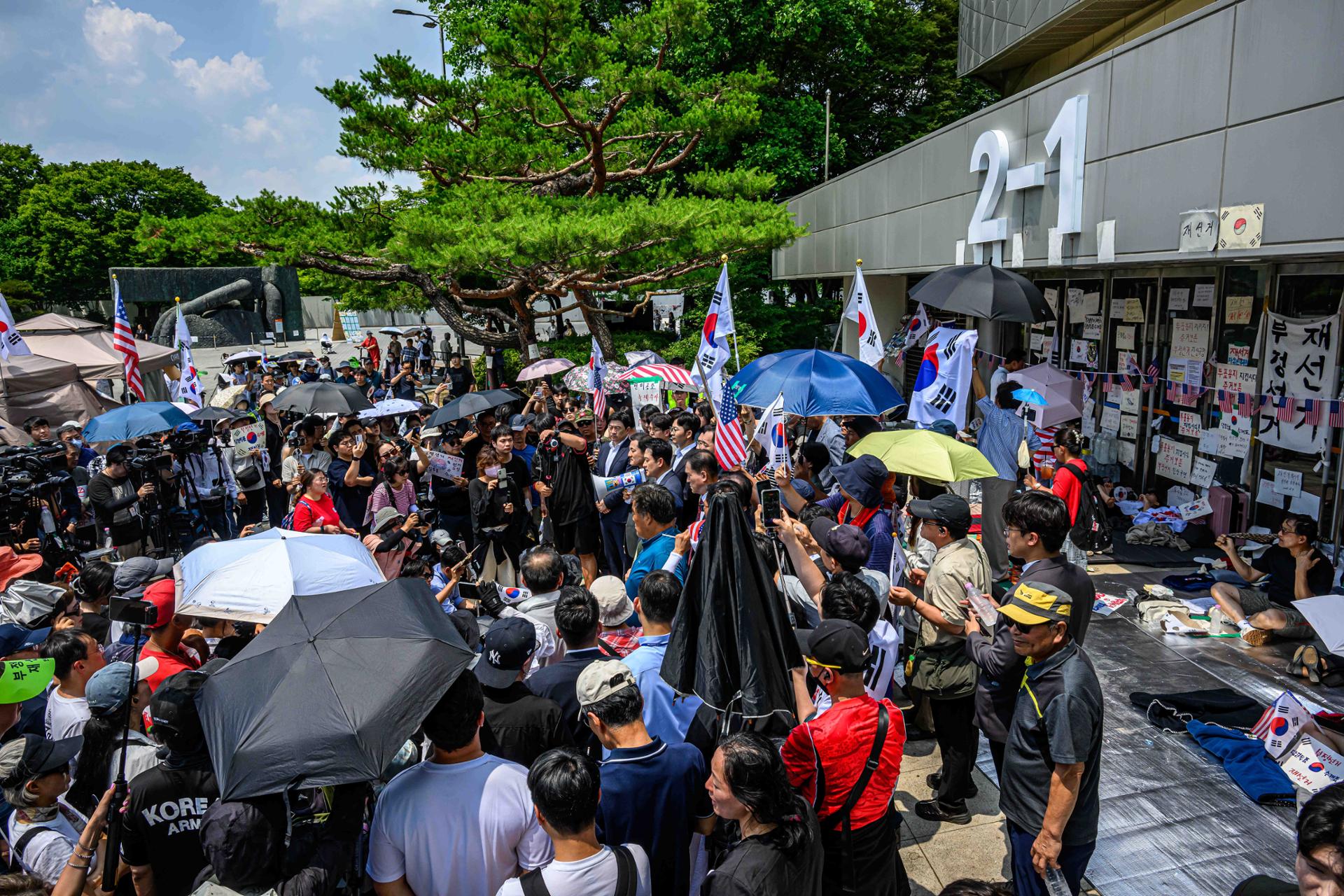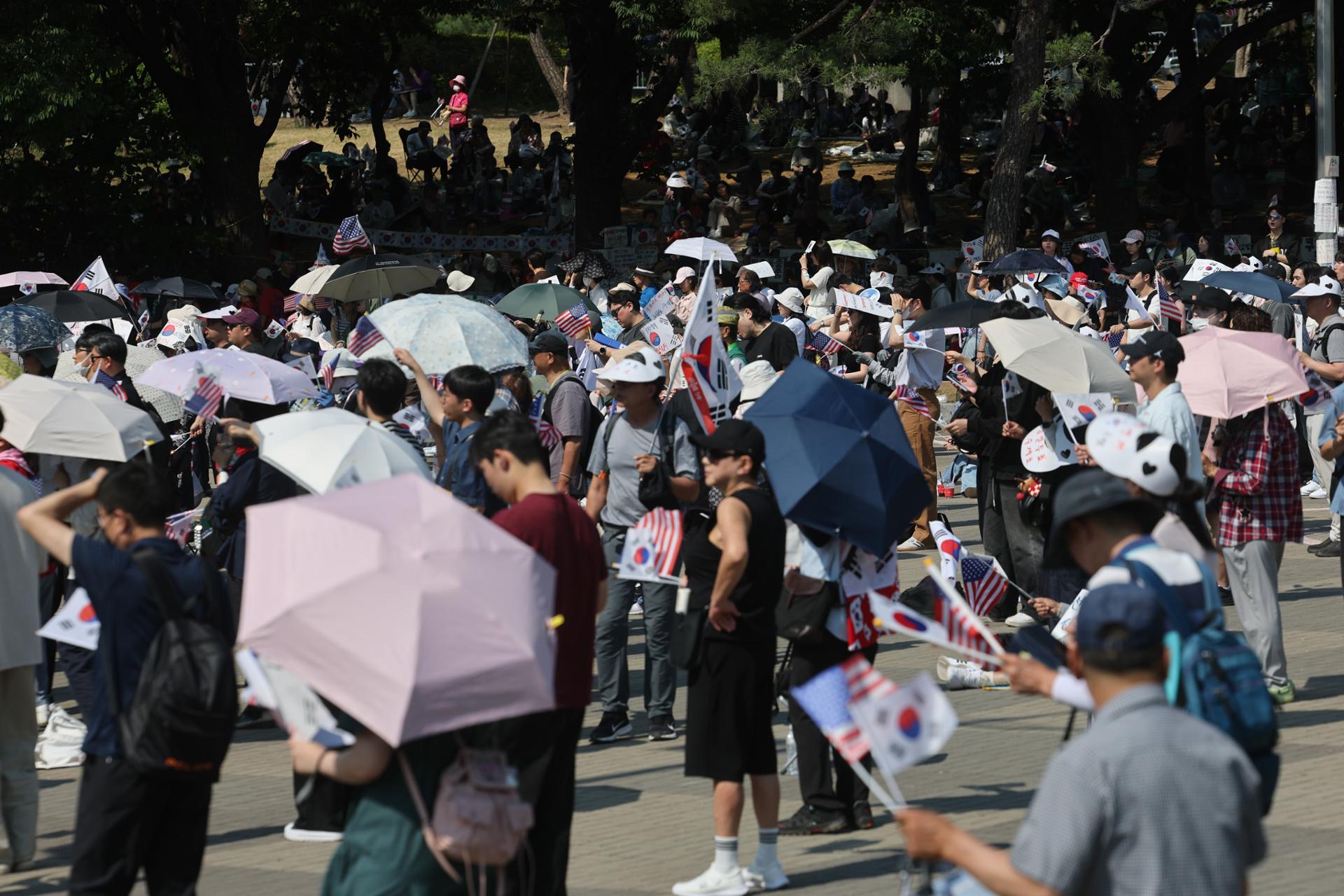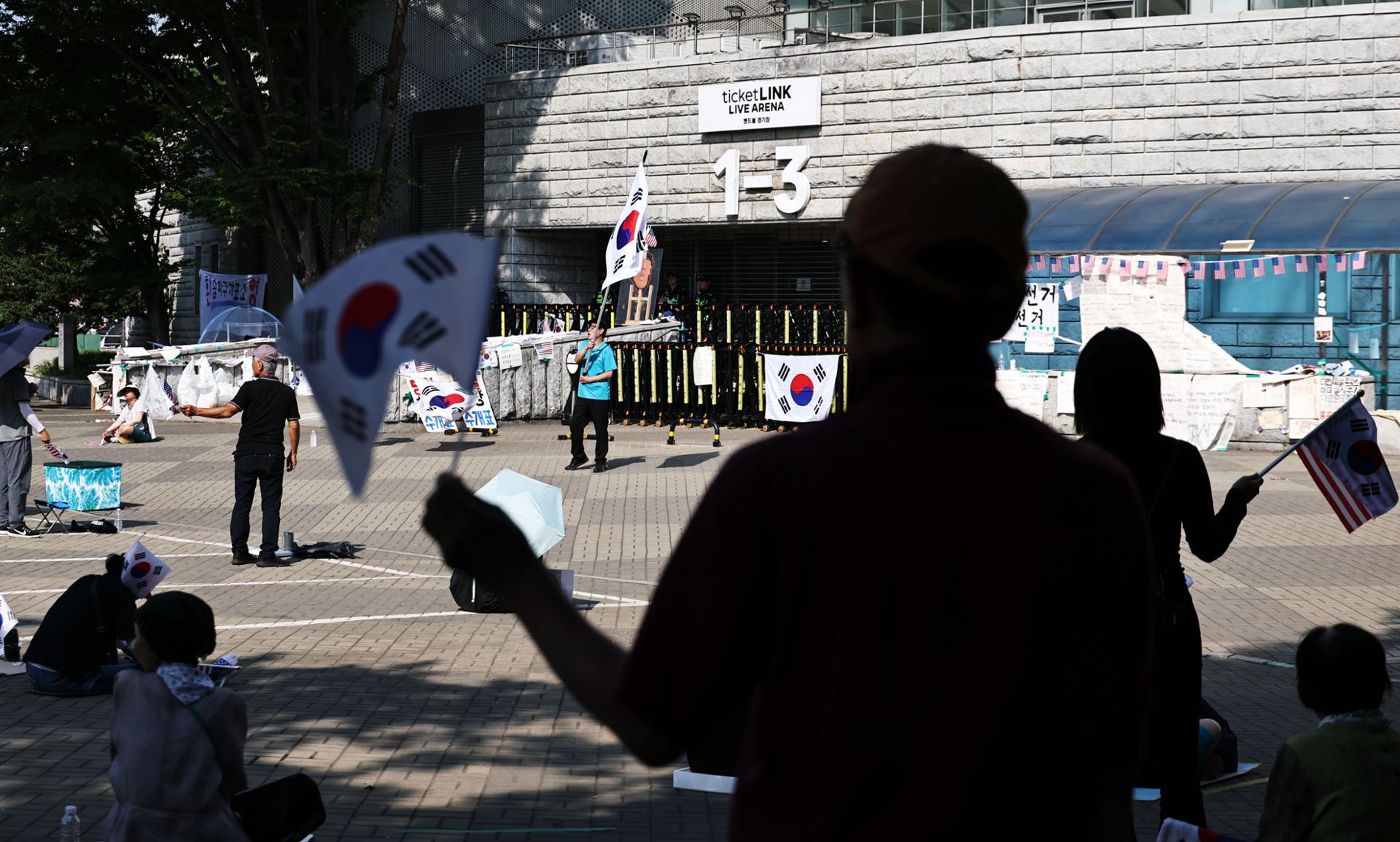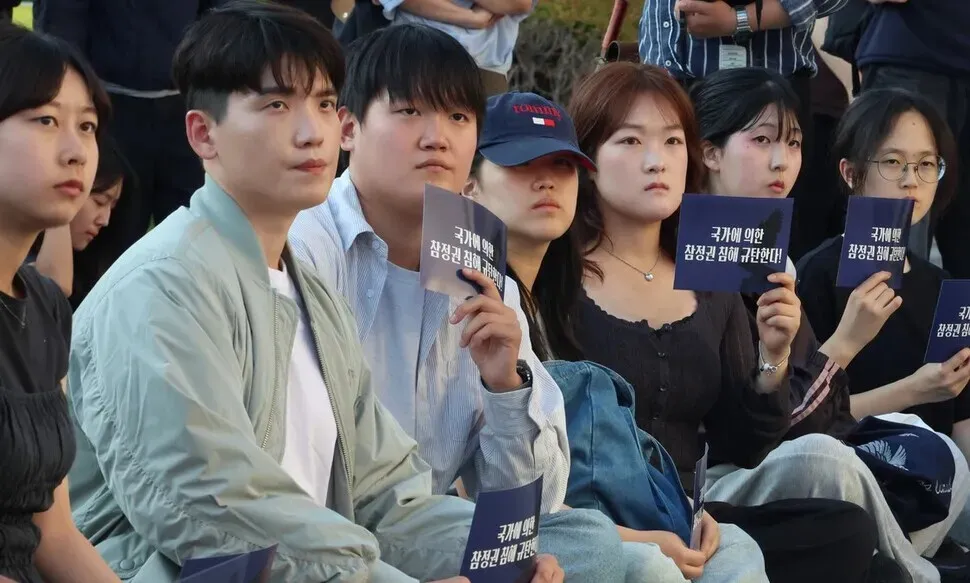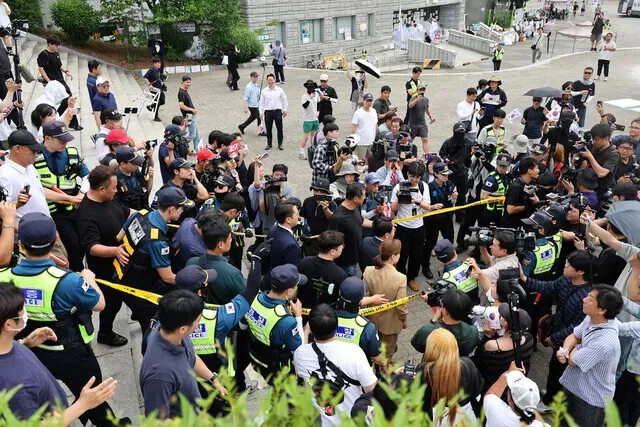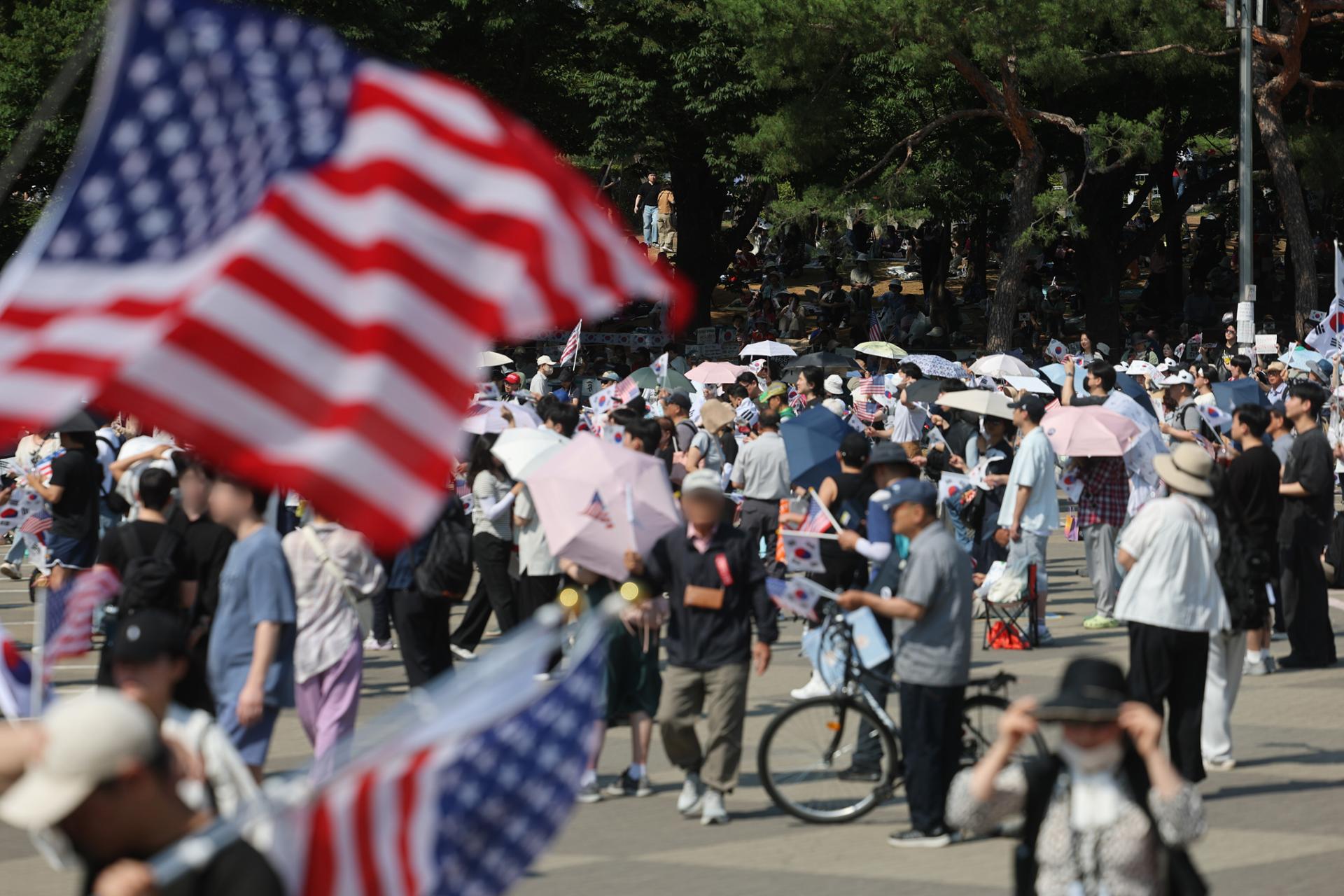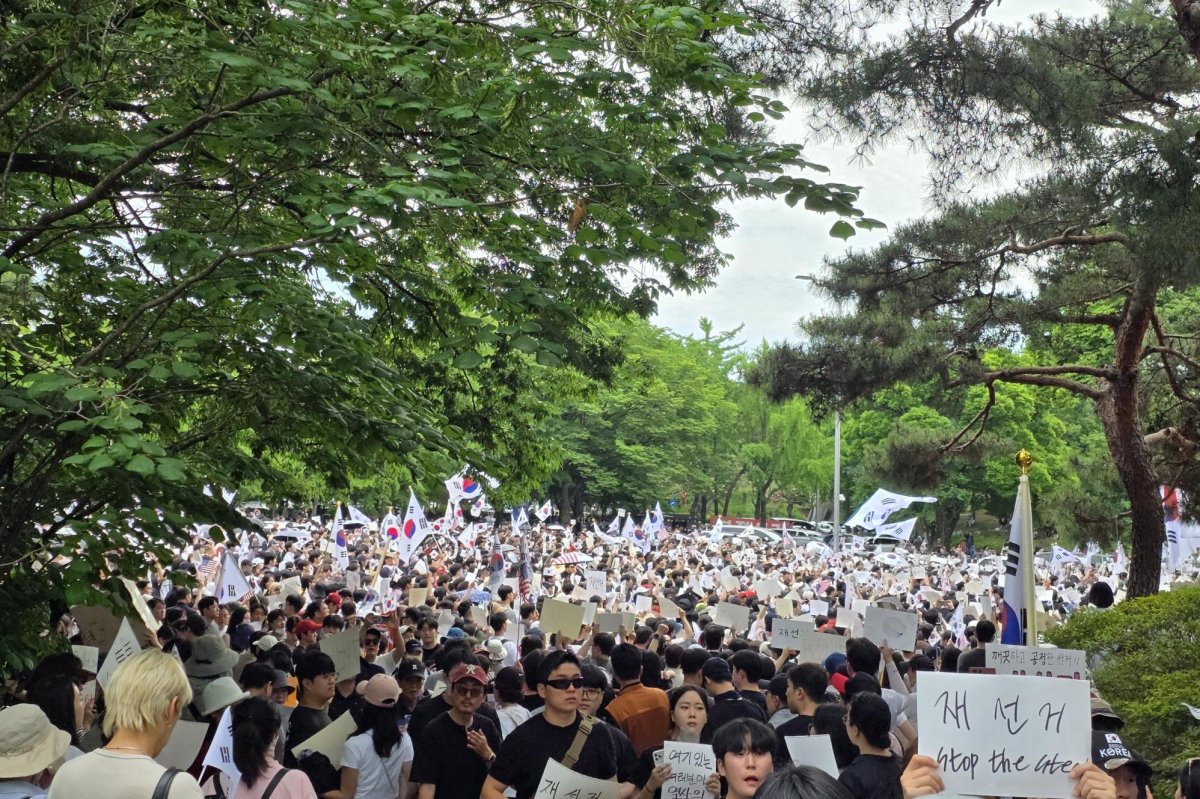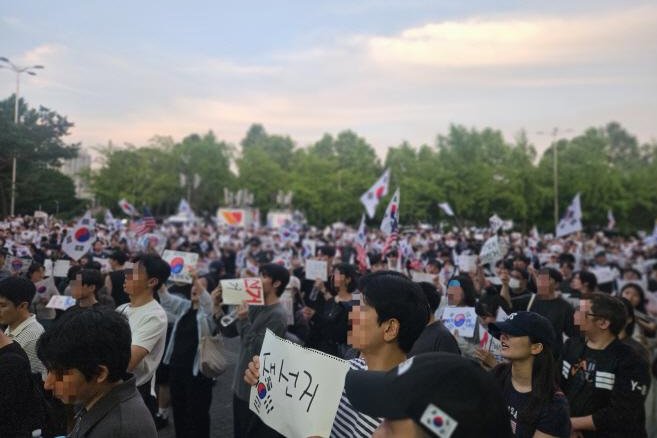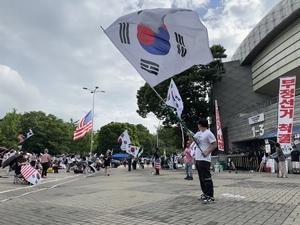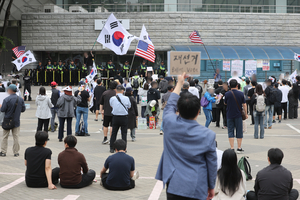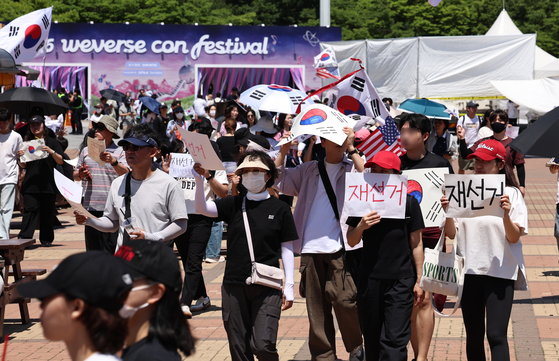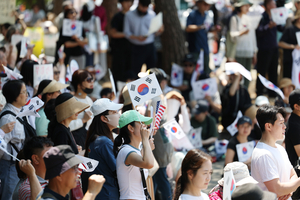
As Seoul election protests enter a second week, some say shared views are sparking friendships and even romance Participants wave South Korean flags during a protest calling for a revote of the June 3 local elections outside the Olympic Handball Gymnasium in Jamsil, southern Seoul, on June 9. (Yonhap) As demonstrations over ballot shortages in Seoul’s June 3 local elections entered their second week, the rallies in Jamsil began drawing attention for another reason: the growing presence of young participants who say they are finding a rare sense of community among people with similar concerns.The gatherings, held near a vote-counting center in southeastern Seoul, began after ballot paper shortages at polling stations triggered accusations that voters’ rights had been infringed. Election authorities have attributed the problem to administrative failures, but protesters have continued to demand a revote.On social media, the scene has also taken on a lighter nickname. Some users have referred to the rallies as “Olympic Park hunting” or “patriotic hunting,” combining the protest site’s location near Olympic Park with “hunting,” a Korean slang term for approaching strangers to flirt or exchange contact information.But participants say the social interactions do not necessarily mean the rallies have lost their political focus. Rather, they describe the atmosphere as one in which young people who might not otherwise meet are naturally talking, sharing concerns about the election and forming informal ties around a common cause.Posts circulating online describe participants exchanging phone numbers, continuing conversations over coffee or meals after rallies, and forming group chats or informal gatherings outside the demonstrations. The trend has prompted mixed reactions, with some viewing it as a natural extension of young people gathering around shared concerns, while others worry it could distract from the rallies’ stated demand for a revote.The rallies have increasingly attracted people in their 20s and 30s, particularly on weekends, creating a distinctly different atmosphere from traditional political protests dominated by older activists.“I originally went to protest the ballot shortage, but I was surprised by how many people my age were there,” said an office worker in her 30s surnamed Lee, who attended the weekend rally.“There were moments when young people gathered naturally and started conversations. During those moments, I felt that some men were interested in me. One man also asked me for my number,” she told The Korea Herald.“Physical appearance matters, of course, but having the same concerns and values made it much easier to connect with people,” she said. A captured social media post recruiting participants for a “patriotic offline blind date” states that the only requirements are a sense of patriotism and a willingness to date to help save the country’s birth rate. (Threads) The phenomenon reflects a broader shift in South Korea, where political identity is playing a growing role in personal relationships.According to a 2024 report by the Korea Institute for Health and Social Affairs, 58.2 percent of respondents said they would be unwilling to date or marry someone with different political views. The trend was particularly pronounced among younger age groups and women.Experts say growing political polarization is increasingly influencing whom South Koreans choose to befriend, date and marry.“Political identity has become an important marker of social belonging,” said Kim Sang-hak, a sociology professor at Hanyang University. “People often feel more comfortable forming relationships with those who share similar views, especially in an era of deep ideological division and declining trust in institutions.”The emergence of social bonds at political gatherings is not entirely new.Similar communities formed during the candlelight protests that helped bring down former President Park Geun-hye in 2017. But observers say the current phenomenon differs because it is occurring among a younger generation facing both political polarization and a shrinking pool of social opportunities.South Korea has one of the world’s lowest birth rates, and a growing number of young adults is reporting difficulties meeting potential partners through traditional channels such as workplaces or social networks.Yet not everyone is comfortable with the trend.Critics argued that treating protests as a place for dating risks trivializing the movement’s stated purpose.Online posts have urged participants to focus on the election-related grievances that brought them together rather than treating the demonstrations as social events.“People understand that young participants naturally talk to one another,” said a 45-year-old office worker who has been attending the rallies. “But we’re not here to play around. Most people are focused on the protest itself.”The debate comes as organizers attempt to keep the movement focused on demands for a revote and concerns over voting rights.Some younger participants have also sought to distance themselves from fringe election-fraud theories that have surfaced at the rallies, establishing rules in online chat groups banning personal attacks and inflammatory political rhetoric.
Politically active youth find community at Seoul protests
As demonstrations over ballot shortages in Seoul’s June 3 local elections entered their second week, the rallies in Jamsil began drawing attention for another r
781 words~4 min read