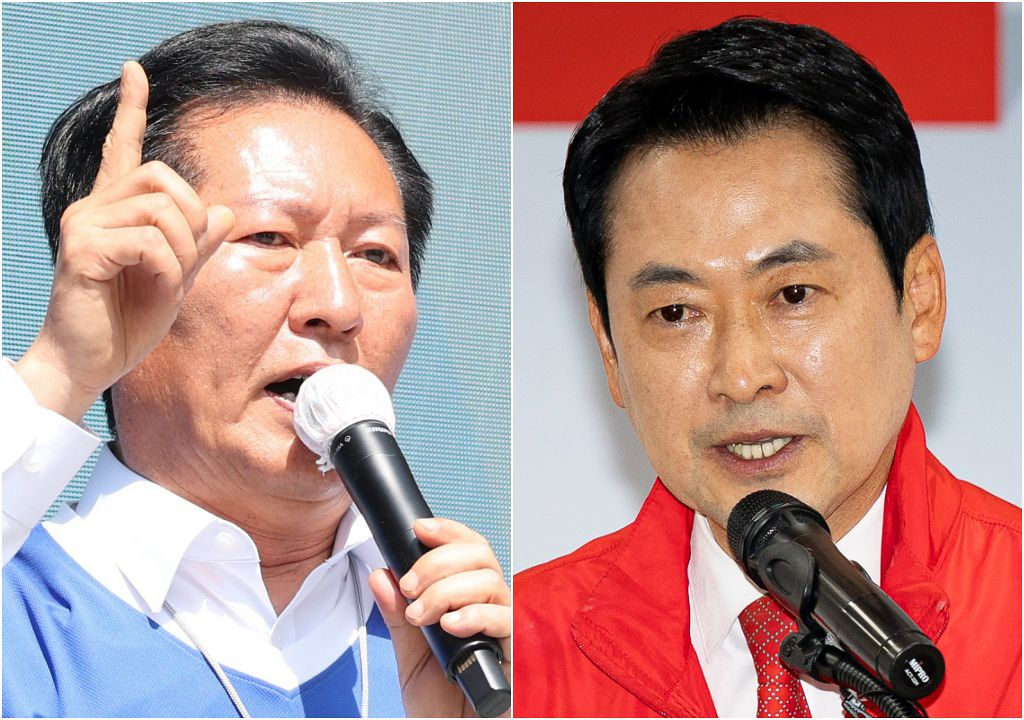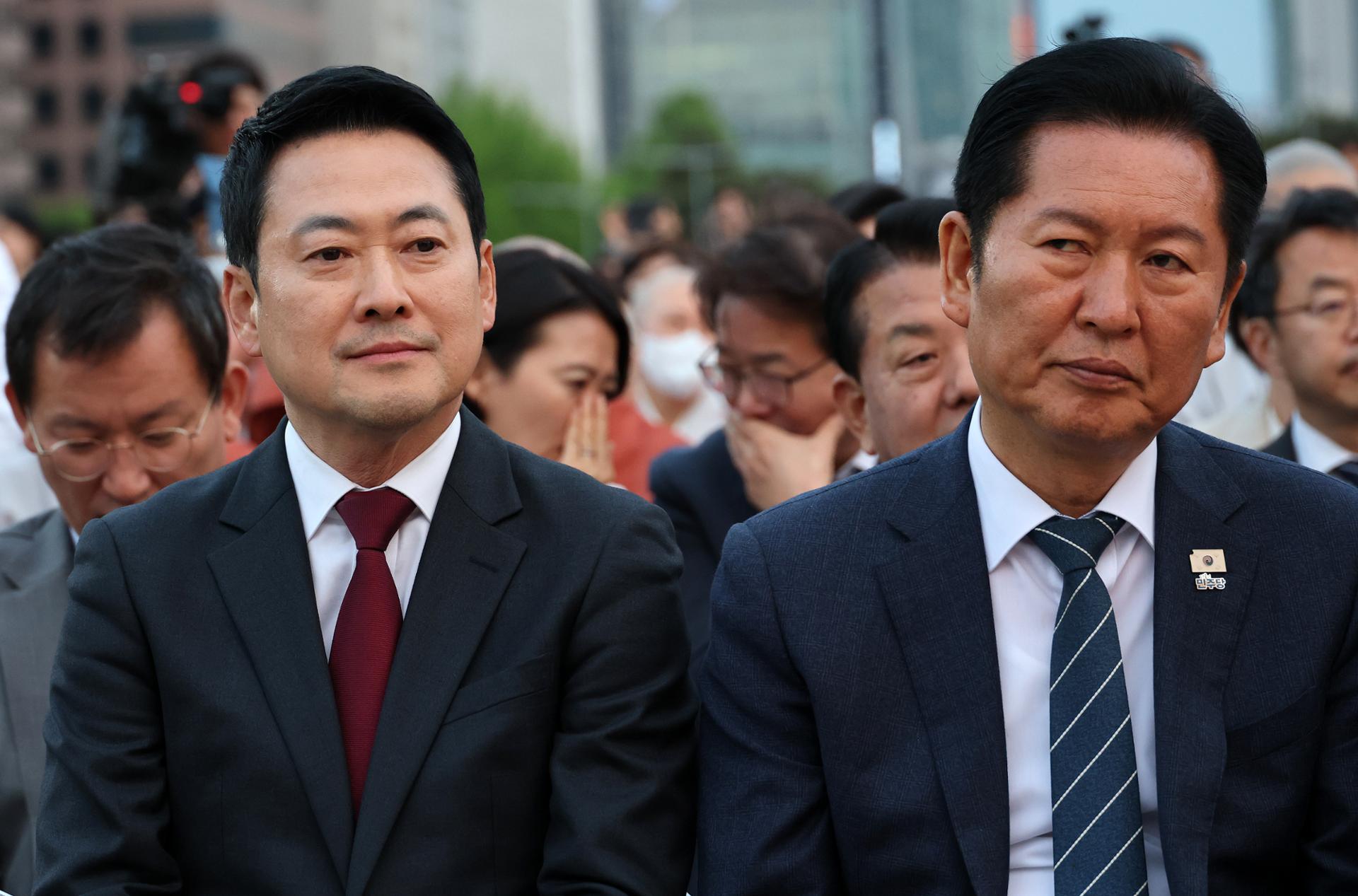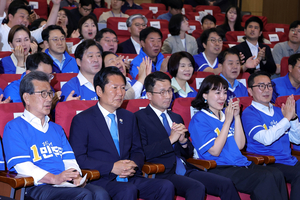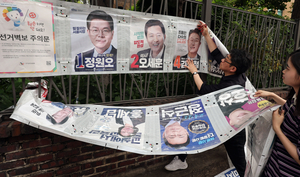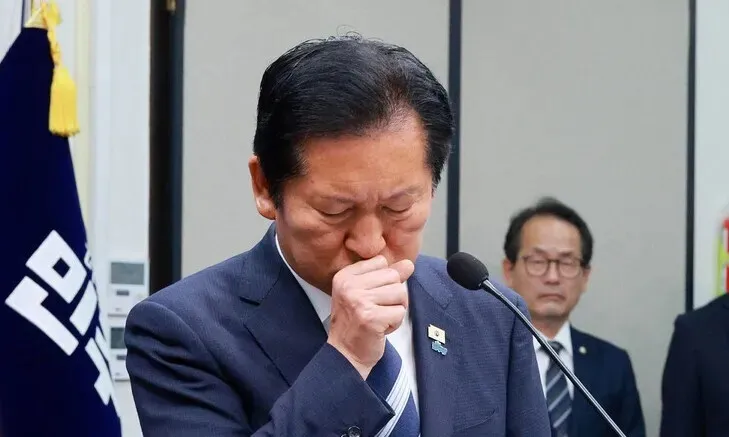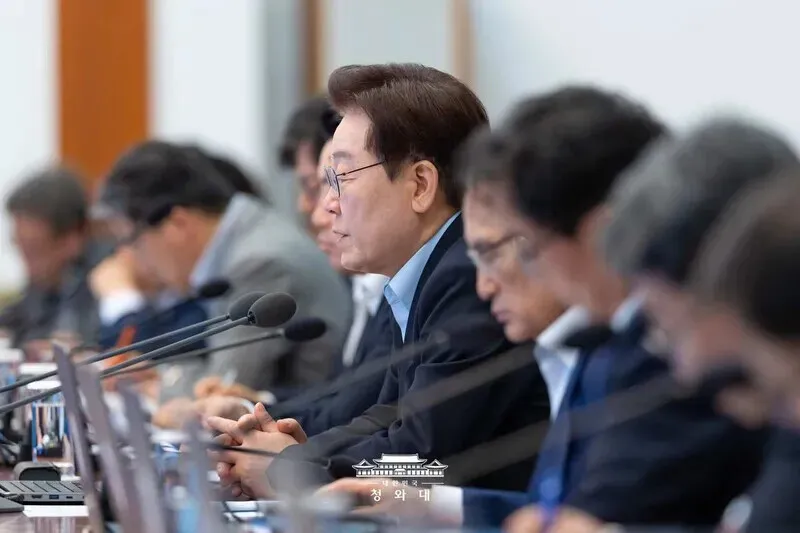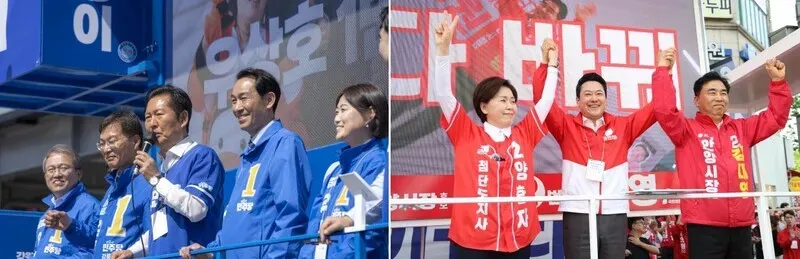
Left: Democratic Party leader Jung Chung-rae stumps for Woo Sang-ho, the party’s candidate in the Gangwon Province gubernatorial race, in Gangneung on May 22, 2026. Right: People Power Party leader Jang Dong-hyuk campaigns for two PPP candidates in races in Gyeonggi Province on May 22, 2026. (courtesy Democratic Party, Yonhap)
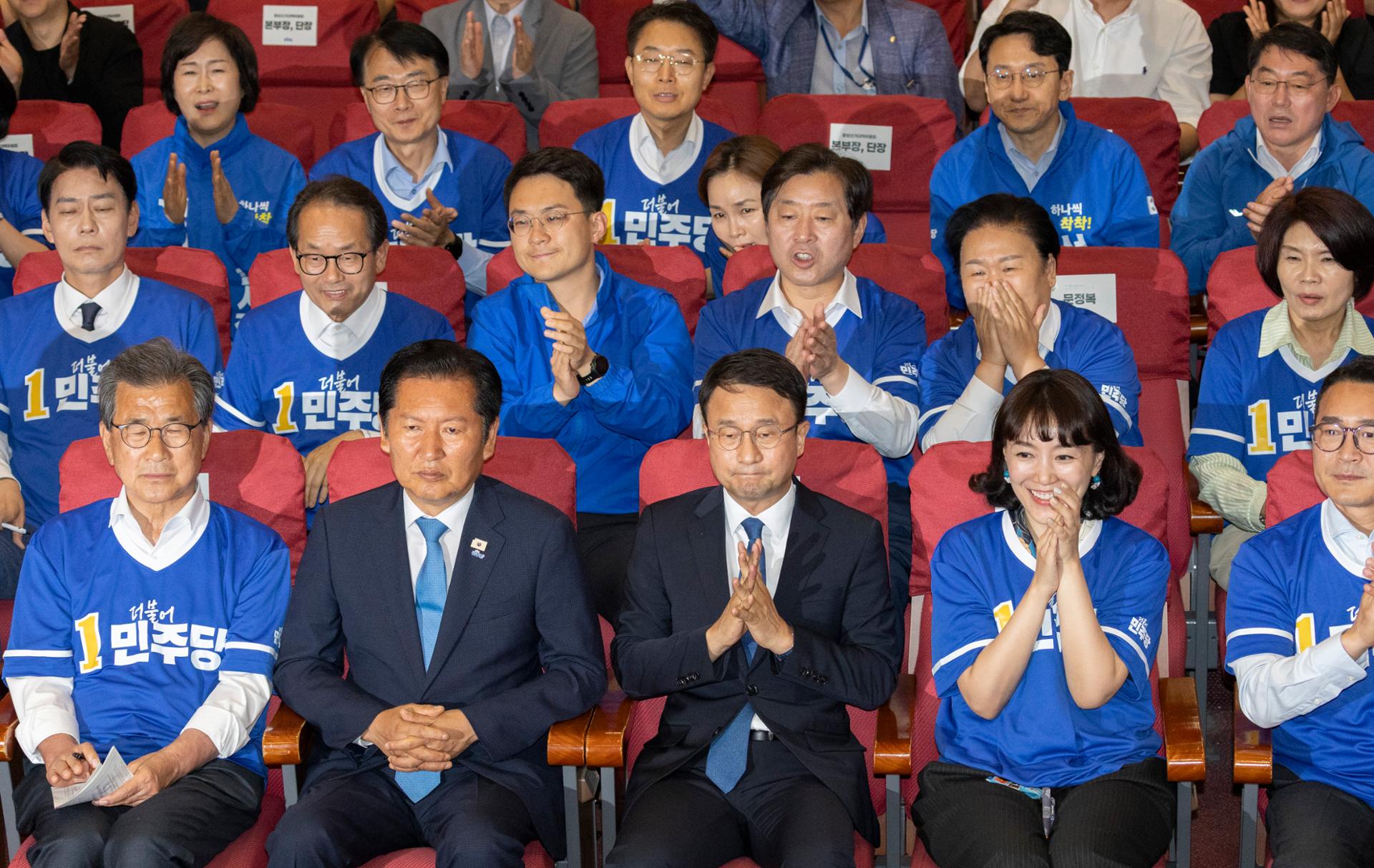
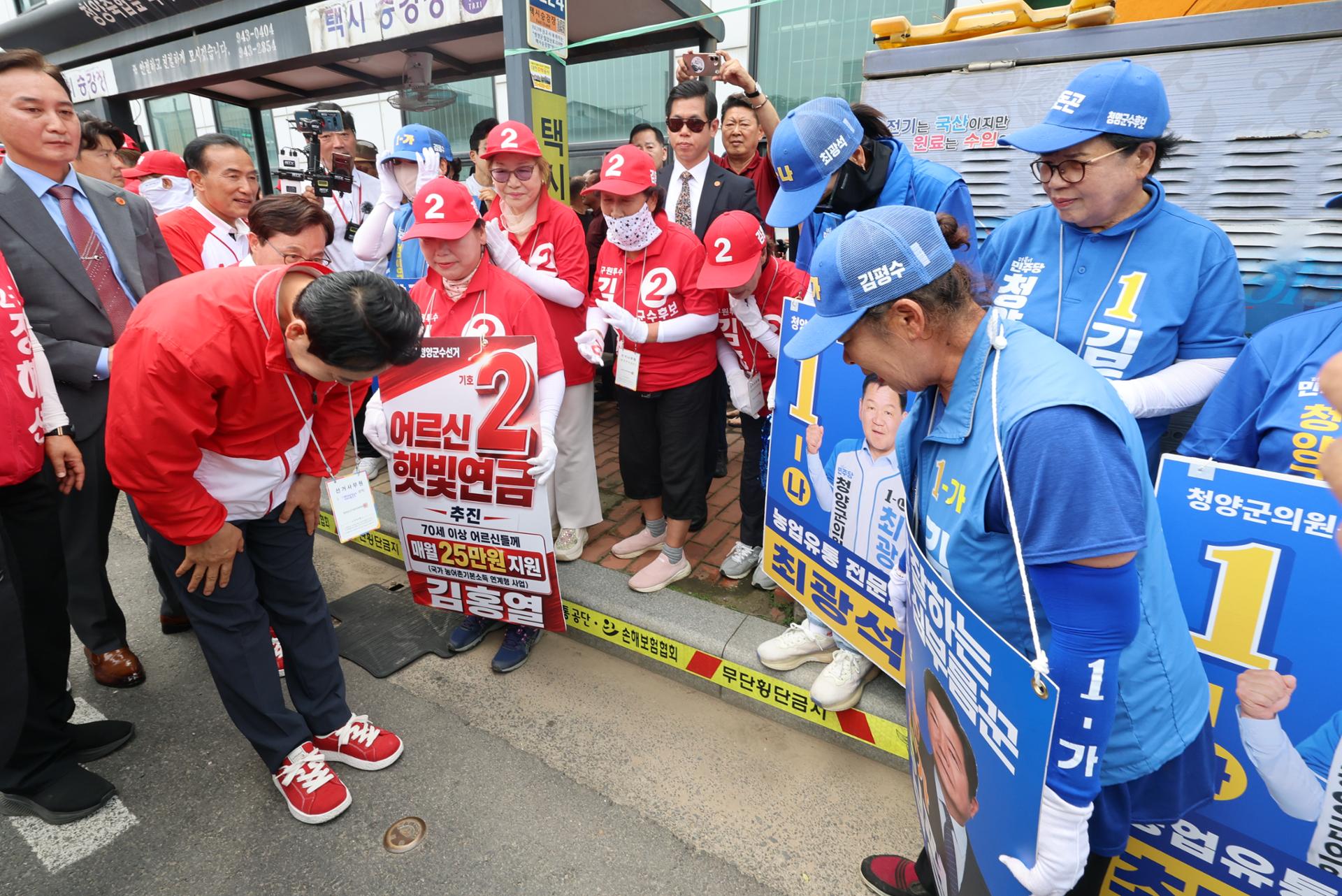
By Shin Young-jeon, professor of preventive medicine at Hanyang University College of MedicineKorea has become a country in which only two colors seem to matter: blue and red.The local elections will be held on June 3, but strangely enough, candidates’ pledges have little impact anymore. Their fate depends instead on the color of their campaign jackets: blue for the ruling Democratic Party and red for the opposition People Power Party (PPP).On packed subway cars, commuters’ eyes are glued to their stock trading apps, checking whether their holdings are headed upward (red) or downward (blue).While a two-party system has certain advantages, in Korea today it serves as a juggernaut smashing minority interests and squashing policy diversity.In the area of public health and welfare, to take one example, minority parties have plenty of strong proposals: instituting a minimum wage for family care, empowering medical and social cooperatives, creating 20 public hospitals, capping medical expenses at 1 million won through the age of 18, moving to a neighborhood-based family doctor system, and setting up more community health centers.But the two main parties are utterly uninterested in such ideas, which don’t even merit a place on their platforms.Around 200 civic groups advocating for the rights of workers, farmers and women have banded together to push for addressing regional disparities in access to care and for fully guaranteeing the right to care, but that doesn’t even move the needle in the upcoming elections.In a country already divided between North and South, the two-party system subconsciously imposes black-and-white thinking on society. It reinforces tendencies to favor one’s group and disparage the other side and hinders mutual understanding and rational debate, making democratic deliberation impossible.Perhaps the most serious problem that the two-party system is now causing is the fact that far-right political figures who either took part in or show no remorse for an unconstitutional insurrection attempt — along with inhumane criminals who disparage people who paid for Korea’s democracy with their blood with references to “tanks” and “slamming tables” — continue thriving in their half of that system.Another issue is the fact that the stock market has become a symbol of political power. With the KOSPI now in the neighborhood of 8,000 points, share prices are all people talk about. Assessments of President Lee Jae Myung are usually tied to how well those prices are doing.But there are fatal flaws to a society where share prices serve as our standard for evaluating government. Perhaps the biggest of them is the way labor ends up diminished. When someone can earn overnight what others would take a year to make working around the clock, who is going to farm, run factories, and look after those who are ailing?Moreover, the stock market is not a democratic space. It isn’t “one person, one vote” like a referendum — it’s “one share, one vote.” It’s a system where a man with a 72% stake has 2.6 times more power than a woman with a 28% stake. It’s one where ultra-high-earning members of the property class and the top 10% by income end up with 91.3% of all dividends, while the bottom 70% of ordinary shareholders share just over 1.6% among them.As for the roughly 54% of adult South Koreans who do not own a single stock, they have no voice whatsoever in this space. That kind of undemocratic stock market should not be allowed to become representative of South Korean society and politics. The president should remember that he does not merely serve those who own stocks.So what should be done? To begin with, the major parties need to implement and institutionalize the things they have promised in the past, such as expanded and mixed-member proportional representation and a shift toward a multi-member district system.As for the stock market, mechanisms need to be created so that it helps relieve income inequality rather than exacerbating it. Transparent democratic controls should be put in place.The novelist Cho Se-hui spent his life adhering to the principle that only people who should be owning land are those who farm it. Can we imagine equality in a world where money makes money while labor goes unrespected?Unfortunately, neither of these issues is going to be resolved in this election. As always, there is no other time you can start but now.Every system that human beings have succeeded in creating around the world came through the political process. This means we should take the opportunity of this election to start by creating a bit of hope.It is a situation that calls for citizens who are awake and seasoned. Certainly, we should try to vote out those who need to be removed. But rather than just trusting in the candidates’ color code, we need to pick people who come out with strong policy pledges that they can do a good job implementing.We need elections that create a stronger political system in South Korea — one where participants may differ from day to day while still overcoming their small differences and joining forces to achieve social justice.A country that is strictly “blue” and “red” is a backwards, undemocratic country. It’s the kind of country where the far right and “Ilbe” types flourish in the shadows.So let everyone have their own color. Let people shine with colors that aren’t just the party colors of red and blue or the lights of stock markets. After all, wasn’t this administration the result of colorful support wands waved in the wintry squares of our cities?Not long ago, Korea celebrated Buddha’s Birthday. I am not a Buddhist myself, but I have a favorite Buddhist phrase: “japhwaeomsik.”It means “flowers of different colors coming together in harmony to create a magnificent and beautiful world.” That’s the kind of world I dream of.Please direct questions or comments to [english@hani.co.kr]