Ji Da-gyum
For over a decade, I’ve navigated the complexities of North Korean affairs, security, and foreign policy from both Seoul and Washington, D.C. As the National Desk Political Team Lead, I track the pulse of geopolitics, closely following developments from the Unification Ministry and the Foreign Ministry. My mornings start with Rodong Sinmun—North Korea’s state mouthpiece—before diving into the day’s headlines from Seoul and Washington.
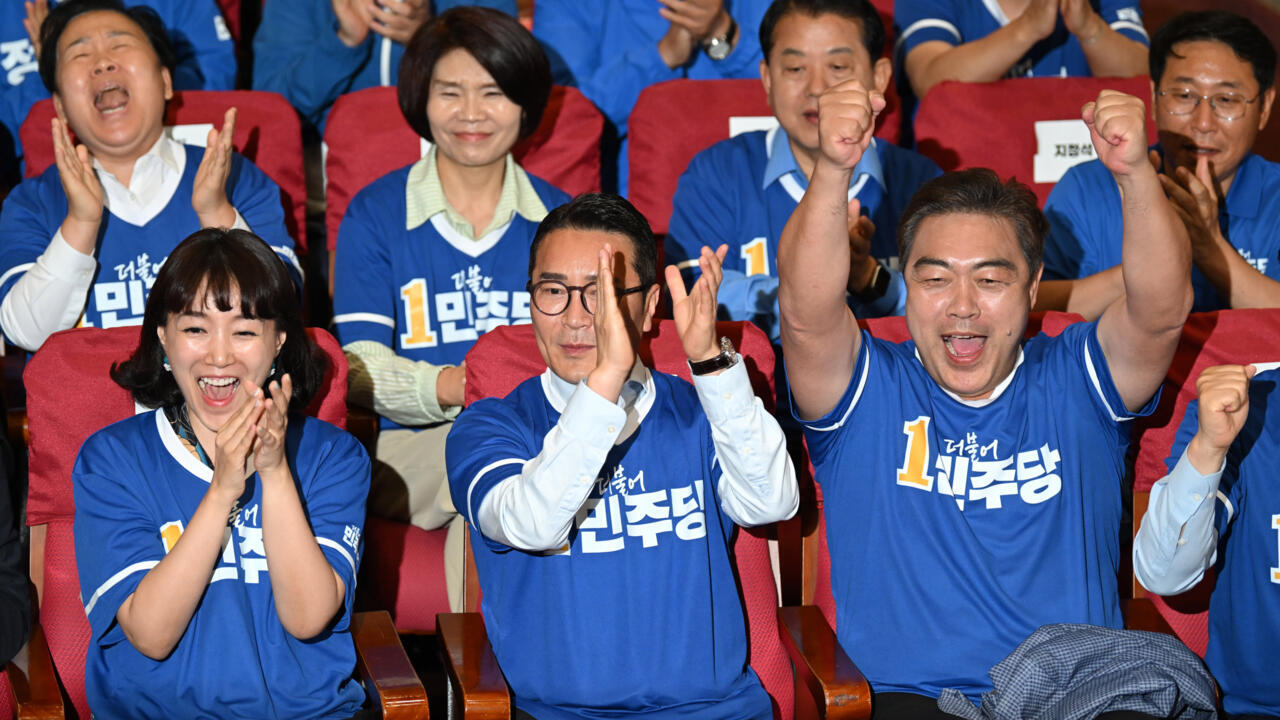
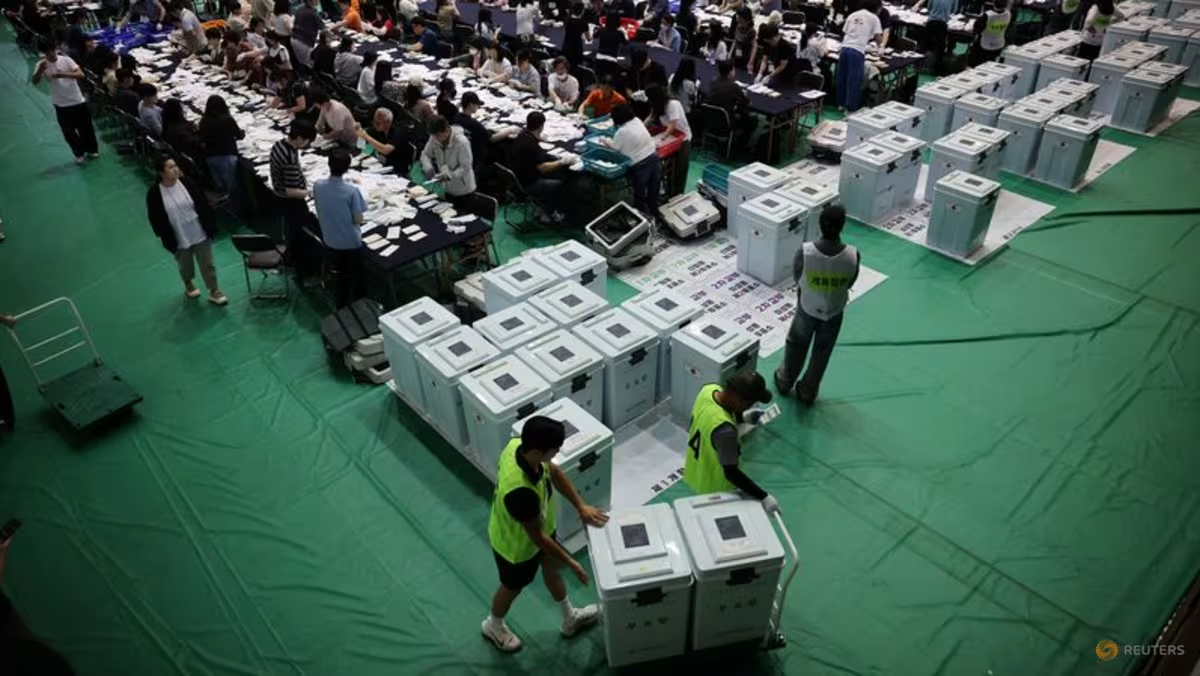
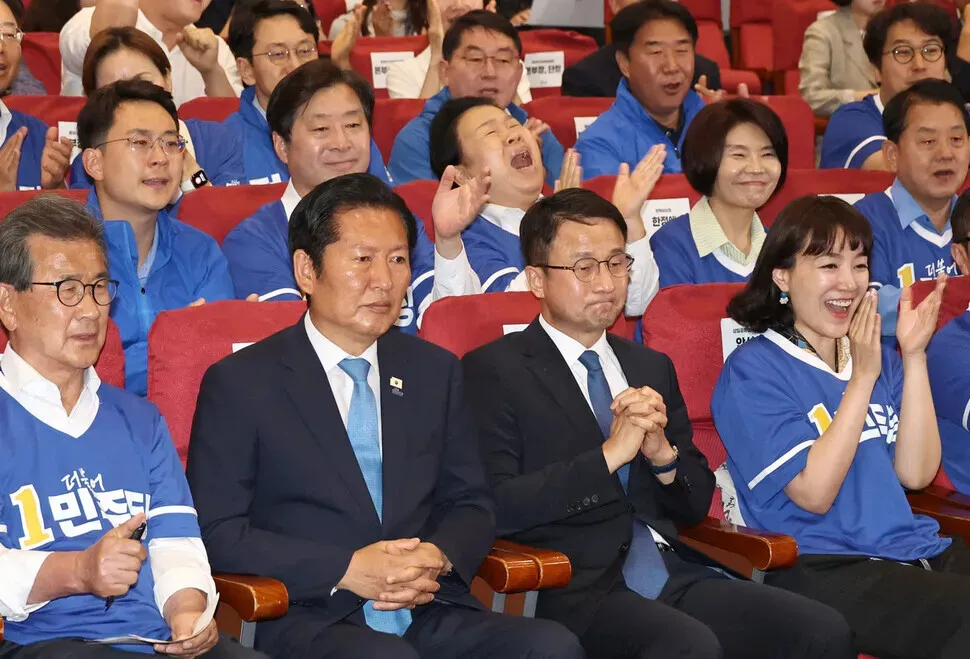
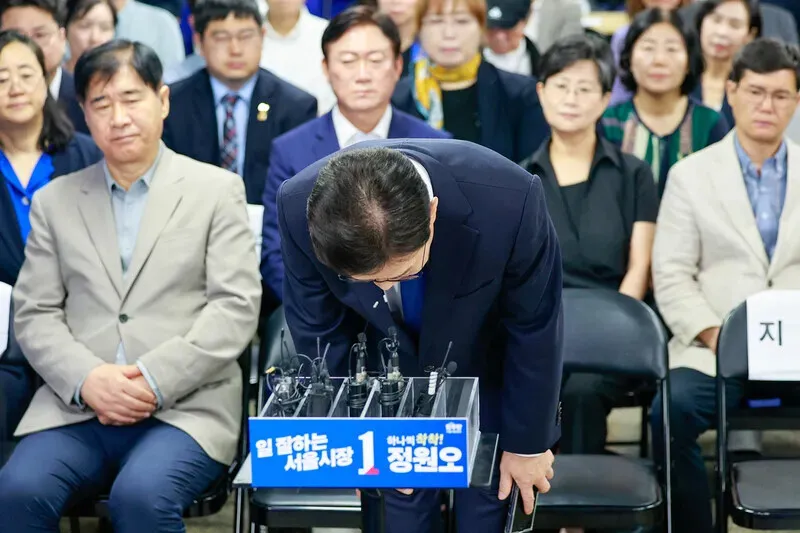
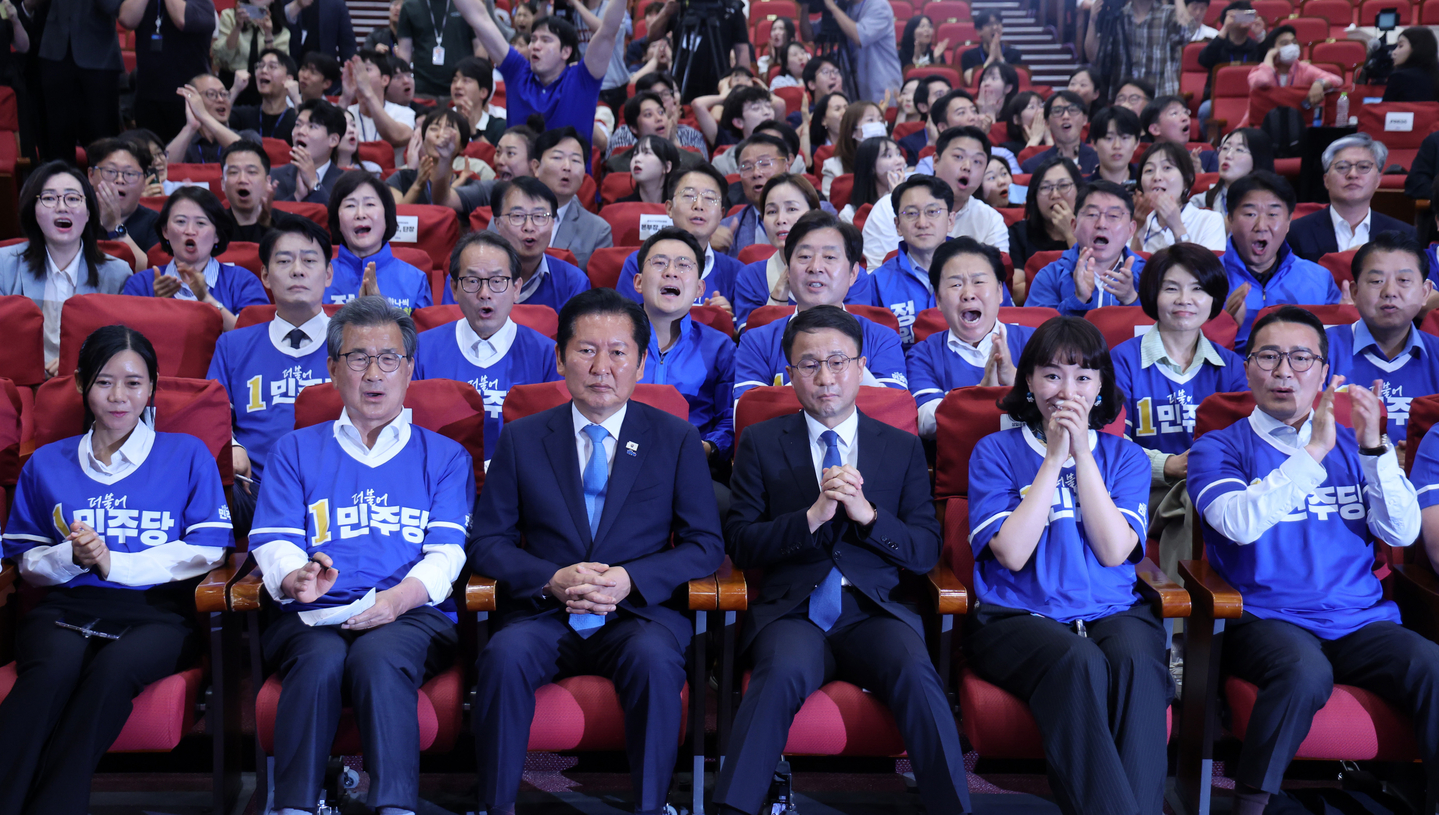
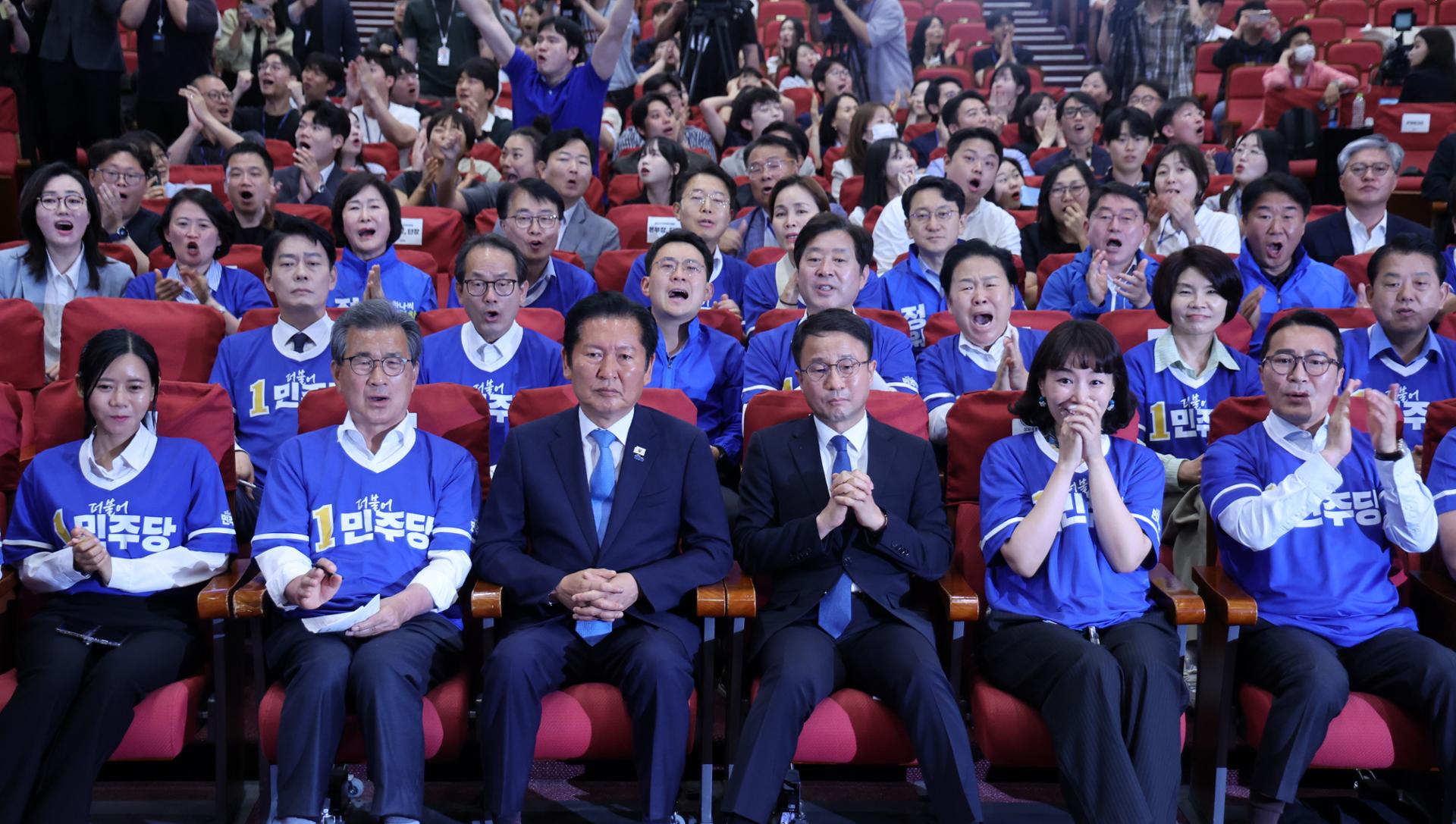
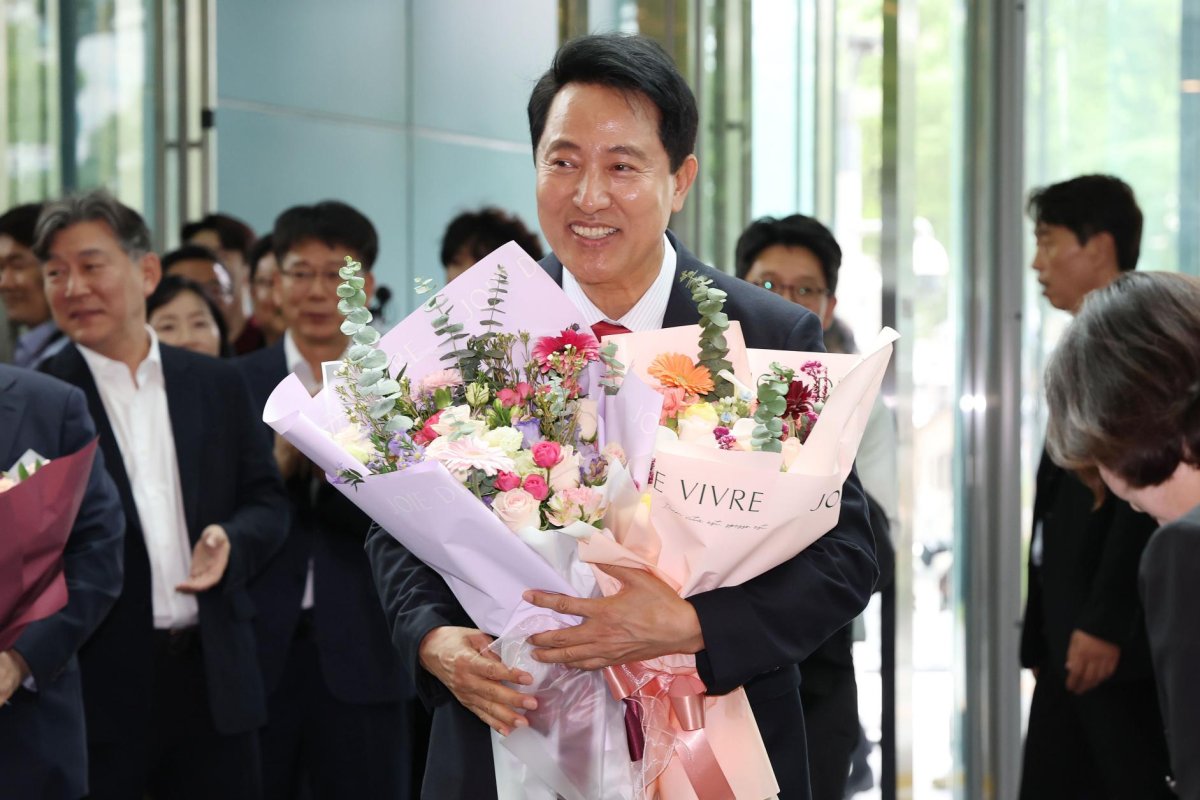
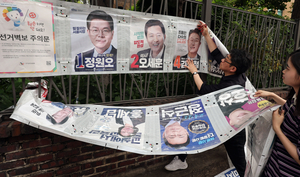
Conservative faction loses Busan, Ulsan, while facing tight races in Daegu, South Gyeongsang Province, in traditional stronghold. Officials remove election campaign posters from a wall outside the Artists' House in Seoul's Jongno-gu on Thursday, a day after South Korea's local elections. (Yonhap) South Korean voters handed the ruling Democratic Party of Korea a decisive victory in the local elections, but kept Seoul and much of the conservative southeast out of its reach, tempering the triumph while giving the battered People Power Party a political lifeline.The Democratic Party won 12 of the country’s 16 mayoral and gubernatorial races, while the main opposition People Power Party secured four — Seoul, Daegu and North and South Gyeongsang provinces, the latter three in its traditional Yeongnam stronghold.The result marked a dramatic reversal from the 2022 local elections, when the Democratic Party won just five of 17 metropolitan and provincial governments (two merged for this year's vote).Yet for the Democratic Party, the defining story of Wednesday’s local elections was not its nationwide sweep, but its failure to capture Seoul.“I am deeply grateful to the people for giving the Democratic Party a sweeping victory across the country,” the Democratic Party’s Chair Rep. Jung Chung-rae said during a news conference on the election outcome Thursday.“However, it is painful that we were unable to reclaim Seoul.” Democratic Party leader Rep. Jung Chung-rae bows after a news conference at the National Assembly in Seoul on Thursday. (Yonhap) Song Young-gil, a former Democratic Party leader who won the National Assembly by-election in Incheon’s Yeonsu-A constituency, expressed disappointment over the party’s failure to win the Seoul mayor's seat.“Frankly, what is most disappointing is that the party failed to make better use of the Lee Jae Myung administration’s strong approval ratings through its election strategy,” Song said Thursday in a radio interview with MBC.The setback was all the more painful because it came at a moment of unusual political strength for the ruling party. The Democratic Party entered the election with a comfortable lead over the People Power Party in most polls, while President Lee Jae Myung’s approval rating hovered around 60 percent.In a dramatic late comeback, People Power Party candidate Oh Se-hoon overtook Democratic Party challenger Chong Won-o, a candidate publicly endorsed and effectively handpicked by Lee, to secure an unprecedented fifth term as Seoul mayor.The late turnaround unfolded against a backdrop of Election Day controversy, after the National Election Commission confirmed unprecedented ballot shortages at 14 polling stations in Seoul. The shortages forced voting to continue for hours beyond the official closing time, disrupted the electoral process and sparked fierce protest from local residents and the People Power Party. Oh Se-hoon of the People Power Party, whose victory in the Seoul mayoral race was virtually assured, greets supporters after delivering a statement at his campaign office in Jongno-gu, Seoul, on Thursday. (Yonhap) Yeongnam no longer untouchableOverall, the People Power Party managed to defend Seoul, but failed to expand beyond its traditional support base in Daegu, North Gyeongsang Province and South Gyeongsang Province.The results underscored a changing political landscape in Yeongnam, long regarded as an utterly safe stronghold for the conservative bloc.Although the People Power Party narrowly held Daegu and South Gyeongsang Province after closely contested races, it lost control of Busan and Ulsan, suggesting that the region can no longer be taken for granted as a conservative bastion.The Democratic Party had placed two political heavyweights in the region in hopes of making symbolic gains, fielding former Prime Minister Kim Boo-kyum in Daegu and former South Gyeongsang Gov. Kim Kyung-soo in South Gyeongsang Province. But both bids fell short, underscoring the party’s continued difficulty in breaking the conservative grip on the region. Busan Mayor-elect Chun Jae-soo of the Democratic Party gives a media interview at his campaign office in Busanjin-gu, Busan, on Thursday. (Pool photo via Yonhap) Still, the ruling party made meaningful gains.In Busan, Democratic Party candidate Chun Jae-soo, a three-term lawmaker and former oceans minister, unseated incumbent Mayor Park Hyeong-joon, returning South Korea’s second-largest city to the party’s control.In Ulsan, Democratic Party candidate Kim Sang-wook — a former People Power Party lawmaker who broke with conservatives over Yoon’s Dec. 3, 2024, martial law declaration — defeated People Power Party rival Kim Du-kyum after securing a unified candidacy on the left.Rep. Song Eon-seog, floor leader of the People Power Party, said the election results showed that voters “had not sided entirely with either President Lee Jae Myung or any of the ruling and opposition parties.”“They have sternly called for the restoration of checks and balances across the political system — between the president and the ruling and opposition parties, between the central and local governments, and between metropolitan and municipal administrations” Song said. “The People Power Party will humbly accept the people’s demands and warning.” Independent candidate Han Dong-hoon greets supporters at his campaign office in Busan’s Buk-gu on Thursday after winning the National Assembly by-election in the city’s Buk-A constituency. (Yonhap) Main opposition captures four Assembly seatsThe People Power Party performed relatively well in the 14 National Assembly by-elections held alongside the local elections, winning four seats despite the fact that 13 of the 14 constituencies had previously been occupied by Democratic Party lawmakers.The Democratic Party won nine seats, including constituencies in Incheon, Gwangju, Gyeonggi Province, South Chungcheong Province, North Jeolla Province and Jeju Island, while one went to an independent conservative candidate.Among the People Power Party’s most notable victories was Pyeongtaek-B in Gyeonggi Province, where Yu Eui-dong defeated Cho Kuk, chair of the minor liberal Rebuilding Korea Party. The party also won in Daegu’s Dalseong constituency and the Gongju-Buyeo-Cheongyang constituency.In Busan’s Buk-A constituency, independent conservative candidate Han Dong-hoon, a former People Power Party chair, defeated Ha Jung-woo, who stepped down as senior presidential secretary for artificial intelligence policy and future planning in the Lee administration.