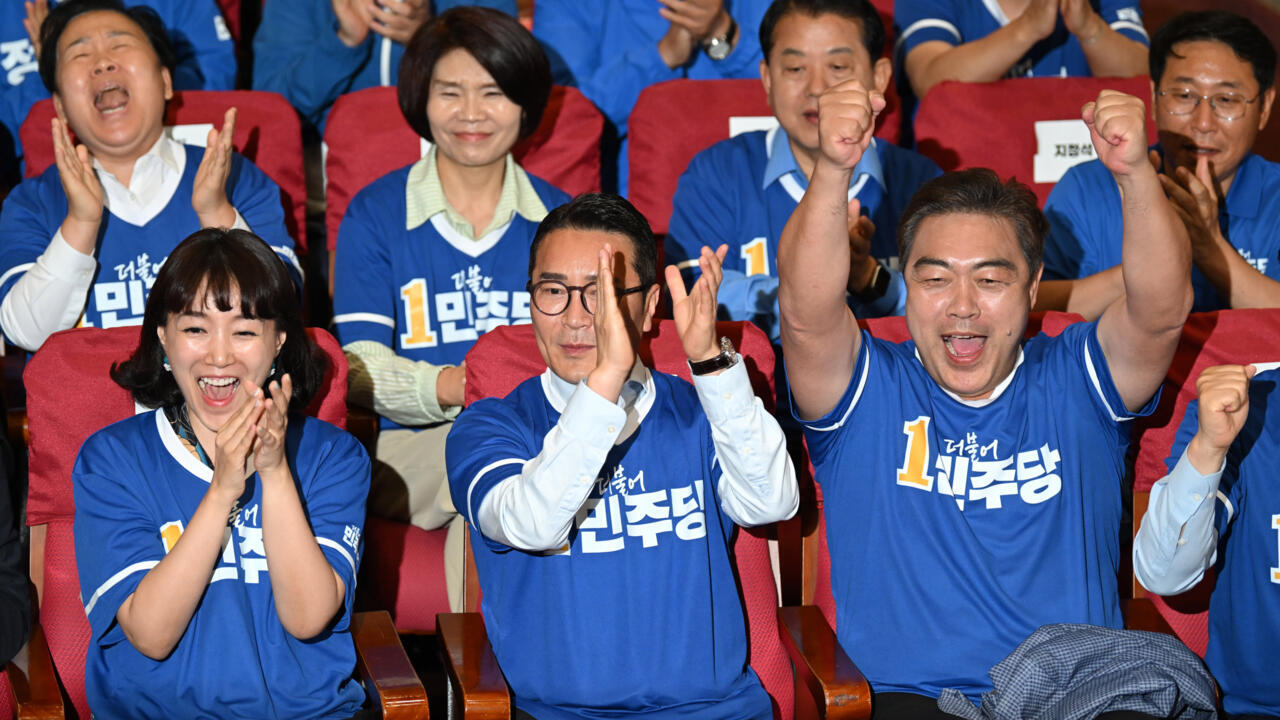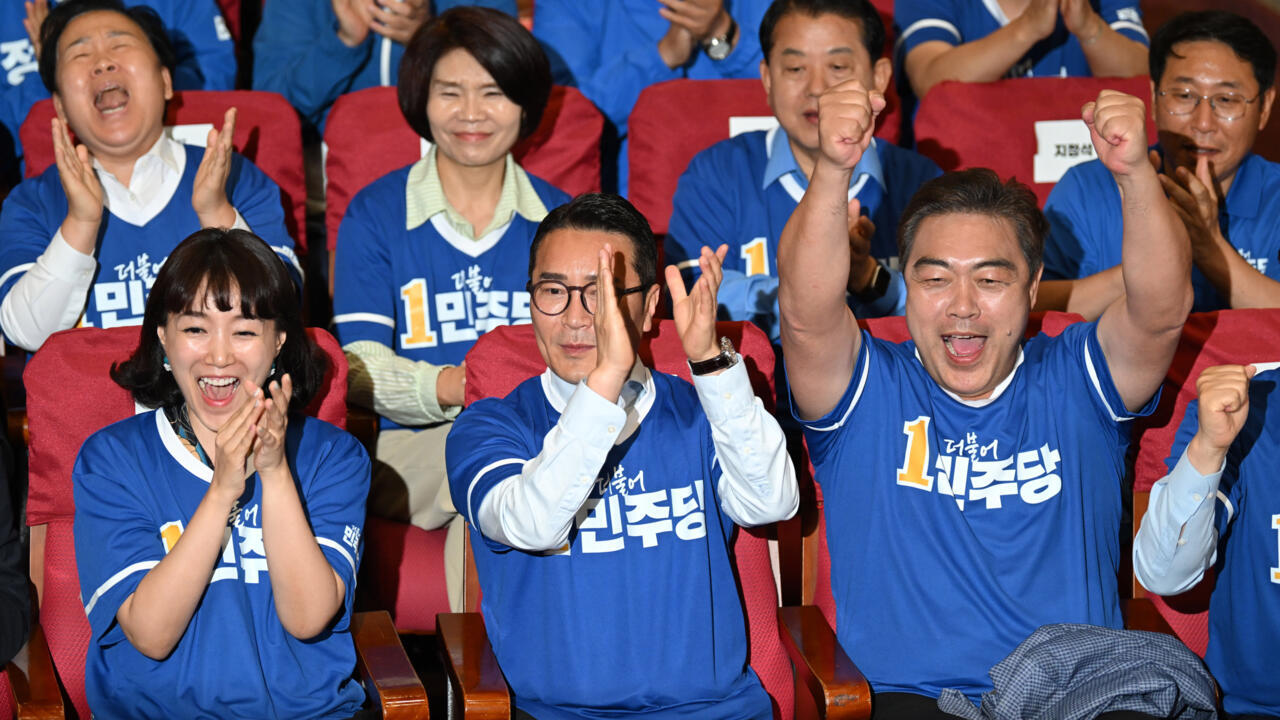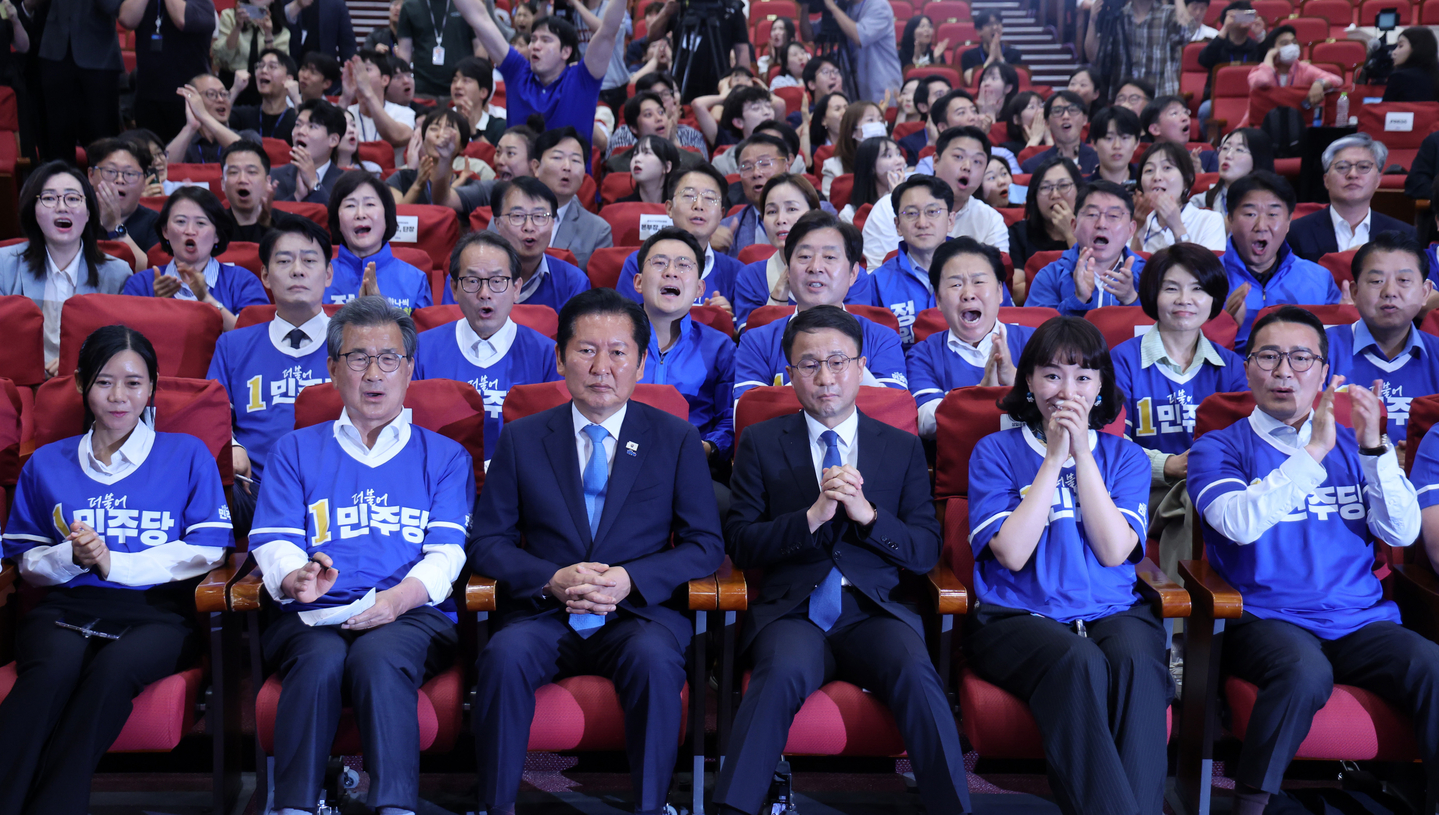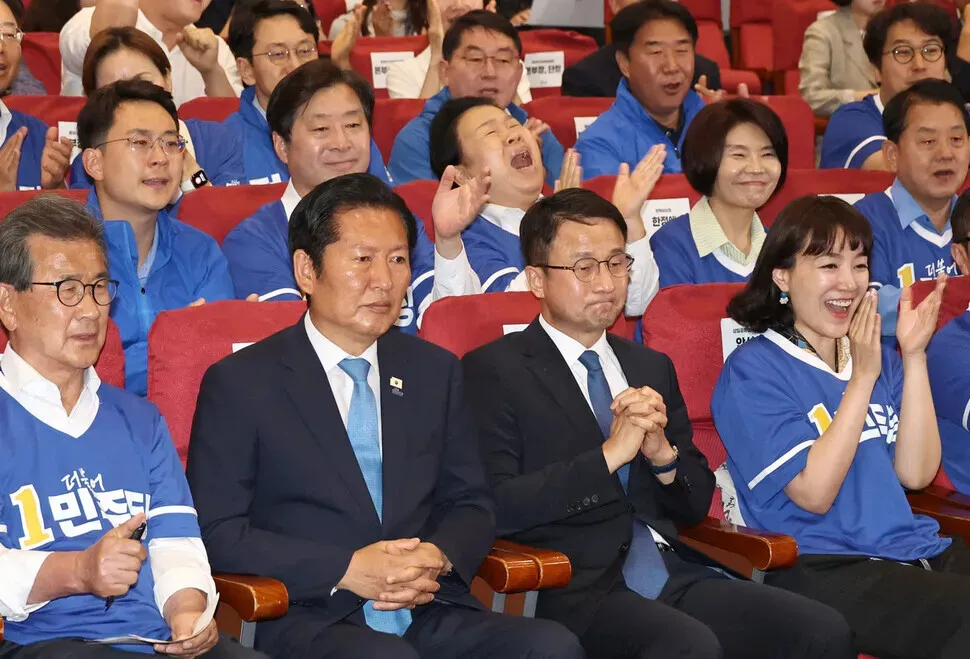
Democratic Party leader Jung Chung-rae (second from left) watches vote tallies come in at the party’s election night watch party for the local elections at the National Assembly Members’ Office Building on June 3, 2026. (Yoon Woon-sik/Hankyoreh)
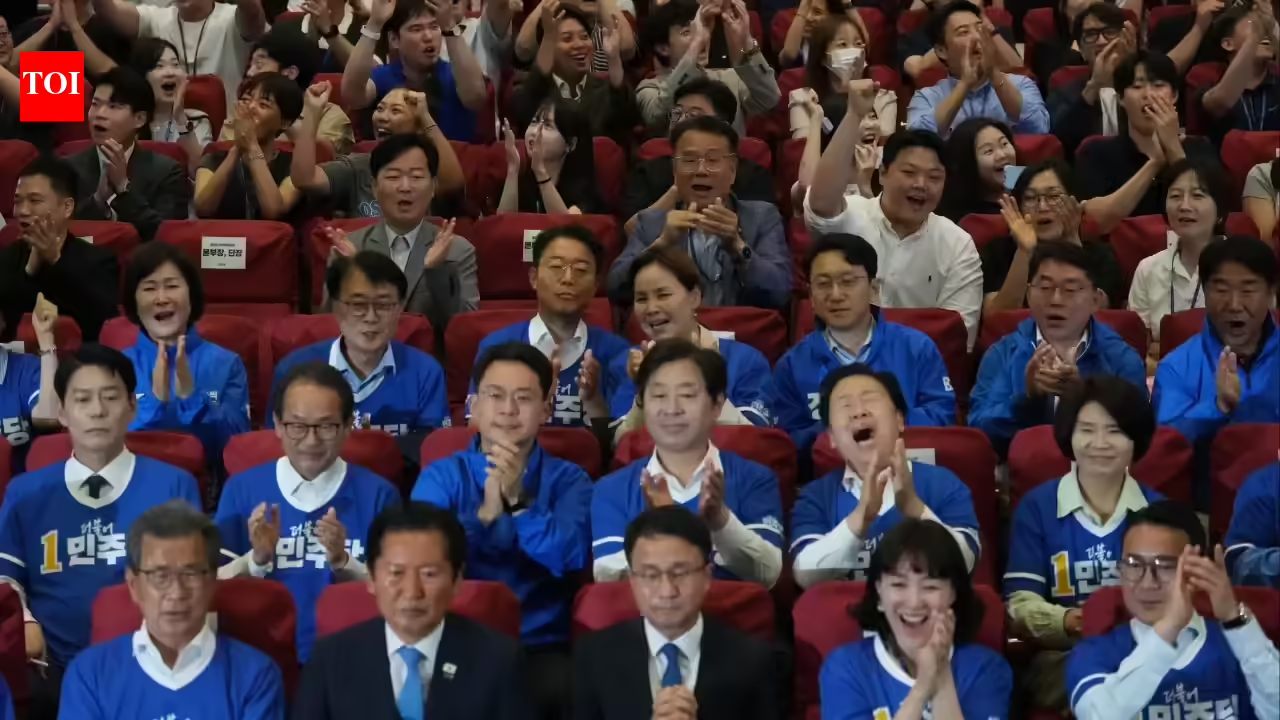
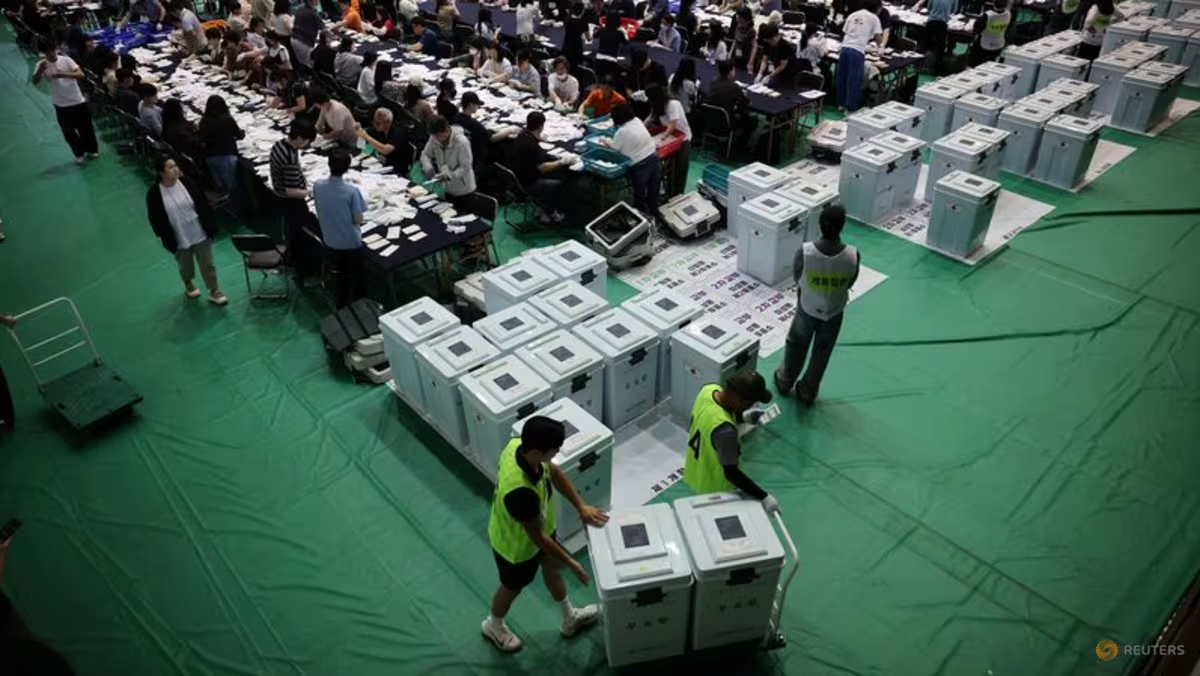
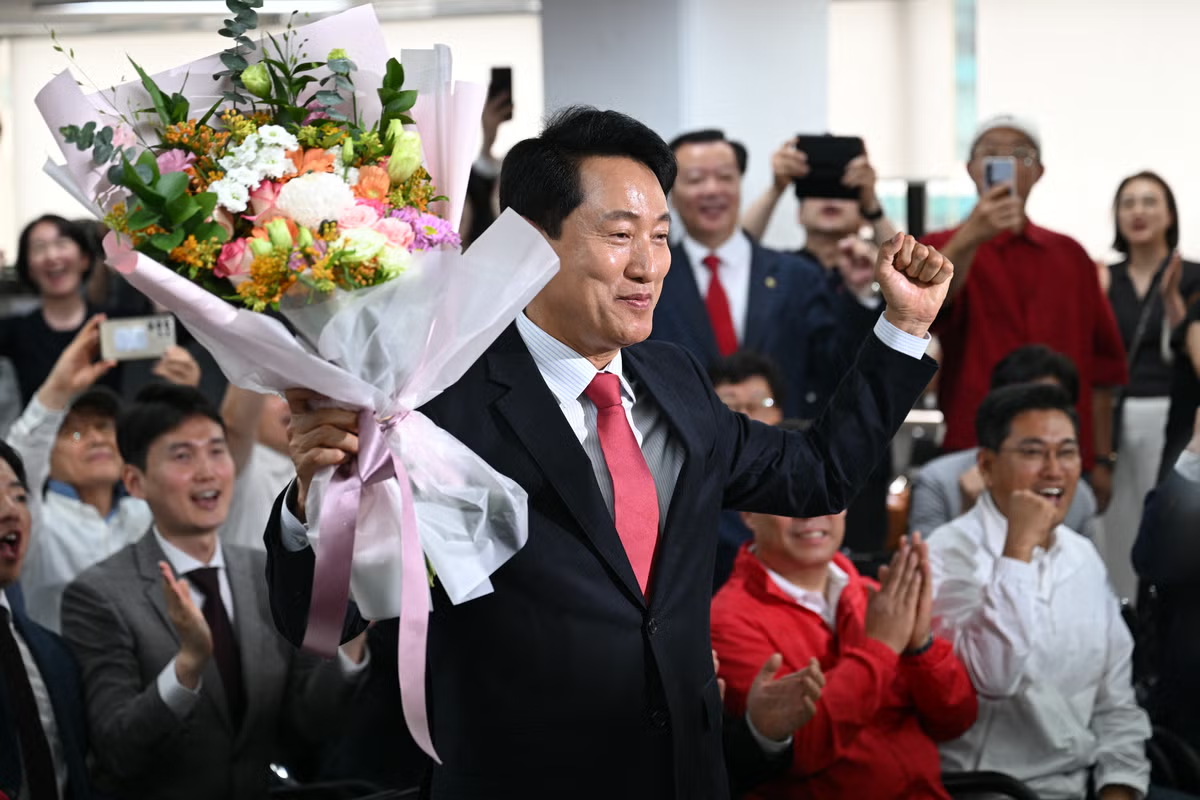
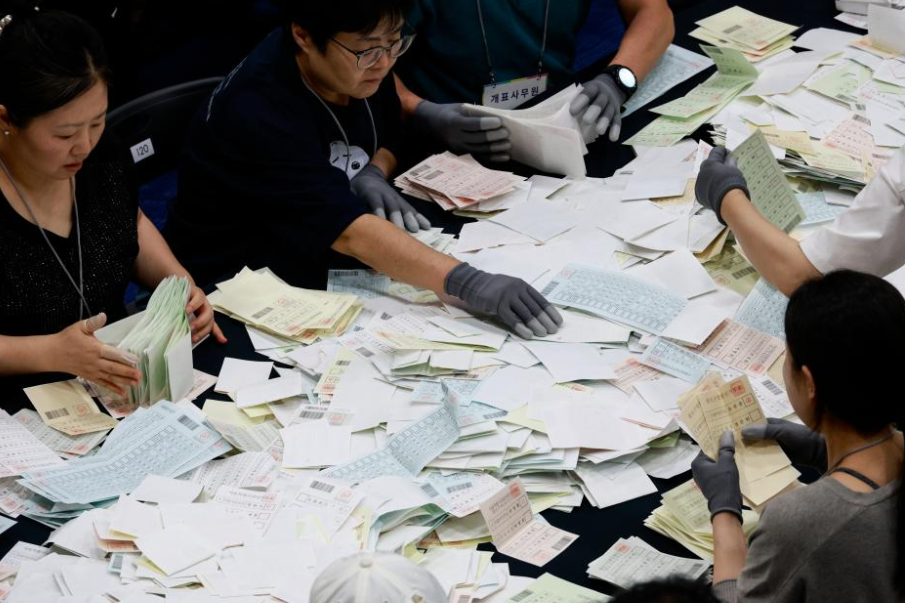
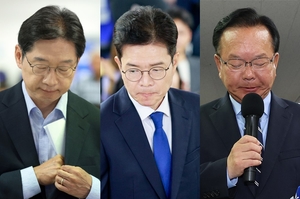
The ruling Democratic Party scored a decisive win in Wednesday’s local elections, a key test of public sentiment one year into the Lee Jae Myung administration, but the opposition People Power Party (PPP) held on to the Seoul mayor’s office. The Democratic Party won 12 mayoral elections in cities that included Busan and Ulsan. The PPP claimed four victories, including the mayoral races in Seoul and Daegu and the gubernatorial race in South Gyeongsang Province.It was the third straight victory for the Democratic Party, after its previous general election win in 2024 and presidential election win in 2025, won on the strength of its calls for the public to support the Lee administration and hold the PPP responsible for its associations with a December 2024 insurrection attempt. This frame won out over the PPP’s calls to punish the administration and check its powers.But while the party consolidated power nationwide at the local level, adding to its existing control of the legislative and executive branches, it faced an unexpected loss in the biggest battleground: Seoul.The final vote count on Thursday showed the ruling Democratic Party winning leadership contests in Gyeonggi Province, Incheon, Sejong, Daejeon, North and South Chungcheong Province, South Jeolla Province/Gwangju, North Jeolla Province, Busan, and Ulsan. The opposition PPP came away with wins in North Gyeongsang Province and the hotly contested battlegrounds of Seoul, Daegu, and South Gyeongsang Province.Analysts said the outcome showed a shift in public sentiment when compared with the last local elections, which took place four years ago shortly after Yoon Suk-yeol won the presidency. At that time, the PPP won 12 of the 17 mayoral and gubernatorial contests (Seoul, Incheon, Busan, Daegu, Ulsan, Daejeon, Sejong, North and South Chungcheong, North and South Gyeongsang, and Gangwon Province), while the Democratic Party claimed only five (Gyeonggi, Gwangju, North and South Jeolla, and Jeju).In a razor-thin contest, Seoul Mayor Oh Se-hoon edged out Democratic challenger Chong Won-oh 49.16% to 48.13%, with 99.54% of votes counted. Oh’s victory makes him the first person elected to a fifth term as the city’s mayor.The PPP claimed victories in its traditional strongholds of Daegu and North Gyeongsang. In the Daegu mayoral election, its candidate Choo Kyung-ho won a closely contested race against the Democratic Party’s Kim Boo-kyum. In North Gyeongsang, PPP candidate Lee Cheol-woo was elected as governor.In South Gyeongsang, PPP candidate Park Wan-su secured a victory with 50.8% of the vote against Democratic Party candidate Kim Kyoung-soo.Progressive candidates were expected to prevail in 10 of 16 metropolitan and provincial education superintendent races, including those in Seoul and Gyeonggi, while conservative candidates were expected to win in four, including Daegu.The National Election Commission announced a provisional local election voting rate of 61.0% as of 9 pm on Wednesday. This was the highest rate since 68.4% for the first-ever local elections held in 1995.By Choi Ha-yan, staff reporter; Jang Ye-ji, staff reporter; Kim Hae-jeong, staff reporterPlease direct questions or comments to [english@hani.co.kr]