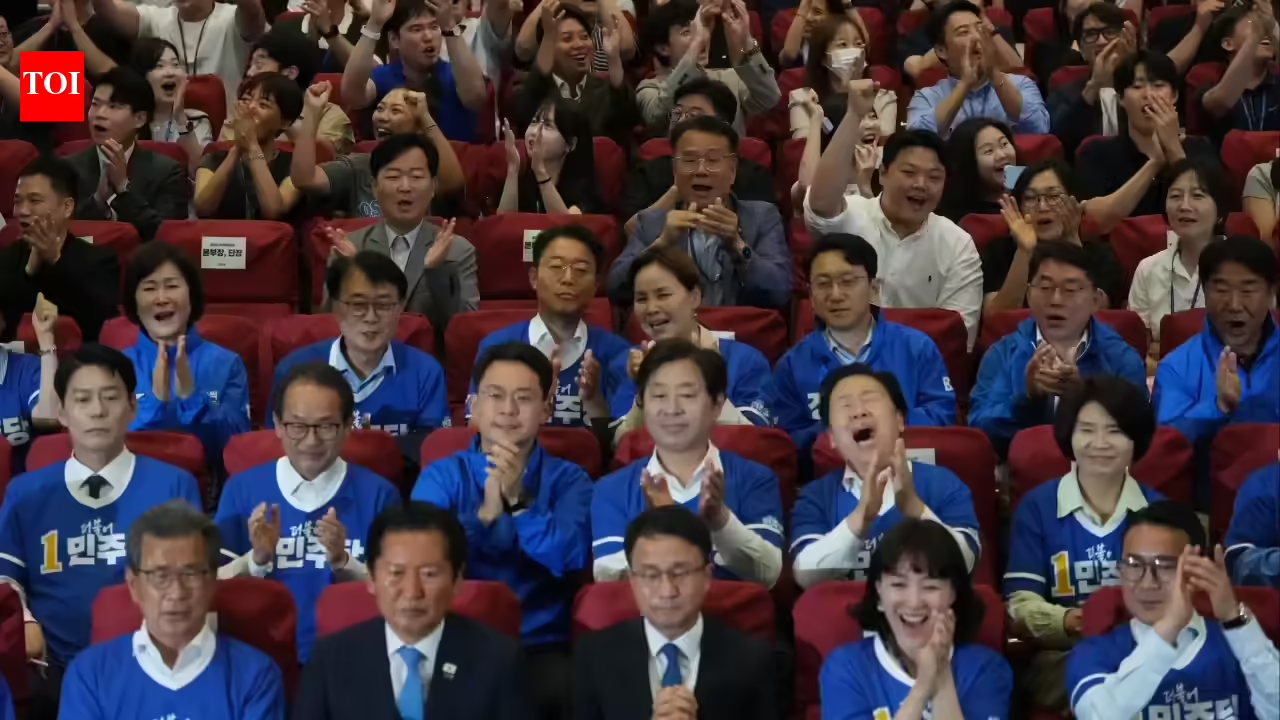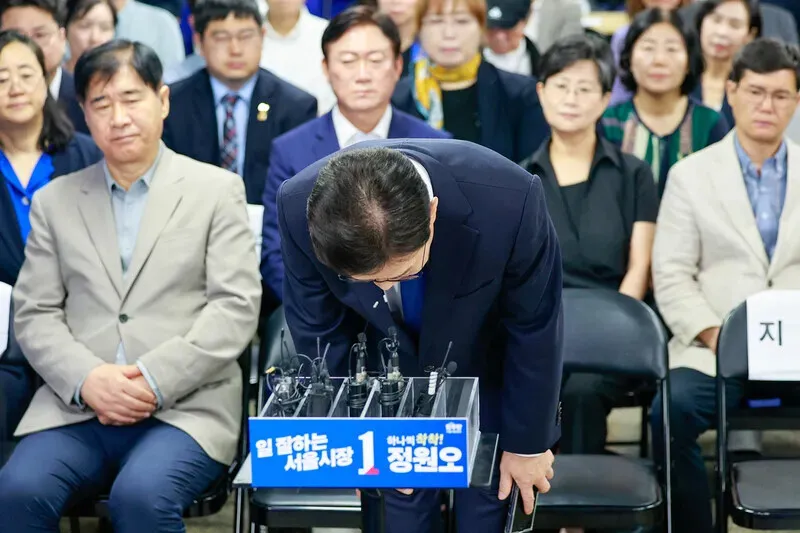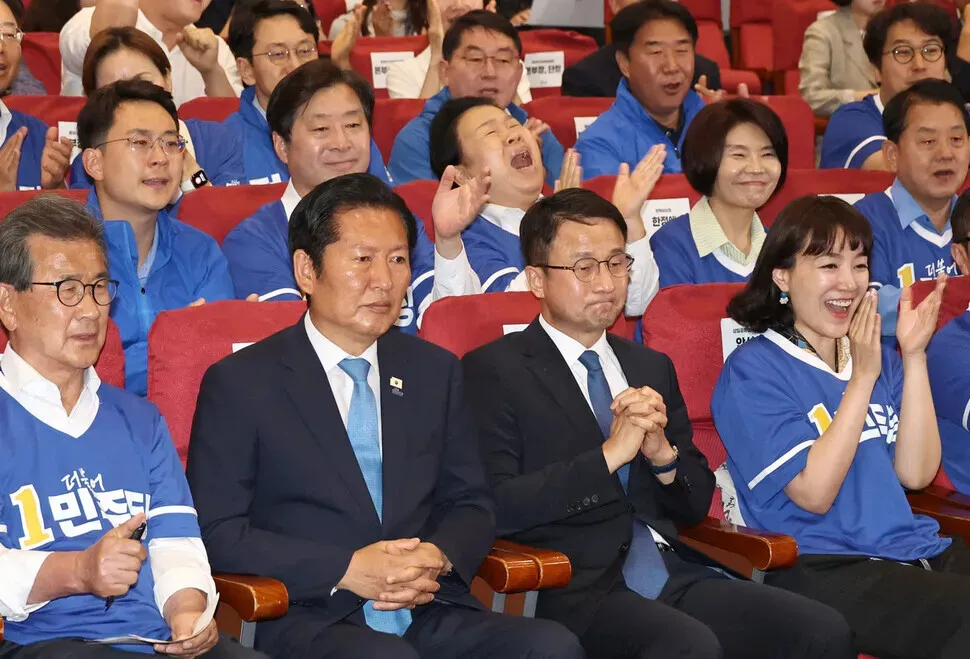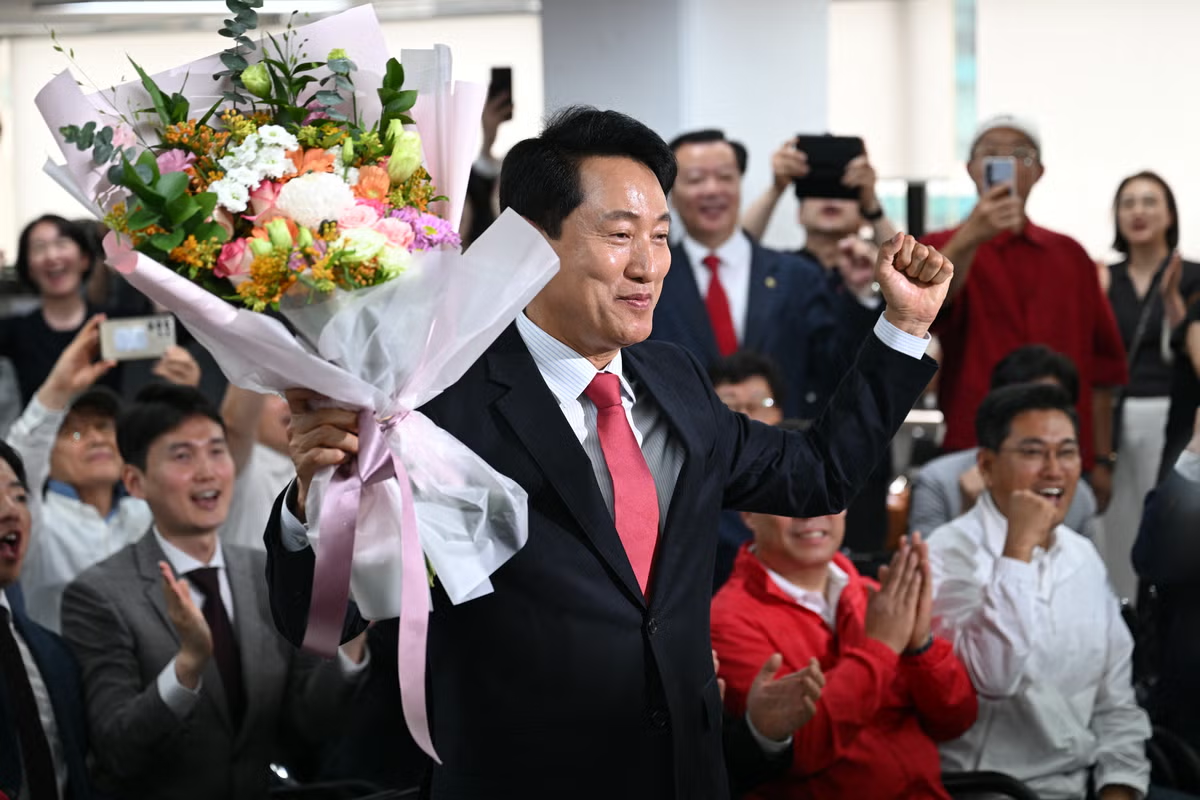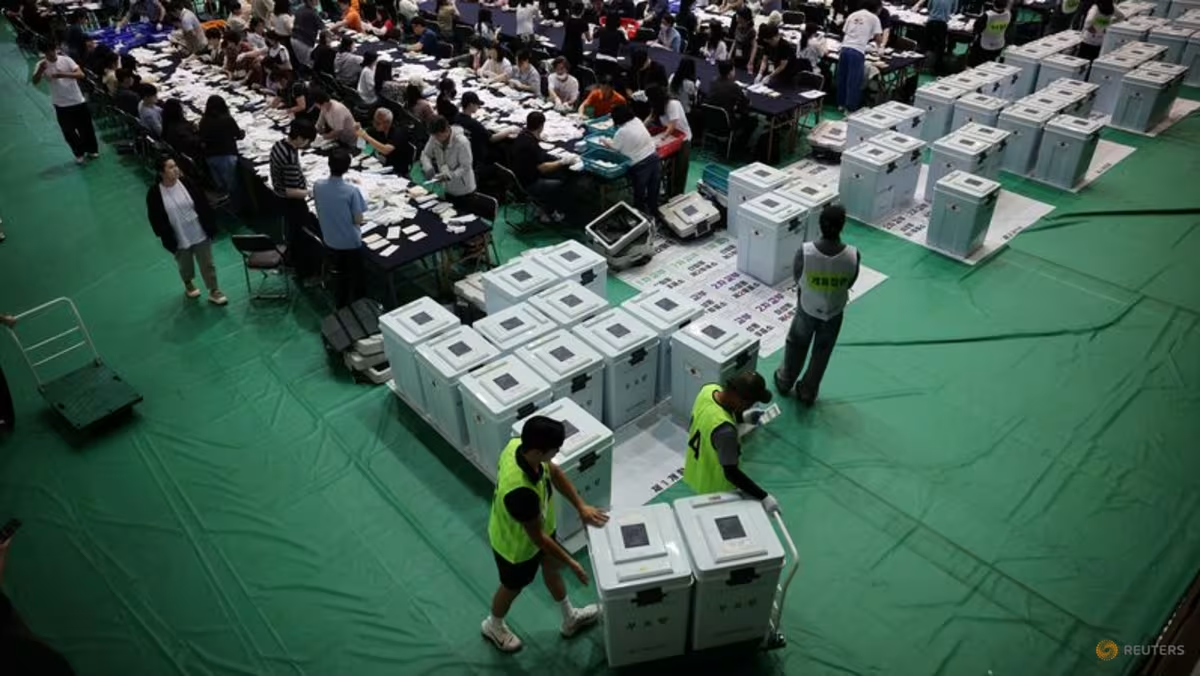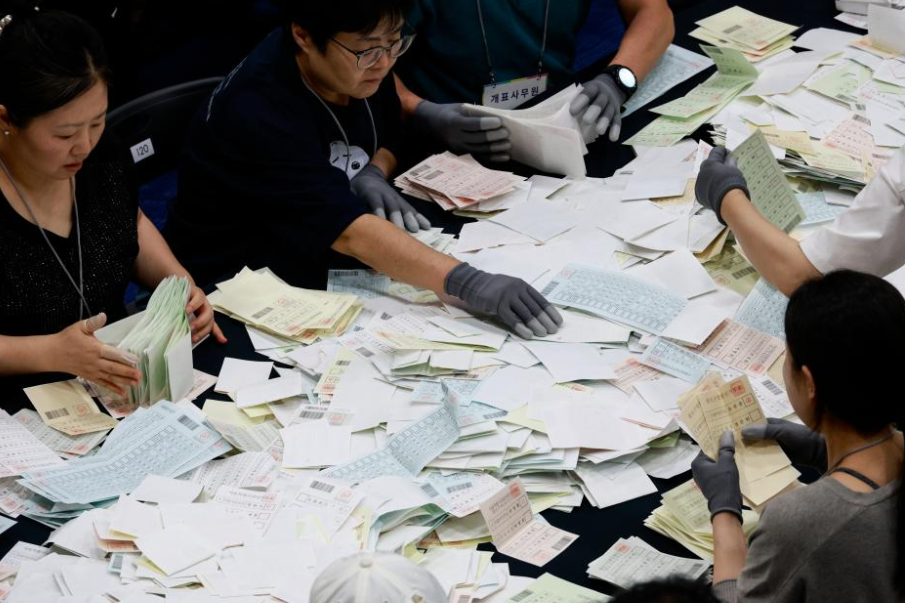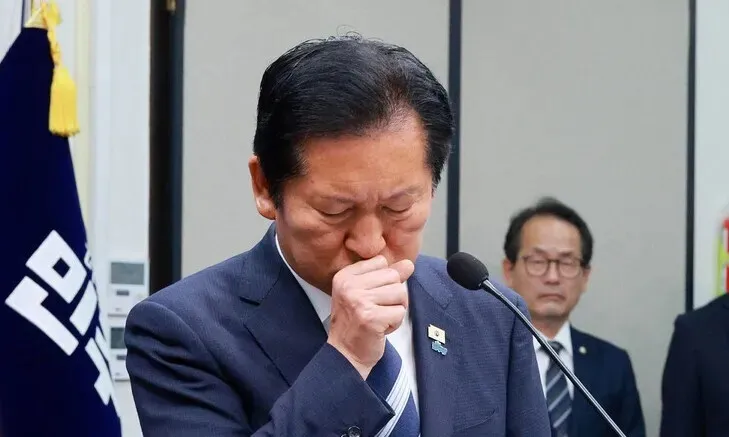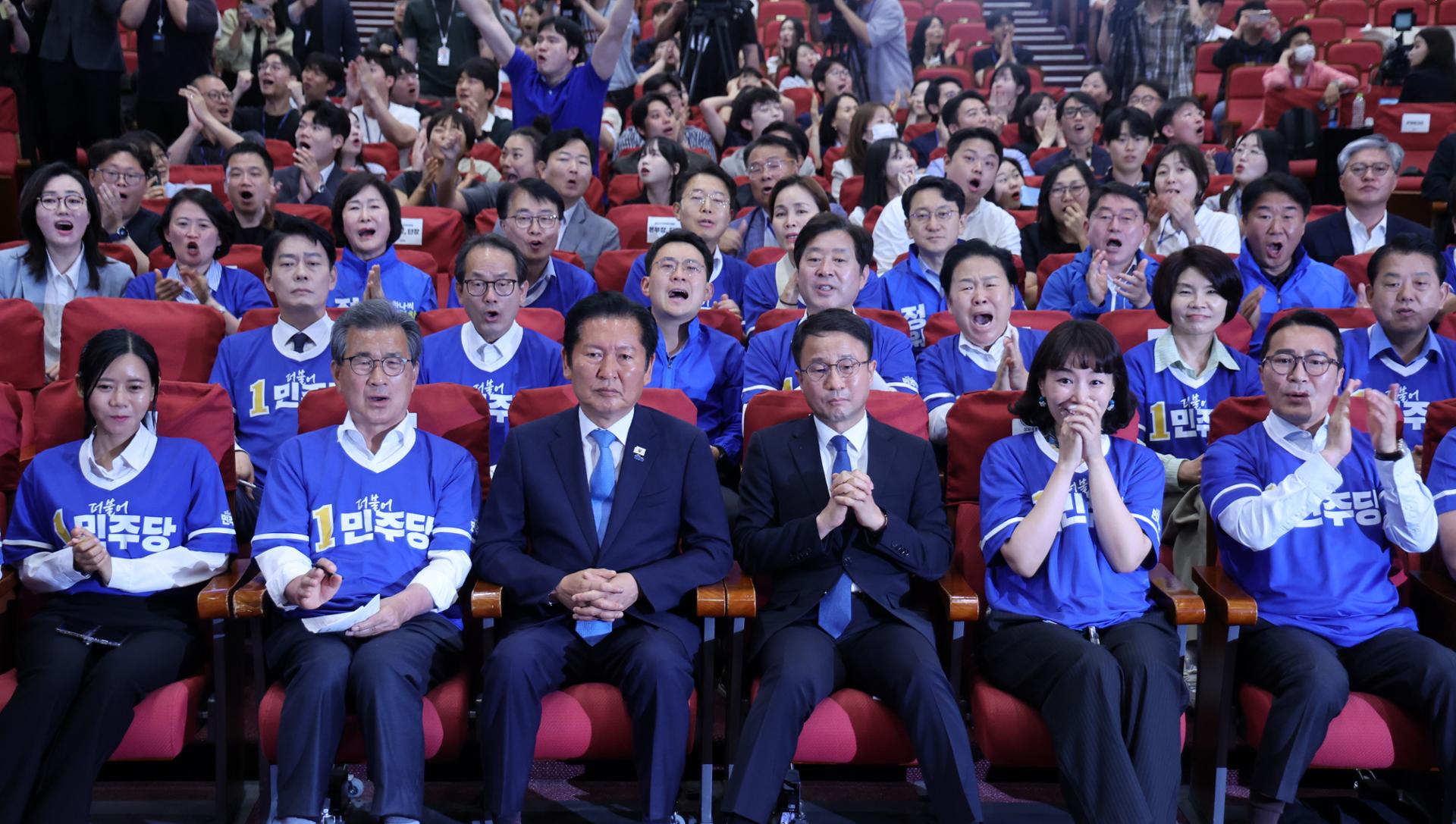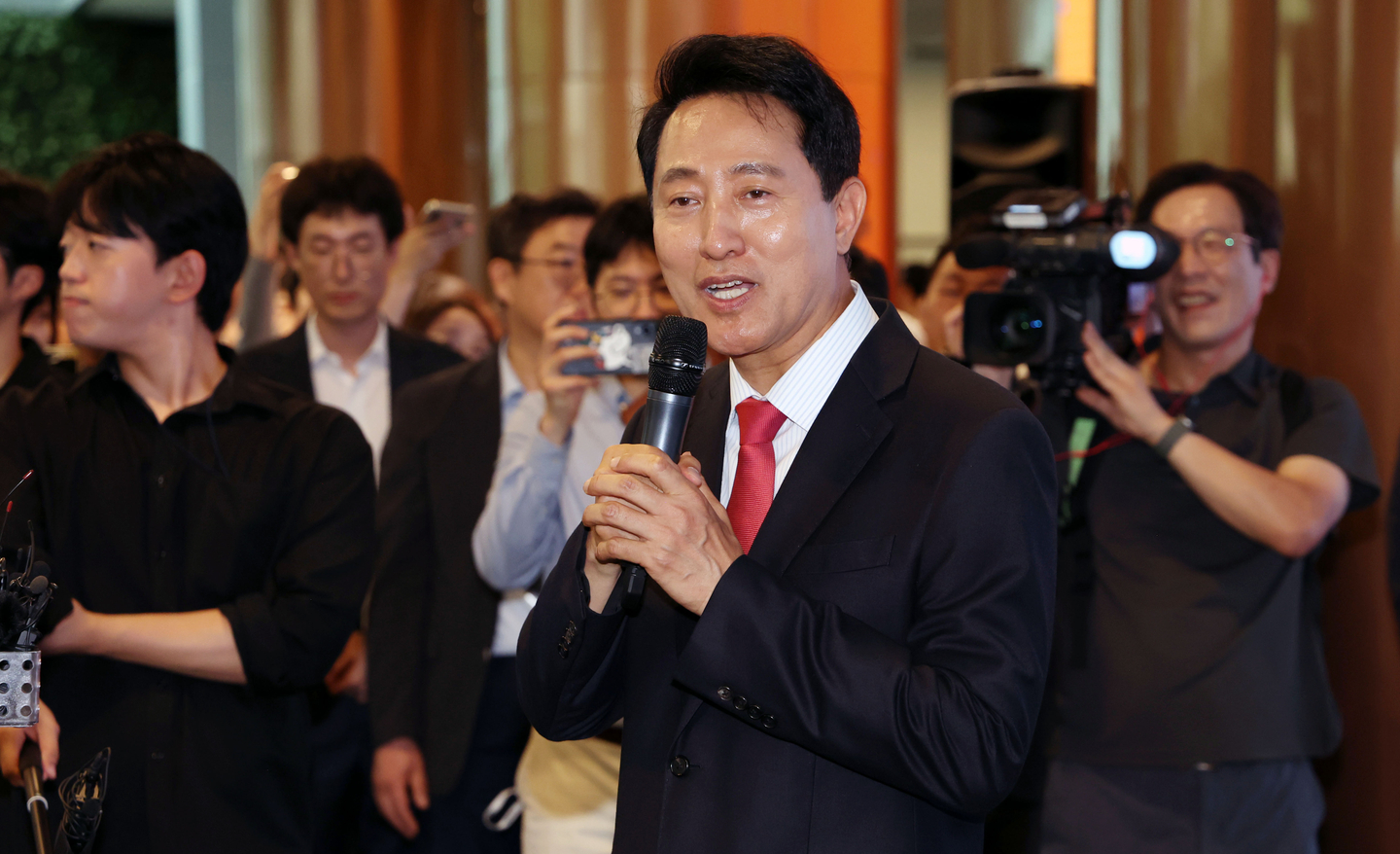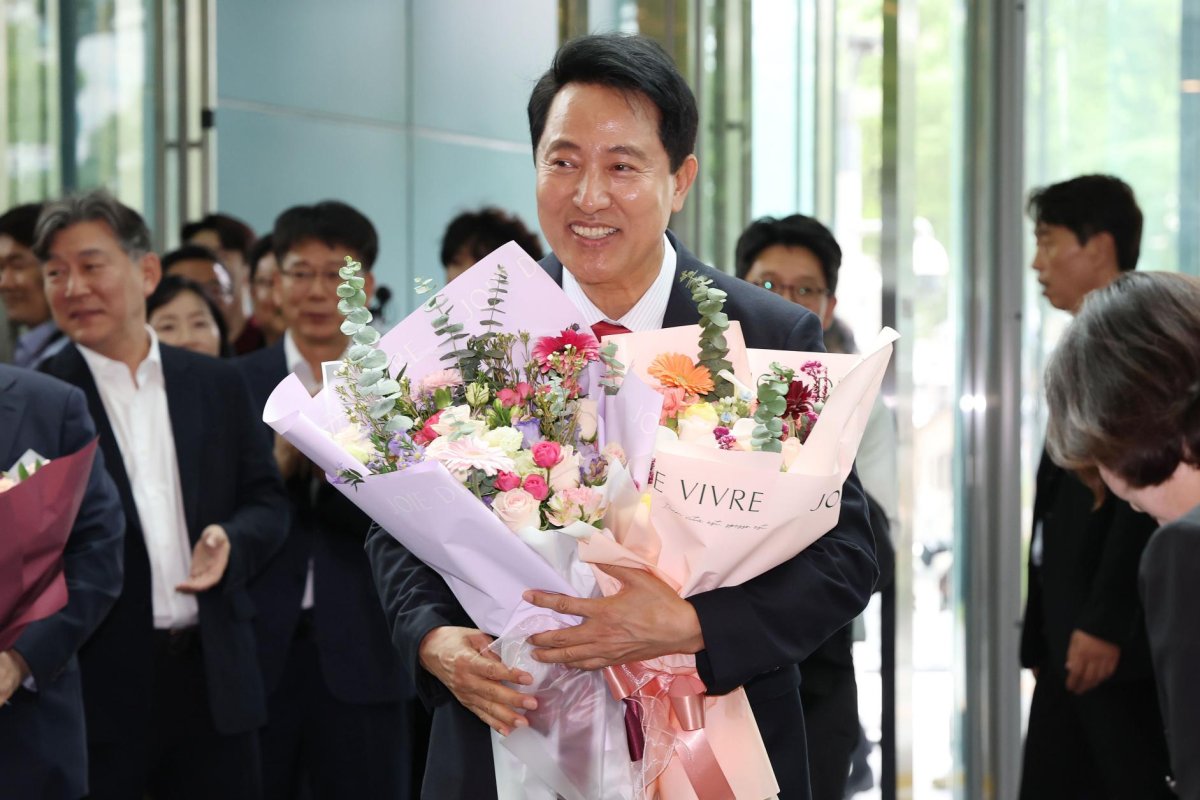
Democratic Party's local election candidates Kim Kyoung-soo (from left), Chong Won-o and Kim Boo-kyum (Yonhap) The ruling Democratic Party of Korea largely prevailed in Wednesday's local elections, but it was not a win without costs, as the party lost some key battlegrounds.In particular, the ruling party's narrow yet crucial loss in the Seoul mayoral election prompted a blame game within the liberal camp, raising questions as to whether the results indeed represent a clear victory for the party.The Democratic Party envisioned wins in tight races involving Seoul mayoral candidate Chong Won-o, Daegu mayoral candidate Kim Boo-kyum, South Gyeongsang Province gubernatorial candidate Kim Kyoung-soo, as well as candidates for lawmaker posts Kim Yong-nam and Ha Jung-woo.Although the party bagged many wins, the result fell short of its expectations for an absolute victory, in part buoyed by President Lee Jae Myung's high-flying approval ratings in his first year in office.The Democratic Party won 12 out of 16 mayoral and gubernatorial posts and nine out of 14 parliamentary posts.But the party suffered defeats in close races of executive posts for Seoul mayor, Daegu mayor and South Gyeongsang Province governor, as well as lawmaker posts for Pyeongtaek-B in Gyeonggi Province and Buk-A of Busan.Rep. Yoon Joon-byeong, a Democratic Party lawmaker, said on Facebook on Thursday that the party must not be blinded by what is seemingly a big win in terms of the number of posts won."Although victory in the elections is spectacular in its appearance, it cannot be said that the Democratic Party achieved a landslide victory in this local election if the Democratic Party of Korea suffered a defeat in the Seoul mayoral election," Yoon said.Liberal heavyweight Song Young-gil, a lawmaker-elect who will represent Yeonsu-A district in Incheon, said the Democratic Party's Chair Rep. Jung Chung-rae must be held responsible.Song said Jung's strategy of concentrating on core left-wing supporters through messages calling for the eradication of remnants of former President Yoon Suk Yeol's political unrest in 2024 left the party isolated and prevented outreach to centrist voters."Instead of focusing on people's living standards and endorsing the Lee Jae Myung administration's pragmatism-focused approach, (Jung) was engaging in ideological debate," Song said in a radio interview with MBC on Thursday, adding this resulted in the liberal party's "self-contradiction that blocks its own potential for expansion in conservative-leaning regions."Song, who is set for a sixth term at the National Assembly, said Jung will face judgment in the upcoming party primary in August, through which Jung will seek an extension of his term, suggesting he might personally contend for the party chair, though he has yet to make a decision. Democratic Party's parliamentary by-election candidates Kim Yong-nam (left) and Ha Jung-woo (Yonhap) In response to Song's remarks, Rep. Jo Seoung-lae, the secretary-general of the Democratic Party who led election campaigns for the party, in a press conference Thursday expressed dissapointment that the party had failed to unite."Discrepancies within our party in terms of public messages hindered the party from uniting," Jo said. "I think it made the election difficult for our party. ... In order to win as big as possible, I think unity within our party is very important."Regarding Chong's loss in the Seoul election, the ruling party's leadership cited Oh's broader public recognition than Chong, Seoul's demographic composition of right-leaning voters and Chong's lead in opinion polls."The opinion polls released early in the election had us preconceived with the notion that our party was taking a big lead and would continue to do so," Jo said. "However, I consistently and clearly stated that the election was bound to be a close race as Election Day drew near."Jo also said that the liberal party did its best in conservative strongholds, adding that opinion polls showing a lead for the liberal Democratic Party there do not necessarily translate to a high chance of winning."What these three battlefields have in common is that the political and demographic landscape does not allow the Democratic Party to hold an overwhelming advantage in public opinion," Jo said. "Unless a big event overshadows the election itself, we can hardly make a difference."Jo also expressed regret that mudslinging between candidates of liberal parties in the Pyeongtaek-B race — Kim Yong-nam of the Democratic Party and Cho Kuk of the minor Rebuilding Korea Party — had given other parties an advantage."I believe that if this election had been structured around competing on vision and policies rather than negative campaigning, this result (of People Power Party candidate Yu Eui-dong's victory) would not have occurred," he said.
Ruling party concedes key battlegrounds after tight race
The ruling Democratic Party of Korea largely prevailed in Wednesday's local elections, but it was not a win without costs, as the party lost some key battlegrou
753 words~3 min read