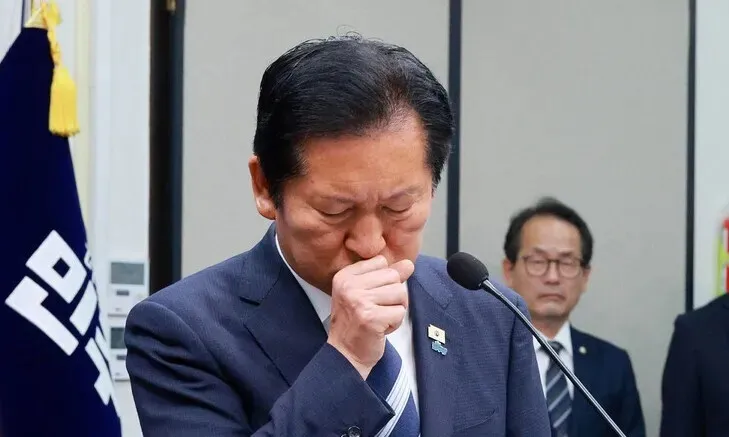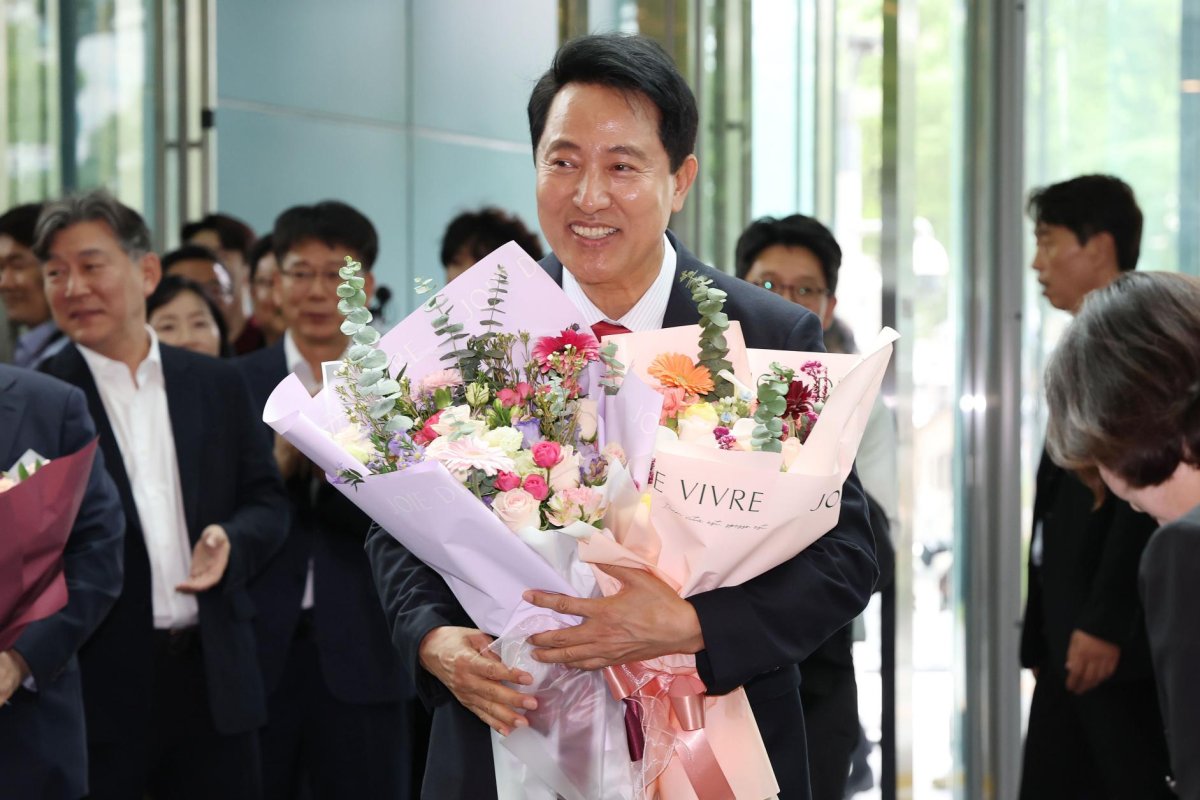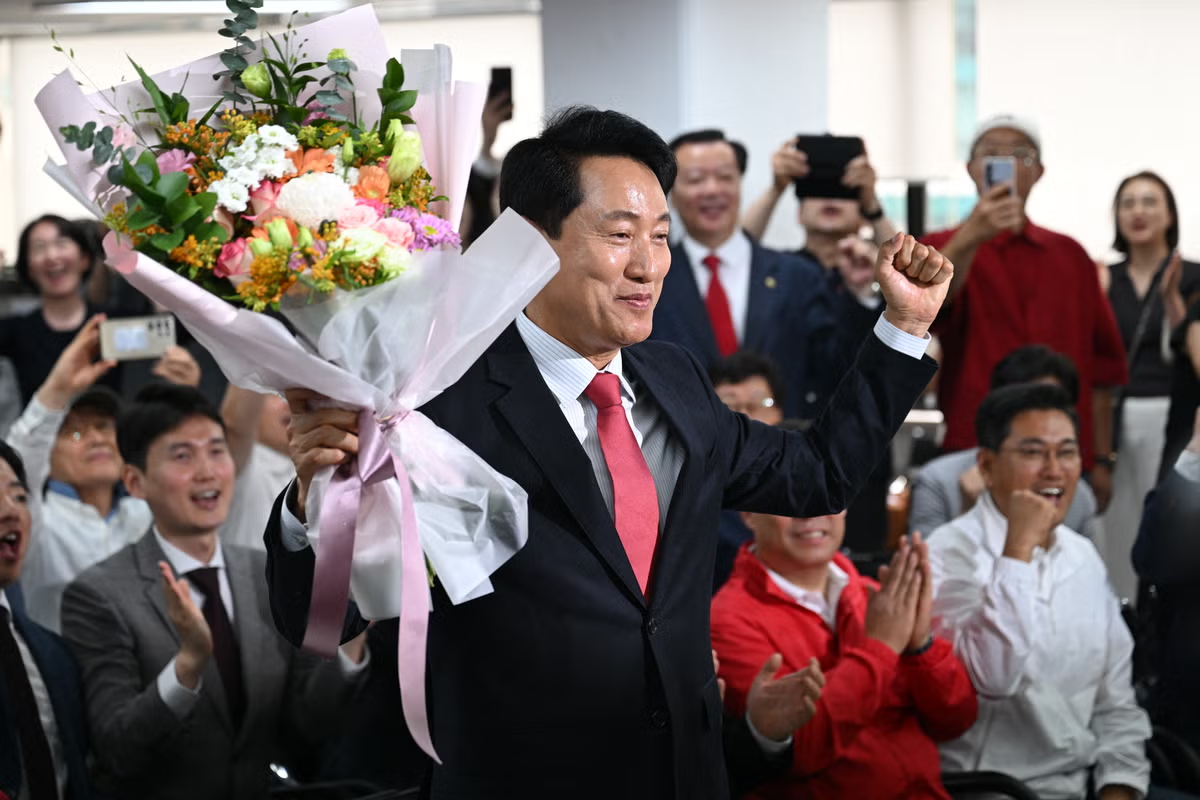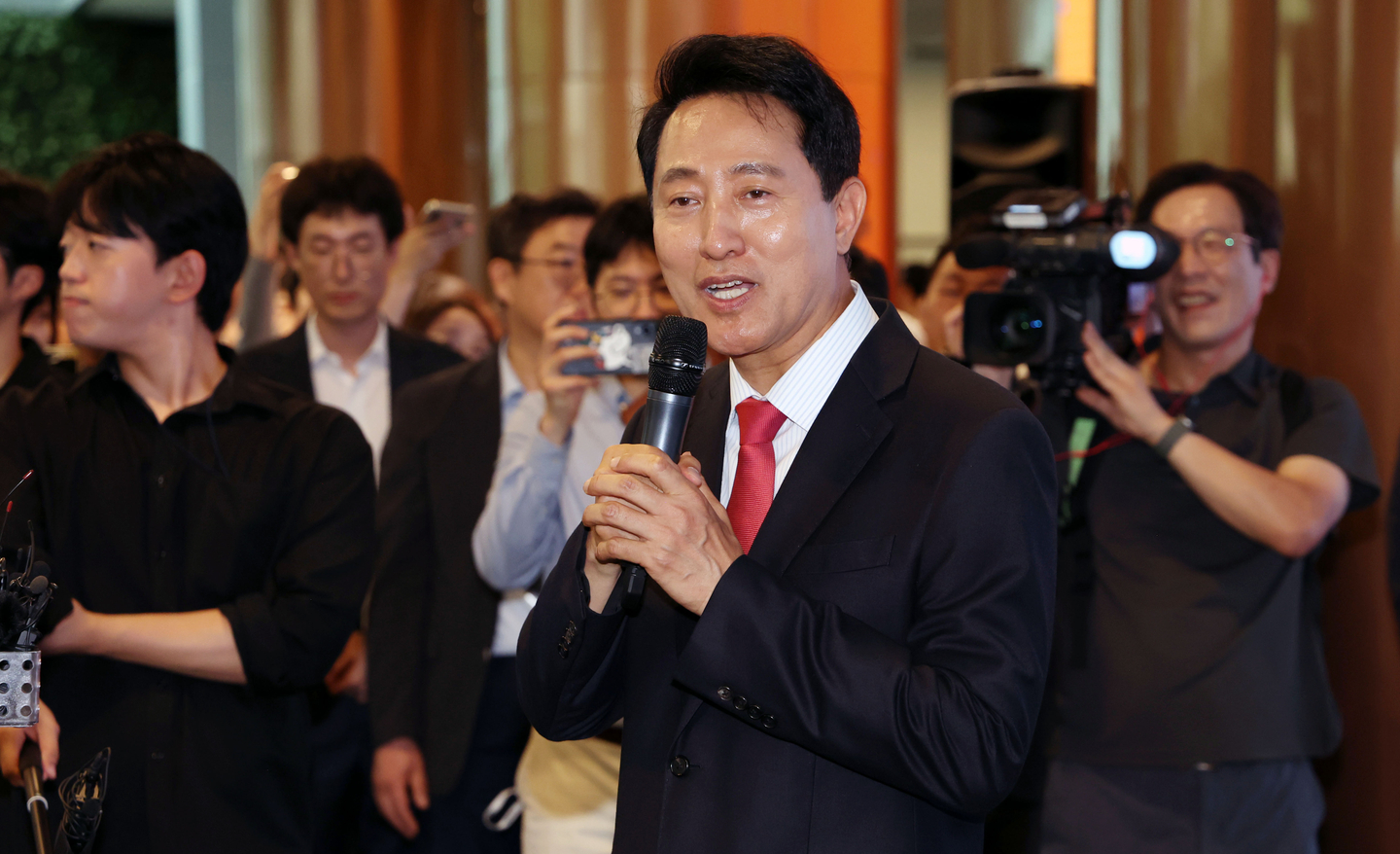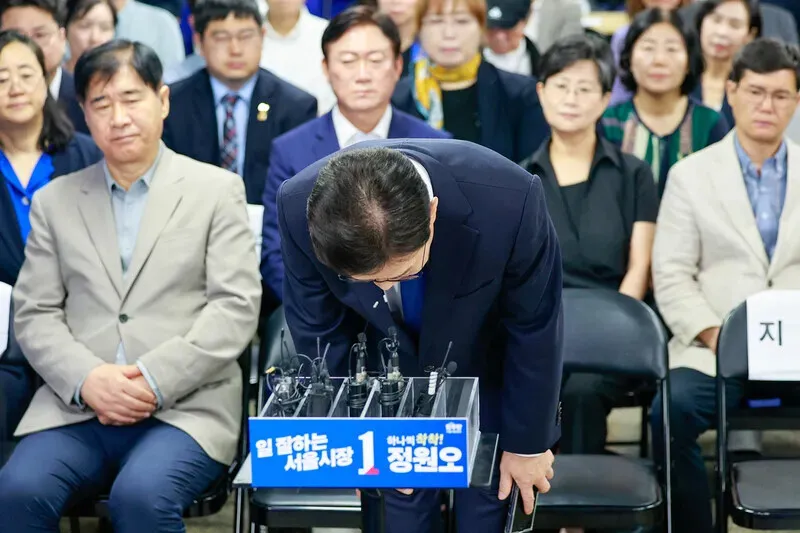
Chong Won-oh, the Democratic Party’s candidate for Seoul mayor, bows during his concession speech at the party’s election headquarters in Seoul’s Jung District on June 4, 2026. (Yonhap)
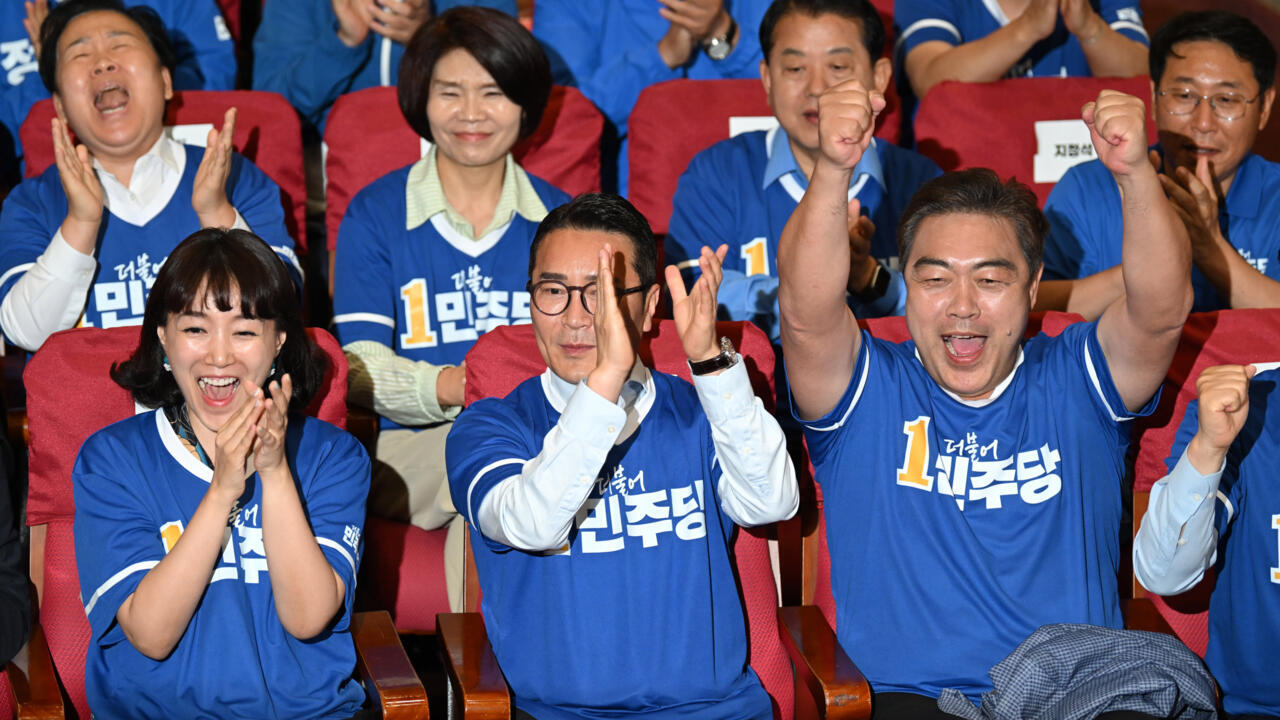
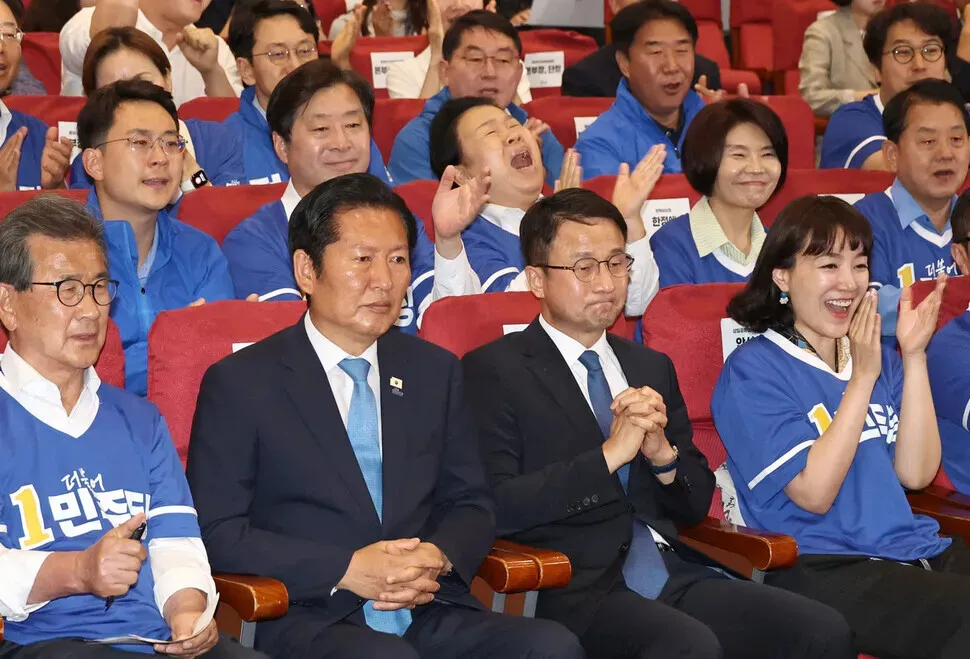
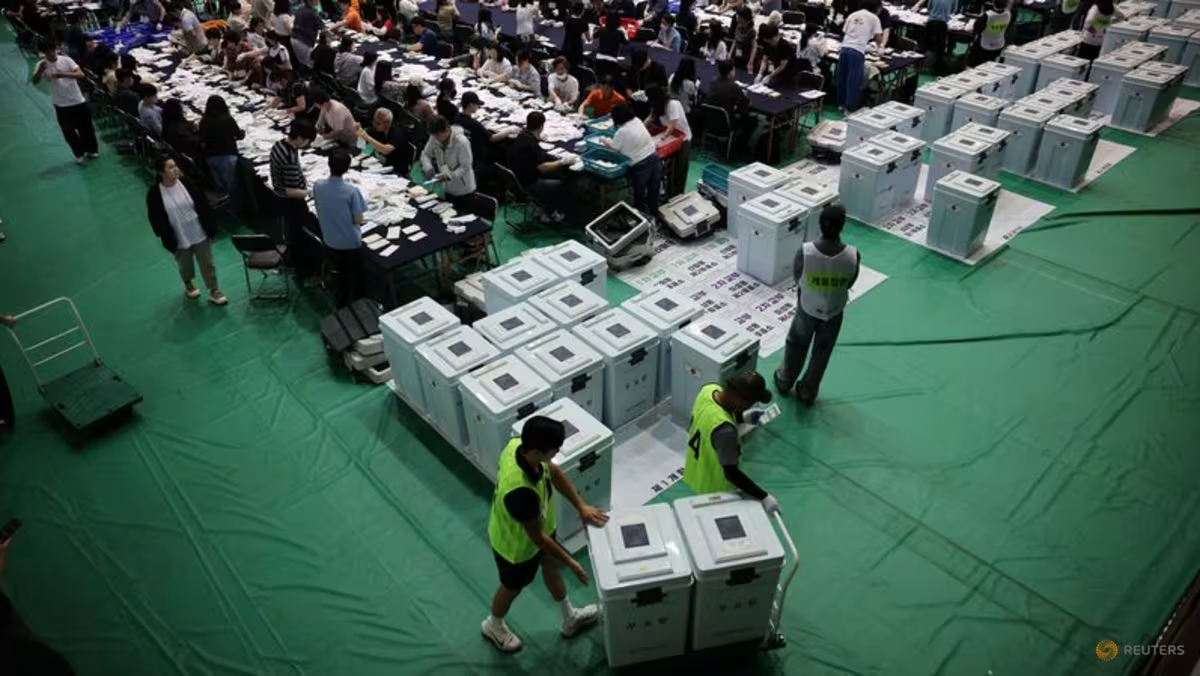
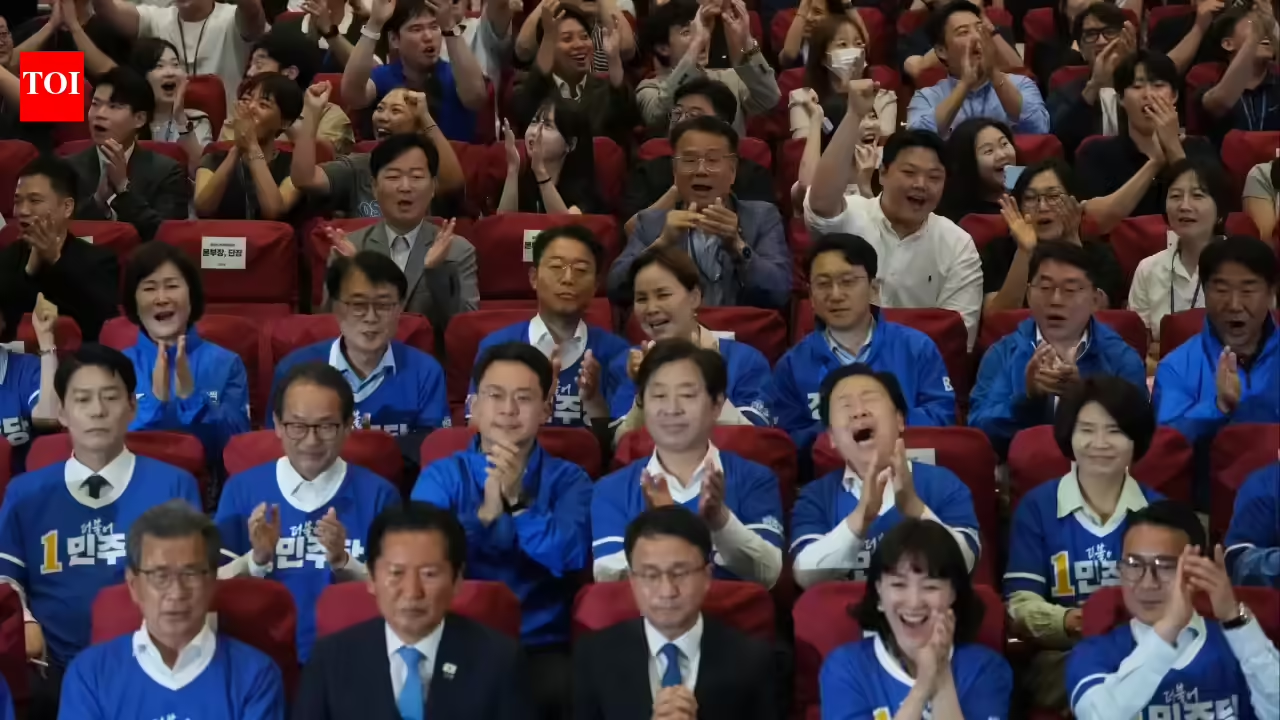
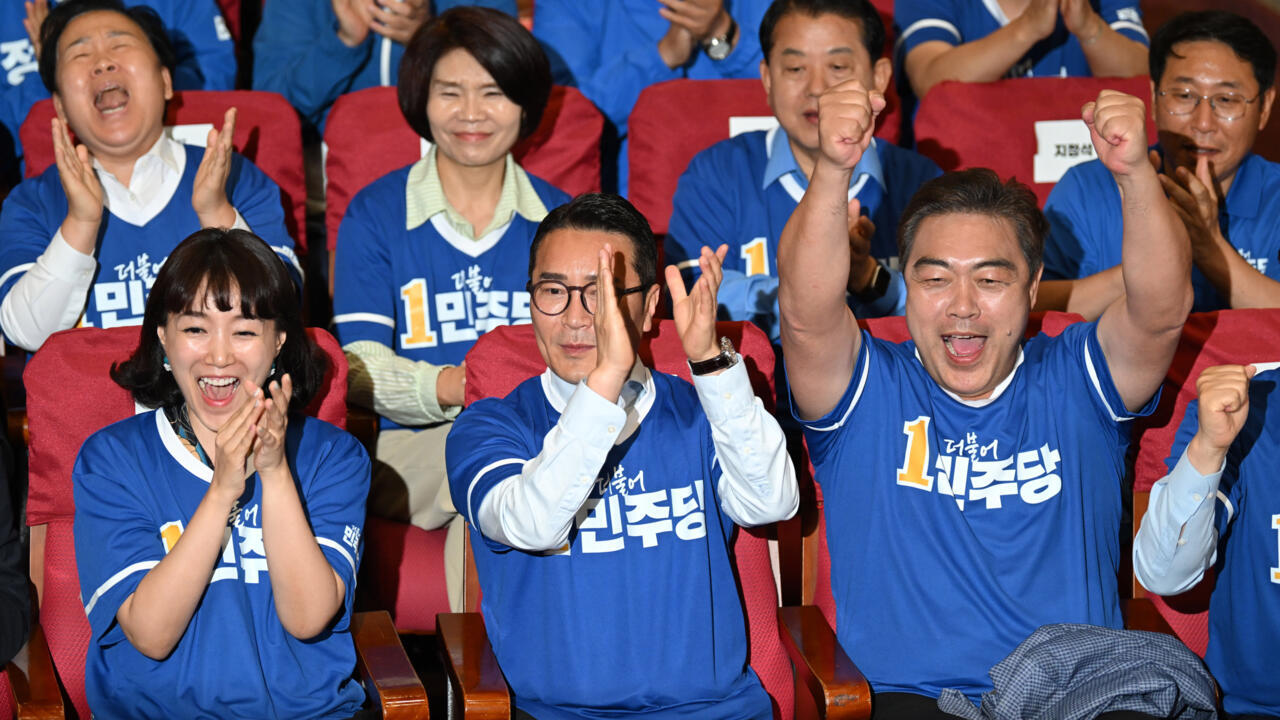
South Korea’s ruling Democratic Party on Wednesday suffered a narrow loss to the main opposition People Power Party (PPP) in the Seoul mayoral election, a shock considering expectations of a landslide Democratic victory. The ruling party’s candidate Chong Won-oh had consistently led in pre-election polls and after vote counting started, but lost by a razor-thin margin to the PPP incumbent, Mayor Oh Se-hoon, after more than 90% of the votes were counted by early Thursday morning.The margin was just some 53,000 votes, or roughly a single percentage point. The upset loss overshadowed the party’s dominance in winning 12 of 16 major metropolitan mayoral and provincial gubernatorial races. Within the ruling party and beyond, the defeat was attributed to a campaign strategy branded too passive for “playing it safe” in relying on favorable conditions going into the election early on.Another reason was policy ineptness that sputtered in the face of Oh’s redevelopment drive as symbolized by Moa Town, an initiative to rapidly redevelop old, low-rise residential areas deemed too fragmented for large-scale redevelopment. But the failed bid for the Seoul mayorship is not the only loss the Democrats must thoroughly reflect on.The party suffered a series of painful defeats to the PPP in races for a considerable number of local government positions in Gyeonggi Province, where the Democrats lost 12 of 31 contests despite being expected to show an overwhelming advantage, and North and South Chungcheong provinces (15 of 26). Another blow was the Democratic Party’s losses in four races — Gyeonggi Pyeongtaek B, Busan Buk A, Ulsan Nam A and South Chungcheong Gongju-Buyeo-Cheongyang— to the PPP and independent candidates in 14 by-elections for National Assembly seats held simultaneously with the local elections.An especially frustrating loss for supporters of the ruling camp was in the by-election for the Pyeongtaek B constituency in Gyeonggi, a race the Democrats were expected to easily win. Instead, the party’s candidate, Kim Yong-nam, engaged in a fierce back-and-forth battle with former Minister of Justice Cho Kuk, who led the minor liberal Rebuilding Korea Party, thus handing victory to the PPP’s Yu Eui-dong.The Democratic Party must humbly reflect on why it lost these races, especially if it unwittingly grew arrogant and complacent by riding on the coattails of President Lee Jae Myung’s high approval rating and voter frustration with the PPP's incompetence and regression.In the Seoul mayoral race, it was difficult to find messages highlighting the Democratic candidate’s strengths, while in the Pyeongtaek B by-election and the race for governor of North Jeolla Province, power struggles driven by fears over possible ruling party realignment overshadowed values and policies. The party’s chairman, Rep. Jung Chung-rae, and others in the party’s leadership must take responsibility in some form.Just over a month before the elections, a controversy erupted over the inclusion of a provision granting the right to dismiss indictments in a special counsel bill concerning allegations of trumped-up charges against Lee Jae Myung. The issue delayed discussion of the matter until after the elections, but this probably weakened support for the Democrats among moderates while giving PPP supporters a pretext to rally and hit back. In addition to Democratic lawmakers who spearheaded the bill, the presidential office shares responsibility for this for letting it go unchecked.The election results confirmed broad national support for the Lee administration’s policies focused on the people’s livelihoods and pragmatism in its first year in office. But they also sounded a serious warning about the Democratic Party’s potential to develop a high-handed attitude and grow out of touch with public sentiment. What the people demand of the Democrats now is policy competence as the ruling party and institutional restraint to exercise its given authority with the utmost caution.Please direct questions or comments to [english@hani.co.kr]