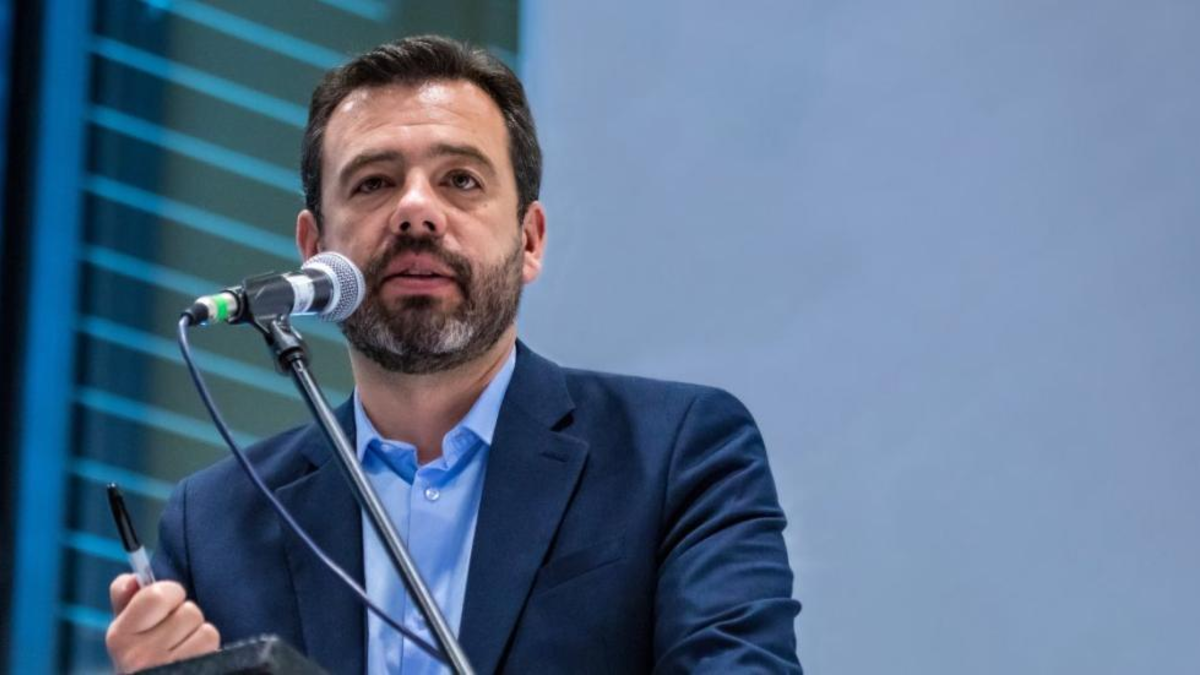
Chong casts himself as a hands-on administrator who can ease Seoul’s living pressures Chong Won-o, the Democratic Party of Korea candidate in the Seoul mayor election, speaks during his campaign in Seoul on Tuesday. (Yonhap) Chong Won-o of the ruling Democratic Party of Korea was projected Wednesday to unseat four-term Seoul Mayor Oh Se-hoon, putting the capital on course for its first liberal mayor in six years.The ruling party was projected to score a nationwide victory over the PPP in local elections, but victory in Seoul, the country's most politically important local administration, would be a symbolic win for President Lee Jae Myung's party.Chong led Oh of the main opposition People Power Party 51.4 percent to 46 percent in a joint exit poll by local broadcasters KBS, MBC and SBS.A separate poll by JTBC showed Chong with a wider lead, at 53.5 percent against Oh’s 42.9 percent.Chong polled ahead of the conservative Oh throughout the campaign, although some recent polls had indicated that the gap was narrowing.If Chong’s win is confirmed, the 57-year-old is set to begin his term as Seoul mayor on July 1. He built much of his political profile as mayor of Seongdong-gu, an eastern Seoul district that includes Seongsu-dong, a role he left on March 4 to enter the mayoral race.Chong emerged as a serious contender after Lee publicly praised him in December as a capable administrator, a comment that helped lift the longtime district chief into the spotlight ahead of the local elections.Convenience and reduced cost of livingChong's campaign focused heavily on the everyday pressures facing Seoul residents, from long commutes and high transport costs to childcare, jobs and housing.At the center of his five main pledges, announced last month, was a “30-minute commute” plan aimed at improving rail links across northern and southern Seoul.The pledge reflects one of the capital’s long-running challenges. While Seoul has one of the world’s most extensive public transport systems, access remains uneven between older neighborhoods, newly developed districts and areas outside the city’s traditional business centers.Chong promised to build a better-integrated network between subways and buses, construct an expressway in western Seoul and link the city’s Climate Card with the central government’s K-Pass program.The Climate Card offers unlimited public transportation for a fixed monthly fee, while K-Pass provides transport refunds for frequent users nationwide.“Seoul’s transportation network is blocked, disconnected and unbalanced. I will connect railways and roads in every corner of the city to reduce the burden on citizens and make everyday life more convenient,” he said when announcing the pledge.His economic pledges include efforts to redraw Seoul’s growth map beyond its familiar centers of Gangnam, Yeouido and Jongno.Chong proposed developing six areas into industry-specific hubs, including Yongsan for international business and Magok for biotechnology and research and development.He also pledged to foster youth culture and content industries in eastern Seoul, including Cheongnyangni and Wangsimni, and western Seoul, including Hongdae and Sinchon.The plan appears aimed at spreading jobs and investment more evenly across the capital, rather than concentrating growth in a few already dominant districts.Other major plans include creating “white zones” with minimal regulations, youth employment complexes, training and subsidies for young entrepreneurs, and childcare support for working parents. He also promised to expand job centers for middle-aged and senior citizens. Seoul mayoral candidates pose ahead of a televised debate at the SBS Prism Tower in Seoul last Thursday. From right: Chong Won-o of the Democratic Party of Korea, Kim Jeong-cheol of the Reform Party, Kwon Young-gook of the Democratic Labor Party, and Oh Se-hoon of the People Power Party. (Yonhap) Housing supplyHousing is expected to be one of the defining issues of Chong’s mayoralty, even though it was not included among his five signature pledges.Seoul’s housing market remains one of the most politically sensitive issues in South Korea. Home prices in the capital have long shaped voter sentiment, especially among young people, newlyweds and middle-income households, who say they are increasingly priced out of the city.Chong unveiled a separate housing plan last month, pledging to supply 360,000 new homes by 2031.The target exceeds Oh’s plan in scale and is likely to become a key policy agenda for the Seoul Metropolitan Government over the next four years.He promised to begin building at least 300,000 homes through the private and public sectors, while providing 50,000 more homes through the city’s existing public housing purchase program.Under the program, the city buys newly built residential units and offers them to residents at below-market prices.While both Chong and Oh focused heavily on housing prices during the campaign, they differed in their diagnosis of the problem.Oh criticized the central government and called for easing regulations, while Chong argued for a stronger role for City Hall and closer coordination with the Lee Jae Myung administration.Chong said the Lee administration’s real estate policy, including tighter rules on speculative investment, was necessary to protect “actual residents.”He vowed to work with the central government to curb speculative home purchases, while lowering interest rates on housing loans for young people and newlyweds.At the same time, Chong sought to soften concerns over the side effects of tougher real estate policy. He said he would push for temporary tax reductions for older owners of single homes who have no income, to protect them from the impact of higher property taxes.Chong said that while there may be “shadows” in the government’s policy, he would coordinate with the administration as mayor to supplement it. THe Democratic Party of Korea's Seoul mayoral candidate cheers in front of his supporters during his campaign in Seoul on Tuesday. (Yonhap) Partnership with LeeChong has made cooperation with President Lee Jae Myung’s administration a central theme of his campaign, arguing that closer coordination between City Hall and the central government would help Seoul tackle challenges ranging from housing and transportation to economic development.Throughout the race, Chong emphasized that political alignment with the president would allow the city to move major projects forward more efficiently and reduce friction between local and national authorities.“There is a connection between good workers, who know what the other person is thinking just by sharing a glance. I will work with President Lee to resolve real estate issues, along with tasks related to transportation and the economy,” he said Tuesday, a day before the election.As a member of the president’s Democratic Party, Chong is expected to enjoy a more cooperative relationship with the Lee administration than his predecessor, Oh Se-hoon, who frequently clashed with the central government on issues including housing policy and regulation.“I wish to support the Lee administration’s success in Seoul. I want to work and protect the lives of Seoul citizens,” Chong said in a Facebook post Wednesday.
Chong Won-o projected to win Seoul mayoral race: exit poll
Chong Won-o of the ruling Democratic Party of Korea was projected Wednesday to unseat four-term Seoul Mayor Oh Se-hoon, putting the capital on course for its fi
1,108 words~5 min read