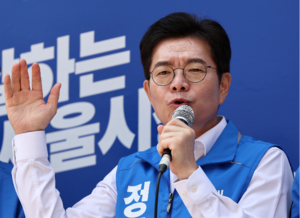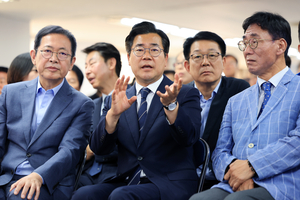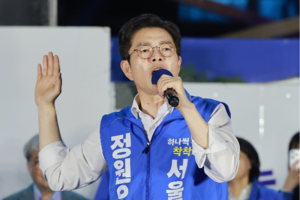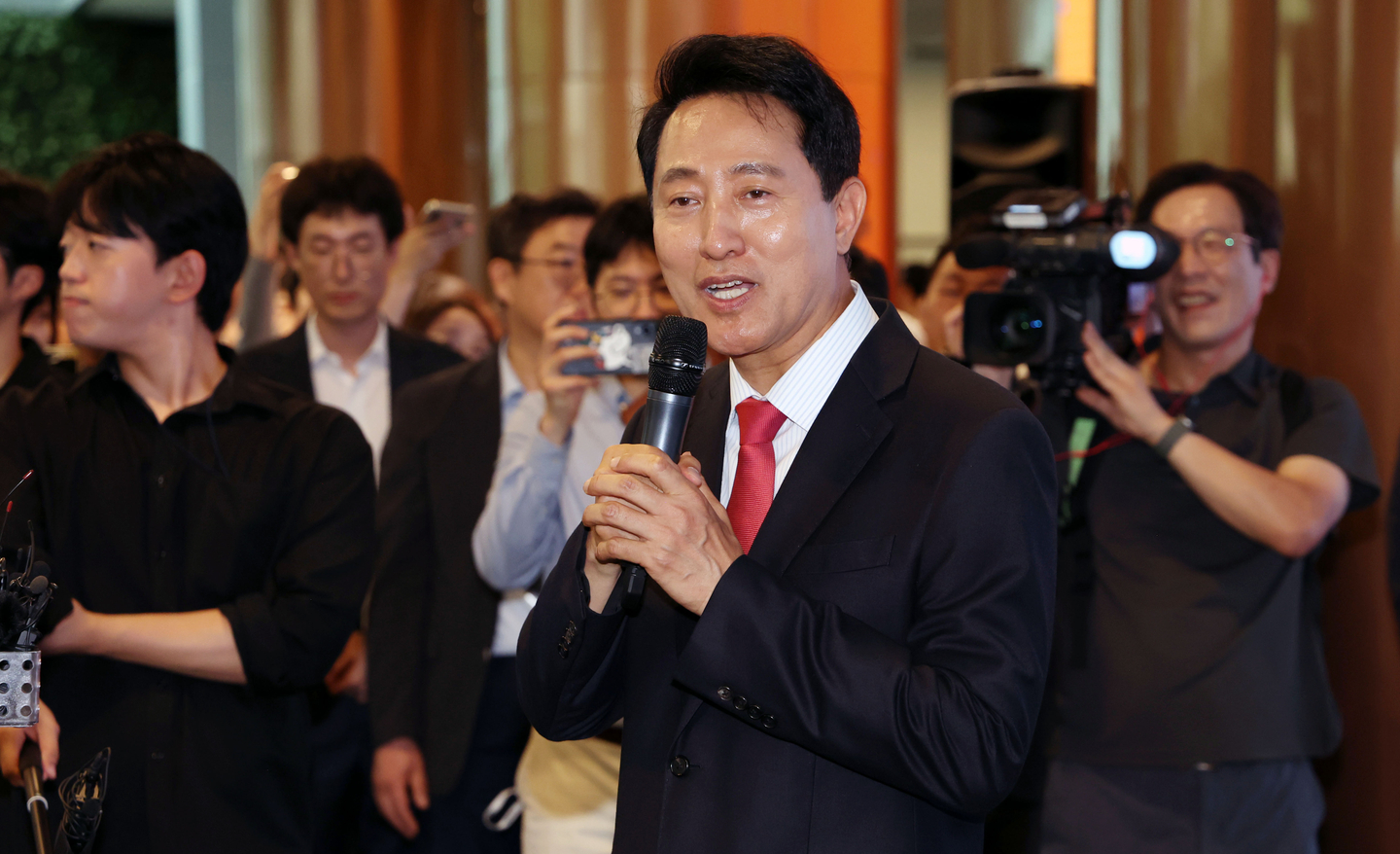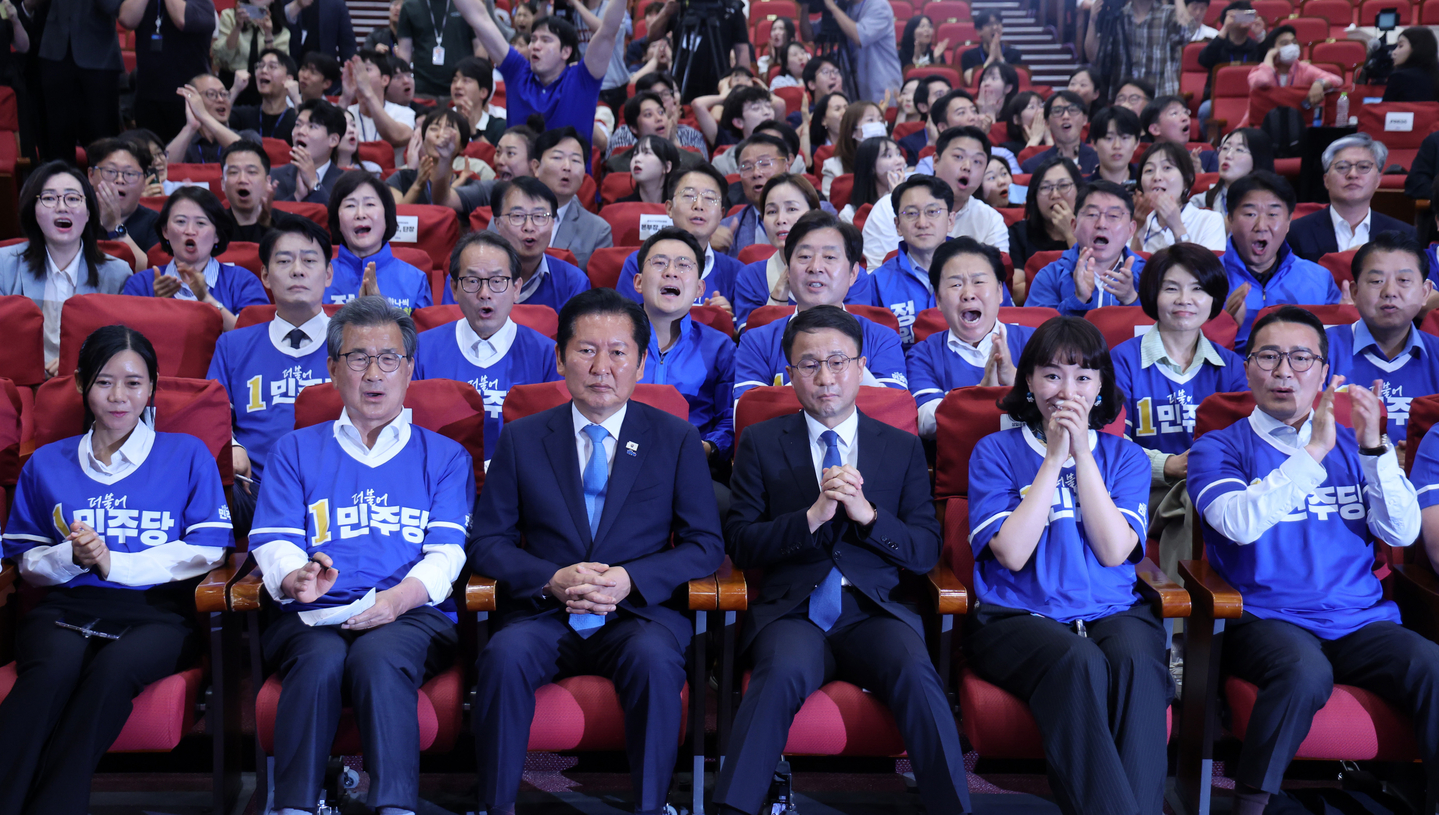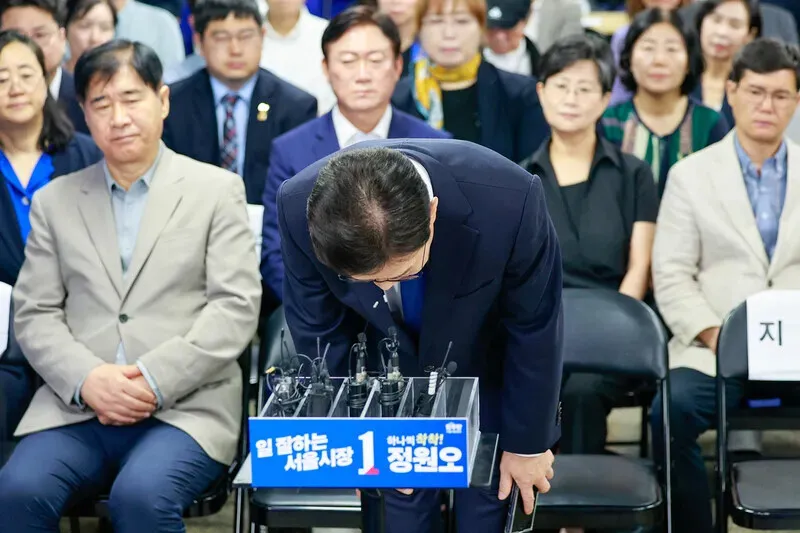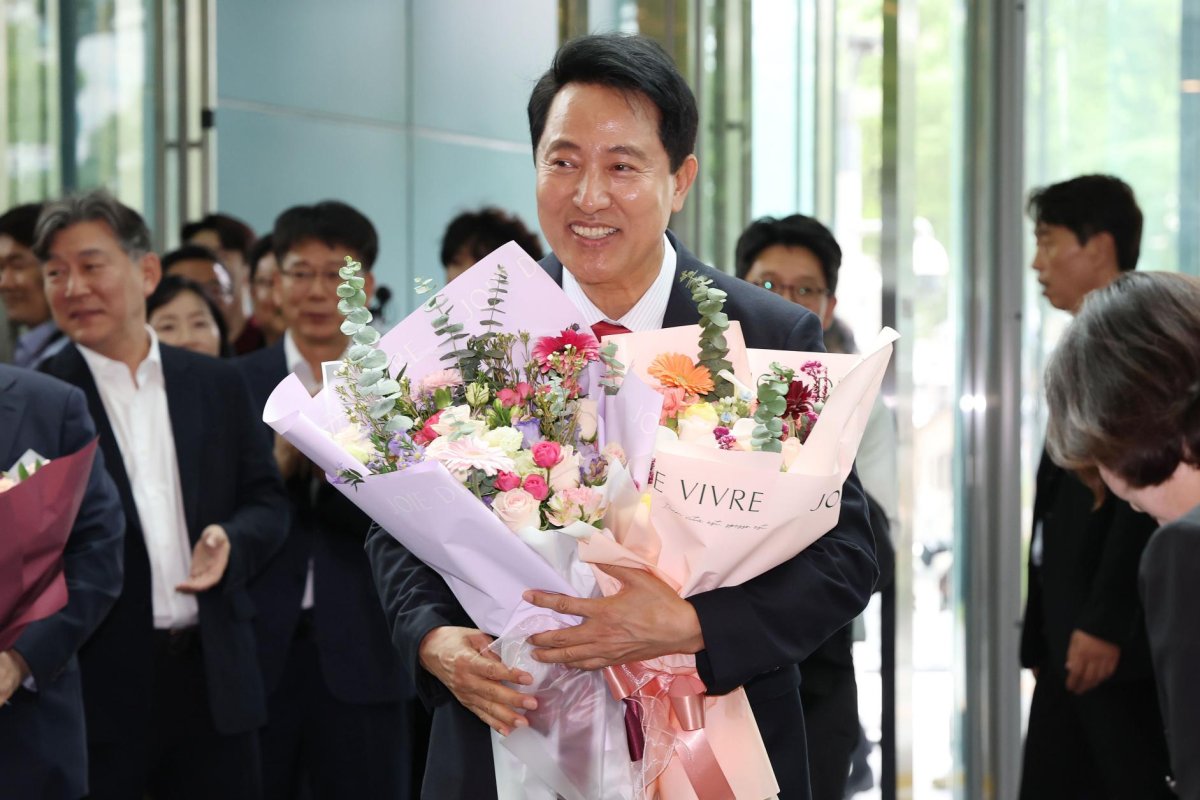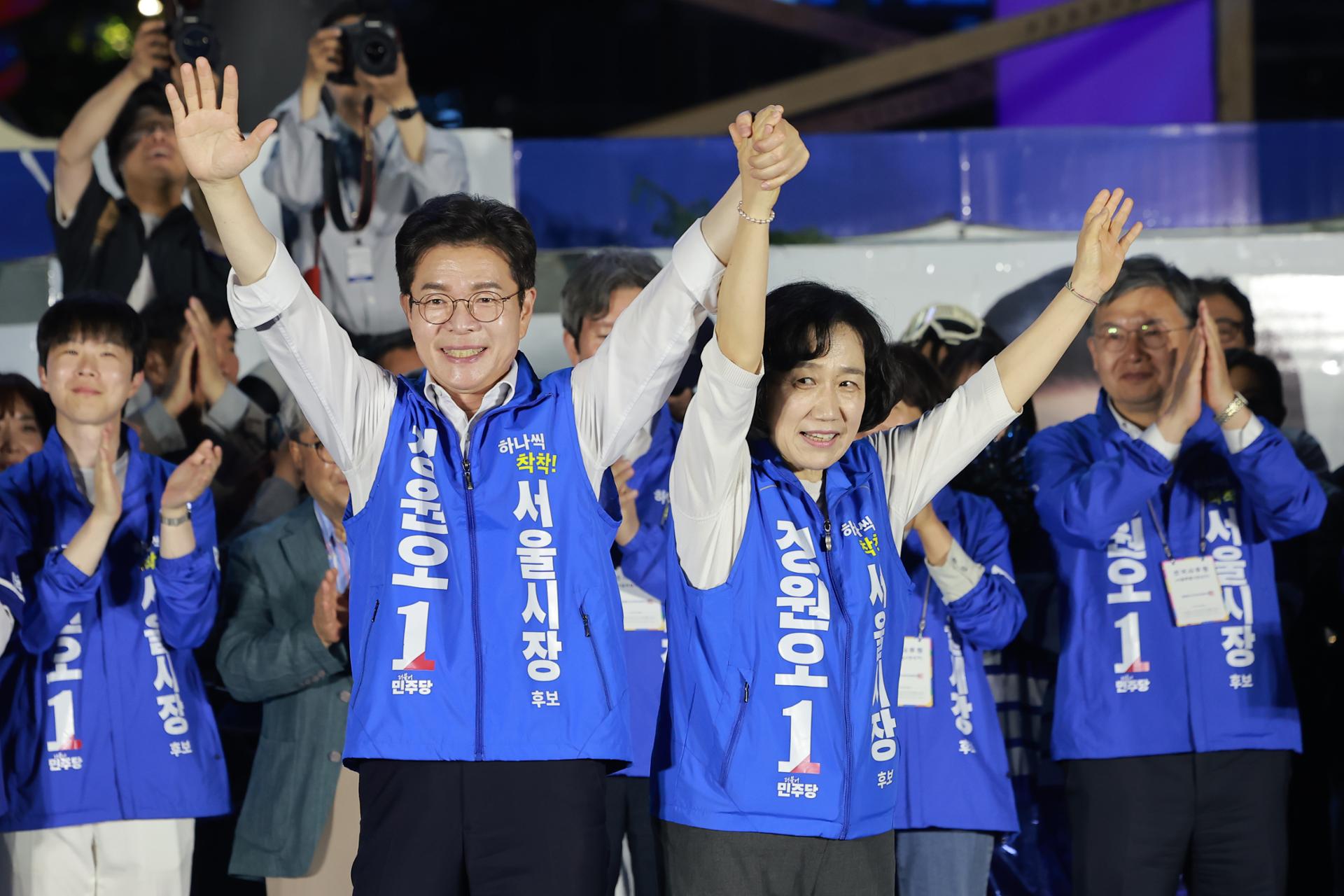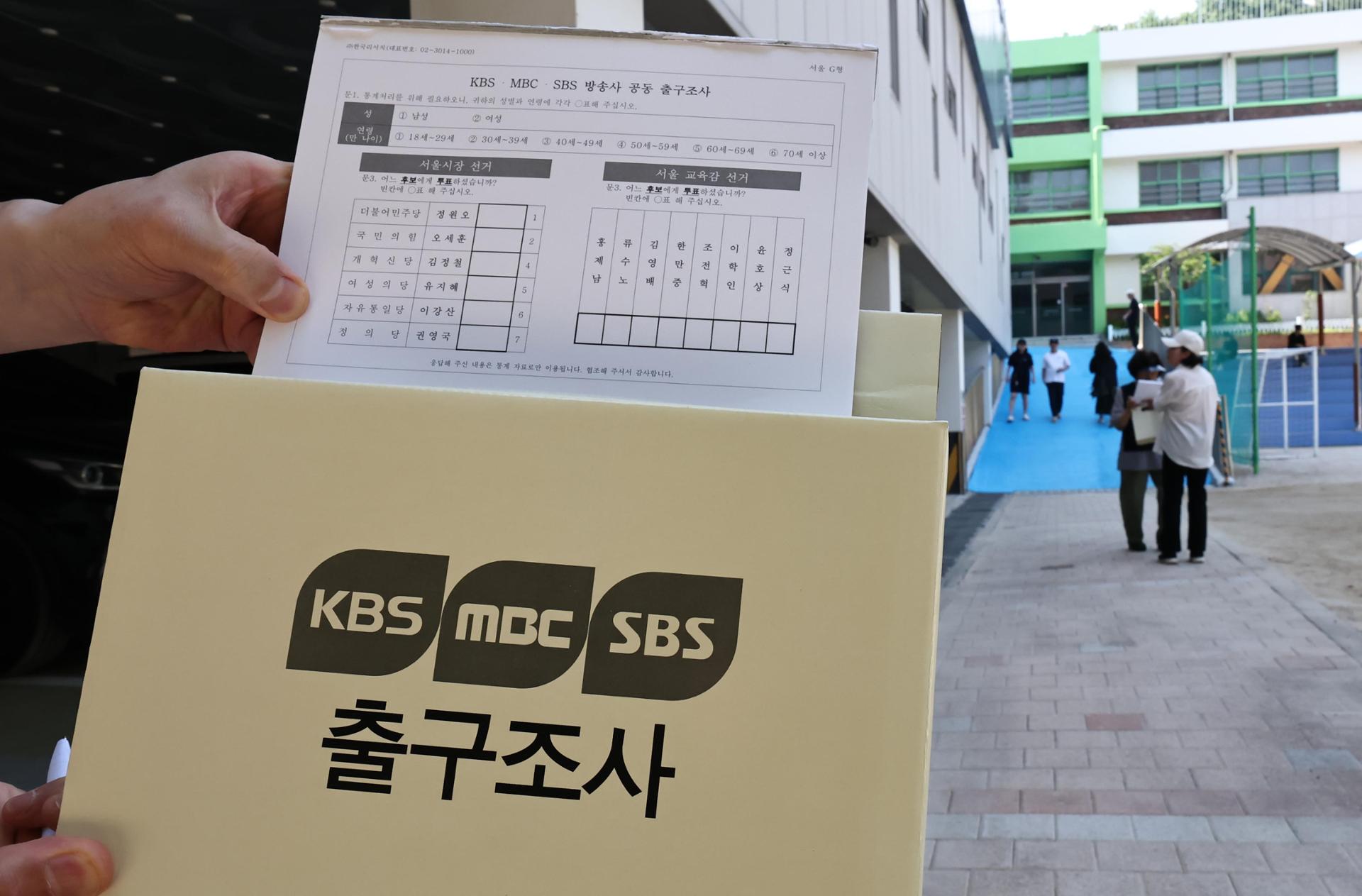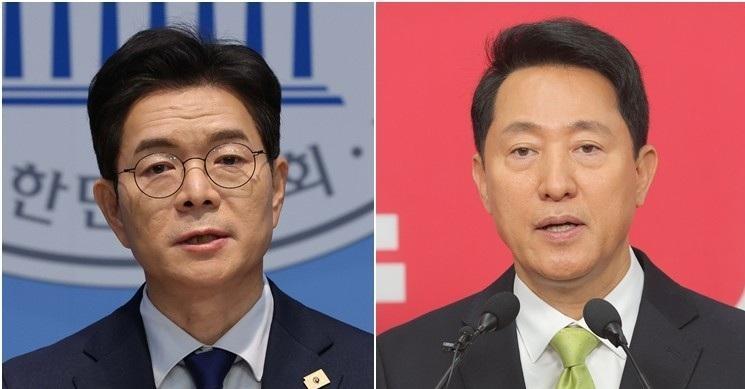
Chong Won-o, right, Seoul mayoral candidate for the ruling Democratic Party of Korea, shakes hands with a reporter at his election camp in central Seoul, Wednesday, hours before exit poll results were released. Korea Times photo by Choi Joo-yeon The ruling Democratic Party of Korea (DPK) is leading in the Seoul mayoral race in the June 3 local elections, according to exit polls, but faces too-close-to-call contests in Busan and Daegu against candidates of the main opposition People Power Party (PPP). A sweep of all three cities would deliver a commanding mandate for the Lee Jae Myung administration, though the tight margins in Busan and Daegu mean the final outcomes could still go either way. For the Seoul mayoral race, Chong Won-o, a three-term Seongdong District head and DPK candidate, led the exit poll and is largely expected to be elected to lead the capital city with 51.4 percent of the vote, while incumbent Seoul Mayor Oh Se-hoon, who was seeking reelection with the PPP, is predicted to gain approximately 46 percent of the vote. Meanwhile, JTBC's forecast placed Chong further ahead at 53.5 percent to Oh's 42.9 percent.The exit poll was conducted by the Korea Election Pool, a joint forecasting committee formed by broadcasters KBS, SBS and MBC. The consortium surveyed voters at 615 polling stations nationwide and conducted a telephone poll of some 108,000 voters. Cable network JTBC has deployed artificial intelligence (AI)-powered election result forecasting. The joint poll showed the margin of error of 1.7 to 4.1 percentage points with a 95 percent confidence level.The projected victory marks another milestone for Chong, elevating his political stature from Seoul district chief to mayor. Chong won three consecutive elections in 2014, 2018 and 2022 to serve as head of Seongdong District and emerged as a leading Seoul mayoral contender after the president publicly praised his administrative performance.During his campaign, Chong pledged to expand housing and ease construction rules so that more people can find homes in Seoul. He also promised to expand public transportation, particularly subways, to enable shorter commuting times and boost the AI ecosystem by hosting the Global AI Hub and designating AI special zones.The Seoul mayoral race was widely seen as a barometer of public sentiment toward the current administration. The position is the only ministerial-level post among metropolitan mayors and governors and is often regarded as a springboard for presidential ambitions — former President Lee Myung-bak served as Seoul mayor before winning the presidency. The post has also historically served as a counterbalance to the sitting administration. Park Heong-joon, center, Busan mayoral candidate for the main opposition People Power Party, smiles while watching the exit poll results on television at his election camp in the southern port city of Busan, Wednesday. YonhapFor the Busan mayoral race, the exit poll shows Chun Jae-soo, former oceans minister and DPK lawmaker, with a slight lead in the polls at 50.2 percent, beating Park Heong-joon, the incumbent Busan mayor and candidate of the PPP, who gained 48.3 percent.JTBC's prediction showed Chun is winning the race, gaining 53.9 percent of the vote, beating Park's 44.4 percent.Busan, Korea's second-largest metropolitan city, has long served as a conservative stronghold, with PPP members holding most mayoral and parliamentary seats. A PPP defeat there would likely undermine the party leadership of Rep. Jang Dong-hyeok. Kim Boo-kyum, center, Daegu mayoral candidate for the ruling Democratic Party of Korea, cheers after watching the exit poll results at his election campaign camp in Daegu, Wednesday. YonhapChoo Kyung-ho, center, Daegu mayoral candidate for the main opposition People Power Party, smiles while watching the exit poll results on television at his election camp in Daegu, Wednesday. YonhapFor the Daegu race, Choo Kyung-ho, former acting prime minister, lawmaker and PPP candidate, is slightly leading the poll at 49.9 percent of the vote, showing a neck-and-neck contest with Kim Boo-kyum, former prime minister and DPK candidate, who gained 49.1 percent. However, JTBC's prediction showed that Kim is leading the poll at 49.7 percent against Choo with 49.2 percent.In the beginning of the June 3 local election campaigns, the Daegu mayoral race appeared to favor DPK’s Kim, as the PPP was mired in an internal feud over candidate selection.However, the race dramatically changed when former President Park Geun-hye, a symbolic figure in conservative circles who succeeded the political legacy of her late father President Park Chung-hee and was later impeached, joined the campaign trail to endorse Choo, triggering a sudden spike in polling numbers in favor of the PPP candidate.The city, one of the most conservative in the country, has not elected a single liberal candidate to the mayoral post since 1995. Even when negative headlines battered the conservative bloc nationwide, voters in Daegu consistently demonstrated their loyalty by casting ballots for conservative candidates.Winning over this electorate represented a highly symbolic objective for the DPK. So when Kim defied the odds to win a Daegu legislative seat in 2016, it was hailed as a historic milestone for the liberal bloc.Further details are available on the website of the National Election Survey Deliberation Commission.
Exit polls show DPK candidate leading Seoul mayoral race - The Korea Times
The ruling Democratic Party of Korea (DPK) is leading in the Seoul mayoral race in the June 3 local elections, according to exit polls, but faces t...
841 words~4 min read