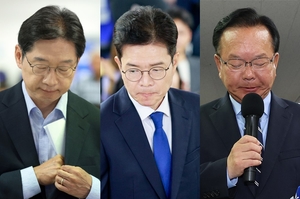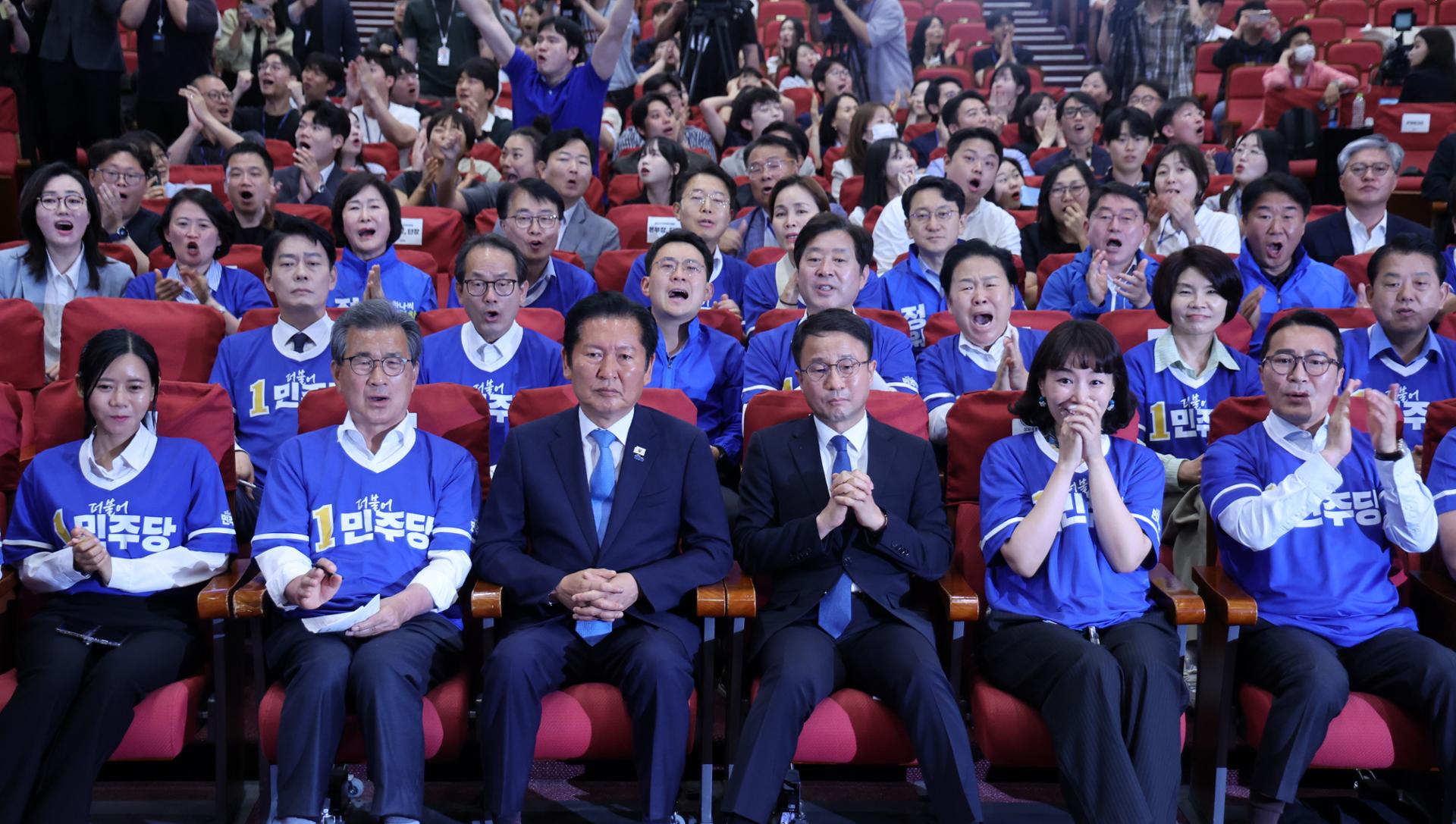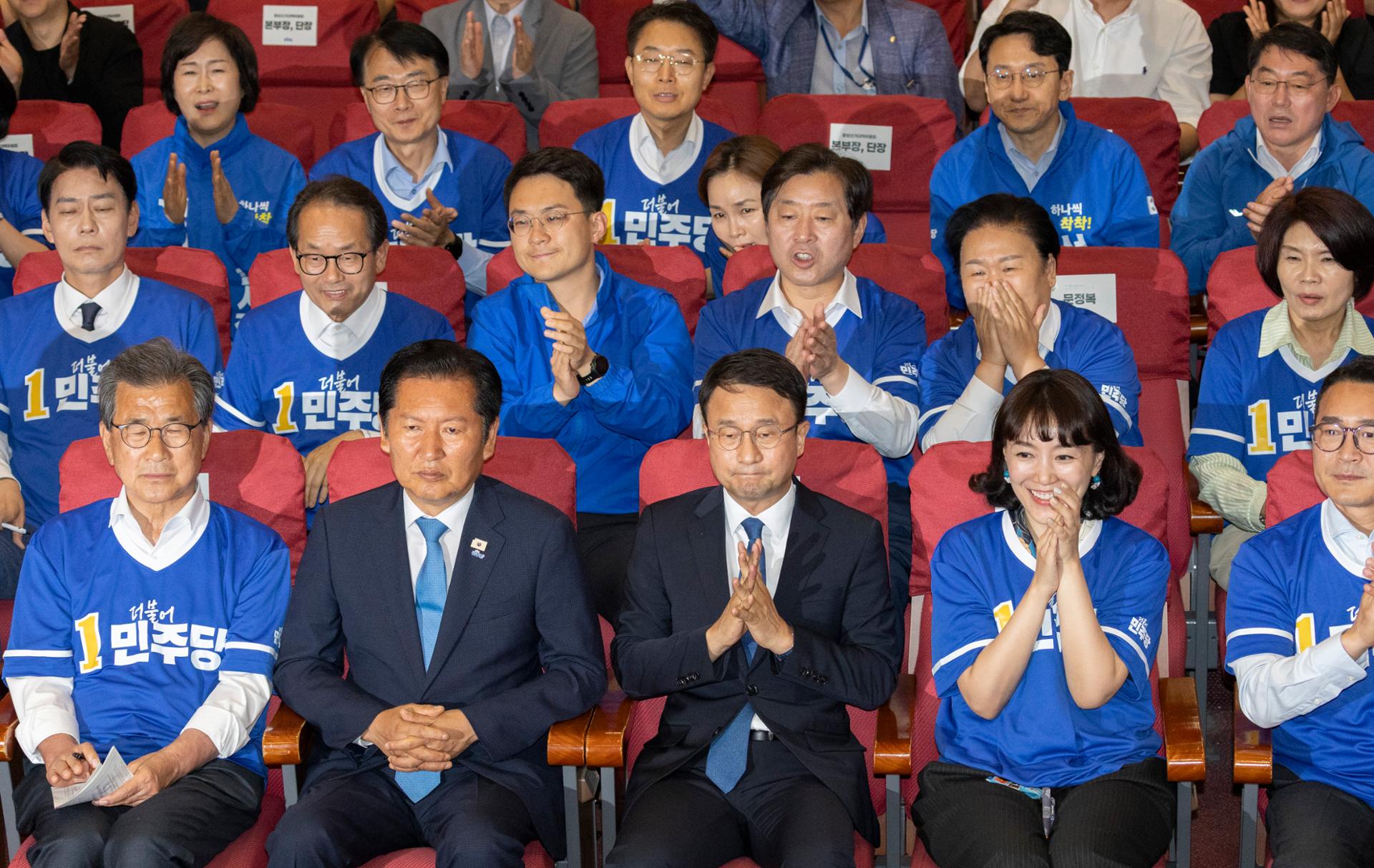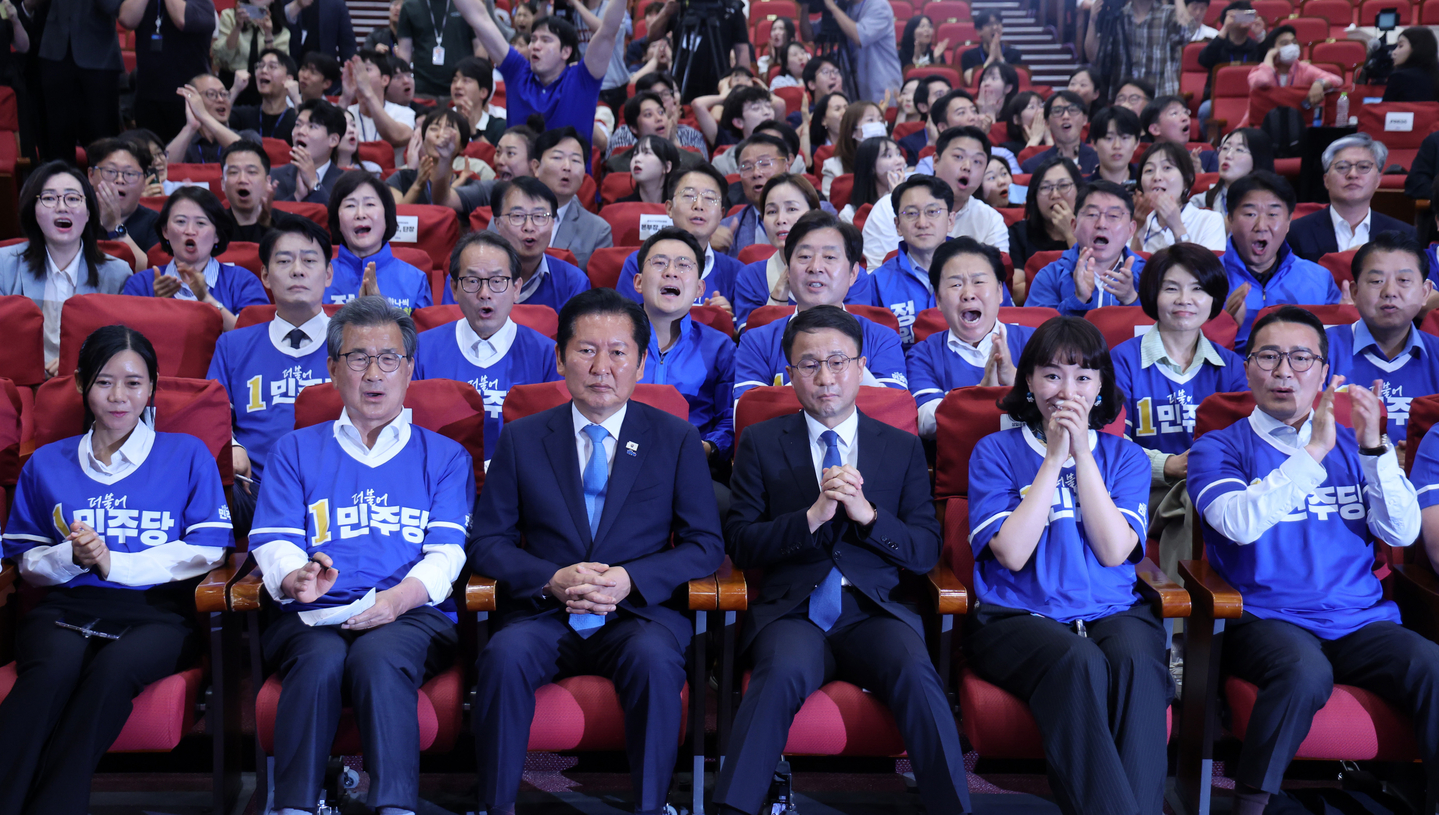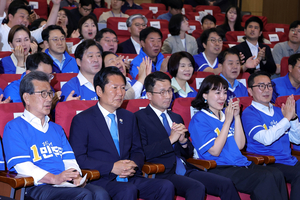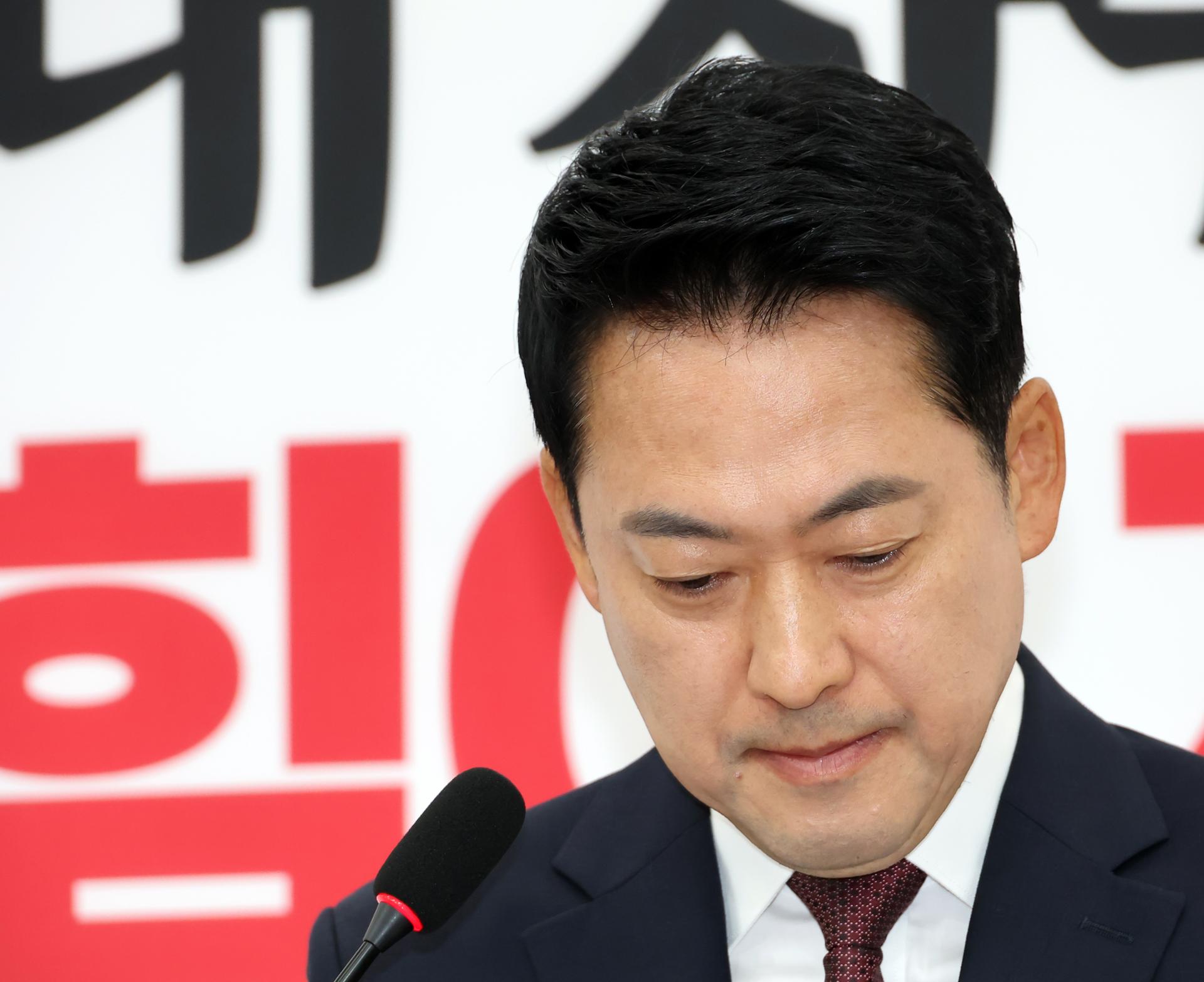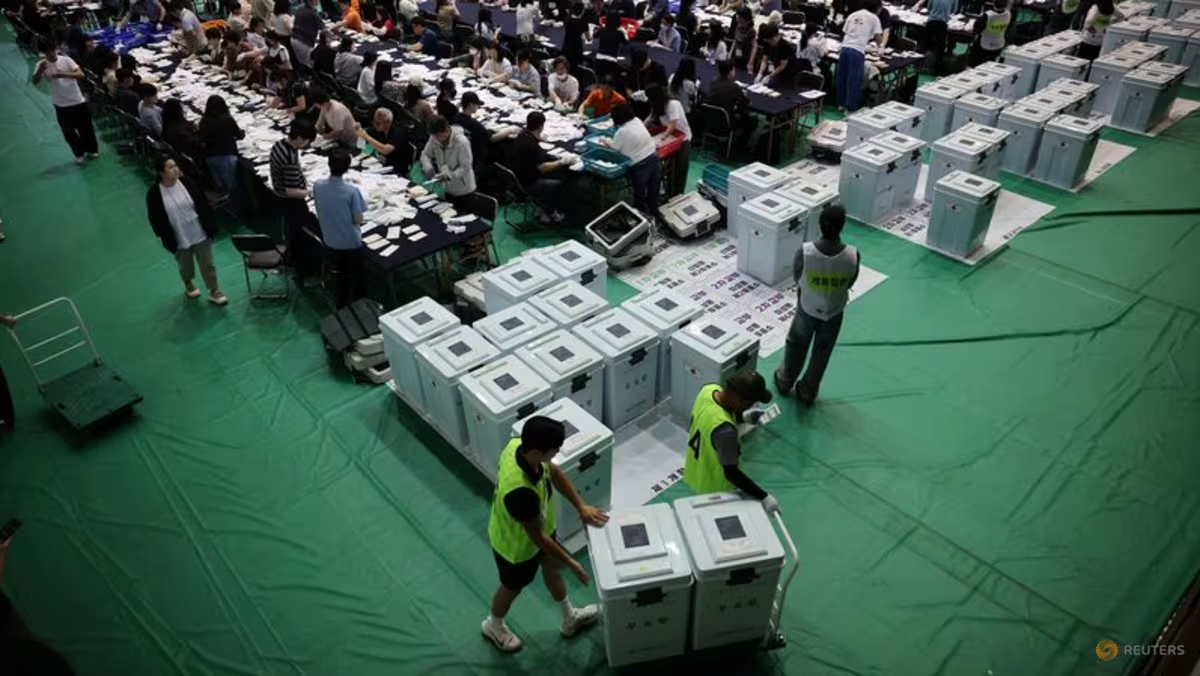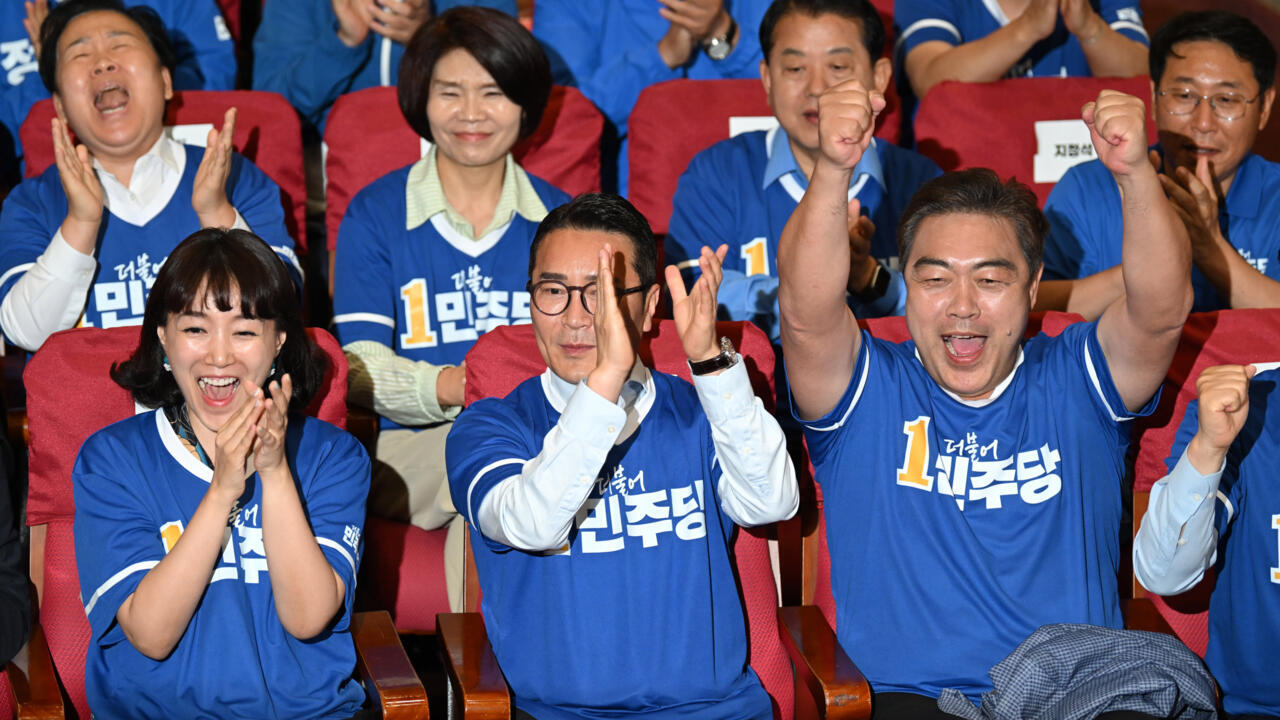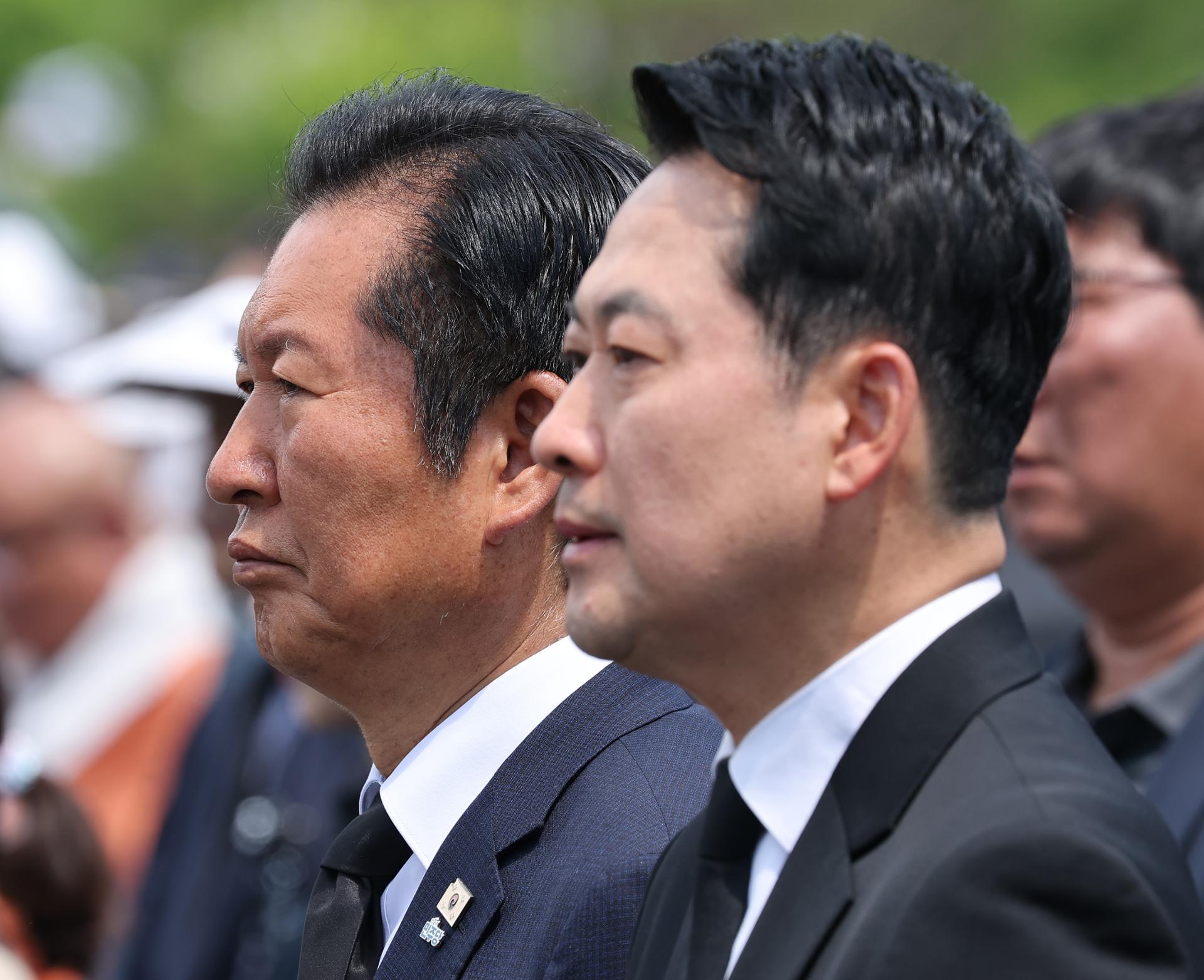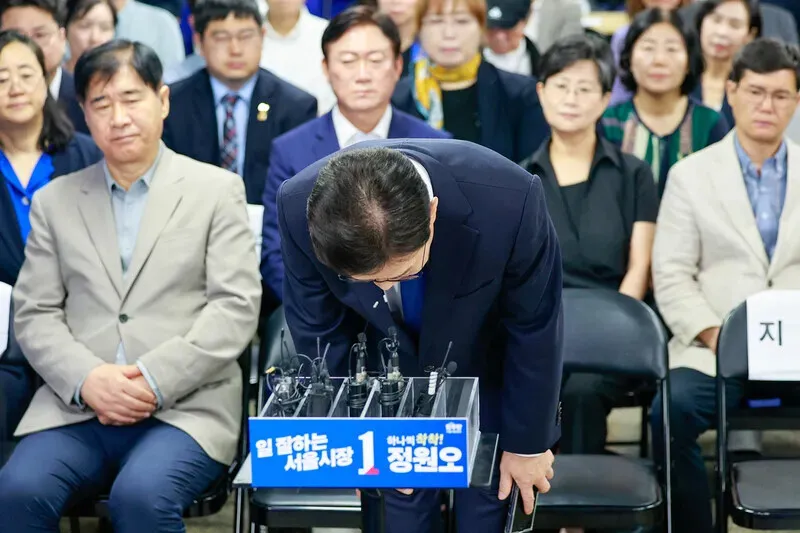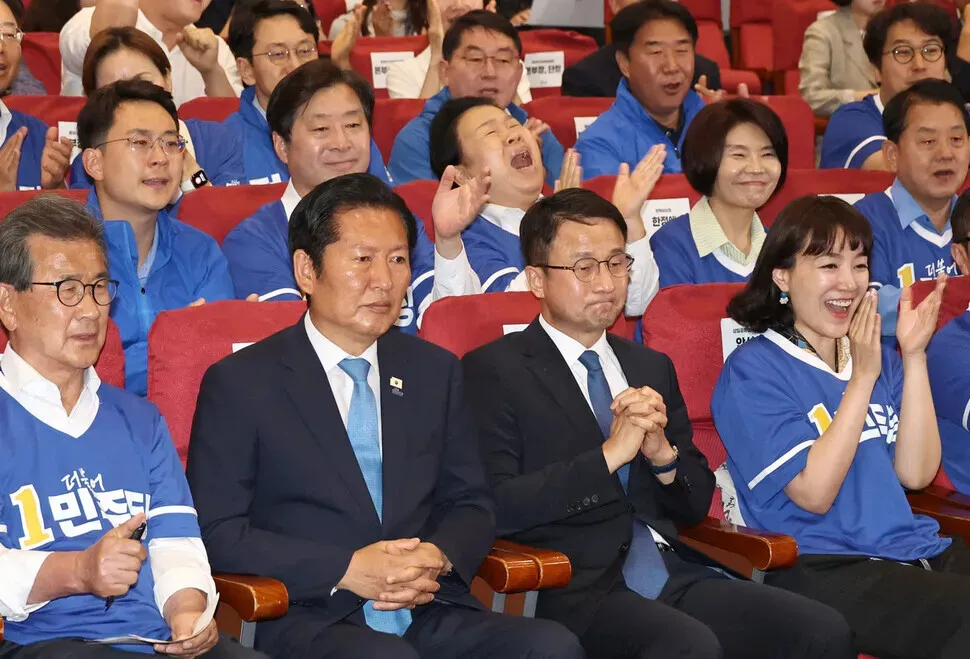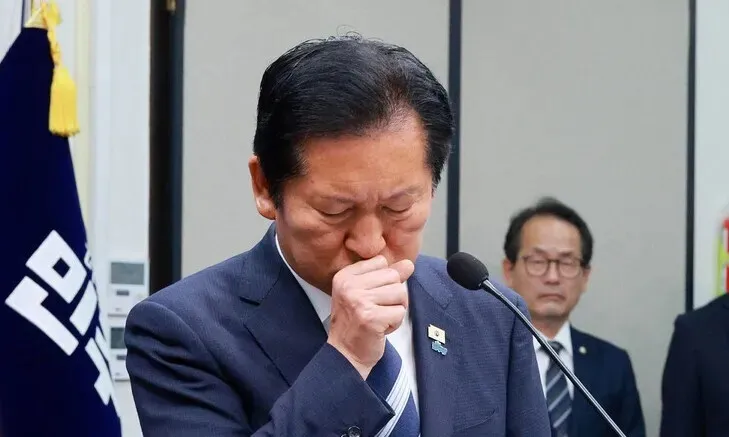
Rep. Jung Chung-rae, leader of the Democratic Party, coughs into his hand during a press conference on June 4, 2026, at the National Assembly regarding the outcomes of the previous day’s local elections. (Yoon Woon-sik/Hankyoreh)
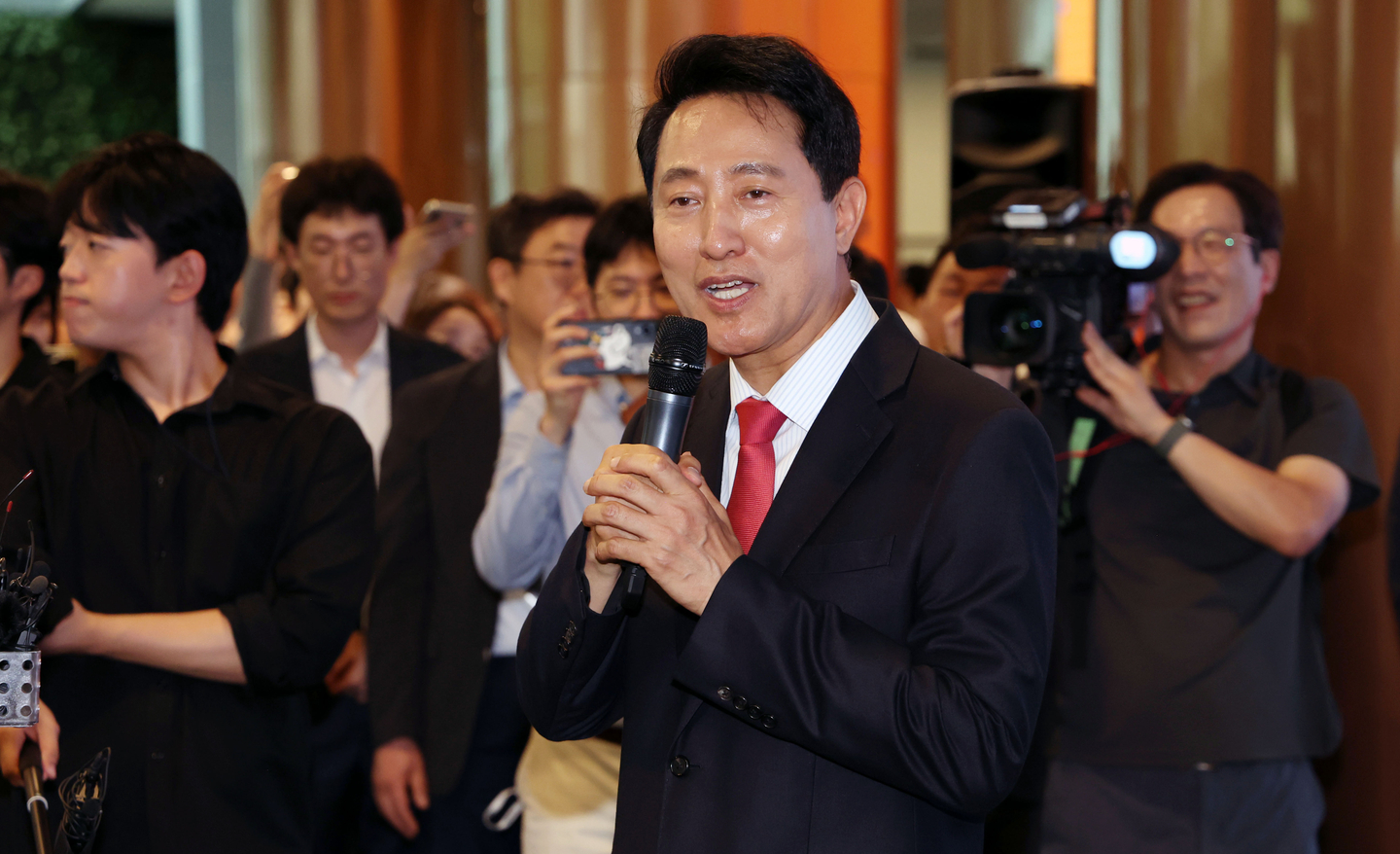
The Lee Jae Myung administration and the Democratic Party clinched a qualified victory in Wednesday’s local elections.Out of the 16 gubernatorial and mayoral races nationwide, the Democratic Party won 12, while the People Power Party claimed four. Four years ago, the PPP won 12 out of 17 races for mayorships and governorships, with the Democratic Party winning five. The Democratic Party succeeded in reclaiming mayoral positions in Incheon, Busan, Ulsan, Daejeon and Sejong, and gubernatorial positions in North and South Chungcheong provinces. In the contests for the Seoul district chief seats, the Democratic Party nabbed 17 victories while the PPP took eight — the exact opposite of the configuration in 2022. The Democratic Party’s success can be attributed to two factors, the first being Lee’s high approval rating.Wednesday’s elections took place exactly one year after Lee won the presidential race. This is a period in which the ruling party enjoys considerable political momentum.Lee has managed to keep his approval ratings steady in the 60% range since taking office by focusing on practical, centrist policies and showcasing his leadership through his characteristic micromanagement tendencies. The current bull market also certainly didn’t hurt his party at the polls on Wednesday. Second, the desire to vote against the PPP outweighed dissatisfaction with the current administration. Effectively, the Democratic Party effortlessly reaped the benefits of the PPP’s failure — or refusal — to turn over a new leaf. Since the 2024 insurrection, Koreans have watched a steady stream of investigations and trials involving Yoon Suk-yeol, his wife Kim Keon-hee, and others accused of participating in the plot.After last year’s presidential election, many conservative-leaning political commentators urged the PPP to sever all ties with Yoon and overhaul the party. However, hard-liners in the party and their supporters selected Jang Dong-hyuk as its leader, a staunch Yoon defender invested in the “Yoon Again” movement to bring back the impeached, deposed and jailed former leader. Upon taking power, Jang expelled Han Dong-hoon, who as party leader had urged members to vote to lift martial law on that fateful night, from the party and steered the party hard right. Voters in the greater Seoul area, the midlands, and the southeast balked at Jang’s approach. Seoul Mayor Oh Se-hoon is one of the few conservative politicians remaining in the PPP who can still see reason. His reelection victory on Wednesday proves that his choice to distance himself from Jang and his far-right beliefs was the right one. But despite all that the Democrats had going for them in the lead-up to the local elections, it was the president and party leader Jung Chung-rae who prevented a blue wave on Wednesday. Early on, the Democrats appeared confident — so much so that they believed that they could win every race for head of local government, save for the traditionally conservative North Gyeongsang Province. In politics, overconfidence is a slippery slope to cockiness, and cockiness is something that voters never fail to notice. Early expectations that the Democratic Party would easily clinch a landslide on June 3 began to falter after party lawmakers introduced a special counsel bill that was effectively aimed at getting a series of indictments against Lee, many of which arose during Yoon’s term in office, dropped. After getting wind of possible backlash, the president attempted to contain the fallout by saying that the Democratic Party “should accept input from the public and, after a deliberation process, make a decision on when exactly the bill will be pursued and relevant procedures.”