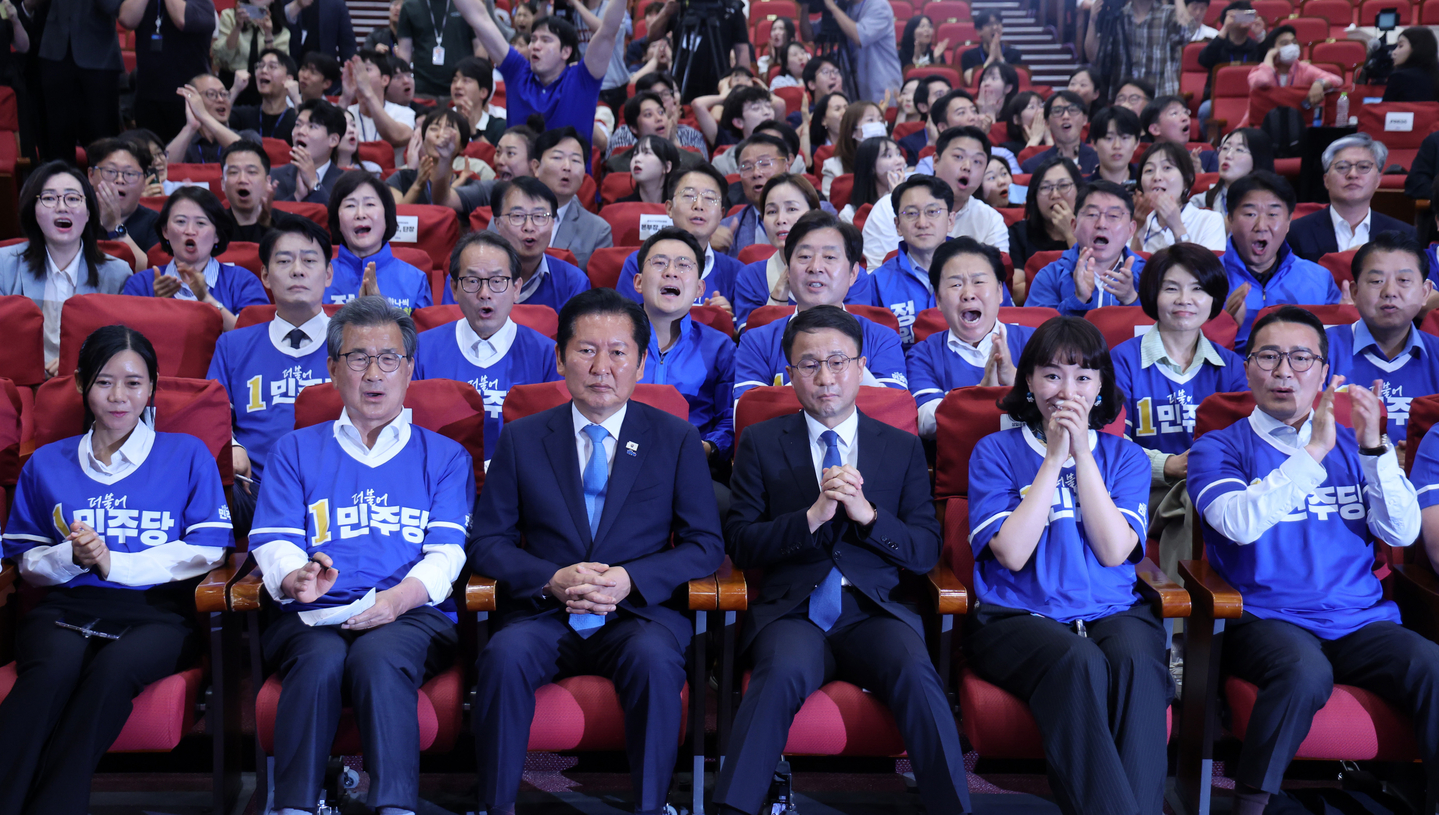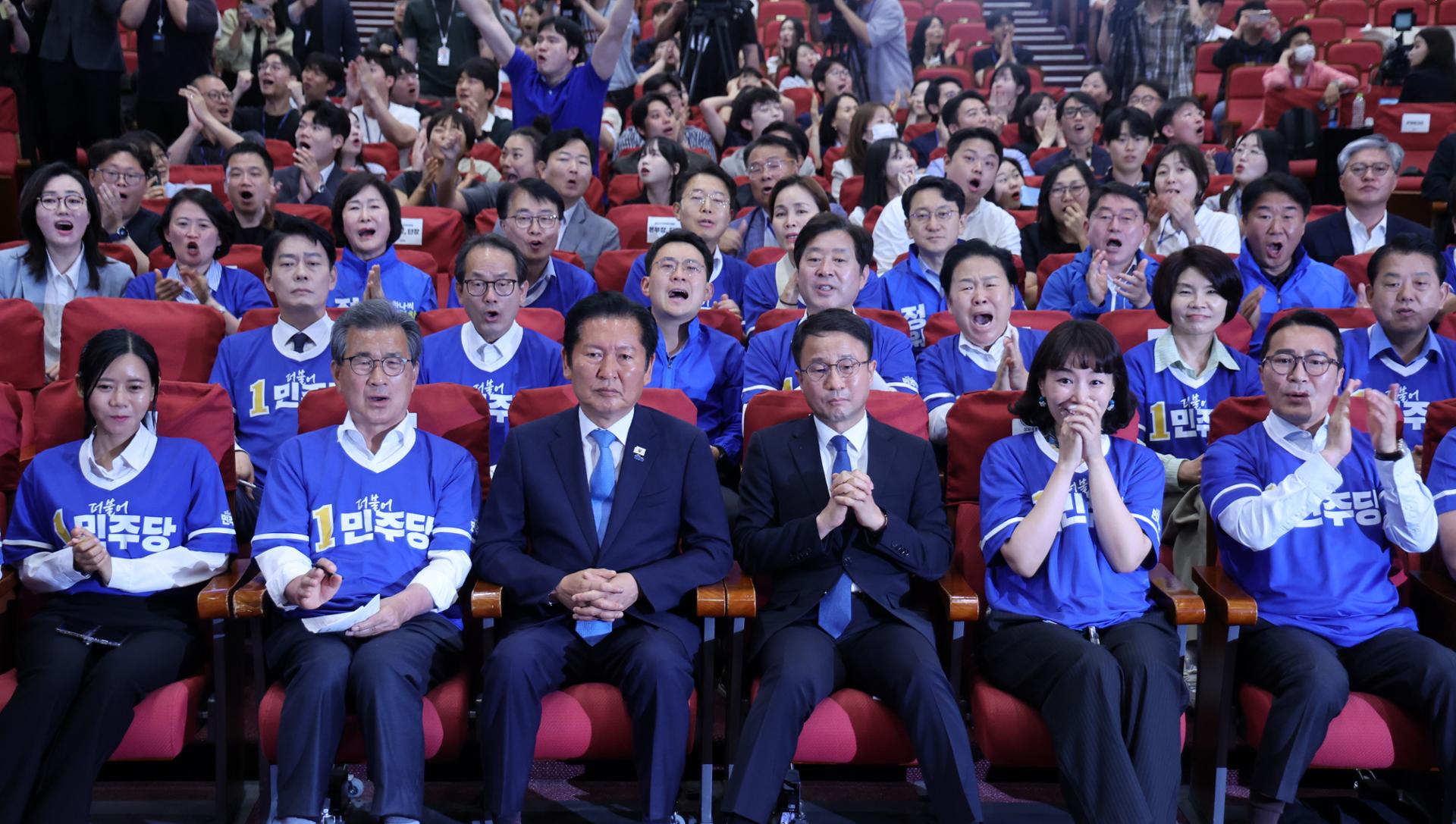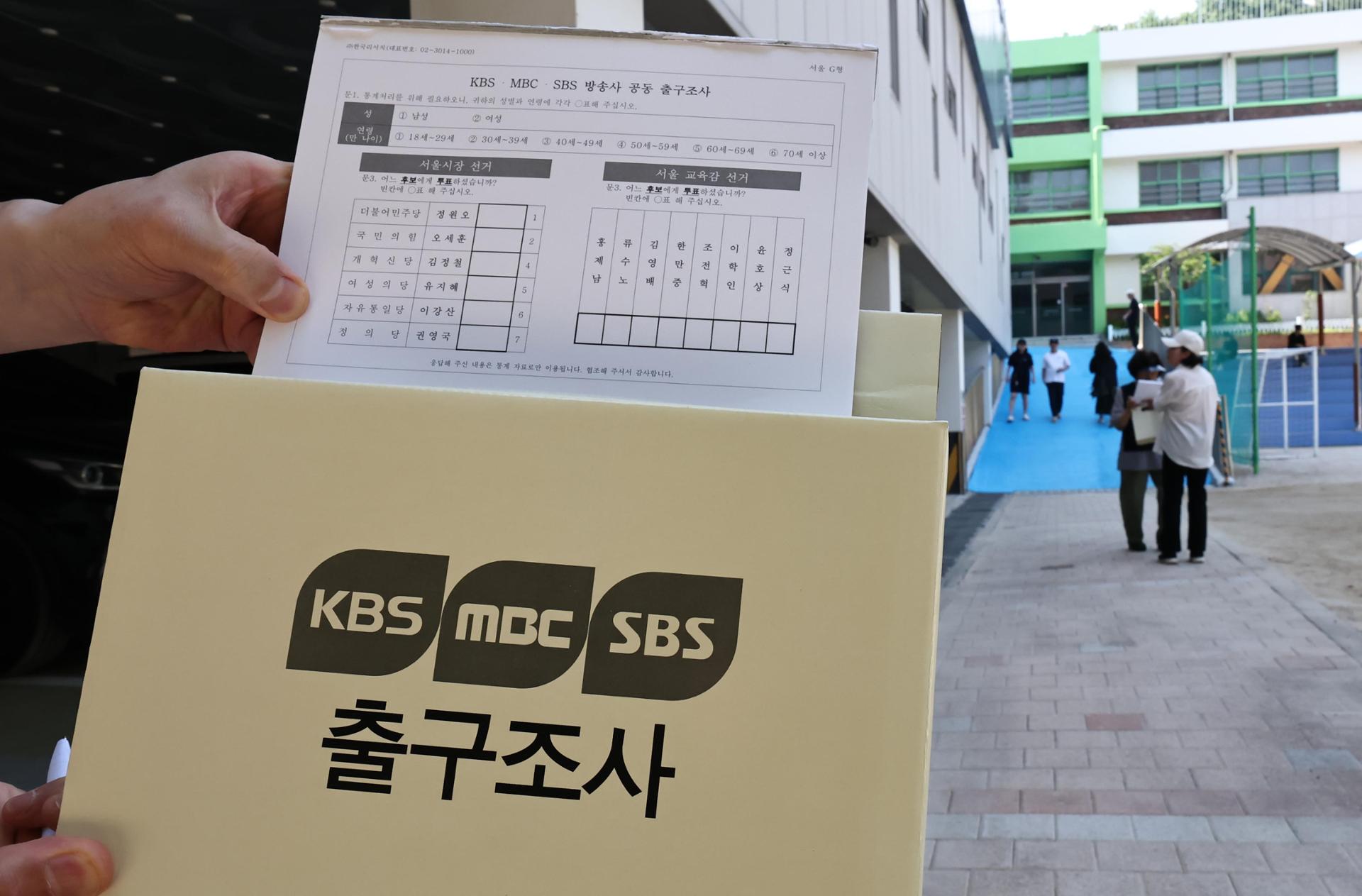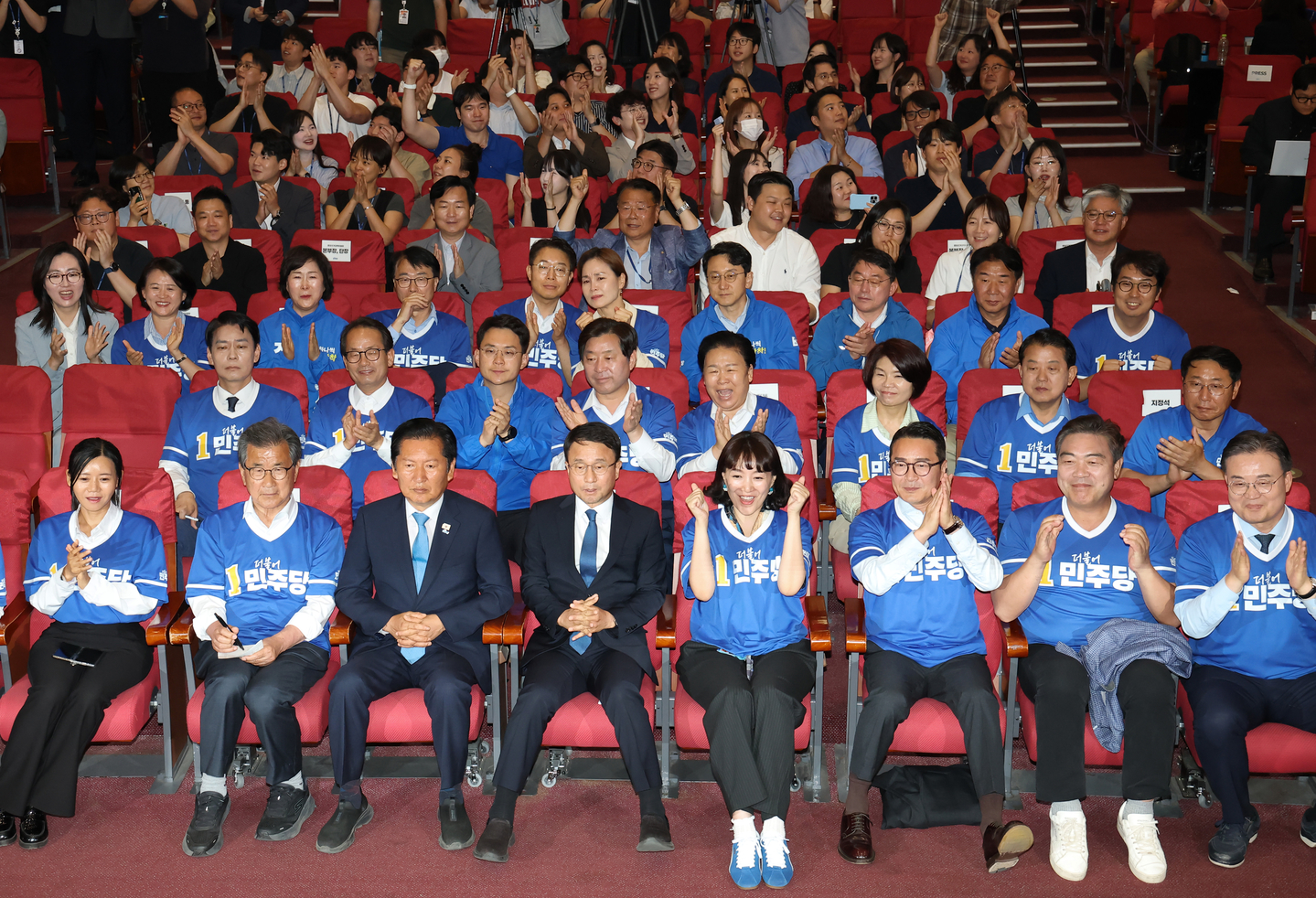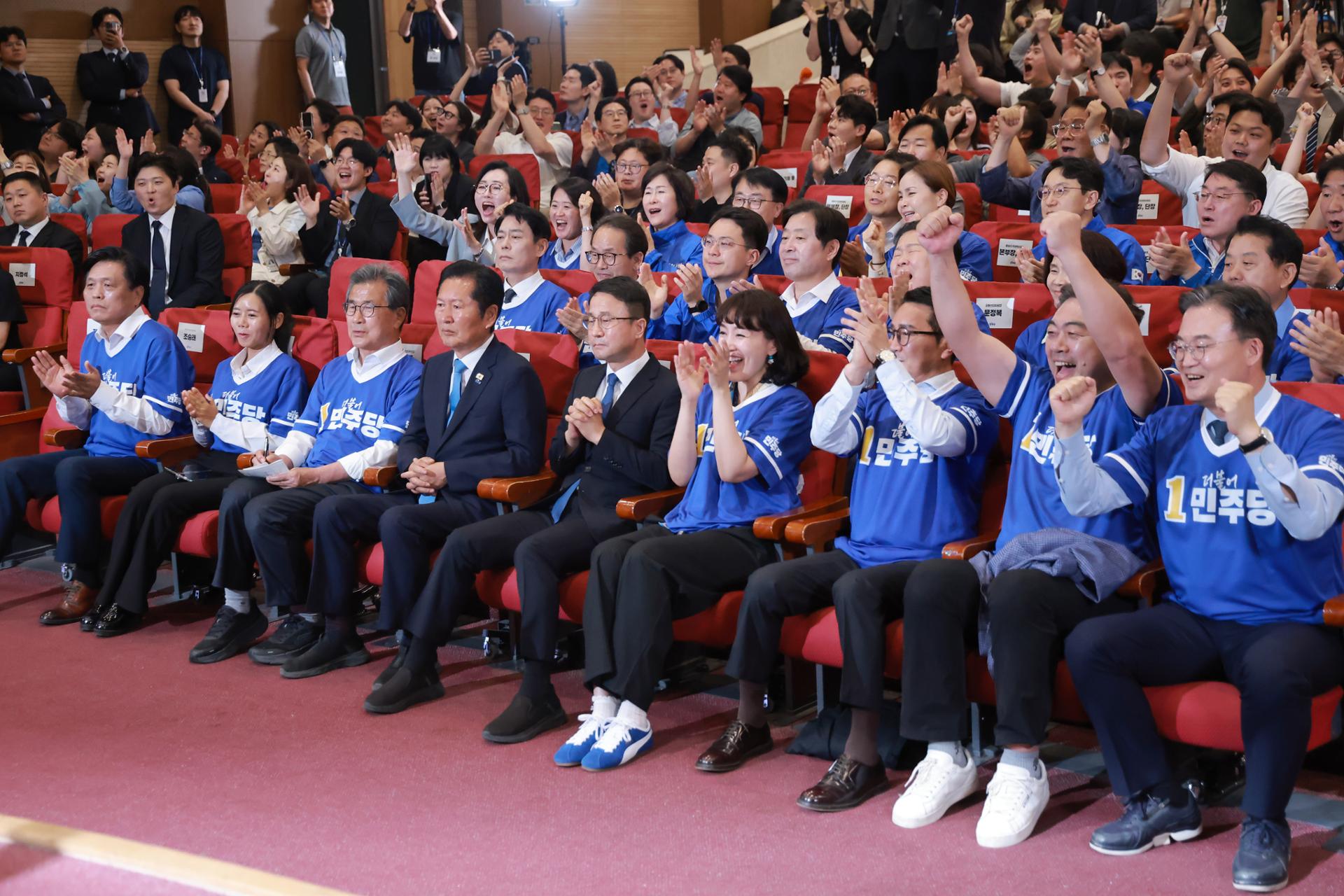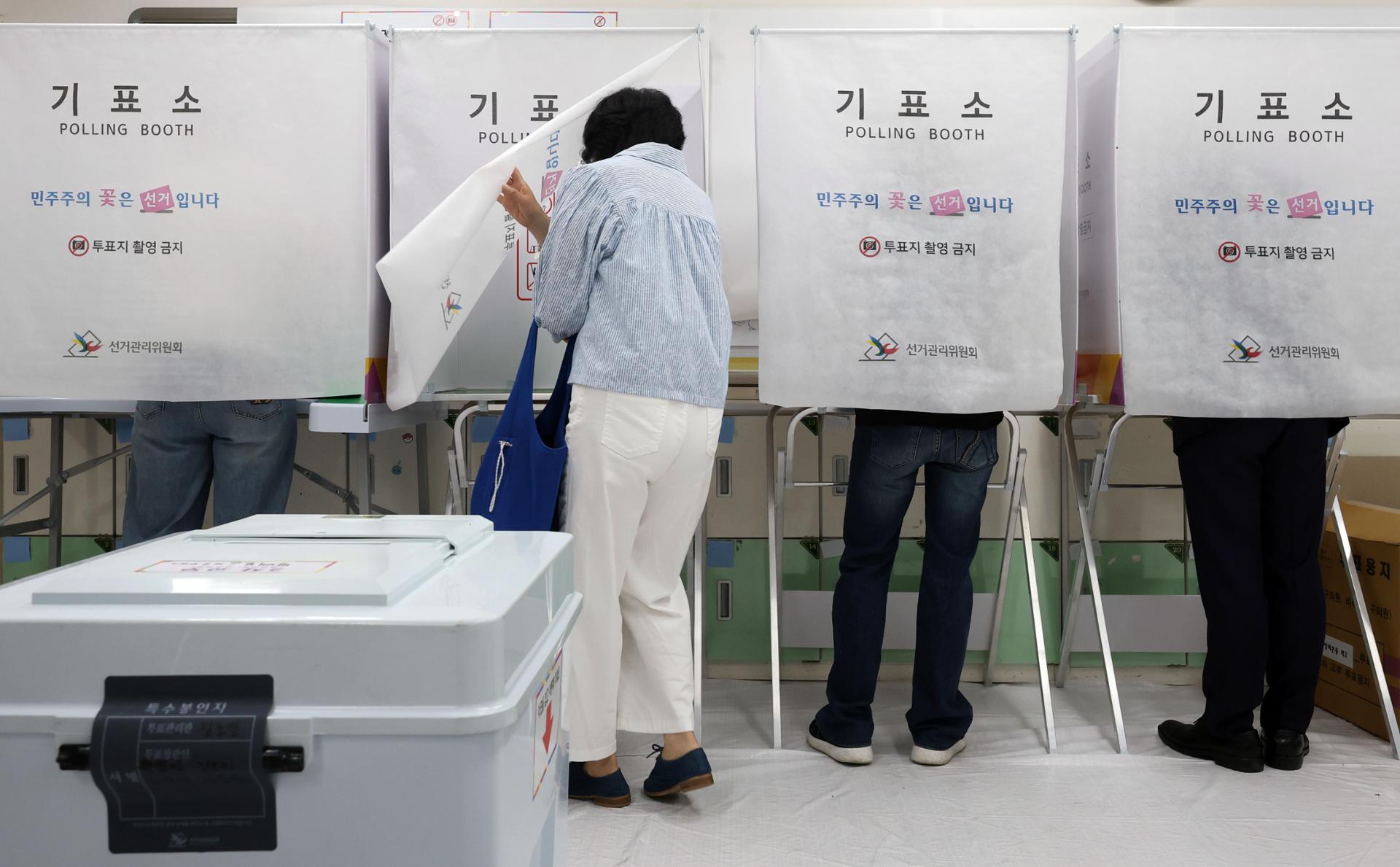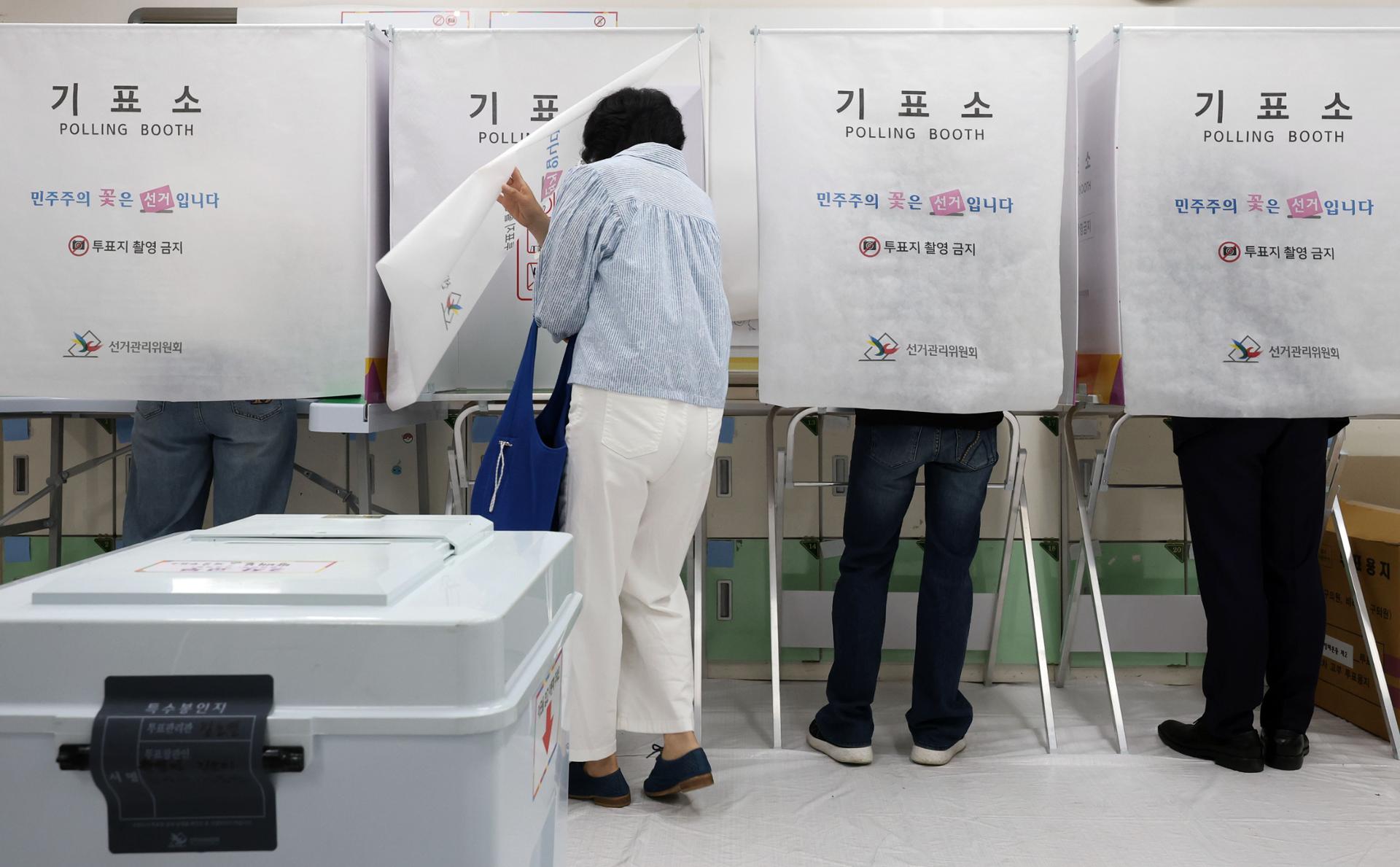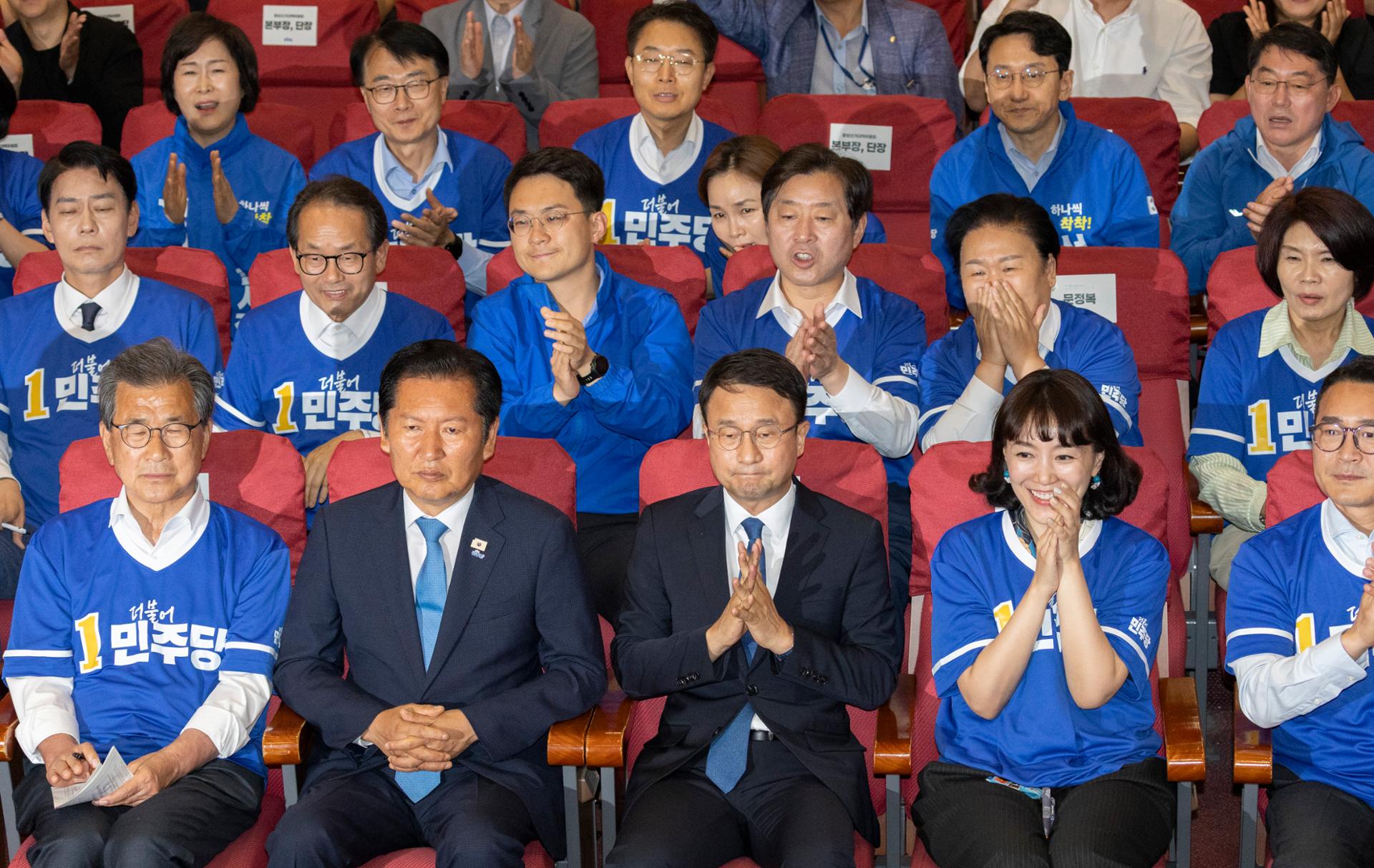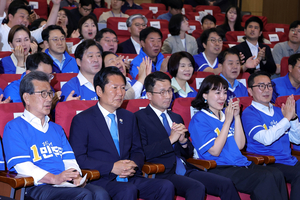
Democratic Party leaders, including Chair Rep. Jung Chung-rae and Rep. Han Byung-do, watch exit poll results at the party’s vote-counting situation room for the June 3 local elections and National Assembly by-elections at the National Assembly Members’ Office Building in Seoul on Wednesday. (Pool photo via Yonhap) South Korea’s ruling Democratic Party was heading for a landslide victory in Wednesday’s nationwide local elections, sweeping across much of the country while leaving the main opposition People Power Party largely confined to its conservative southeastern strongholds.As vote counting continued early Thursday, the Democratic Party was leading in 13 of 16 mayoral and gubernatorial races, while the People Power Party was ahead in three — Daegu, North Gyeongsang and South Gyeongsang provinces.The projected outcome would mark a dramatic reversal from the 2022 local elections, when the Democrats suffered a crushing defeat and won only five metropolitan and provincial governments. The result would also put the party on course to reclaim local power for the first time in four years, following its victory in the presidential election.According to the National Election Commission, the Democratic Party was leading as of 2 a.m. in Seoul, Busan, Incheon, Daejeon, Ulsan, Sejong, Gyeonggi, Gangwon, North Chungcheong, South Chungcheong, North Jeolla, South Jeolla and the newly integrated Gwangju-South Jeolla special self-governing city.The Democratic Party’s projected landslide was driven by sweeping wins across the capital region, central provinces and much of the southwest, while the conservative People Power Party largely held onto only parts of its traditional southeastern base.In the closely watched battleground of Daegu, People Power Party candidate Choo Kyung-ho was projected to win the mayoral race after overtaking Democratic Party rival Kim Boo-kyum, a former prime minister, early in the count.As of 2:10 a.m. Thursday, with 62.68 percent of ballots counted, Choo was leading with 52.12 percent of the vote, ahead of Kim’s 46.84 percent.Conservatives also retained North Gyeongsang Province, where incumbent governor Lee Cheol-woo of the People Power Party secured reelection.In neighboring South Gyeongsang Province, however, the race remained highly competitive, with People Power Party candidate Park Wan-soo narrowly leading Democratic Party rival Kim Kyung-soo as of 2:40 a.m. Thursday. With 69.73 percent of ballots counted, Park had 50.85 percent of the vote, compared with Kim’s 49.14 percent.But the Democratic Party managed to make a breakthrough in Busan, one of the conservative southeast’s most important political strongholds.Democratic Party candidate Chun Jae-soo was all but certain to defeat incumbent People Power Party Mayor Park Hyeong-joon.As of 2:50 a.m. Thursday, with more than 90 percent of ballots counted, Chun was leading Park by about 40,000 votes. Jeon’s victory would make him Busan’s second Democratic Party mayor, after Oh Keo-don’s election in 2018, and mark the party’s return to power in the city after eight years.The Democratic Party also appeared poised to flip Gangwon Province, another key battleground.As of 2:47 a.m., Democratic Party candidate Woo Sang-ho was narrowly ahead of People Power Party rival Kim Jin-tae with 51.28 percent of the vote, compared with Kim’s 48.71 percent — a margin of 18,450 votes with 84.91 percent of ballots counted.In North Jeolla Province, Democratic Party candidate Lee Won-taeg was projected to defeat independent rival Kim Kwan-young, the incumbent governor who had been expelled from the Democratic Party during the nomination process.The party also secured major victories in the Seoul metropolitan area. In Gyeonggi Province and Incheon, Democratic Party candidates Choo Mi-ae and Park Chan-dae defeated People Power Party rivals Yang Hyang-ja and Yoo Jeong-bok, respectively.Democratic Party candidates Min Hyung-bae and Wi Seong-gon were elected in the Gwangju-South Jeolla integrated metropolitan government and Jeju Province, respectively.Choo became the first woman in South Korean constitutional history to serve as a metropolitan or provincial governor, while Min became the first elected head of an integrated metropolitan government.The Democratic Party was also poised for a strong showing in National Assembly by-elections held alongside the local elections. As of 1 a.m. Thursday, Democratic Party candidates were leading in 12 of the 14 races. Of the 14 seats up for grabs, 13 were previously held by Democratic Party lawmakers.Two of the most closely watched contests were Busan’s Buk-A district and Pyeongtaek-B in Gyeonggi Province.In Busan’s Buk-A, independent candidate Han Dong-hoon, a former People Power Party chair, was elected after defeating Democratic Party candidate Ha Jung-woo, who served as senior presidential secretary for artificial intelligence policy and future planning under the Lee Jae-myung administration.In Pyeongtaek-B, Yoo Ui-dong of the main opposition People Power Party defeated Cho Kuk, chair of the Rebuilding Korea Party.
DP nears nationwide sweep, with PPP reduced to southeastern base
South Korea’s ruling Democratic Party was heading for a landslide victory in Wednesday’s nationwide local elections, sweeping across much of the country while l
746 words~3 min read