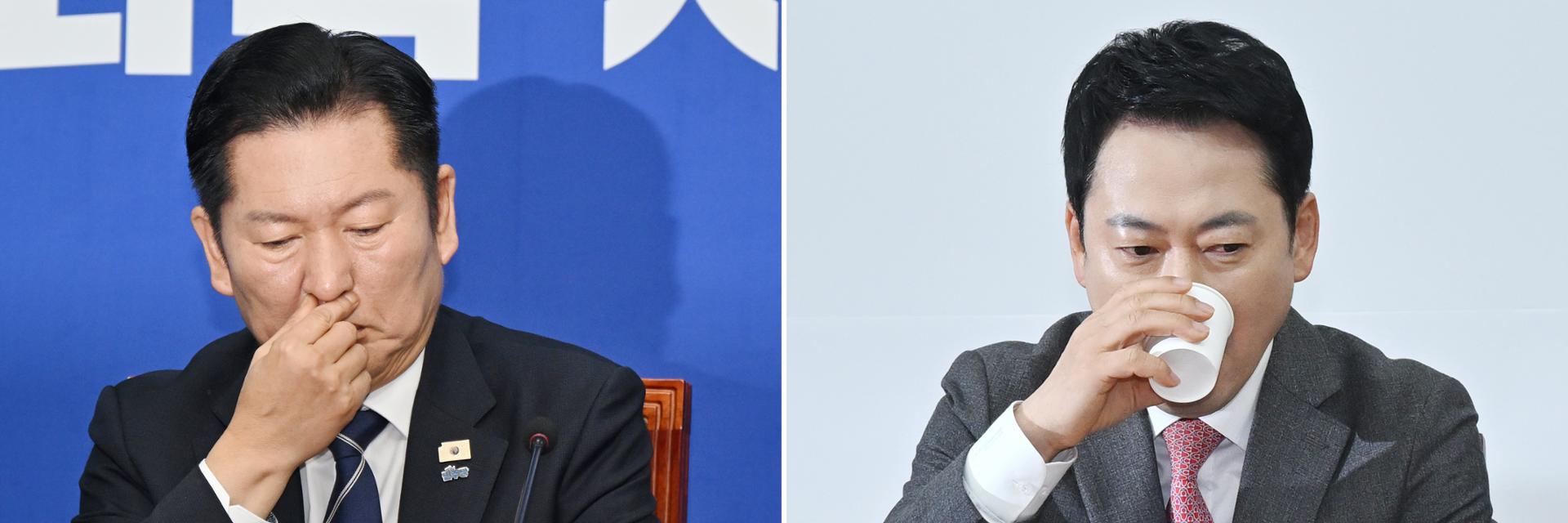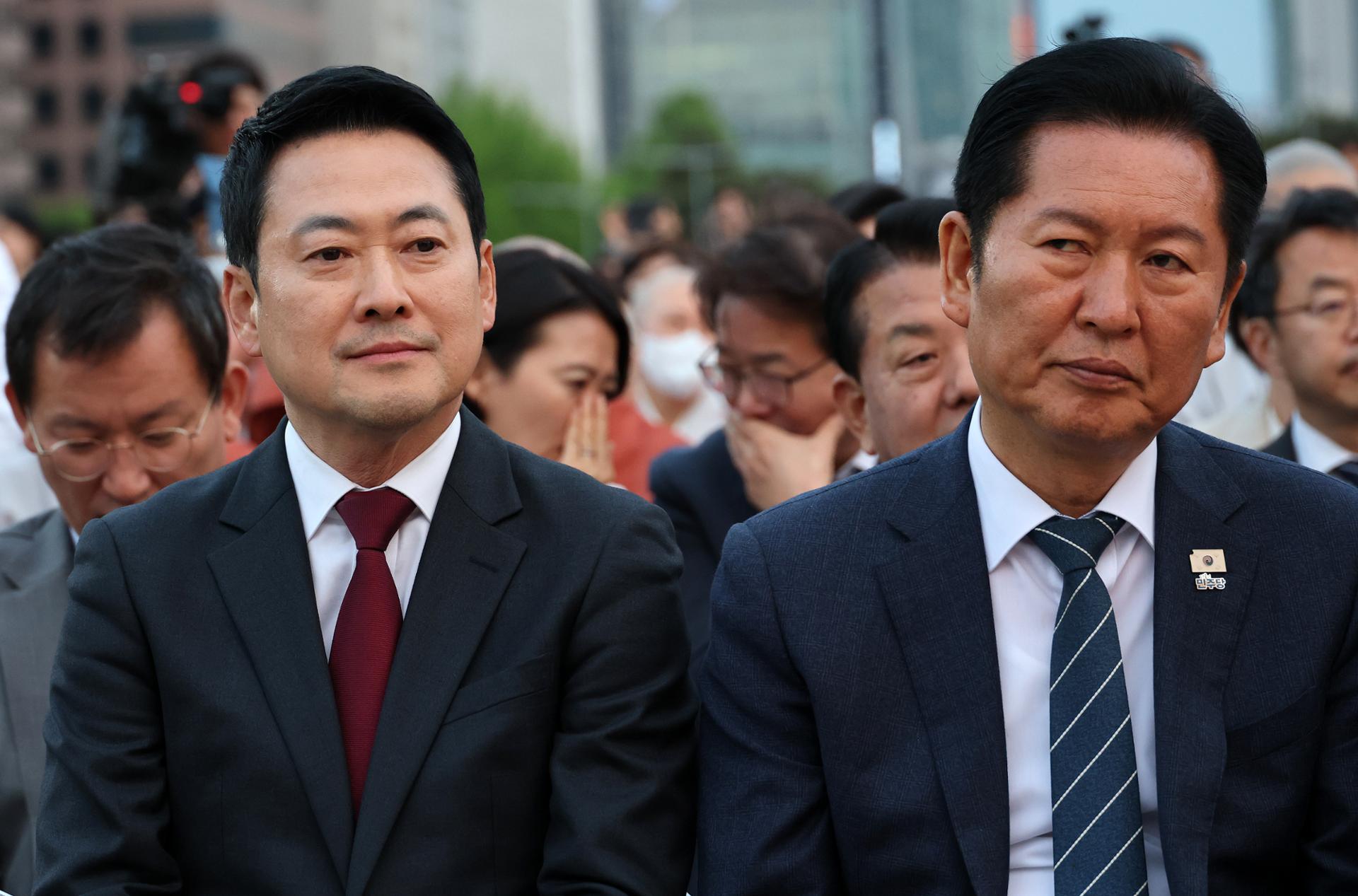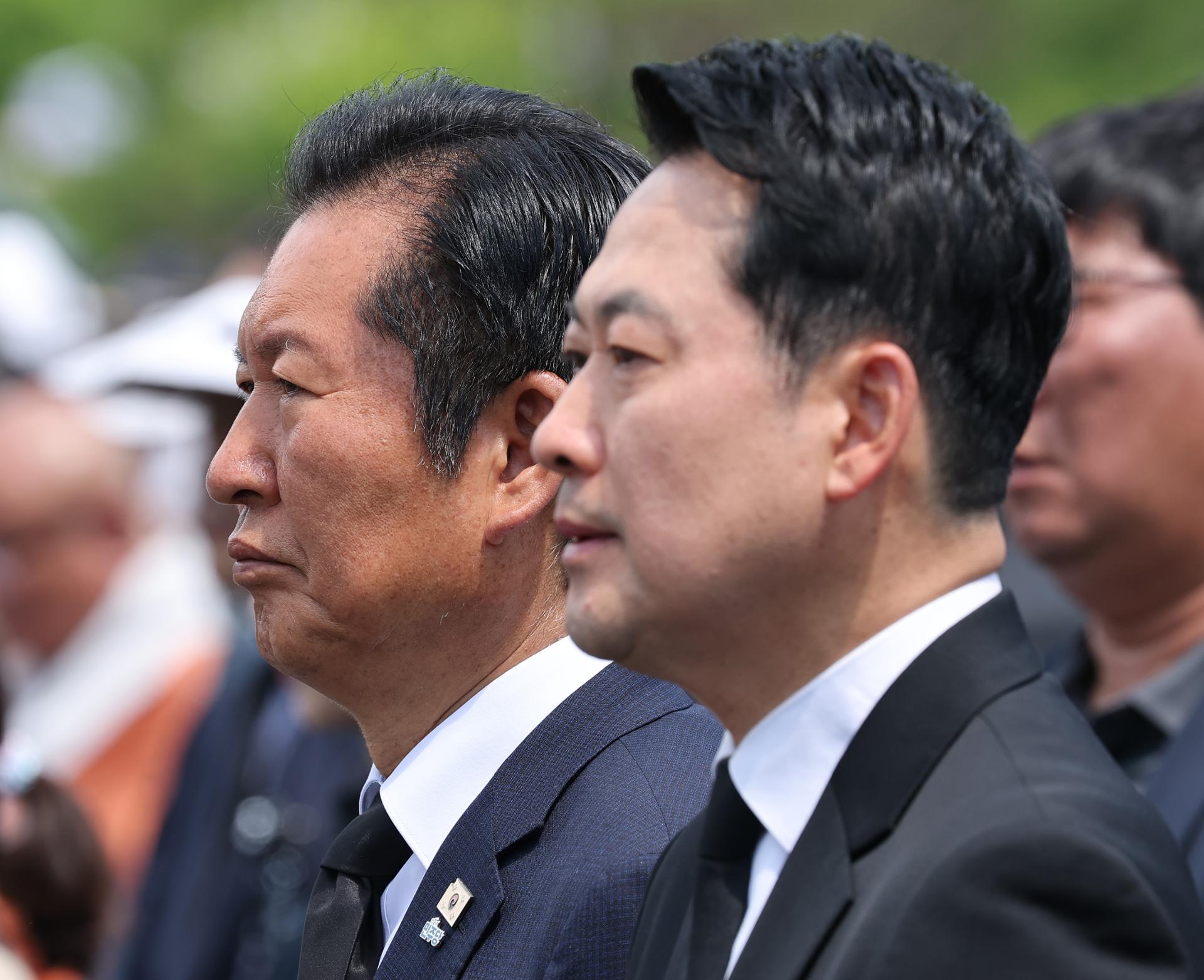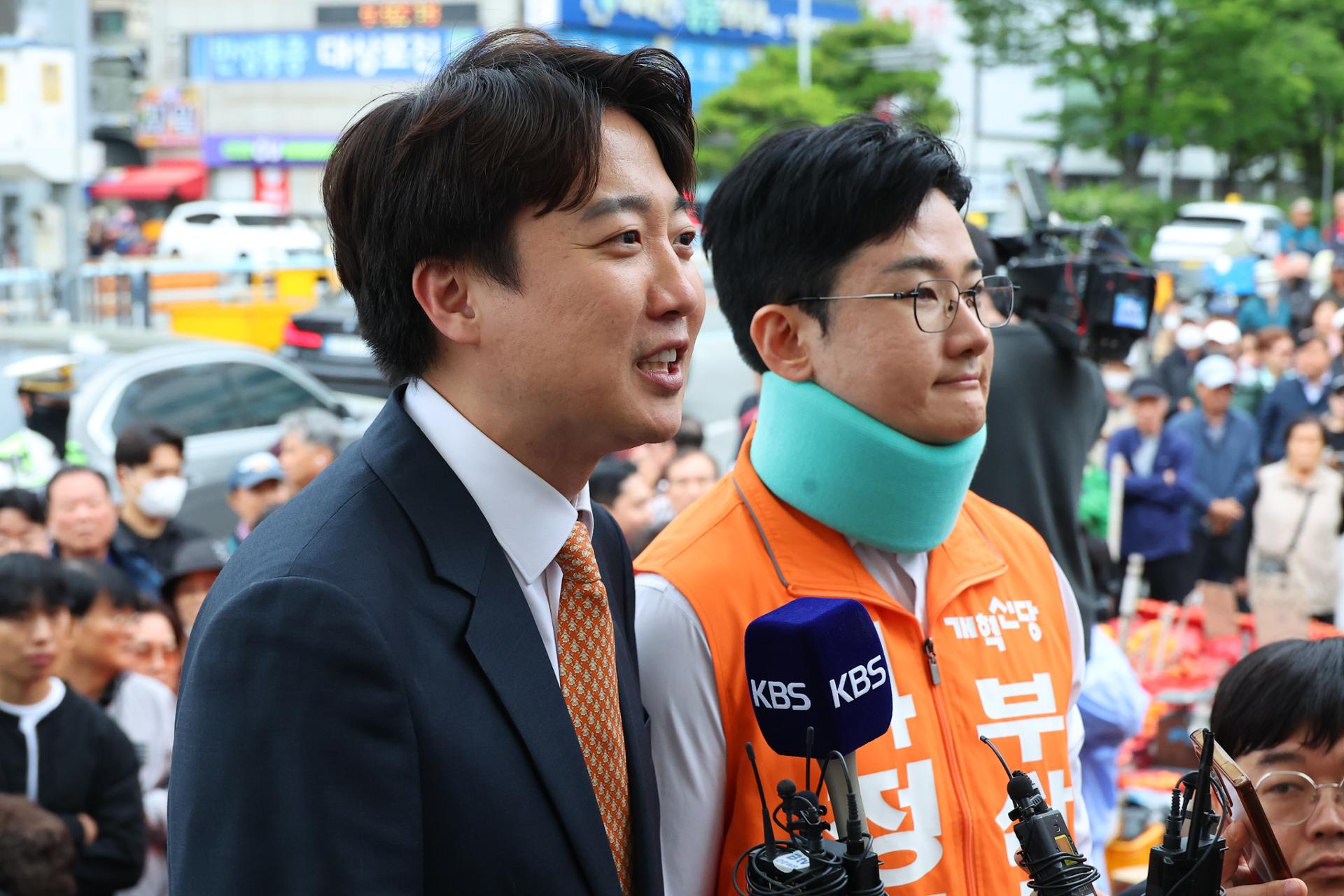
Reform Party leader Lee Jun-seok, left, and Jeong I-han, the party's candidate for the Busan mayoral election, meet residents in the southeastern city's Buk District, April 29. Yonhap
The two-party system that has dominated Korean politics for decades is largely responsible for the country's political polarization.
Politicians have frequently resorted to divisive tactics and strategies to consolidate their support bases and expand their influence. In such a fractured political environment, the role of minor parties is essential. Depending on their performance, they can help ease partisan conflicts and reduce confrontations between the ruling and main opposition parties, transforming political competition into outcomes that benefit the broader community.
In this sense, the recent scandal involving the Reform Party is particularly regrettable. The police are investigating Jeong I-han, who ran in the Busan mayoral election on the Reform Party’s ticket, over manufactured attack allegations. On April 27, during the campaign period for the June 3 local elections, Jeong issued a press release claiming that he had been the target of political violence.
According to Jeong, while he was campaigning in Busan’s Geumjeong District, a driver in a passing vehicle threw coffee at him while expressing anger that he was too young and inexperienced to be mayor. Jeong claimed that he slipped into the street while trying to avoid the attack and lost consciousness. He was later diagnosed with a concussion and a muscle sprain. The incident drew widespread criticism, with some members of the public characterizing it as an act of "political terrorism." The police launched an investigation, identified the alleged attacker and questioned him.