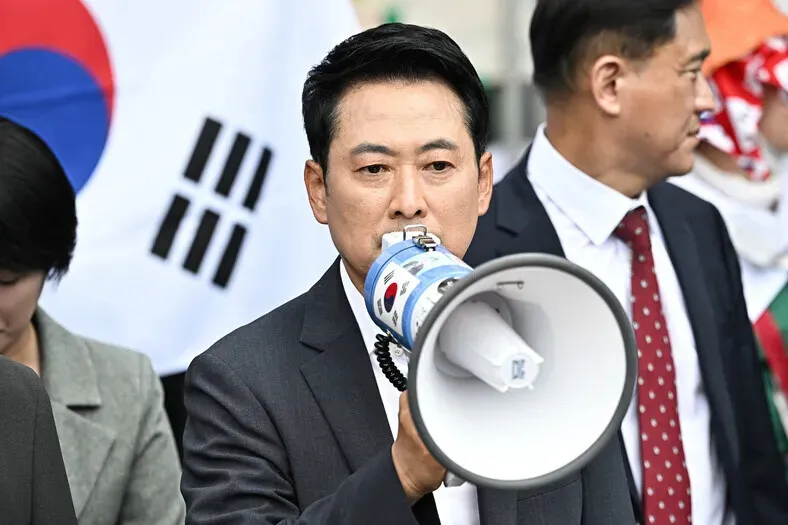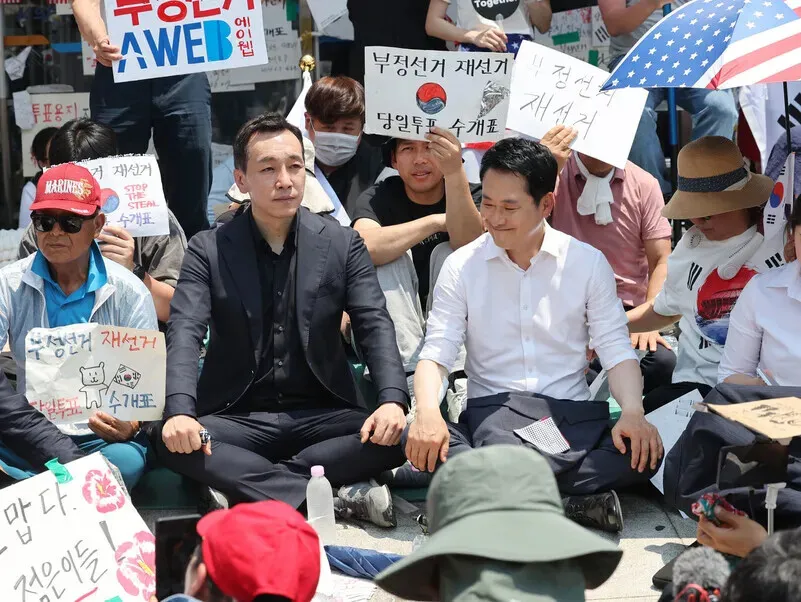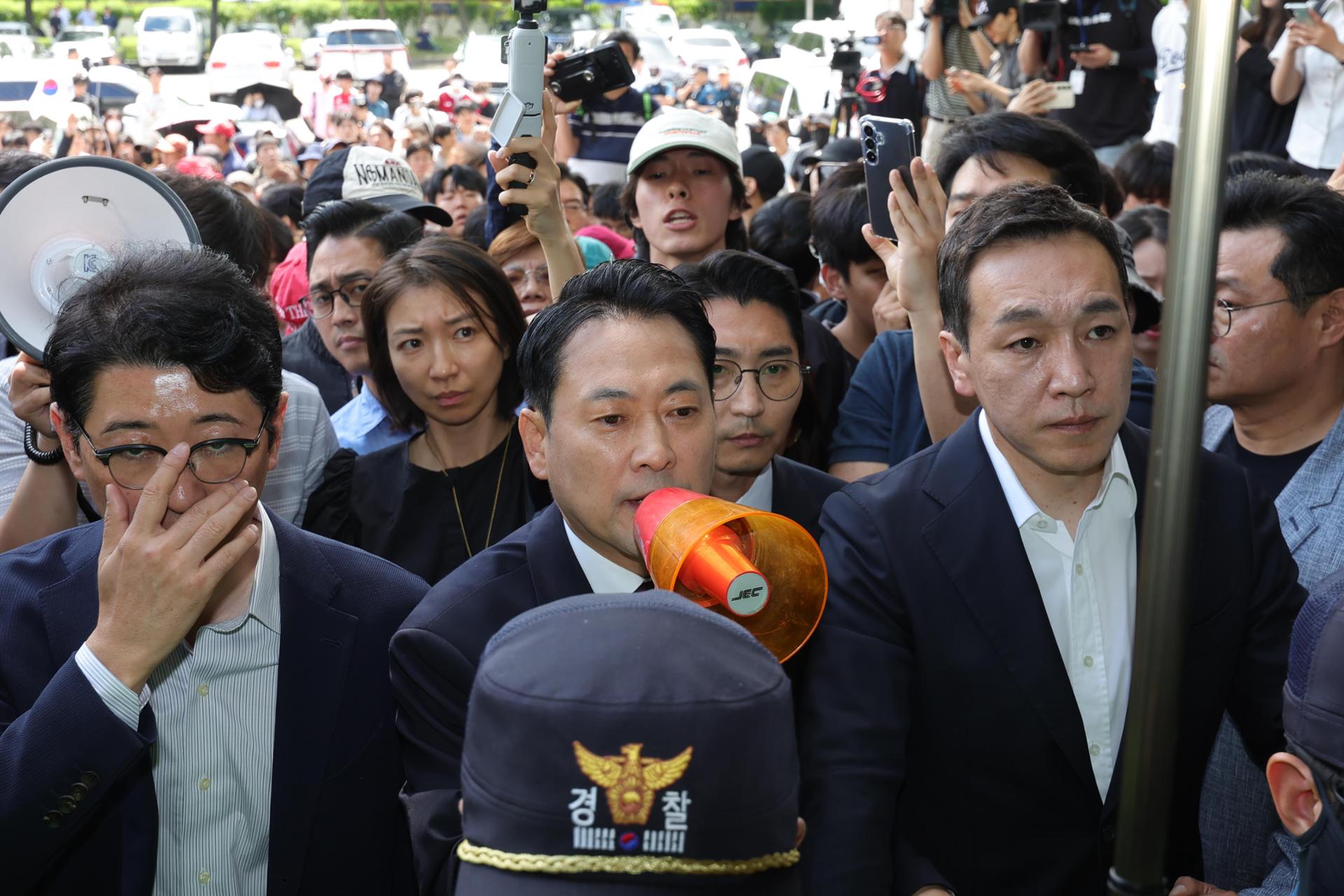
Rep. Jang Dong-hyeok, chairman of the conservative opposition People Power Party, speaks during a protest against the National Election Commission near a polling station in southern Seoul, Friday. Newsis
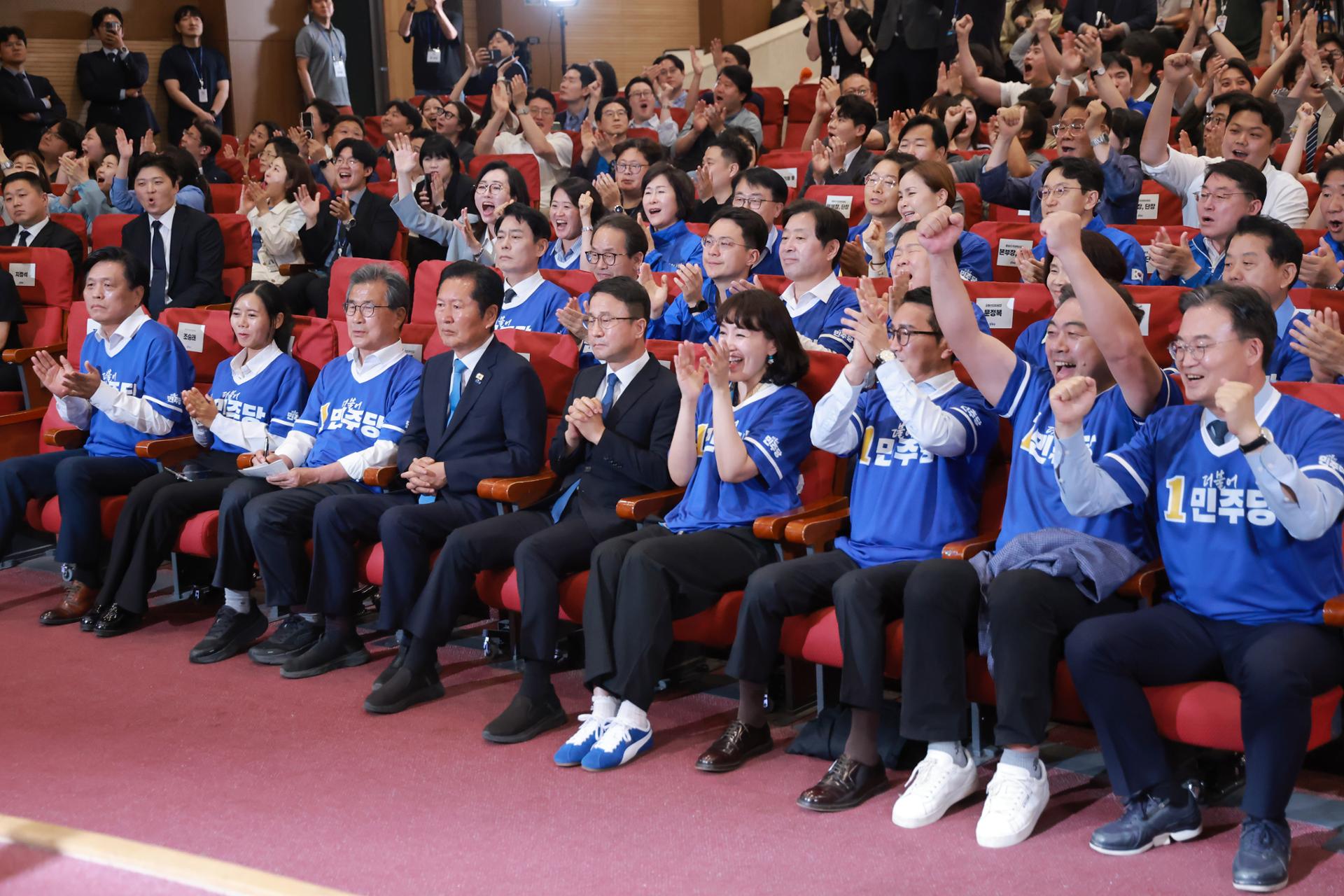
Politics and elections in Korea can often be dynamic. The ruling Democratic Party of Korea (DPK) is coming apart at the seams even after it won 12 of the 16 metropolitan mayoral and gubernatorial races. Its approval ratings dipped to 38 percent, surprisingly tailing the main opposition People Power Party (PPP) for the first time since President Lee Jae Myung took office. The president's approval ratings dropped to 51.5 percent, according to a Realmeter survey conducted in the second week of June and announced Monday, while another poll conducted by Jowon C&I showed Lee's approval rate at 47.7 percent, the lowest since he took the presidency.
Factional strife may be at work in the DPK. The other side of it is the arrogance of the liberal ruling party, with its grip on the government and the legislature, unable to read the sentiment brewing and spreading among young voters.
DPK leader Jung Chung-rae is in a tough spot, with the party losing in the critical Seoul mayoral race during the June 3 local elections. The president has been suggesting that Jung take responsibility, saying on social media Sunday that the "ruling party must take responsibility for the nation's future and the lives of all citizens." Since the DPK's candidate lost the Seoul race, Jung has been facing mounting pressure to resign. He shot back by saying that "power is short," which was seen as a veiled slight at the president. His critics immediately retorted that "party leadership is short," as those not affiliated with Jung are supporting a new leadership under outgoing Prime Minister Kim Min-seok.