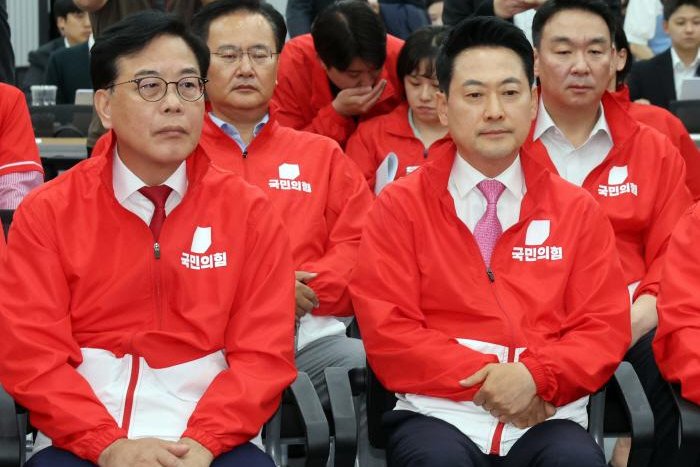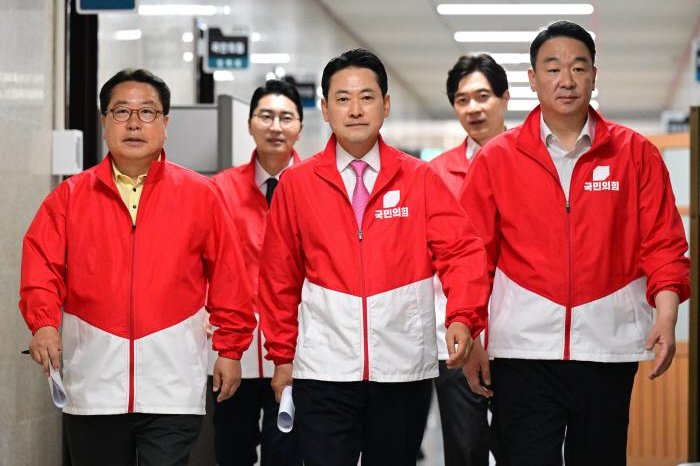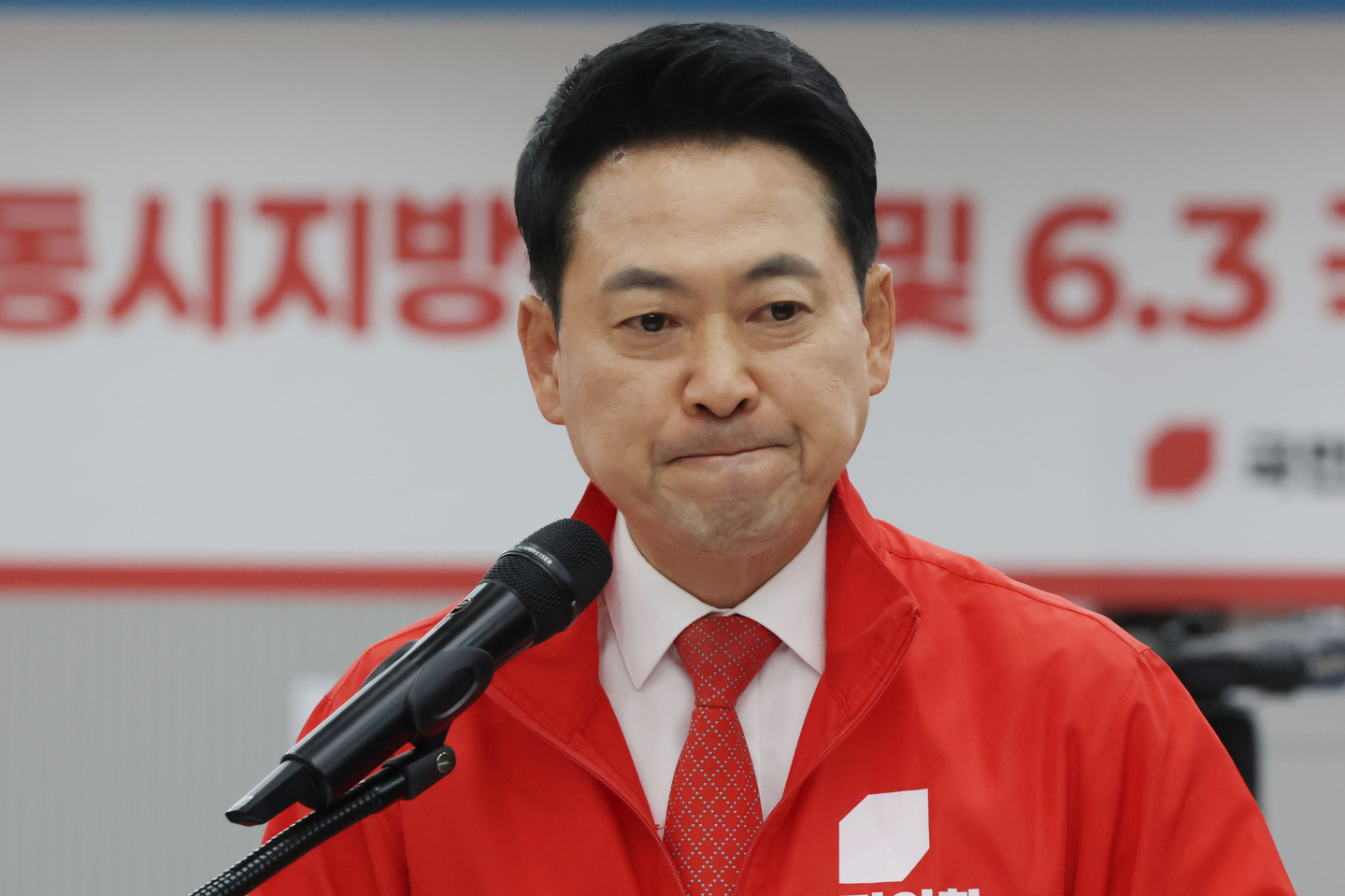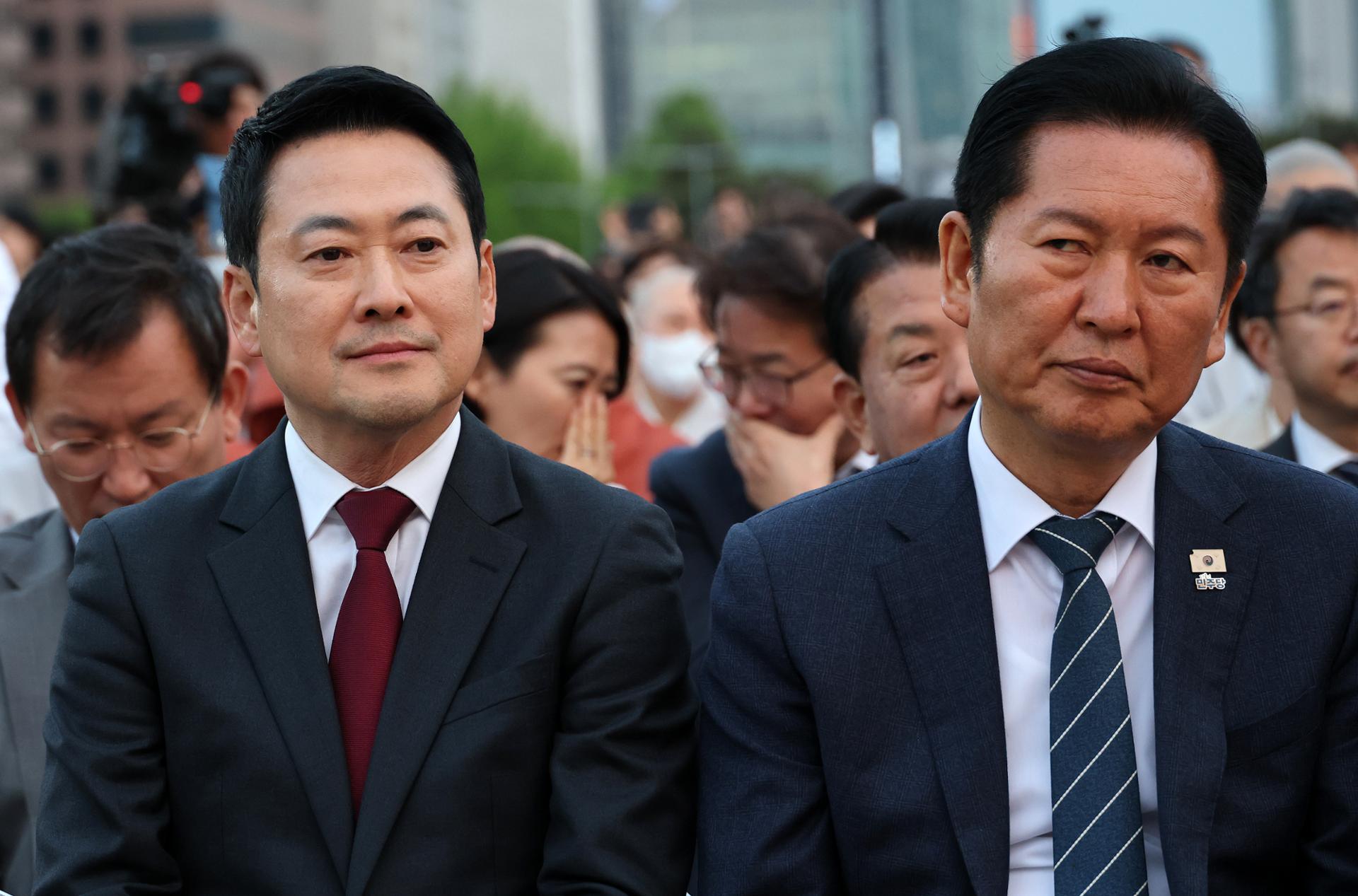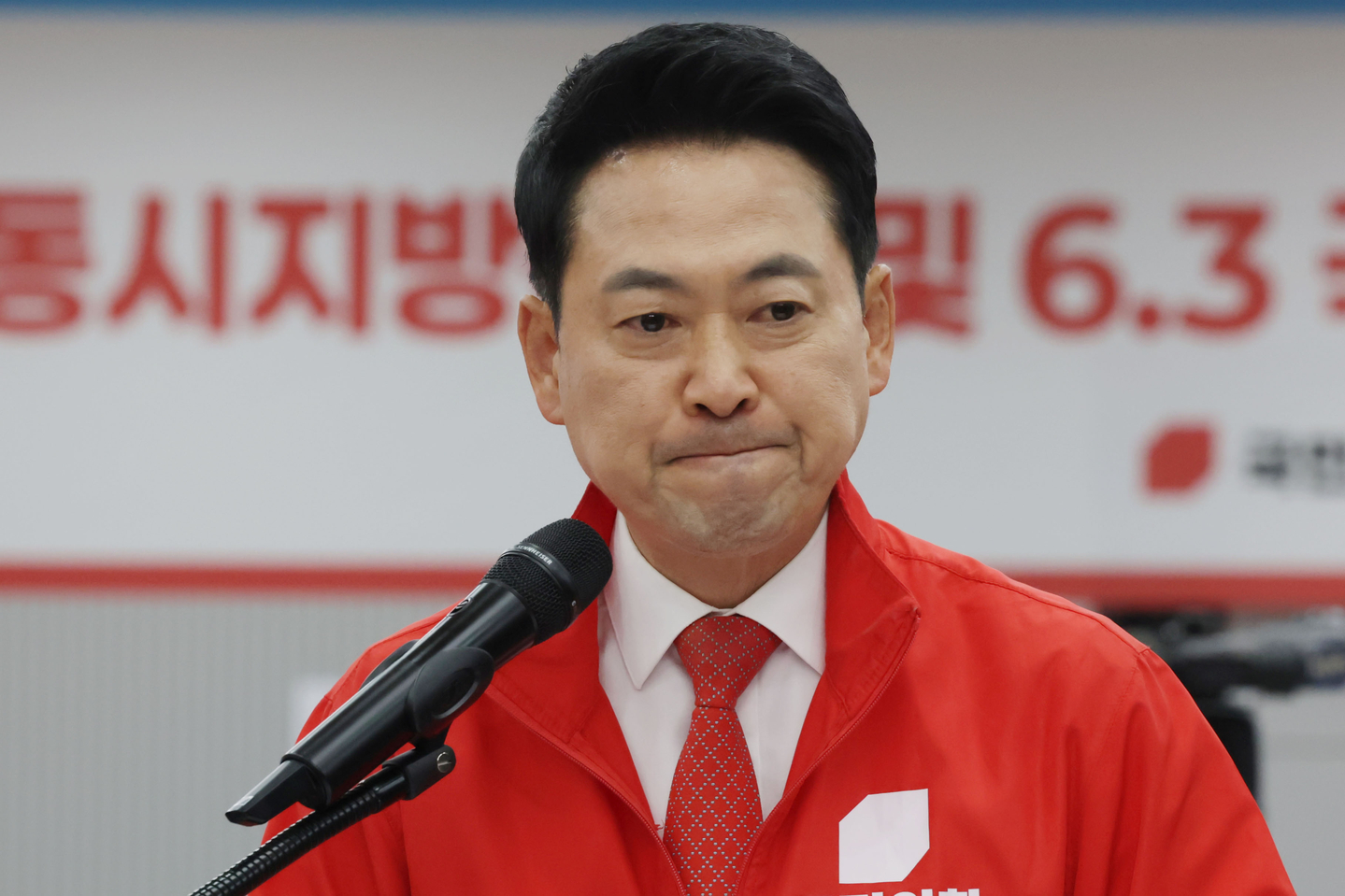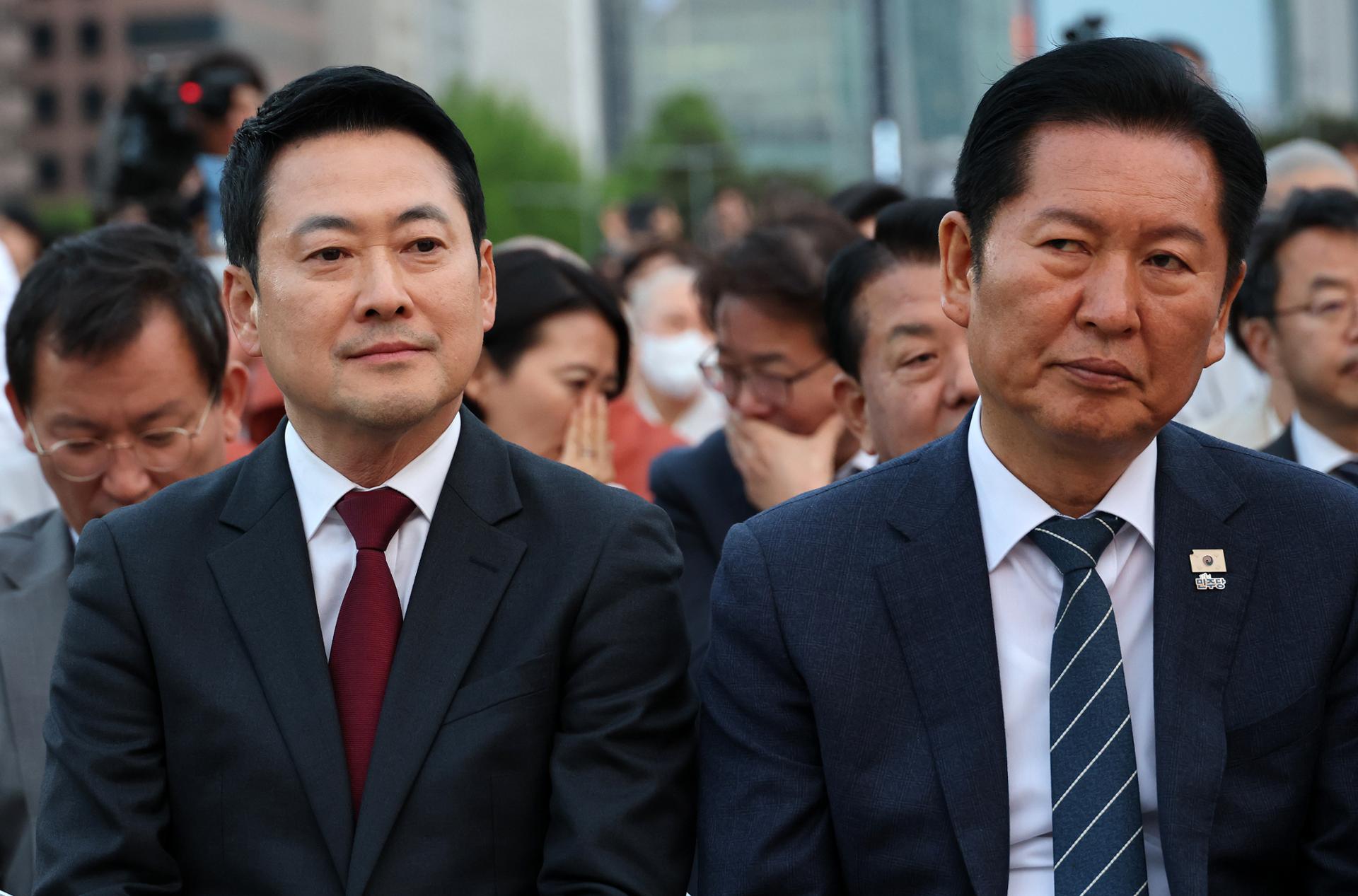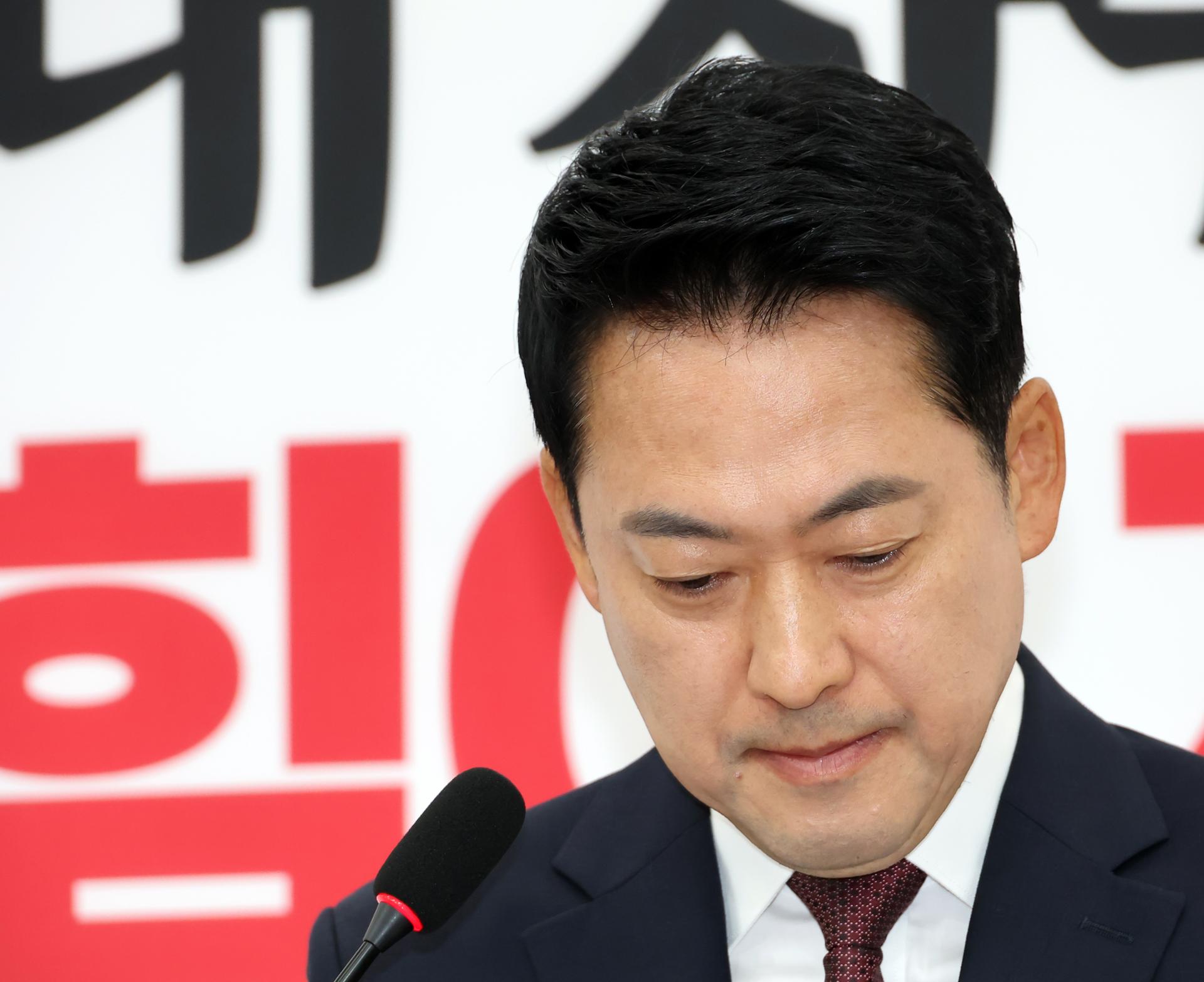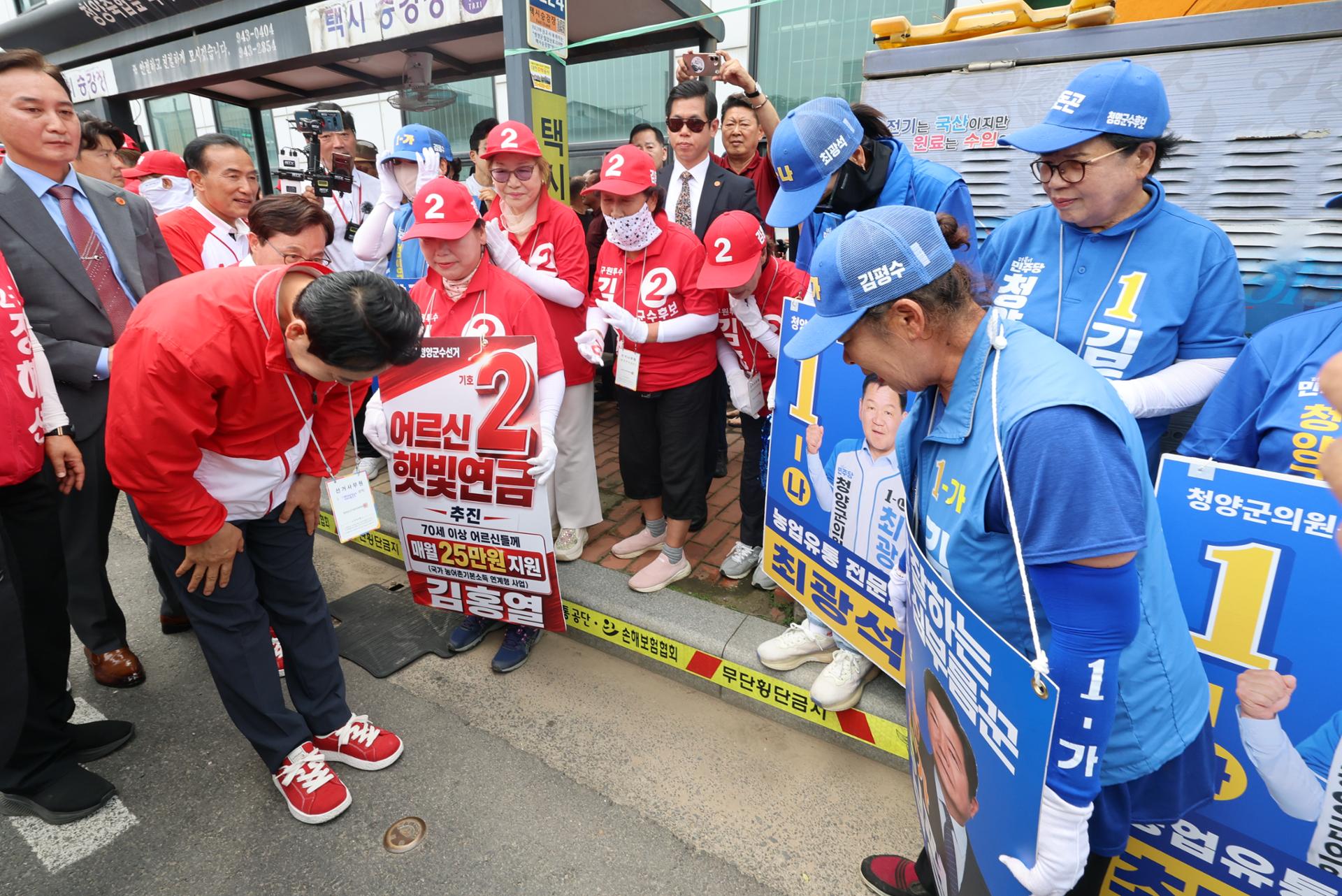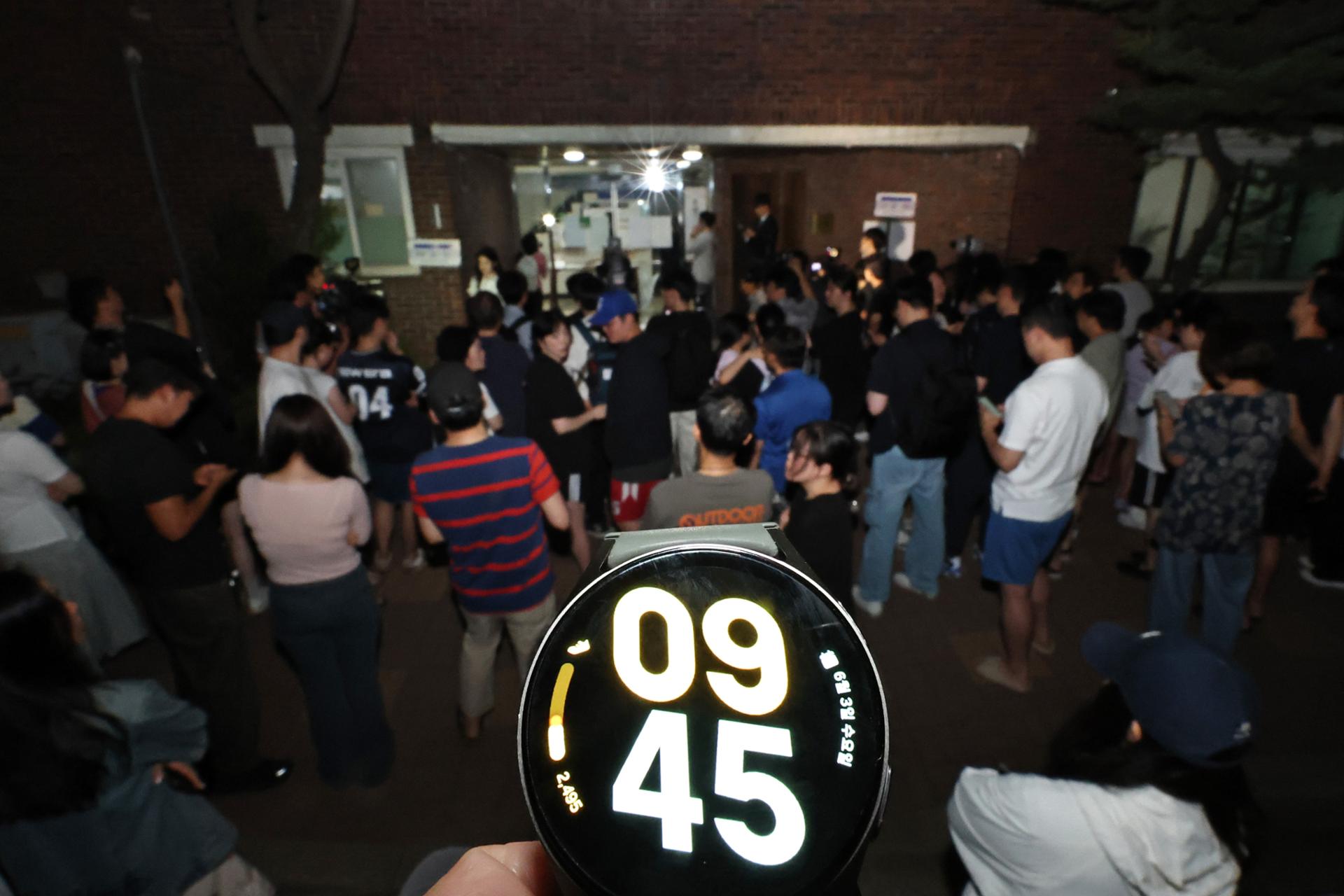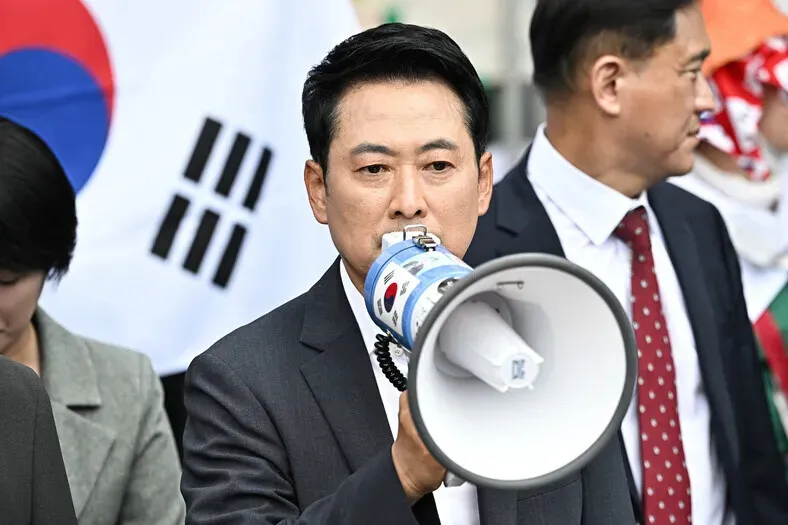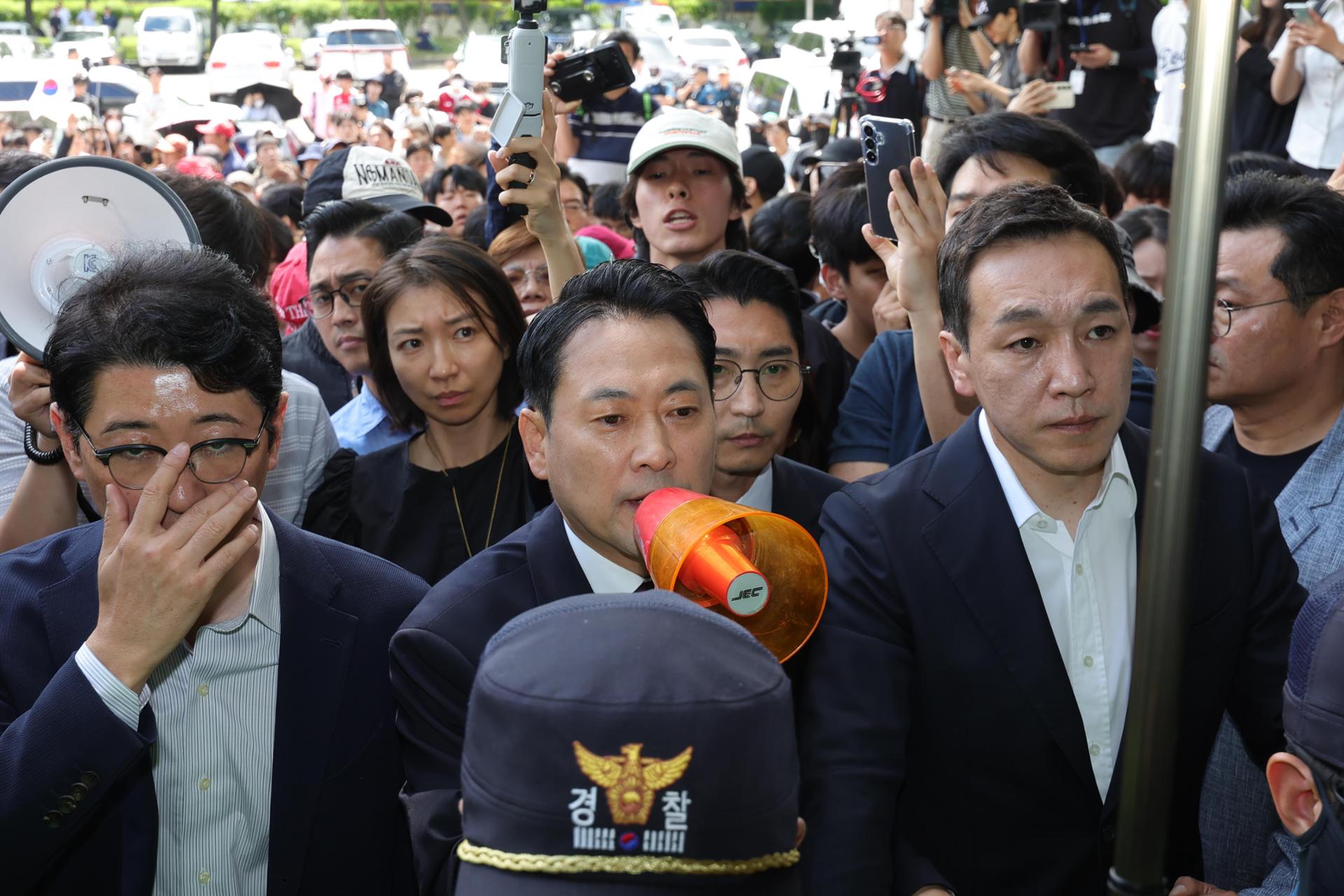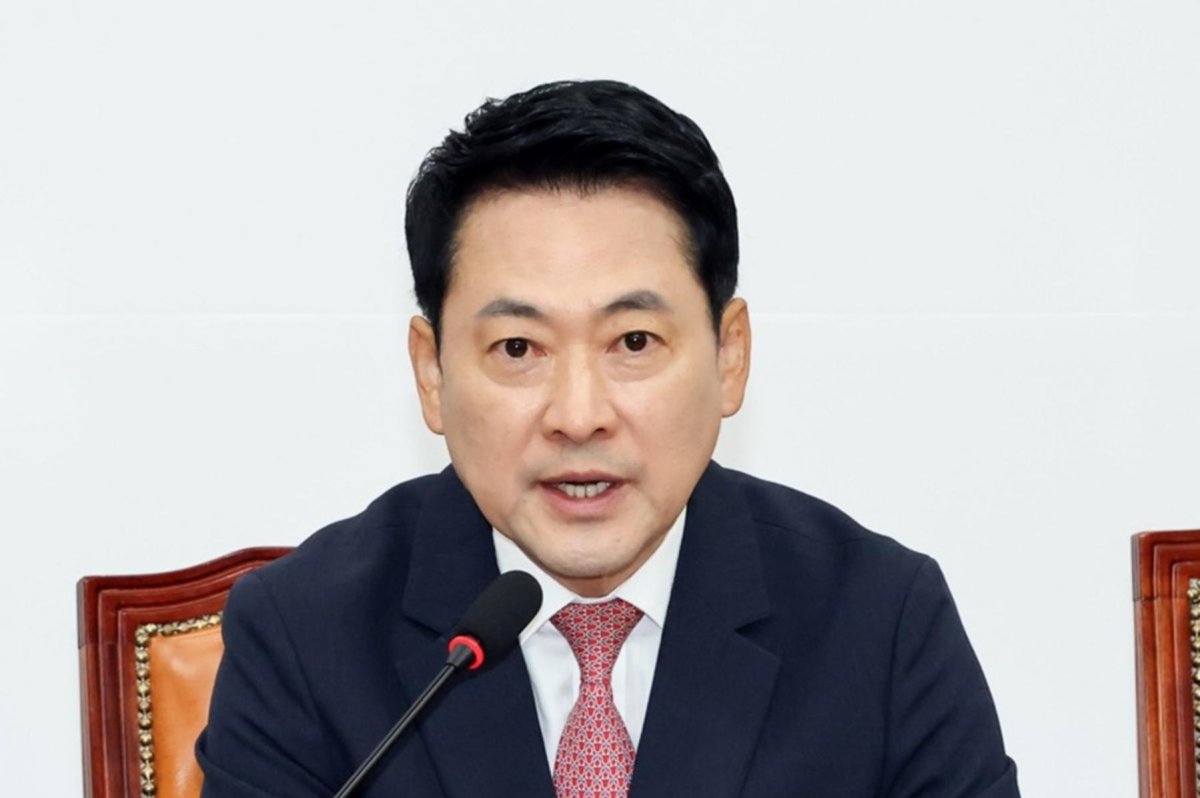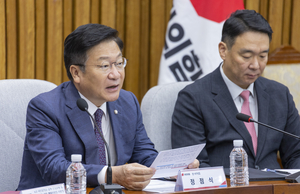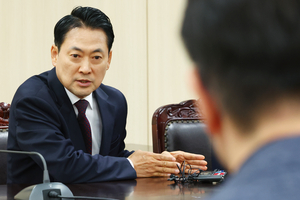
People Power Party Chair Rep. Jang Dong-hyeok speaks with officials at the Seoul Metropolitan Election Commission during a protest visit to the commission's office in Jongno-gu, Seoul, on Friday. (Yonhap) South Korea's main opposition People Power Party is facing mounting internal pressure for leadership change after Wednesday's local elections, as calls grow for Chair Rep. Jang Dong-hyeok to take responsibility despite the party avoiding its worst-case scenario.The People Power Party retained four of the 16 mayoral and gubernatorial races, including Seoul, Daegu, North Gyeongsang Province and South Gyeongsang Province.The result allowed the party to avoid a total rout, but it did little to ease questions over Jang's leadership, which had already been under pressure before election day.The ruling Democratic Party of Korea, meanwhile, won 12 of the 16 major races, a result widely seen as consolidating its dominance in local governments one year after President Lee Jae Myung took office.Jang appeared to reject calls for his resignation shortly after the elections, saying that the party had "kept alive a spark of hope" despite difficult circumstances."I will not turn away from the grave responsibility given to me and will find a new path forward together with party members," Jang wrote in a Facebook post on Thursday.Jang took office last year after former President Yoon Suk Yeol was removed from office over his Dec. 3, 2024, martial law declaration, winning the party leadership with strong backing from hard-line pro-Yoon supporters.Since then, he has faced repeated demands from within the party to step aside or shift course. Critics have argued that the party remained too closely tied to the former president and his loyalist supporters even after Yoon's removal from office. Rep. Jang Dong-hyeok, chair of the main opposition People Power Party (left), and Seoul Mayor Oh Se-hoon (Yonhap) The party's performance in the local elections also has created room for competing interpretations.Jang's supporters argue that the party defended its conservative strongholds and retained the Seoul mayoralty, the most politically symbolic prize in the election. They also point to the party's wins in parliamentary by-elections as evidence that the result was not a sweeping defeat.But critics say the result cannot be claimed as a victory for Jang's leadership.Seoul Mayor Oh Se-hoon secured a fifth term after distancing himself from party leadership during his campaign, making it difficult for Jang to claim the capital's victory as a clear endorsement of his leadership.Some party members have cited Oh's victory as evidence that conservative candidates can remain competitive even when they separate themselves from the current leadership's factional disputes.Pressure on Jang intensified Friday when floor leader Rep. Song Eon-seog announced his resignation, saying the party needed a new start after the elections."After reflecting on the meaning of the election results, I believe our party also needs a new beginning," Song said at a general meeting of party lawmakers at the National Assembly in Seoul.He added that he would return to being an ordinary lawmaker and continue to serve the party from there.Song, who was elected floor leader in June 2025, had led the party's floor strategy through a turbulent period following Yoon's impeachment and removal from office, during which the party struggled with deep internal divisions and falling public support.Calls for Jang's resignation have since surfaced from several corners of the party.Former lawmaker Yoo Seong-min wrote on Facebook that conservatives must "cross the river of impeachment" and rebuild themselves as a competent and reform-minded conservative force.Rep. Kim Yong-tae, a younger party lawmaker who has called for a clearer break with Yoon, said the local election results exposed the limits of the current leadership.Kim also warned that the ballot shortage controversy should not become a chance for the leadership to avoid responsibility for the election outcome.Yang Hyang-ja, a Supreme Council member who ran in the Gyeonggi gubernatorial race, said the leadership should take responsibility, adding that doing so would require them to "put everything down together."Another variable is the return of former party leader Han Dong-hoon, who won a parliamentary by-election in Busan's Buk-A constituency as an independent candidate.Han was once a close confidant of Yoon, but later became one of his critics and openly denounced Yoon's martial law bid in 2024.He was expelled from the party earlier this year over allegations that he and his family had posted online comments critical of Yoon and the party leadership. But he has since drawn support from party members calling for a break with Yoon.Political commentator Choi Yo-han said the party is unlikely to avoid a prolonged internal struggle over how to interpret the election outcome."The People Power Party is now headed for a power struggle over whether the election should be seen as a defensive success or another warning sign for the conservative bloc," Park said."With Song stepping down and Jang signaling his intention to stay, the key question is whether pressure from lawmakers and reformist figures can force a broader leadership change, or whether Jang can survive the backlash with support from party members," he added.
People Power Party faces post-election tension as pressure mounts on Jang
South Korea's main opposition People Power Party is facing mounting internal pressure for leadership change after Wednesday's local elections, as calls grow for
830 words~4 min read