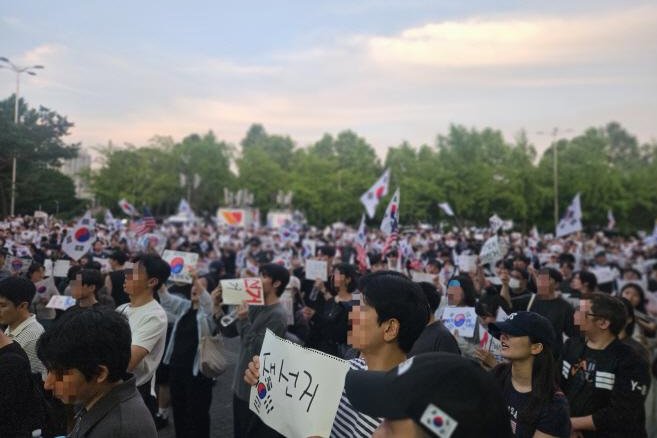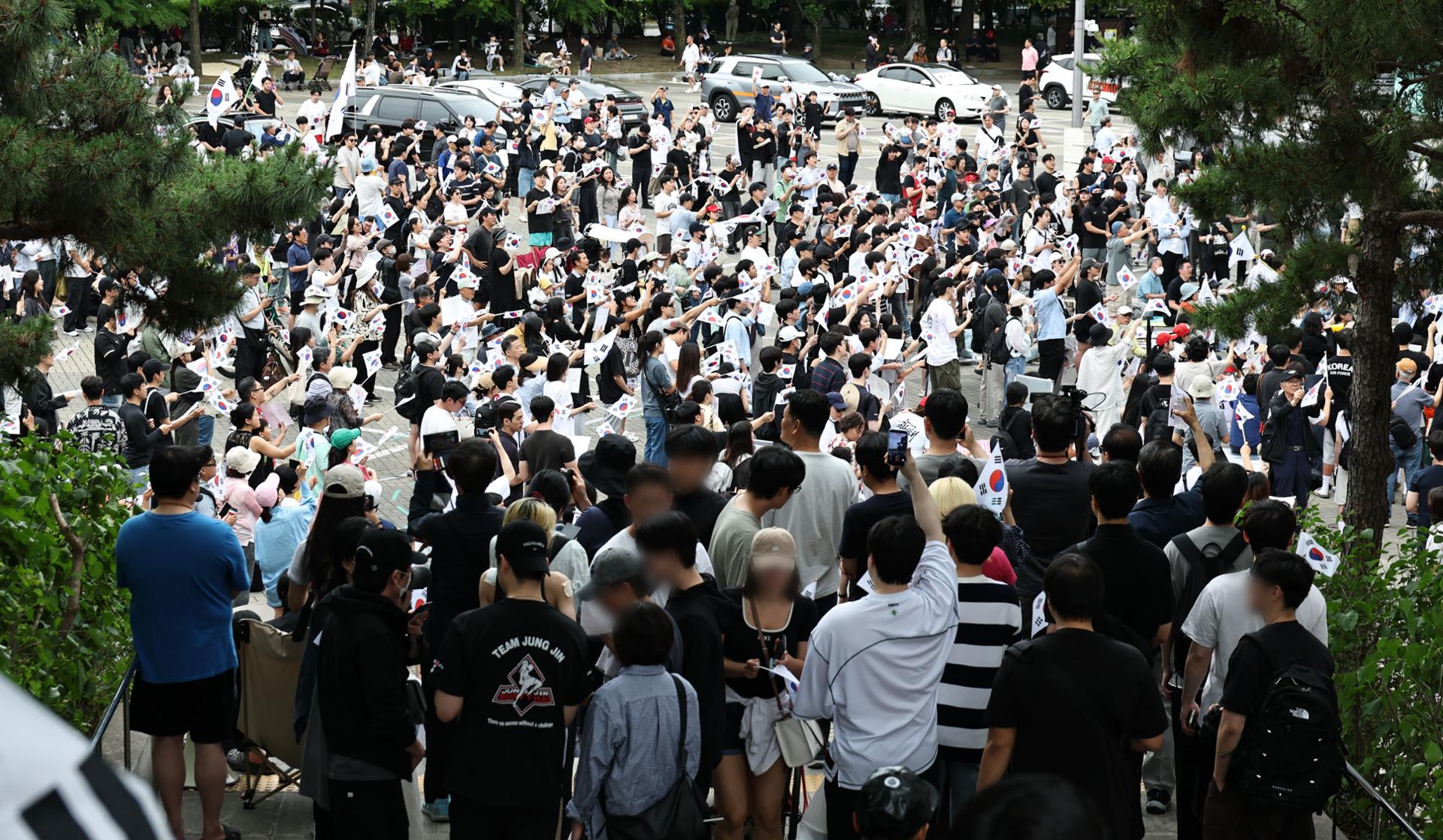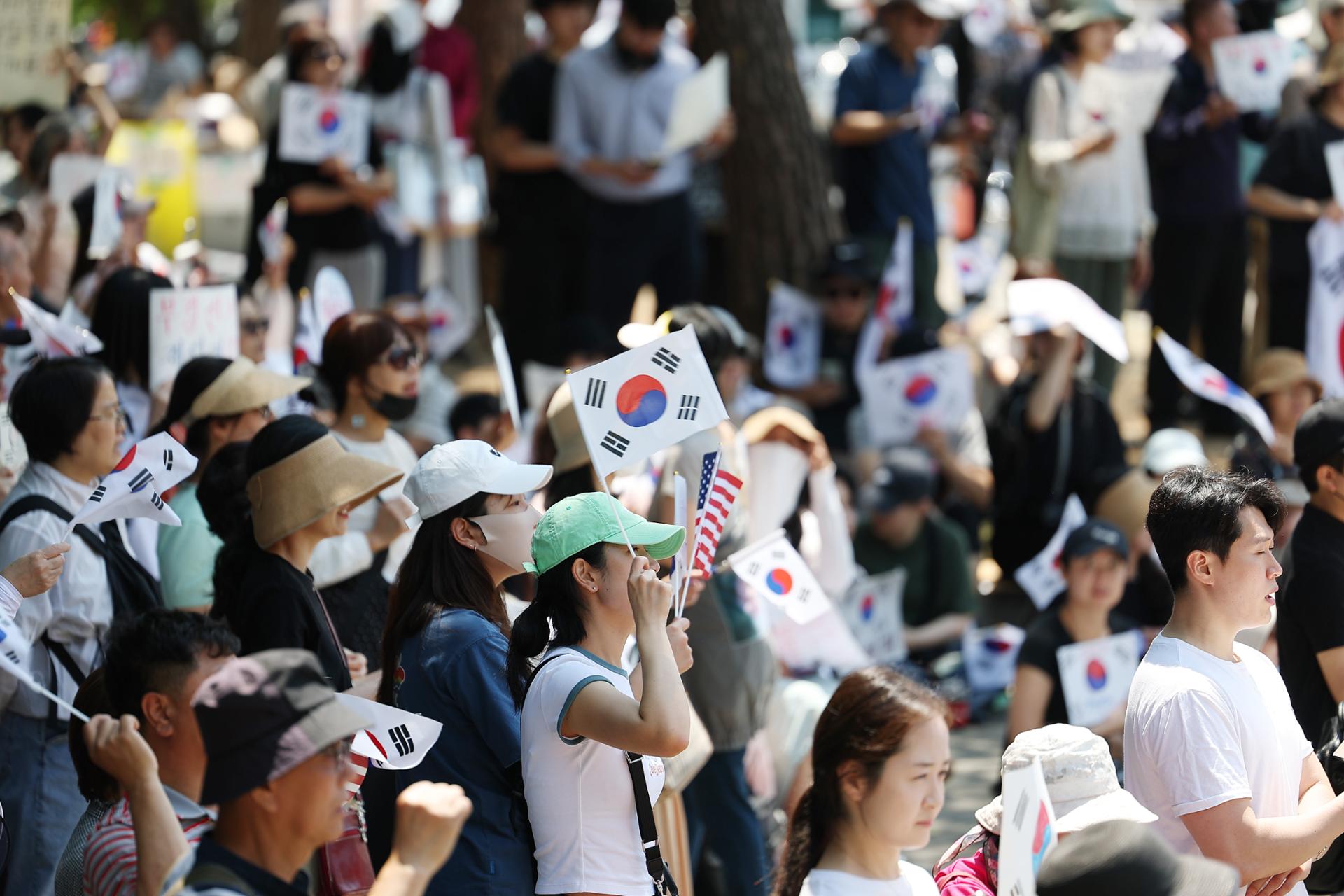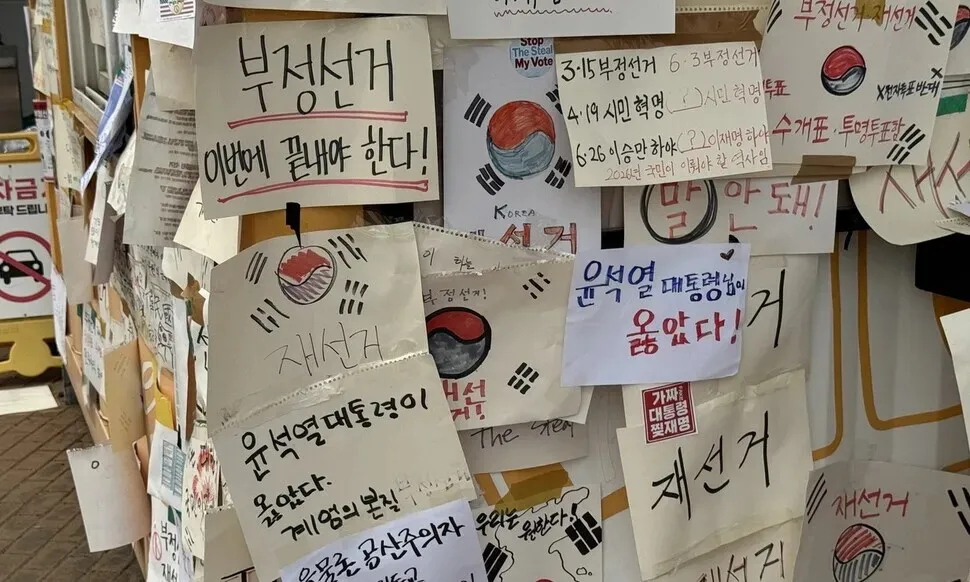
Signs reading “President Yoon Suk-yeol was right!” and others calling for a revote in the June 3 local elections plaster a ticket booth near the handball arena in Seoul’s Olympic Park on June 14, 2026, where protesters gathered following ballot shortages in the elections. (Jeong Bong-bi/Hankyoreh)
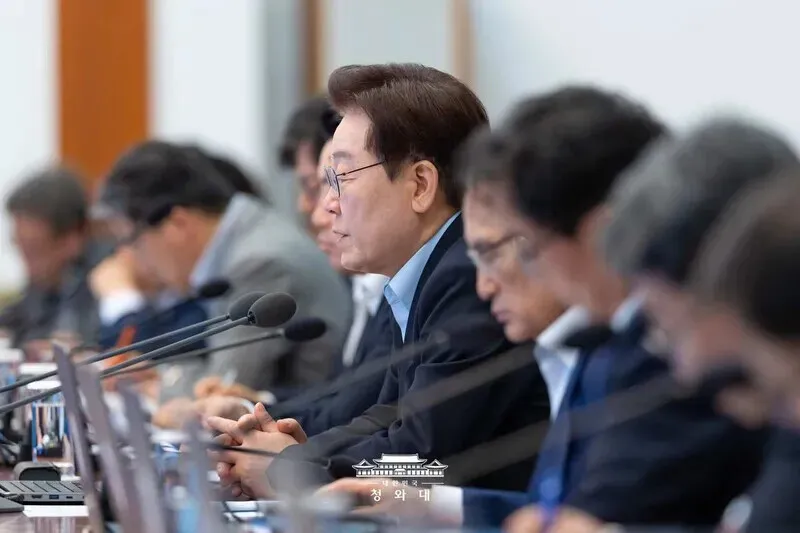
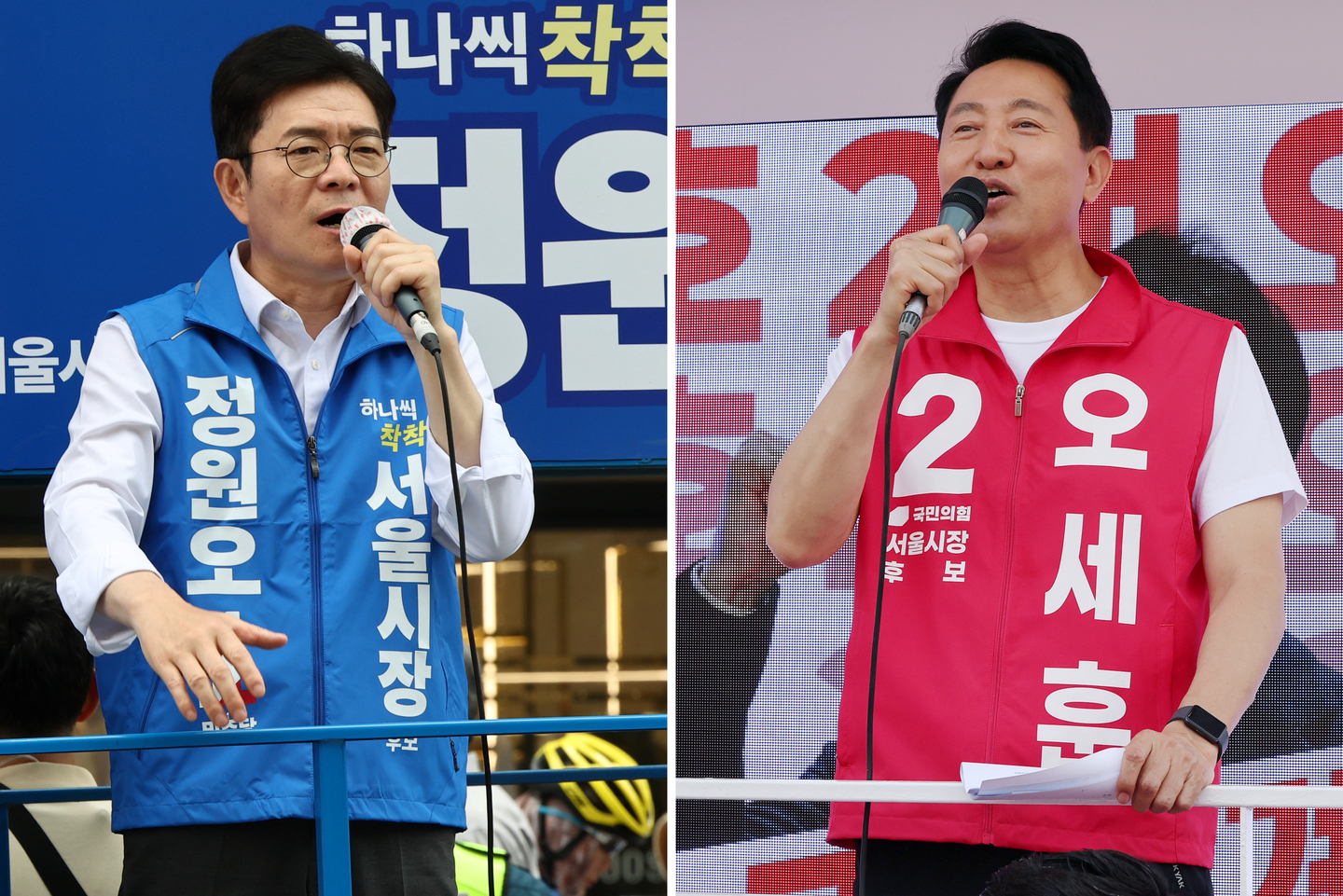
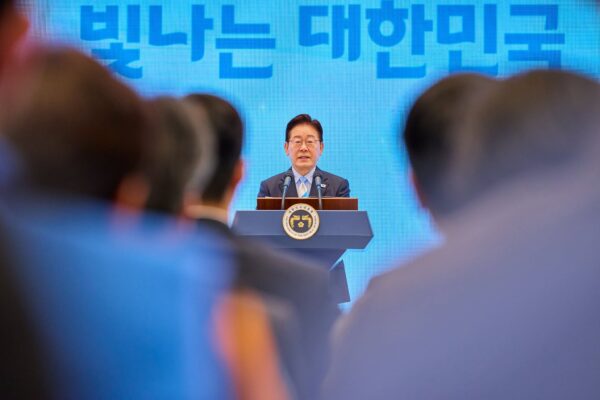
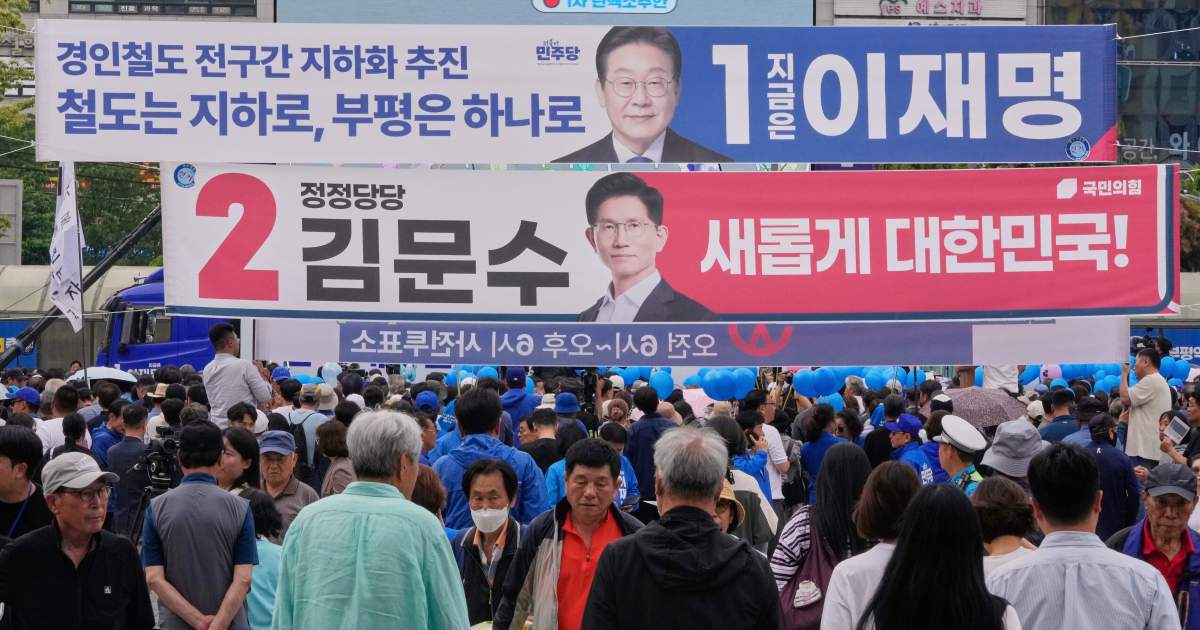
By Shin Jin-wook, professor of sociology at Chung-Ang UniversityJust one year after a new administration came to power in Korea, everything seems to be going topsy-turvy once again.The ruling Democratic Party was expected to dominate the local elections in June, with attention initially focusing on a couple of close races. But a month later, the situation still hasn’t returned to normal.After the National Election Commission’s botched handling of ballots, election denialists and conspiracy theorists who defend former President Yoon Suk-yeol’s illegal declaration of martial law have come out of the woodwork. The president and the Democratic Party’s approval rating has plunged, and fissures have appeared inside the party.The People Power Party (PPP), whose approval had fallen as low as 15%, has clambered out of the impeachment quagmire, and the “Yoon Again” campaign has gained strength.What on earth is going on?The critical thing is to understand the significance of the present moment in terms of the broader historic task of stabilizing society and shoring up democracy in the wake of Yoon’s attempted insurrection. To prevent a repeat of the martial law debacle — along with the constitutional crisis, human rights violations and military perils that entailed — our first priority should be transforming party politics.A self-coup such as the one attempted by Yoon is when an individual comes to power through a democratic election and then seeks to overturn democracy. Our democracy is in danger until we can guarantee that it and our constitutional government are respected no matter who is in power.In that respect, there are two ideal scenarios. The first is for President Lee Jae Myung and the Democratic Party to set an example that leaves the PPP with no choice but to implement reforms. The second is for the PPP to cut ties with the forces aligned with the insurrection and clean house, turning it into a healthy partner and viable competitor for the Democratic Party.But the political developments that followed the local elections and the ballot shortage represent the worst-possible scenario. The Democratic Party, as the stabilizer of democracy, has failed to earn the public’s trust, and the PPP has seen its support rebound purely because of the Democratic Party’s blunders without even trying to reinvent itself as a conservative party that endorses democracy.How did that happen?First, the election outcome had a major impact on subsequent developments.The national election map would suggest that the Democratic Party prevailed, winning most of the major mayoral and gubernatorial races and the by-elections for the National Assembly. But the election map has been overshadowed by high-impact results in a few strategic strongholds.There are two specific points to consider here.The first is the victory of several high-profile candidates linked with the “Yoon Again” movement, including Choo Kyung-ho, who was elected mayor of Daegu, and Lee Jin-sook, who was elected to the National Assembly. The second is the victory of Han Dong-hoon and Oh Se-hoon, both of whom regularly poll highly on hypothetical presidential matchups.Those successes have enabled the PPP to crank up its resistance both inside and outside of the National Assembly while feeling more confident that it will prevail in the next presidential election.The local elections have also led to the first major change in party support and presidential approval since Lee took office. Several polls even show the PPP’s support exceeding that of the Democratic Party’s and more people disapproving of Lee’s presidential performance than those who approve it.The Democratic Party and Lee maintain the advantage in polls by Gallup Korea and the National Barometer Survey, but even those polls show a downward trajectory over the past few weeks.How responsibility is assigned and any call to action for the future will depend on one’s analysis of the causes. Those more focused on political identity argue that the ruling party’s delinquency in carrying out its mission of prosecutorial reform alienated its core supporters, while those who emphasize reaching across the aisle believe that excessive partisanship has pushed away moderates and casual supporters.In my opinion, the ruling party has simultaneously lost support from both groups, but for the opposite reasons. As a result, resolving the problem requires the political acumen to thread the needle between an overemphasis on identity and a wishy-washy big-tent approach.Here’s the evidence for my case.The first catalyst for the shift in public opinion was the ballot shortage and the large-scale protests that followed. In an early poll carried out by Gallup Korea, respondents who disapproved of Lee cited the National Election Commission’s poor handling of the election as their main reason. But over time, the situation has grown more complicated.The main causes of disapproval can be categorized as follows.If the first issue is the election watchdog’s failure, the second is economic sentiment about bread-and-butter issues and high exchange rates, and the third is housing and wealth issues, including real estate policy, the high cost of rent and property tax. Fourth is ethical concerns about the Democratic Party’s push to cancel deferred indictments against Lee. Fifth is the appointment of figures with problematic stances on major issues including the martial law declaration and prosecutorial reform. The final issue is conflict within the Democratic Party and friction with the Blue House.The drop in support for the president and the Democratic Party has been observed in a range of groups. Shortly after the election, that was mainly a phenomenon seen among people in their 20s and 30s, residents of the greater Seoul area, and moderates. But as the weeks passed, the trend has expanded to people in their 40s and 50s, residents of the southwestern region of Honam, white-collar workers, and politically engaged voters.That means the ruling party has been shedding support both at the core and on the periphery, and for mutually exclusive reasons. For example, casual supporters defected when the party tried to appoint a special counsel empowered to withdraw indictments against Lee, nominally as a part of prosecutorial reform. But Lee also lost core support when he appointed figures who defended Yoon’s martial law declaration, ostensibly to make use of their talent or unify the country.But aside from the National Election Commission issue, all the aforementioned factors were already in place before the election. So what’s behind the sudden shift in support after the election?One hypothesis is that we’re seeing a bandwagon effect — once political approval begins to falter, previously latent grievances turn into negative judgments.Another possibility is that this is a negative feedback loop driven by hyperaggressive reactions. Slamming the radical wing to prevent moderates from defecting alienates the core, and slamming the tolerant wing to retain the core causes moderates to defect.In the end, this may be a case of negative factors being too visible without any positive factors to offset them.Until the recent announcement of a raft of “megaprojects,” the government hadn’t taken any proactive policy measures capable of impressing the public after the local elections.There’s much that Lee, the Blue House and the Democratic Party can do to counteract the factors eroding their support, assuming they have the necessary resolve.Notably, the ruling party’s success (or lack thereof) has a corresponding impact on the opposition party’s future. Weakening support for the Democratic Party has served to close the gap with the PPP and squander an opportunity to overhaul Korea’s opposition.It was widely expected that the local elections would force the PPP to undergo major changes, but instead, and unexpectedly, protestors at Olympic Park have been waving the American flag and demanding that the Lee administration step down. That leaves PPP hard-liners with little incentive to tone things down.The whole process has likely reinforced radical views among the PPP base including support for Yoon Suk-yeol, belief in election fraud, and fears that Korea will fall under communist influence and become a vassal state of China.In terms of the goals of fully overcoming the insurrection and consolidating Korean democracy, the current situation must seem like a hopeless dead end for both parties.How this unstable situation plays out will determine the outcome of the 2028 general election and the 2030 presidential election and the fate of the country for years to come.Will Yoon’s proponents orchestrate a second coming? Or will Korea institute reforms through a joint effort by progressives and conservatives? That’s the crossroads where we stand today.Please direct questions or comments to [english@hani.co.kr]