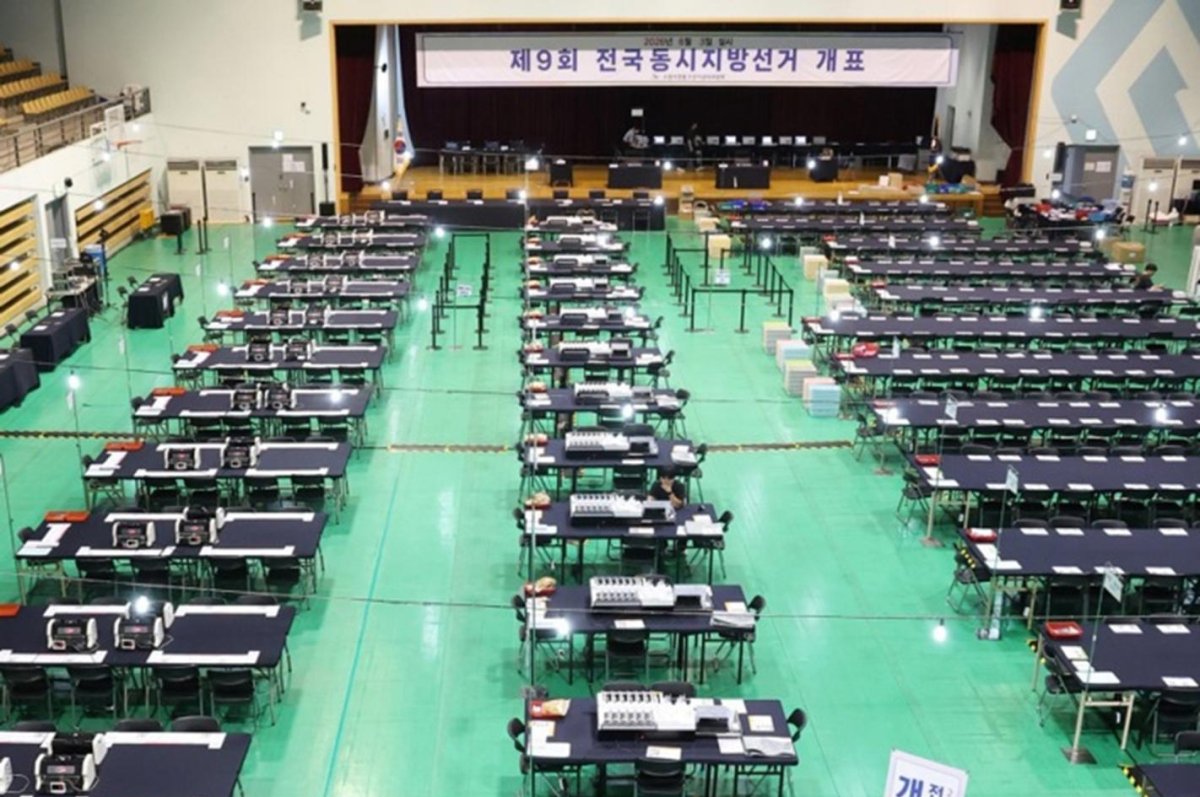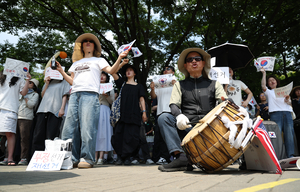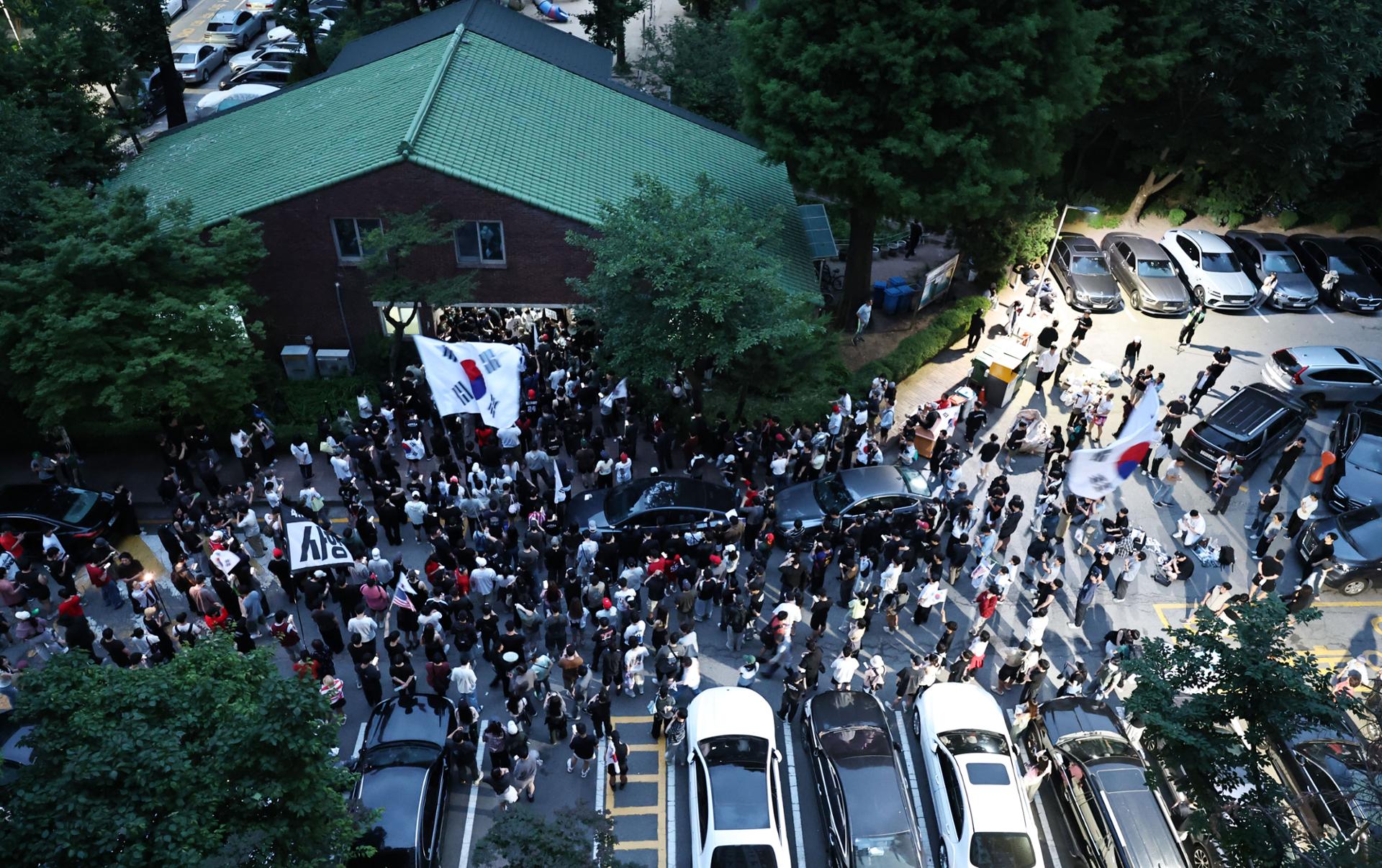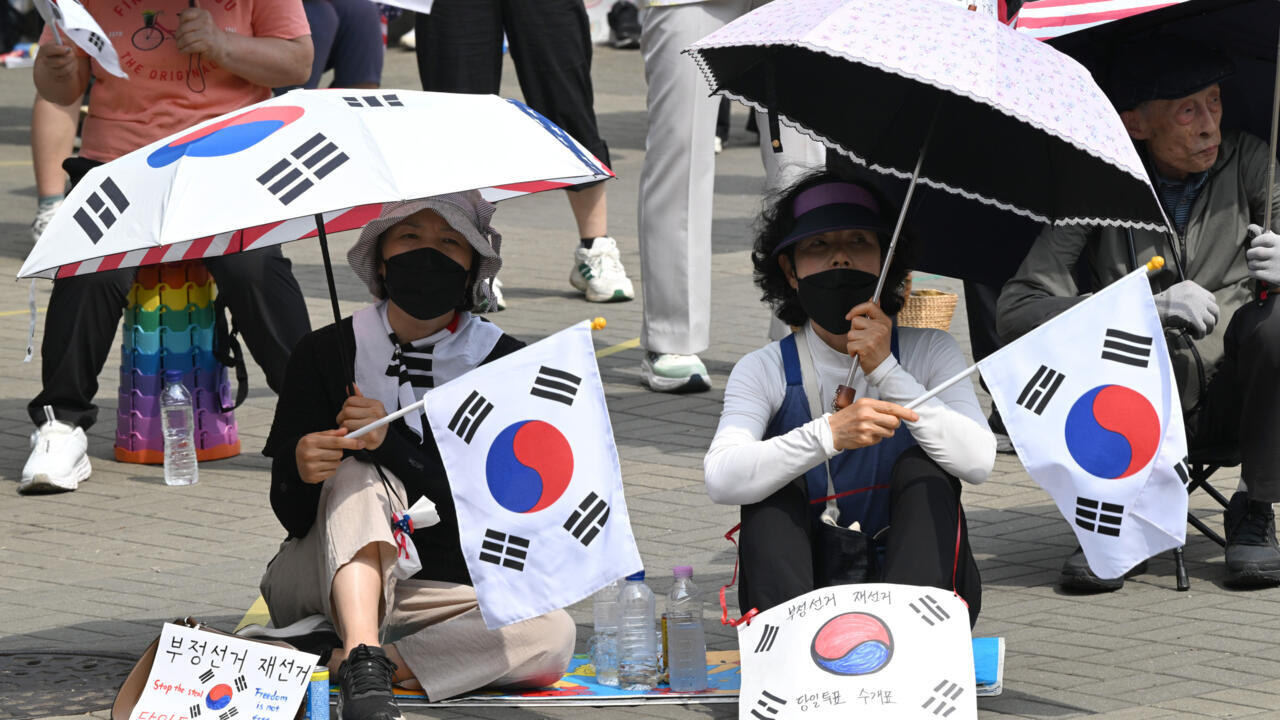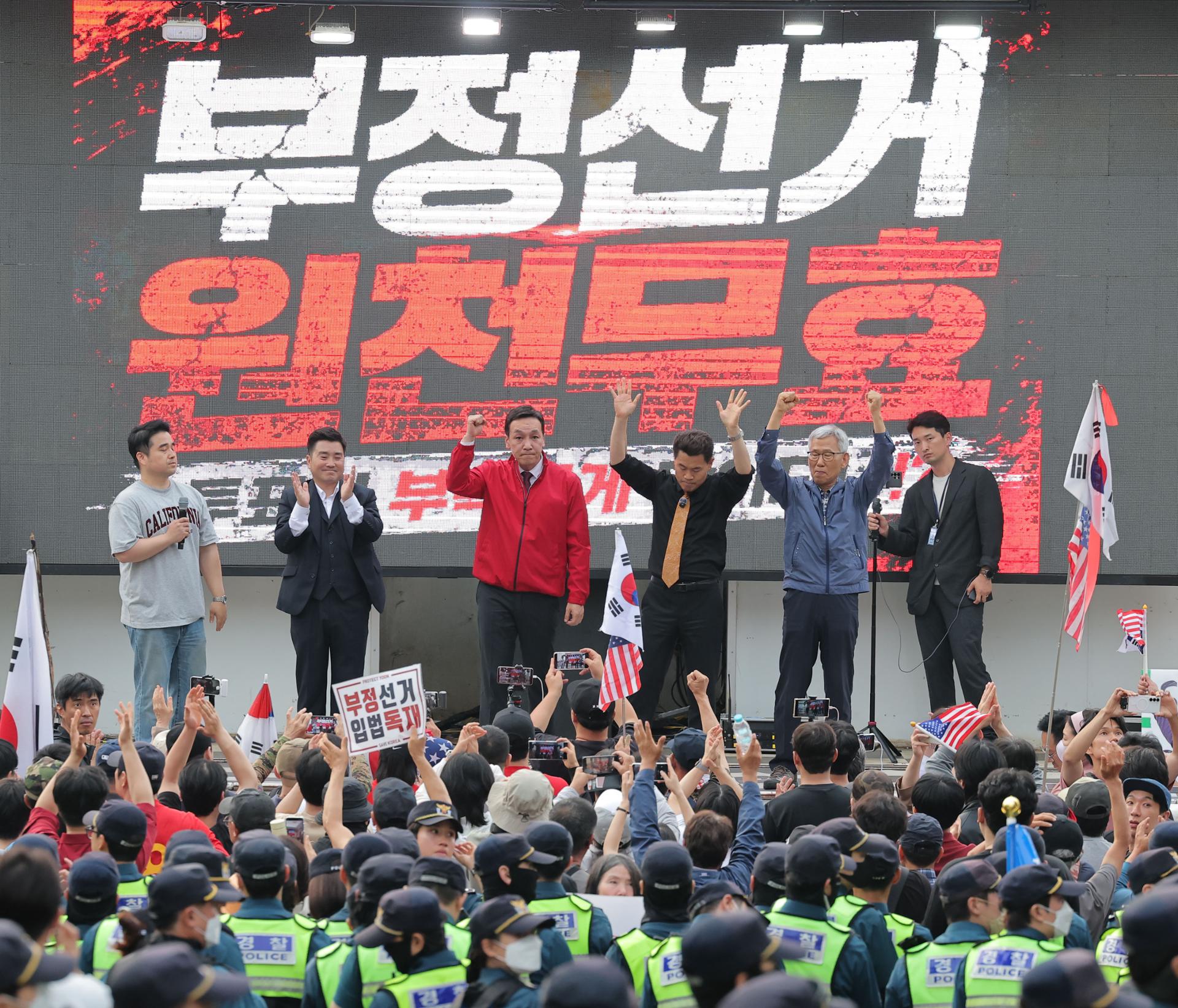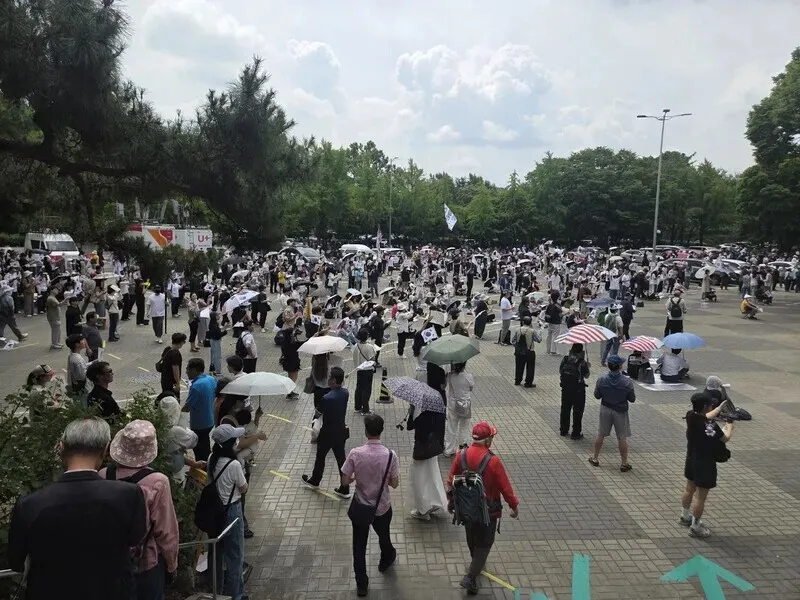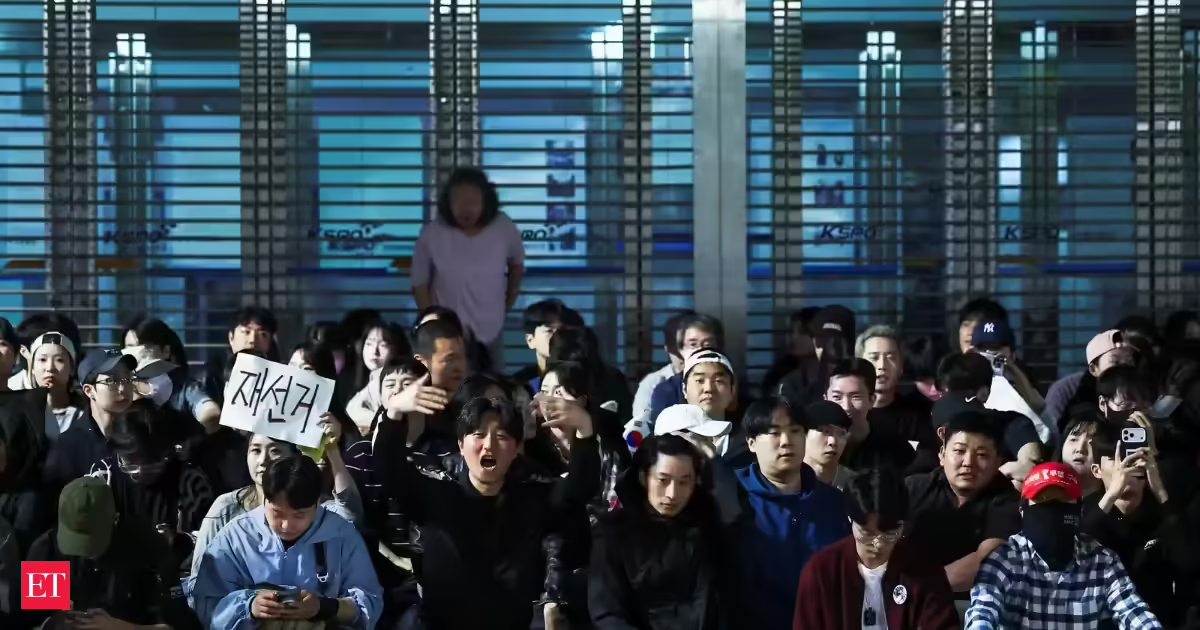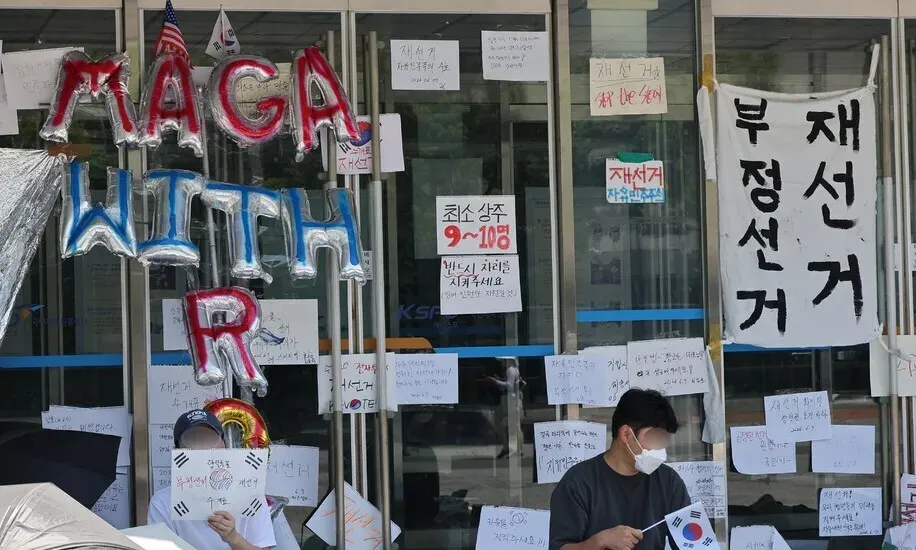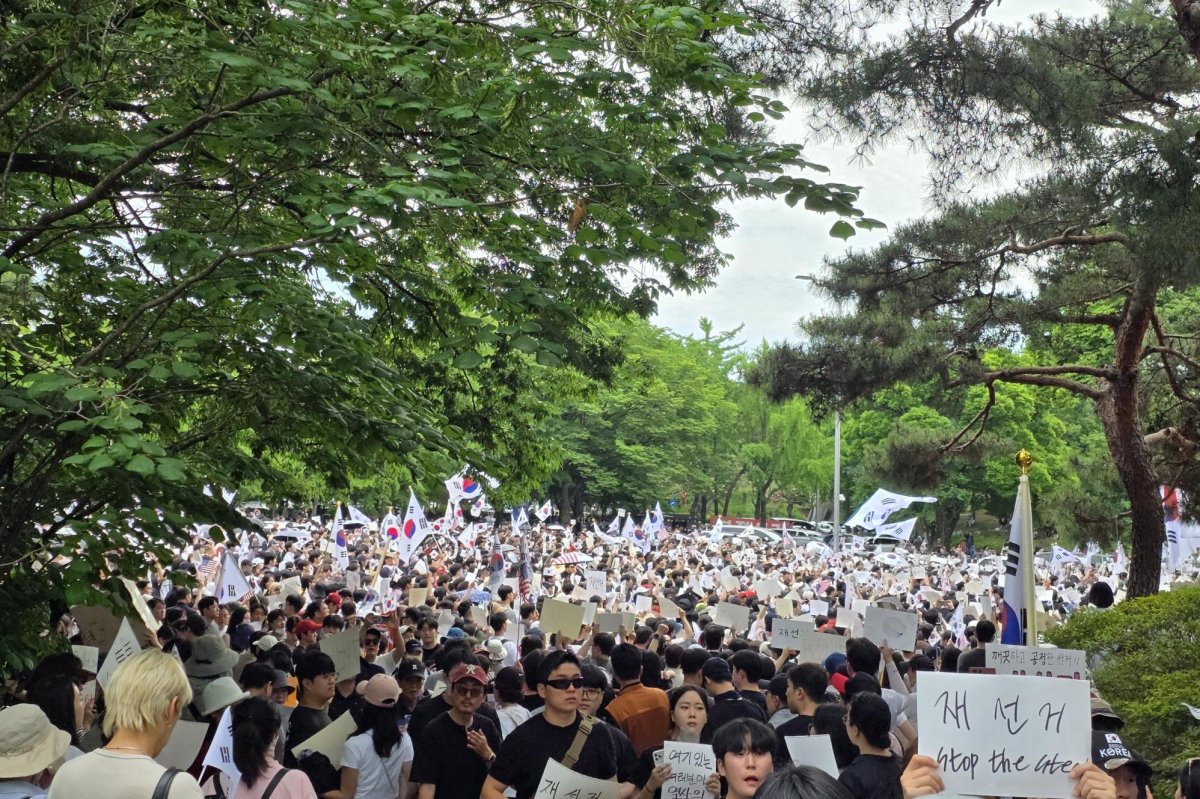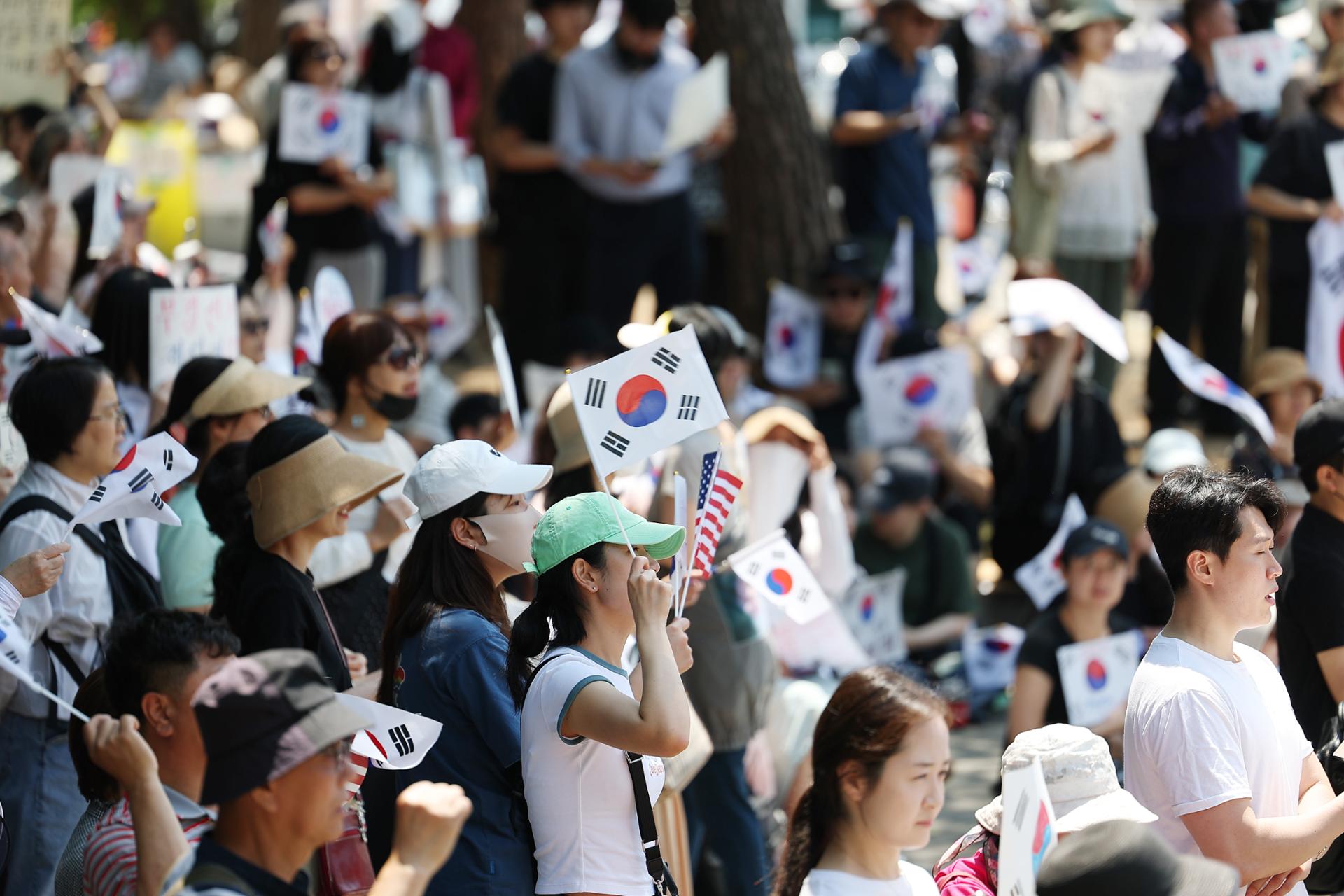
A participant waves a South Korean flag inside the Olympic Park Handball Gymnasium in Seoul's Songpa District on Jun. 9 as protests demanding a reelection continue over ballot shortages during the Jun. 3 local elections. Yonhap
SEATTLE — A ballot shortage that disrupted voting during South Korea's recent local elections could have longer-lasting consequences for public confidence in the country's electoral system, according to a U.S. scholar of Korean politics.
The controversy deepened Thursday when police raided the National Election Commission (NEC) and several local election offices as part of an investigation into ballot shortages that temporarily suspended voting at 26 polling stations nationwide during the June 3 local elections.
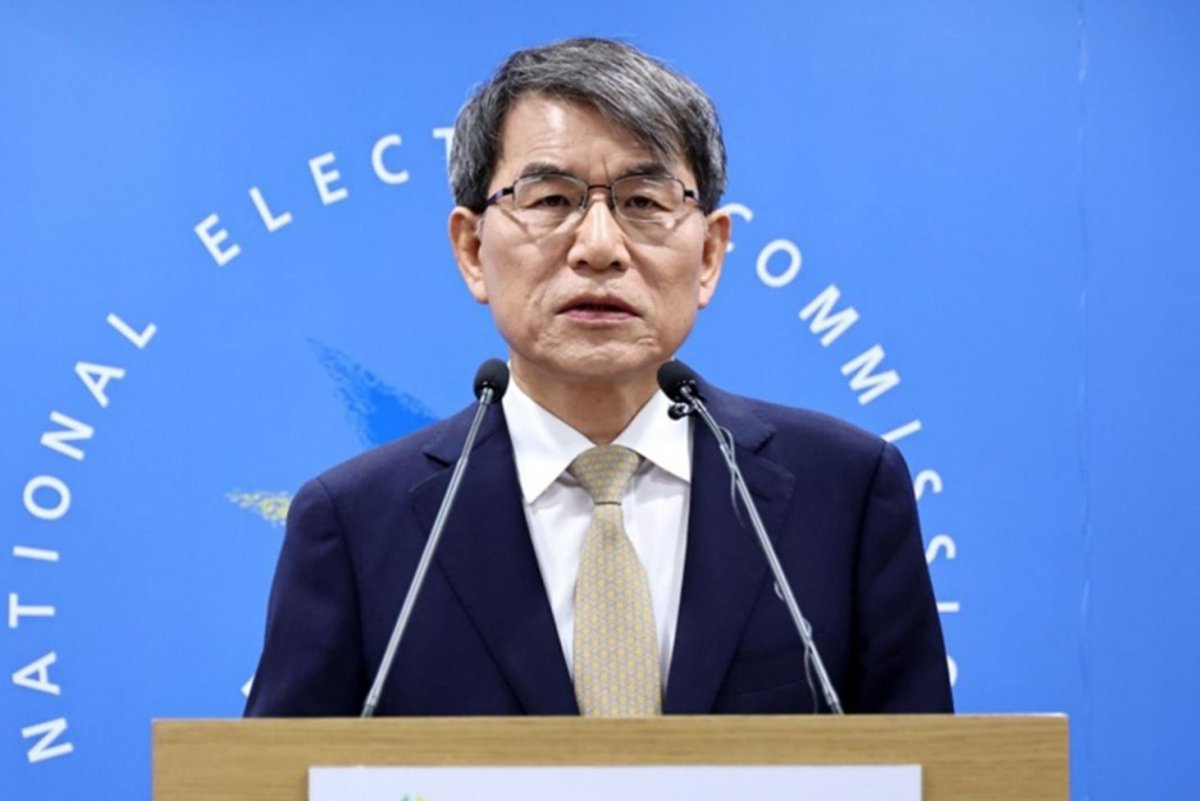
More than 100 investigators took part in searches of seven locations, including the NEC headquarters in Gwacheon and local election offices in Seoul that experienced shortages. Police are investigating possible election law violations and dereliction of duty, while former NEC Chairman Rho Tae-ak, who resigned over the incident, has reportedly been listed as a suspect.
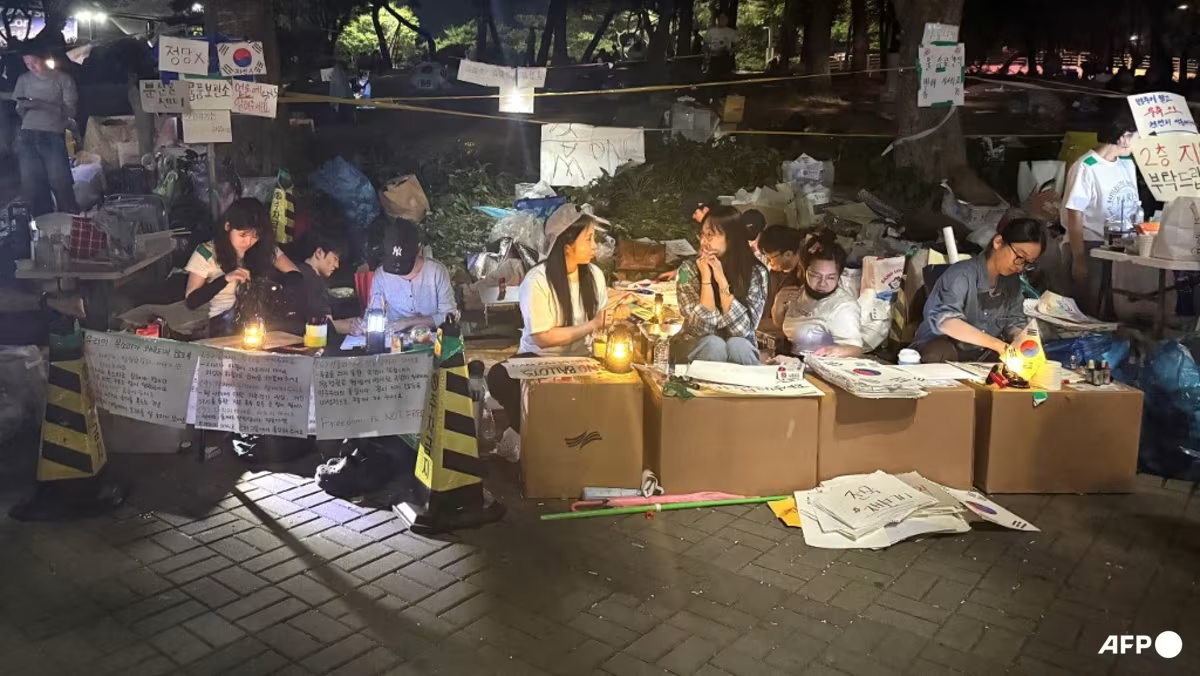
The shortages sparked days of protests by demonstrators demanding a rerun of the elections, though election officials have maintained that the incident does not constitute grounds for a revote.