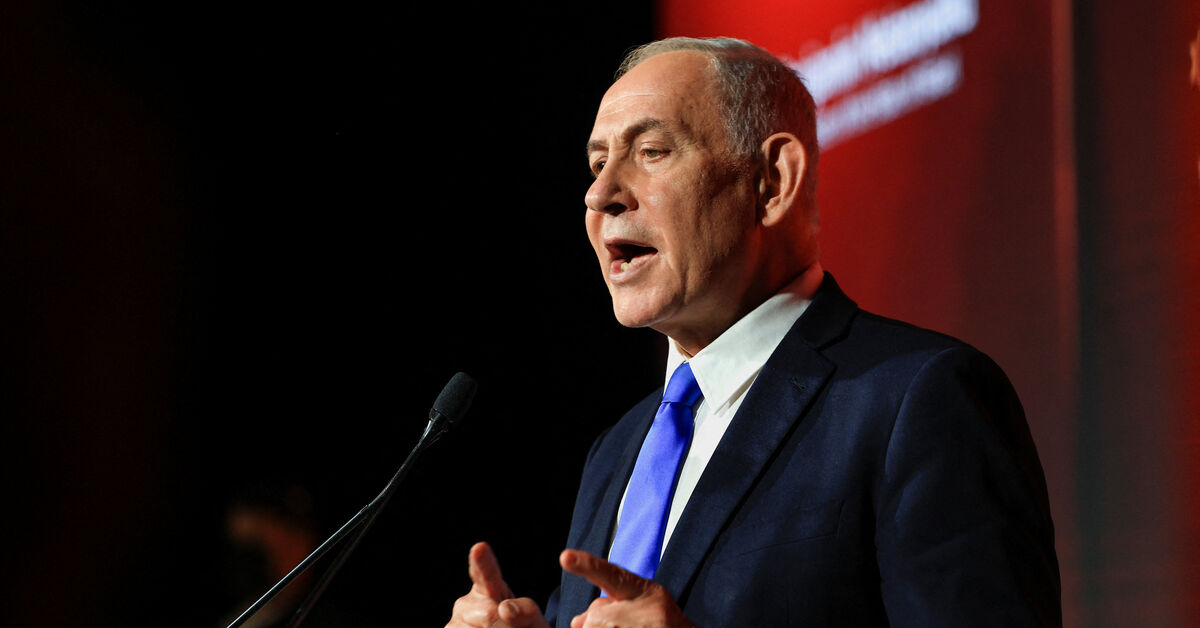
Israeli Prime Minister Benjamin Netanyahu’s government has reportedly declared its intention to selectively comply with Supreme Court rulings, a move that analysts suggest could push the country toward a constitutional crisis. This development is part of Netanyahu’s broader judicial overhaul agenda, which aims to limit the judiciary’s power. The government’s stance represents an unprecedented challenge to judicial authority in Israel and may escalate political tensions, potentially leading to snap elections if the coalition collapses. This escalation comes amid ongoing debates over the government’s efforts to reform the judicial system, which has been a source of significant internal conflict.
In the prediction markets, the likelihood of Netanyahu being ousted by the end of 2026 has decreased, with the probability standing at 40.5%, down from 46% just 24 hours ago. The drop suggests that market participants view the current political crisis as less likely to result in his immediate removal, despite the heightened political tensions. The market for Netanyahu’s ousting by July 31, 2026, remains low at 0.5%, indicating a general consensus that any significant political shift is unlikely to occur in the short term.