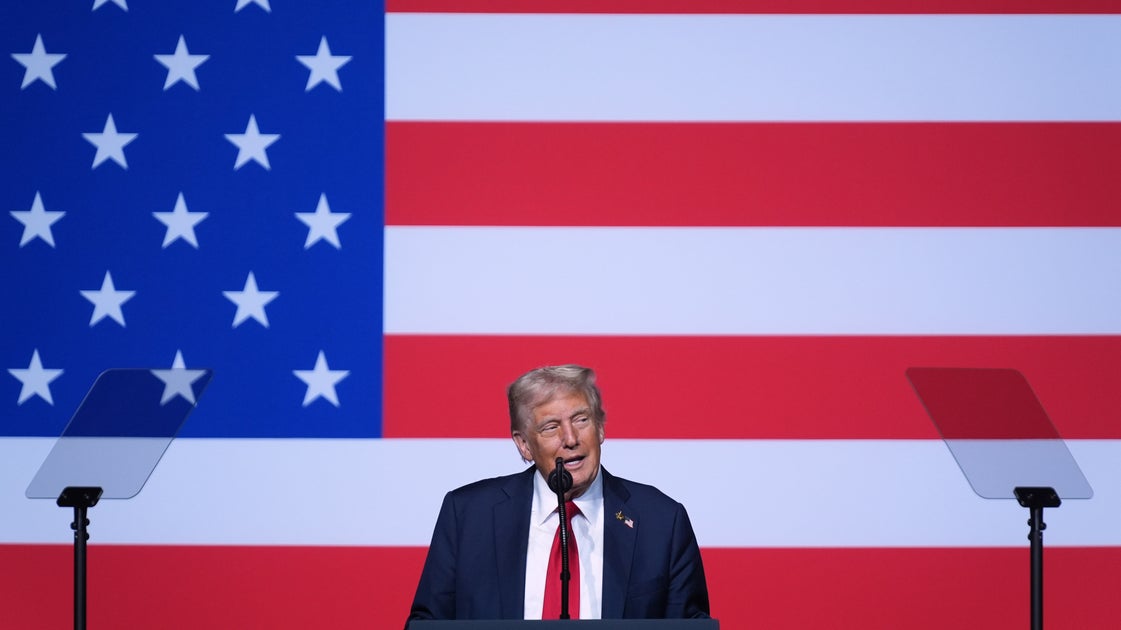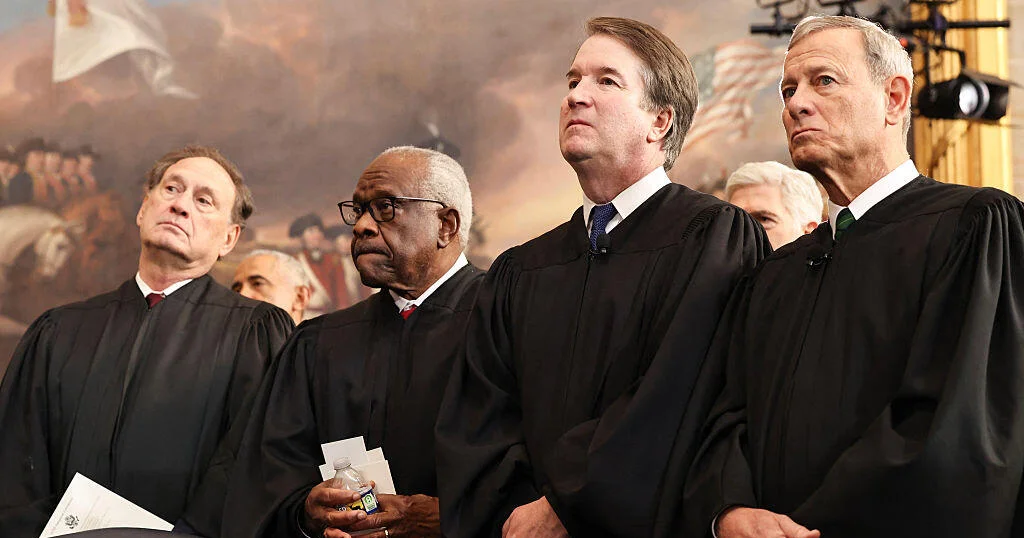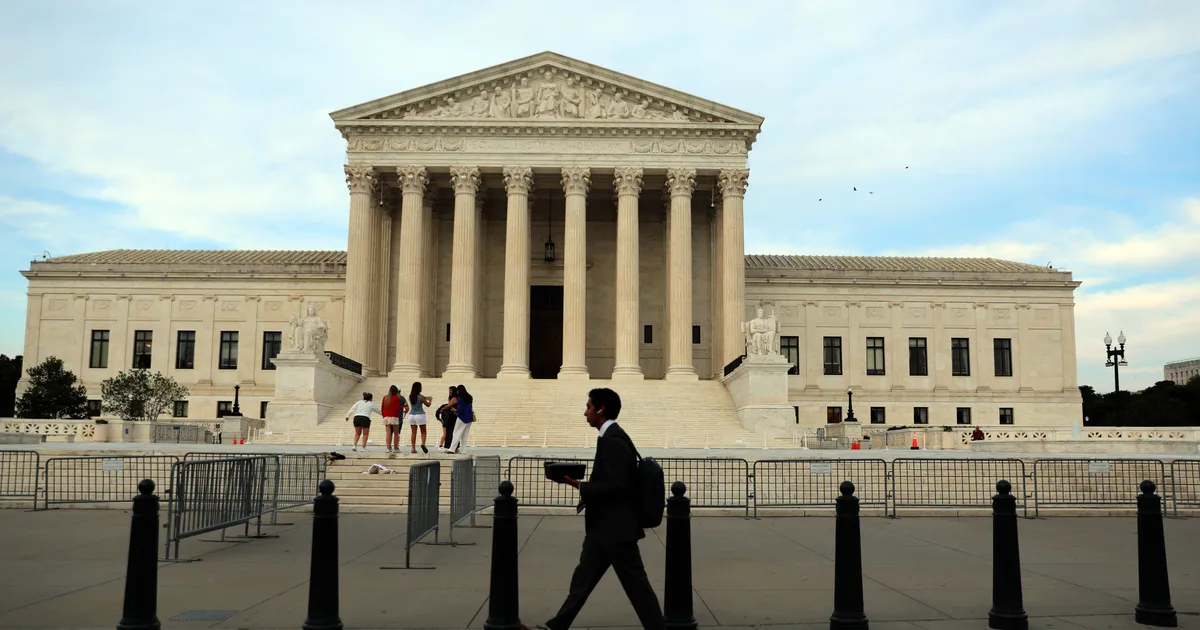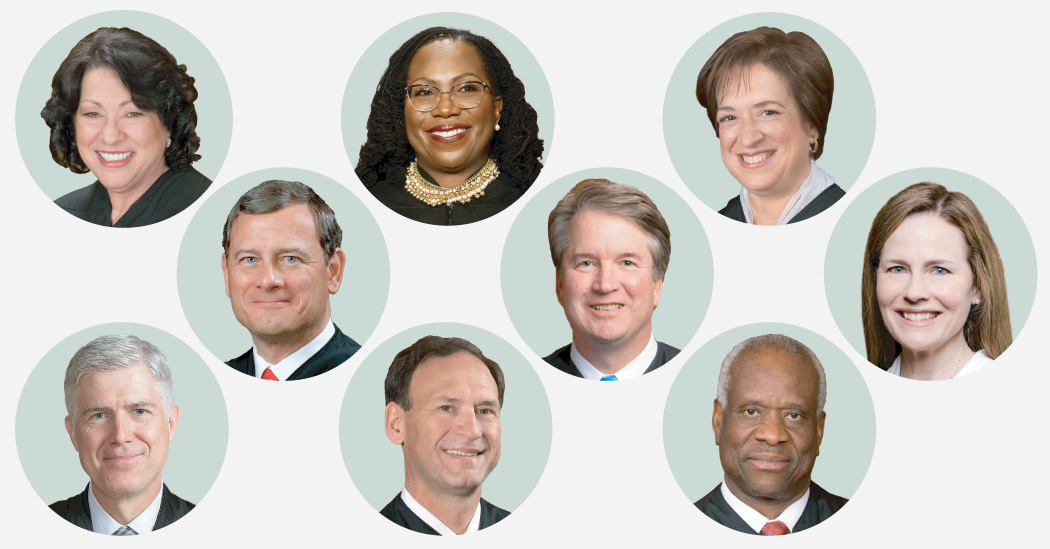
The Supreme Court term that began in October was once again dominated by President Trump’s boundary-pushing policies. Over the next several days, the justices will decide major tests of presidential power in cases involving the administration that could have generational consequences. Major cases this term In contrast to the temporary orders the Supreme Court issued early in the president’s term on an emergency basis, the decisions the court announces this spring and summer will be more lasting. The justices will rule on the president’s attempt to fire independent agency leaders, the independence of the powerful Federal Reserve and his push to end the guarantee that people born in the United States are automatically entitled to citizenship. In a major setback for Mr. Trump’s second term agenda in February, the justices struck down his sweeping tariffs on imports.In other major cases, the justices heard arguments on the rights of transgender athletes; a redo of a consequential voting rights case on whether states can take race into account when drawing congressional districts; a ban on conversion therapy for gay and transgender minors; and two cases testing gun regulations. Gun Possession U.S. v. Hemani 9-0 ruling on June 18 Liberal bloc Sotomayor Jackson Kagan Conservative bloc Roberts Kavanaugh Barrett Gorsuch Alito Thomas The court narrowed a federal law that banned drug users and addicts from owning or possessing guns. The justices ruled that the law was overbroad, sweeping together recreational drug users with people addicted to drugs who posed a danger to public safety. Why it matters The case provided the justices with another opportunity to clarify the test that the majority set out in the 2022 Bruen guns case that expanded the right to carry firearms in public for self-defense. Lower courts have struggled with how to apply the Supreme Court’s test that gun regulations must fit within the country’s “history and tradition.” Where does the public stand? On whether laws like one that makes it unlawful for illegal drug users to possess firearms violate the Second Amendment Such laws do not violateDo violate All respondents70%30% Democrats74%26% Independents67%33% Republicans70%30% Source: SCOTUSPoll Death Penalty Hamm v. Smith Declined to issue a ruling on May 21 The justices decided not to rule in a case dealing with how states should assess whether capital defendants have intellectual disabilities that should require them to be spared the death penalty. Joseph Clifton Smith, an Alabama man, was sentenced to death after a conviction for a 1997 murder. He took multiple I.Q. tests and received varying results, but argues he has a mental disability and should not be executed. The court heard oral arguments in the matter but instead of ruling sent the case back to the lower courts. Why it matters Two decades ago, the court barred the execution of people with mental disabilities as a violation of the Eighth Amendment ban on cruel and unusual punishment. In deciding not to rule, the court did not provide further guidelines for states to evaluate how to determine who is intellectually disabled and whether defendants can present a full picture of their intellectual functioning beyond test scores. Racial Gerrymandering Louisiana v. Callais 6-3 ruling on April 29 Liberal bloc Sotomayor Jackson Kagan Conservative bloc Roberts Kavanaugh Barrett Gorsuch Alito Thomas In a blow to the Voting Rights Act, the court ruled that Louisiana’s new congressional district map was an unconstitutional racial gerrymander. The court’s conservative majority upheld the constitutionality of the Voting Rights Act itself, but in their dissent, the liberal justices accused them of gutting it. A group of white Louisiana voters had sued state officials over the map, in which state lawmakers added a second majority-Black district, in 2024. Why it matters The case challenged Section 2 of the Voting Rights Act, the remaining core piece of the legislation aimed at protecting voters from discrimination based on race. It is unclear how the court’s decision on the Louisiana map could affect the nationwide redistricting battle that has spiraled already into multiple states. Voting rights groups had feared that a decision that limited lawmakers from taking race into account in drawing voting maps could erase majority-minority districts — a move that would most likely benefit Republicans. Where does the public stand? On whether Congressional districts designed to be majority-minority are constitutional and protect the ability of minority voters to elect representatives of their choice The districts are constitutionalAre not constitutional All respondents51%49% Democrats73%27% Independents47%53% Republicans36%64% Source: SCOTUSPoll Free Speech First Choice Women's Resource Centers v. Platkin 9-0 ruling on April 29 Liberal bloc Sotomayor Jackson Kagan Conservative bloc Roberts Kavanaugh Barrett Gorsuch Alito Thomas The court ruled that a New Jersey crisis pregnancy clinic should be able to challenge a subpoena issued by state officials seeking donor information. State officials had subpoenaed the clinic in 2023 as part of an investigation into whether it misled donors over its mission. The justices cleared the way for the clinic to bring a First Amendment challenge in federal court as it tries to fight the subpoena. Why it matters Although the case involves an anti-abortion clinic, the legal issue is a jurisdictional one, whether the state subpoena can be challenged in federal court. Because of its narrow focus and implications for the First Amendment, the dispute includes unusual alliances. The American Civil Liberties Union filed a brief in support of the anti-abortion clinic’s argument, asserting that requests for donor information could chill free speech. Where does the public stand? On whether a demand that a nonprofit pro-life organization turn over internal records as a part of a state investigation violates the First Amendment Demand does violateDoes not violate All respondents62%38% Democrats67%33% Independents63%37% Republicans56%44% Source: SCOTUSPoll Environment Chevron U.S.A. Inc. v. Plaquemines Parish, La. 9-0 ruling on April 17 Liberal bloc Sotomayor Jackson Kagan Conservative bloc Roberts Kavanaugh Barrett Gorsuch Alito Thomas The court ruled that energy companies facing lawsuits over environmental damage in Louisiana can move the challenges from state courts into friendlier federal venues. Louisiana state officials are seeking to hold the companies liable for coastal damage linked to oil and gas production, some dating back to World War II. Why it matters Although the case focused on a narrow question — whether the lawsuits should be heard in state or federal court — there are major implications for climate-related lawsuits. The decision by the justices to move the case to federal court — seen as friendlier to business interests — could make it more difficult for state and local governments to win lawsuits against companies for environmental damage. Conversion Therapy Chiles v. Salazar 8-1 ruling on March 31 Liberal bloc Sotomayor Jackson Kagan Conservative bloc Roberts Kavanaugh Barrett Gorsuch Alito Thomas The court sided with a Christian therapist, rejecting a Colorado law that prohibited mental health professionals from seeking to change the sexual orientation or gender identity of L.G.B.T.Q. minors. Lawyers for the therapist and the Trump administration had said the law impermissibly interfered with free speech. Colorado countered that states have long regulated medical practices to ensure patients are protected from substandard care. Why it matters The court’s decision will have implications for more than 20 other states that have similar laws prohibiting so-called conversion therapy, which medical organizations say is ineffective and potentially dangerous for young people. Where does the public stand? On whether banning conversion therapy violates the free speech and religious freedom of mental health professionals Does not violate their rightsDoes violate All respondents57%43% Democrats66%34% Independents61%40% Republicans51%49% Source: SCOTUSPoll Tariffs Learning Resources v. Trump; Trump v. V.O.S. 6-3 ruling on Feb. 20 Liberal bloc Sotomayor Jackson Kagan Conservative bloc Roberts Kavanaugh Barrett Gorsuch Alito Thomas The court ruled that President Trump exceeded his authority when he imposed sweeping tariffs on nearly every U.S. trading partner. Six companies and several states had challenged the policy. The Constitution gives Congress the power to impose taxes, but Mr. Trump is the first president to declare that a 1977 law gives him the power to set tariffs unilaterally during emergencies. Why it matters The outcome of the case could significantly affect the global economy and American businesses and consumers, and shape Mr. Trump’s foreign policy and economic initiatives for the remainder of his term. The Trump administration had said that a loss at the Supreme Court could force the government to unwind trade deals with other countries and potentially pay hefty refunds to importers. But the president’s top trade negotiator said last month that the administration would move quickly to replace any tariffs invalidated by the court with other levies. Where does the public stand? On whether the president can use an emergency powers law to impose tariffs Cannot use the law to impose tariffsCan use the law All respondents55%45% Democrats88%12% Independents62%38% Republicans19%81% Source: SCOTUSPoll Election Law Challenges Bost v. Illinois State Board of Elections 7-2 ruling on Jan. 14 Liberal bloc Sotomayor Jackson Kagan Conservative bloc Roberts Kavanaugh Barrett Gorsuch Alito Thomas The court held that a Republican congressman from Illinois could challenge the rules governing the counting of votes in his election. The congressman had sued the Illinois State Board of Elections to challenge rules that allow mail-in ballots in the state to be counted up to 14 days after an election provided they are postmarked by Election Day.Writing for the majority, Chief Justice John G. Roberts Jr. concluded that political candidates have a direct interest in election rules — an interest that extends to the integrity of the election that gives them standing to sue. Why it matters This lawsuit could clear the way for more challenges to state election laws. Some observers also predicted that it could reduce the number of lawsuits filed after elections by allowing courts to deal with more challenges in advance. Federal Reserve Board Firing Trump v. Cook Not yet decided Lisa Cook, a member of the Federal Reserve Board, sued President Trump after he tried to fire her in August, citing the law that established the central bank that allows presidents to dismiss members but only “for cause.” The administration cited an allegation that Ms. Cook had engaged in mortgage fraud. She has not been charged and vigorously denied any wrongdoing. Why it matters The case is a key test of how much discretion the president has to remake and control the Fed, which Mr. Trump has repeatedly tried to pressure to lower interest rates. Former top Fed and Treasury officials and Ms. Cook’s legal team warned the Supreme Court that permitting Mr. Trump to fire her while her litigation is underway would spur economic turmoil and undermine public confidence in the central bank. Where does the public stand? On whether the president may remove a Federal Reserve board member whom he has claimed committed mortgage fraud, which the member denies May not removeMay remove All respondents56%44% Democrats85%15% Independents61%39% Republicans23%77% Source: SCOTUSPoll Regulator Firings Trump v. Slaughter Not yet decided President Trump has repeatedly fired independent government regulators despite federal laws meant to insulate them from political pressure by allowing presidents to remove the officials only with good cause. Rebecca Kelly Slaughter, a Democratic member of the Federal Trade Commission, sued after Mr. Trump fired her without citing any reason. The court’s conservative majority has generally allowed the firings to take effect through temporary emergency orders. Why it matters A ruling in Mr. Trump’s favor would call into question the constitutionality of job protections for leaders of more than two dozen other bipartisan commissions and boards — and it would be a major expansion of presidential authority over independent agencies. Where does the public stand? On whether the president may remove a commissioner of the Federal Trade Commission for not sharing policy priorities May not removeMay remove All respondents60%40% Democrats87%13% Independents65%35% Republicans30%70% Source: SCOTUSPoll Birthright Citizenship Trump v. Barbara Not yet decided President Trump signed an executive order on the first day of his second term to end birthright citizenship, the commonly understood principle that children born in the United States are citizens. The order was immediately challenged in court and blocked by lower courts. The Trump administration asked the justices to step in and find the order constitutional. Why it matters Birthright citizenship has been a core tenet of American life since the Reconstruction amendments were passed after the Civil War. A ruling by the court to uphold Mr. Trump’s executive order could redefine what it means to be an American and overturn more than a century of precedent from the court. Where does the public stand? On whether the president's executive order directing the government to not recognize children born to certain immigrants as U.S. citizens violates the constitution Does violate the constitutionDoes not violate All respondents63%37% Democrats91%9% Independents68%32% Republicans31%69% Source: SCOTUSPoll Mail-In Ballots Watson v. R.N.C. Not yet decided In 2020, during the Covid-19 pandemic, Mississippi lawmakers voted to accept mail-in ballots that are mailed and postmarked by Election Day but arrive up to five business days later. Republican leaders challenged the grace-period rule, asserting that federal law requires that ballots must be received by Election Day. Why it matters A ruling striking down Mississippi’s law has the potential to invalidate not only the state’s mail-in ballot rules, but also similar laws in more than a dozen other states. It could also potentially upend grace periods aimed at allowing military, diplomatic and other overseas voters to participate, along with rural voters and people with disabilities, and potentially disrupt all state laws that allow mail-in voting. Where does the public stand? On whether states may count mailed ballots postmarked on or before Election Day but received later May count ballots received laterMay not count All respondents55%45% Democrats77%23% Independents57%43% Republicans32%68% Source: SCOTUSPoll Campaign Finance N.R.S.C. v. F.E.C. Not yet decided On the eve of the 2022 midterms, JD Vance, then a Senate candidate, sued to challenge campaign finance rules limiting how much money political parties can spend in coordination with candidates. He was joined by Republican groups. Why it matters A decision for the Republicans could give more power to official political parties and reduce the influence of super PACs. A broad ruling could also expand the influence of big donors compared with small-dollar contributions and could chip away at one of the Democrats’ financial advantages ahead of the midterms. Where does the public stand? On whether such campaign finance limits violate political parties’ right to free speech Such limits do not violate rightsDo violate All respondents79%21% Democrats80%20% Independents80%20% Republicans77%23% Source: SCOTUSPoll Transgender Athletes West Virginia v. B.P.J. and Little v. Hecox Not yet decided Two transgender athletes — Becky Pepper-Jackson, a high school student in West Virginia, and Lindsay Hecox, a college student in Idaho — challenged laws in their states that prohibit the participation of transgender athletes on girls’ and women’s sports teams. The Trump administration and lawyers for the states say transgender female athletes threaten to undermine progress under Title IX, which has led to increased opportunities for women in sports. Why it matters The outcome of the two cases has implications for the 25 other states with similar laws and for athletes who compete in school and collegiate sports around the country. Where does the public stand? On whether barring transgender girls from playing on girls’ sports teams violates their constitutional rights Does not violate their rightsDoes violate All respondents69%31% Democrats45%55% Independents72%29% Republicans89%11% Source: SCOTUSPoll Guns on Private Land Wolford v. Lopez Not yet decided Hawaii passed a number of gun laws in response to a 2022 Supreme Court case that expanded gun rights and set out a new test for evaluating regulations. One state measure required gun owners to get advance permission to carry weapons on private property that is generally open to the public. Three Maui gun owners and a local firearms advocacy group challenged the restriction, arguing that it violates the Second Amendment. Why it matters A decision by the court could clarify the test for evaluating the constitutionality of gun regulations that the justices set out in 2022 in New York State Rifle & Pistol Association v. Bruen. Lower courts have struggled to figure out how to carry out the Supreme Court’s test, which required that they evaluate the constitutionality of gun laws based on the country’s “history and tradition.” Where does the public stand? On whether such concealed carry laws violate the Second Amendment Such laws do not violateDo violate All respondents62%39% Democrats77%23% Independents61%39% Republicans47%53% Source: SCOTUSPoll Religious Rights Landor v. Louisiana Not yet decided Damon Landor, a Rastafarian, sued Louisiana prison officials after guards forcibly shaved him bald while he was serving a five-month sentence for drug possession. At the time, Mr. Landor, whose faith requires him to let his hair grow long, was carrying a copy of a legal opinion that said inmates must be allowed to keep their dreadlocks, under a federal law protecting prisoners’ religious freedom. The issue before the justices is whether Mr. Landor can seek monetary damages for his treatment. Why it matters The Supreme Court has in recent years repeatedly bolstered religious rights, but during oral argument in Mr. Landor’s case the justices seemed to divide along ideological lines, with members of the court’s conservative majority suggesting the statute at issue does not clearly permit such lawsuits. Where does the public stand? On whether prisoners should be able to sue officials for money damages Should be able to sueShould not be able to sue All respondents51%49% Democrats68%32% Independents56%45% Republicans30%70% Source: SCOTUSPoll Asylum Policy Noem v. Al Otro Lado Not yet decided The court is reviewing a Department of Homeland Security policy that allowed the government to turn noncitizens away at the border without hearing any claims they had that they qualified for asylum. The policy was in effect during the Obama administration and President Trump’s first term but reversed during the Biden administration. Why it matters Immigrant advocates say the so-called metering policy violates federal law, which requires officials to “inspect and refer for processing” asylum seekers who are “physically present” in the United States. The Trump administration says the policy is critical for managing the southern border. Where does the public stand? On whether noncitizens stopped near the border outside of the United States should be allowed to apply for asylum Should be allowed to applyShould not be allowed All respondents56%44% Democrats80%20% Independents61%39% Republicans29%71% Source: SCOTUSPoll Protections From Deportation Mullin v. Doe; Trump v. Miot Not yet decided The justices are examining the president’s efforts to end deportation protections for hundreds of thousands of Haitian and Syrian migrants. As part of the administration’s crackdown on immigration, the president has moved to terminate the program, known as Temporary Protected Status, that allows migrants from certain troubled nations to live and work legally in the United States. Why it matters At issue is a statute that gives the secretary of homeland security authority to provide humanitarian relief to citizens of countries affected by armed conflict, natural disaster or other catastrophes. Immigrant advocacy groups sued to halt the termination of the program, saying the government had not taken into account conditions in Haiti and Syria, as required by law.
The Major Supreme Court Decisions in 2026
The Supreme Court is deciding a series of cases central to President Trump’s second-term agenda.
3,174 words~14 min read