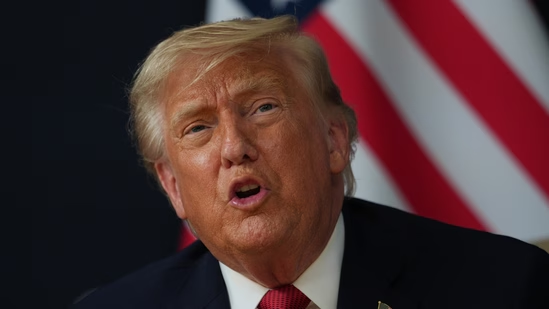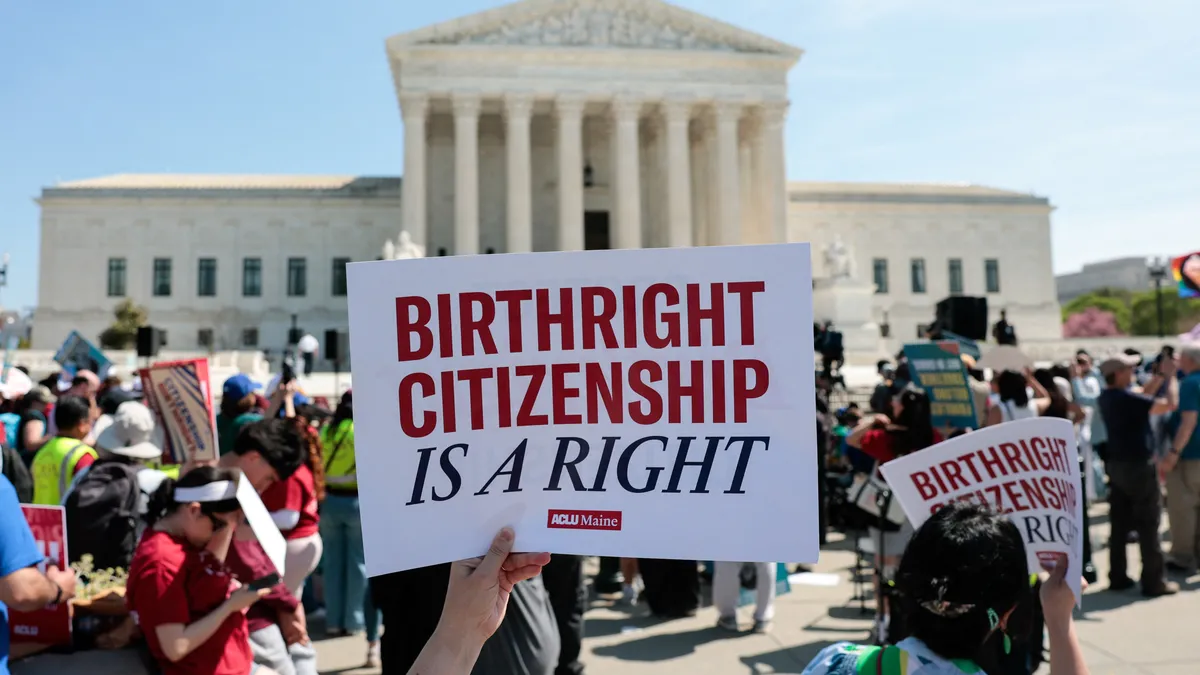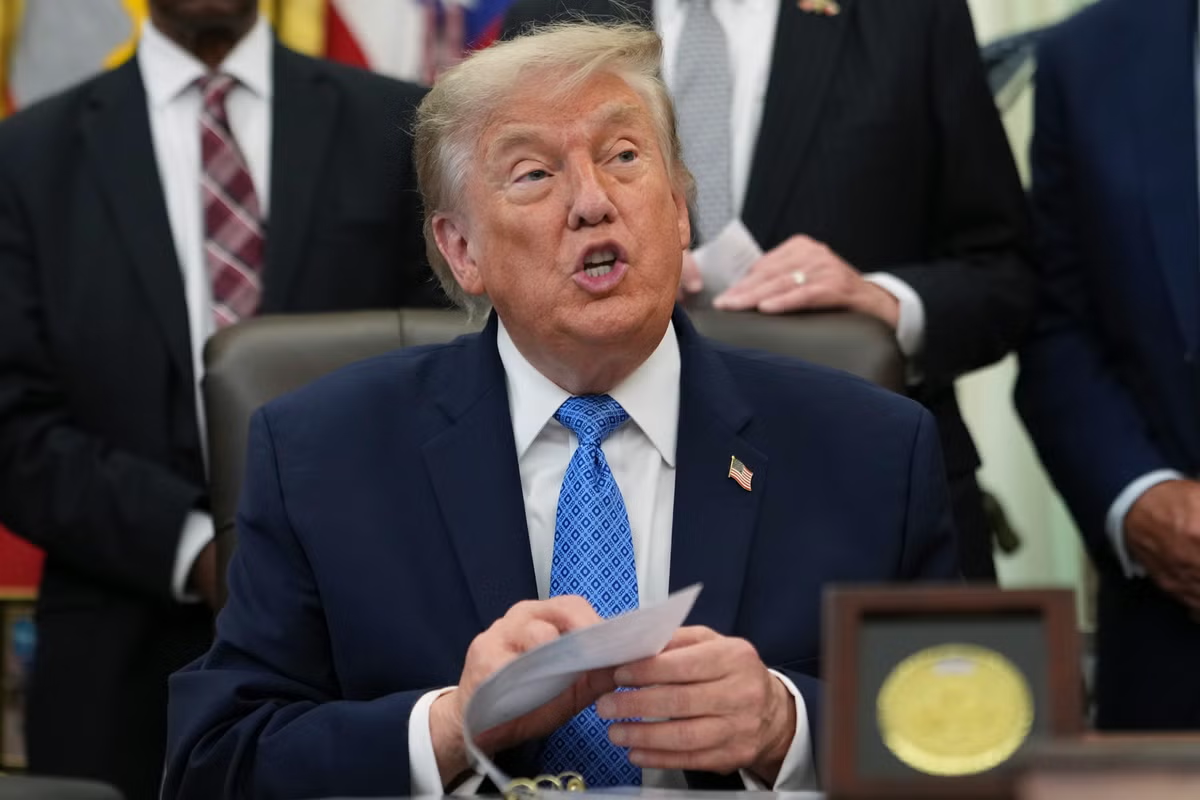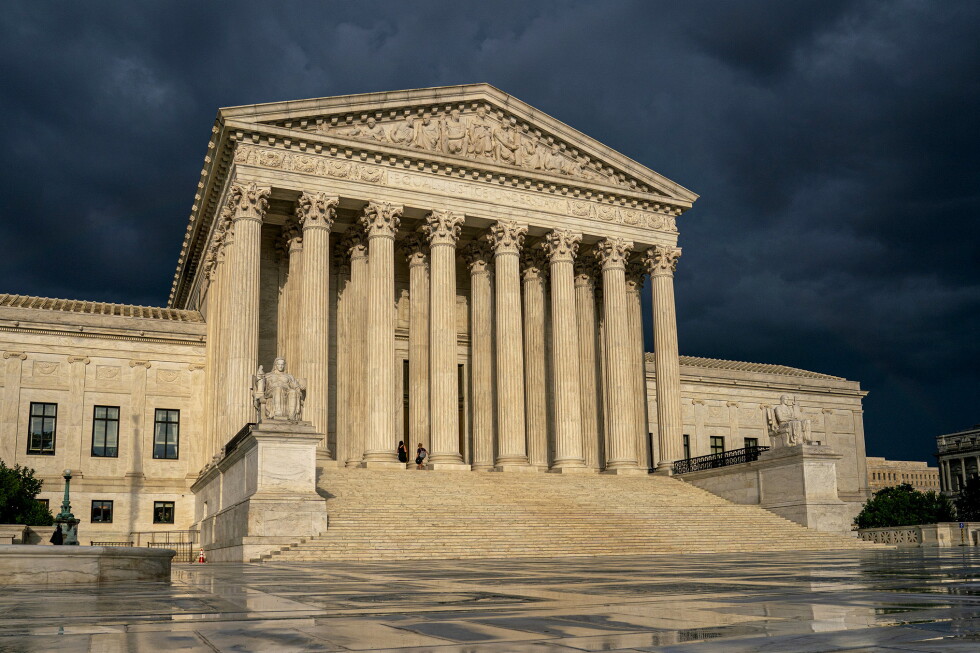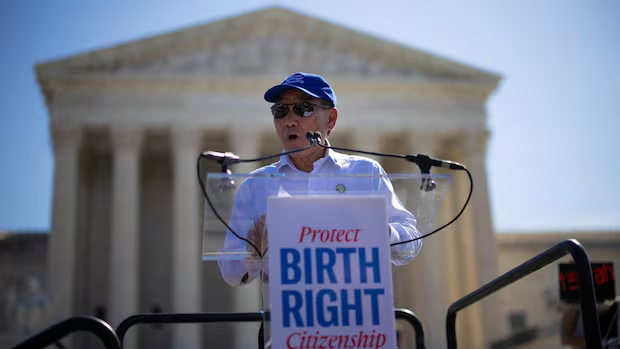
WASHINGTON — The Supreme Court in the coming fortnight will render judgment in a flurry of significant cases involving President Donald Trump, including his attempt to limit birthright citizenship and fire a member of the Federal Reserve’s Board of Governors.The court, which has a 6-3 conservative majority, has 20 cases left to decide in its current term, with the next ruling day set for Thursday. The term starts in October and generally concludes at the end of June when many of the biggest and most consequential cases are decided.Trump has already suffered a major loss at the court this year, with the justices in February blocking his sweeping tariffs on imports from around the world.He reacted by lashing out at the justices who were in the majority, including two he appointed.Robert Luther III, a professor at Antonin Scalia Law School at George Mason University who served in the White House during the first Trump term, said that while the president will inevitably lose some cases, it is partly because the administration is pushing an “extremely robust vision” of presidential power.Trump cases at the Supreme CourtTrump v. Barbara: The administration's effort to limit birthright citizenship.Trump v. Cook: The president's attempted firing of Fed board member Lisa Cook.Trump v. Slaughter: Trump's firing of Federal Trade Commission member Rebecca Slaughter.Mullin v. Doe/Trump v. Miot: The administration's plan to remove legal protections from Haitian and Syrian immigrants.Mullin v. Al Otro Lado: A dispute over the government's powers to turn away asylum-seekers at the border.“While ultimately there may be a few losses, I think the court continues to move in a pro-executive direction, a vision that is more consistent with President Trump’s view of the executive branch,” he added.In recent weeks, Trump has appeared rattled at the general consensus that the court is likely to rule against him on his widely touted plan to reinterpret a provision in the Constitution’s 14th Amendment that guarantees citizenship to almost everyone born on U.S. soil.Trump’s proposal would not grant citizenship to babies whose parents do not have legal status in the U.S. or are temporary visitors.He attended the birthright citizenship oral argument in April, the first sitting president to do so, and has since grumbled about the likelihood of the court ruling against him.“The United States States of America cannot live with the shackles of Birthright Citizenship. It is not economically, or otherwise, sustainable, and no other Country in the World, of consequence, does it!” Trump said in a Truth Social post last week.Based on the oral arguments, the court also seems likely to rule against the president on his effort to fire Lisa Cook, the Federal Reserve Board of Governors member. The court already delivered a blow to Trump on that front by refusing to immediately allow him to remove Cook from office last fall.Trump sought to remove Cook based on allegations of mortgage fraud against her, which she denies. The Federal Reserve has a long tradition of being independent, but Trump has openly sought to increase his influence over it. He recently appointed Kevin Warsh to be the new chairman of the board.The court seems poised, however, to hand Trump victory on his broader effort to reshape the government by endorsing his power to fire members of other hitherto independent agencies without needing to give a reason. That case involves the ouster of Federal Trade Commission member Rebecca Kelly Slaughter.The Supreme Court allowed the firing to take effect in September and has also been receptive to the president’s removal of officials at other agencies.In a separate Trump-related case, the justices are considering whether to grant his requests to remove protections for thousands of Haitian and Syrian immigrants as part of the administration’s hard-line immigration policy. The ruling in the two linked cases will determine whether the administration can quickly revoke what is known as Temporary Protected Status for people from other countries too.In another immigration case involving the administration, the justices will issue a ruling on the government’s powers to turn away asylum-seekers at the border.The Supreme Court has several high-profile cases to decide that are not directly related to Trump policies, including two involving state efforts in West Virginia and Idaho to ban transgender girls and women from participating in girls’ and women’s sports. The justices will also issue rulings on significant cases involving election law and gun rights.While the end of the Supreme Court term may be a mixed bag for the Trump administration, liberal advocates are anxious that the conservative majority under Chief Justice John Roberts does not get too much credit for a potential ruling against the president on birthright citizenship. They remain focused on the court’s contentious recent decisions that cast a blow against the Voting Rights Act and allowed Republican-led states to adopt new congressional maps that eliminate majority-Black districts.“I don’t think a ruling against Trump in birthright citizenship is going to make a difference in terms of how the Roberts court is perceived,” said Elizabeth Wydra, president of the left-leaning Constitutional Accountability Center. She added, “The Supreme Court simply not getting on the train to crazy town doesn’t negate the fact they have turned back the clock on American progress toward multiracial democracy.”
Trump faces Supreme Court showdown as major rulings loom
Over the next two weeks, the justices will issue key rulings, including rulings on the president’s effort to curb birthright citizenship and fire a member of the Federal Reserve.
864 words~4 min read