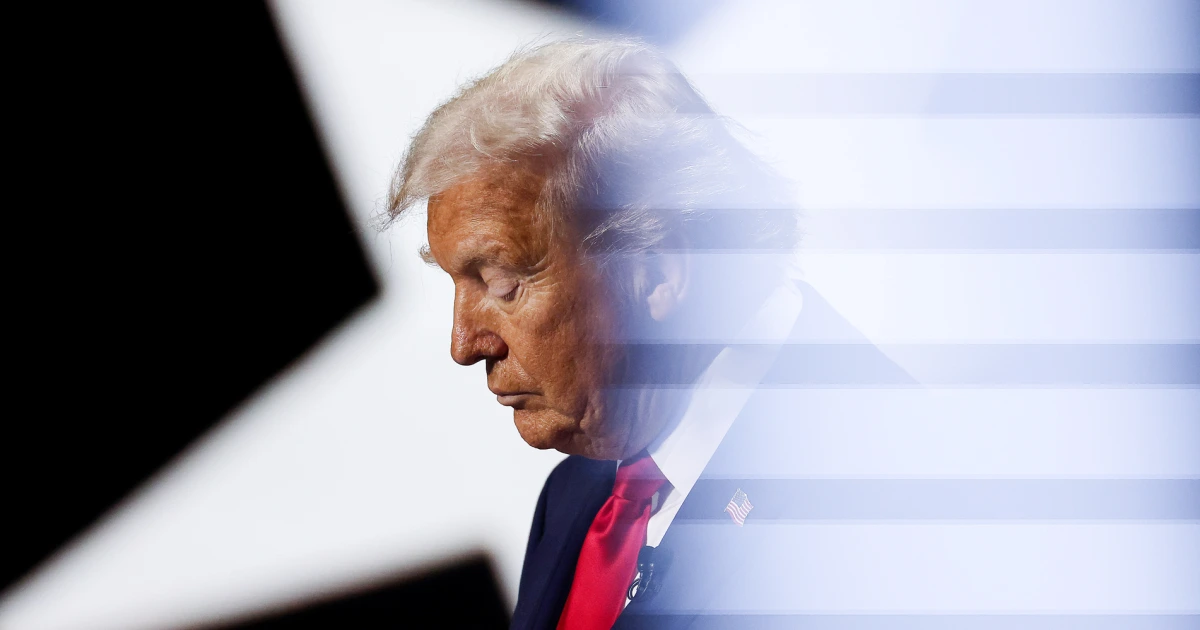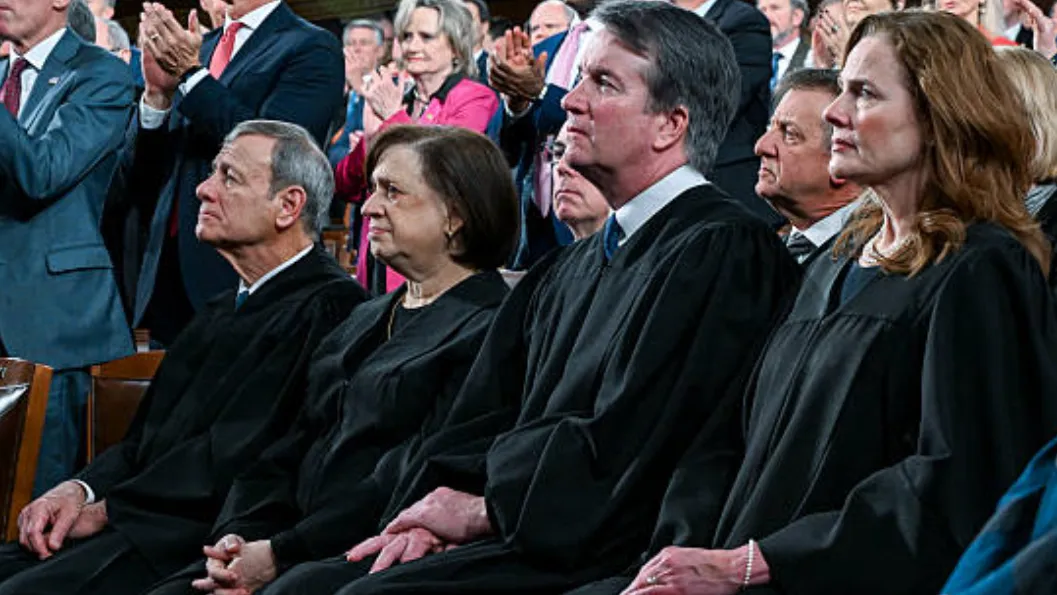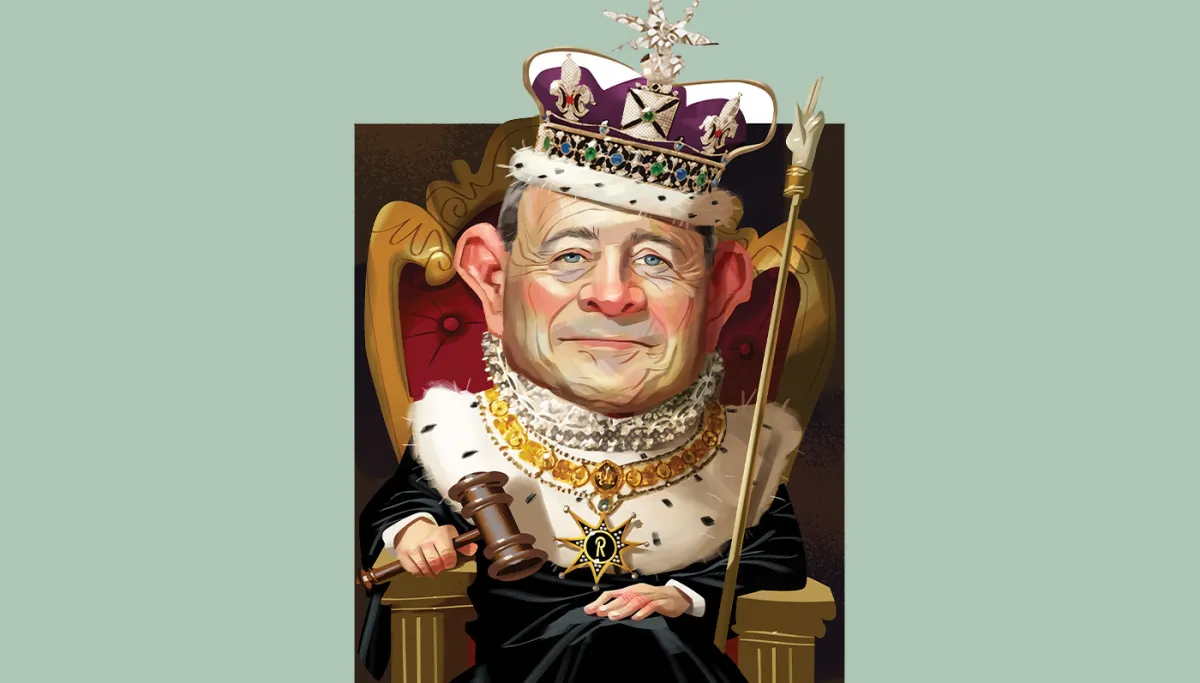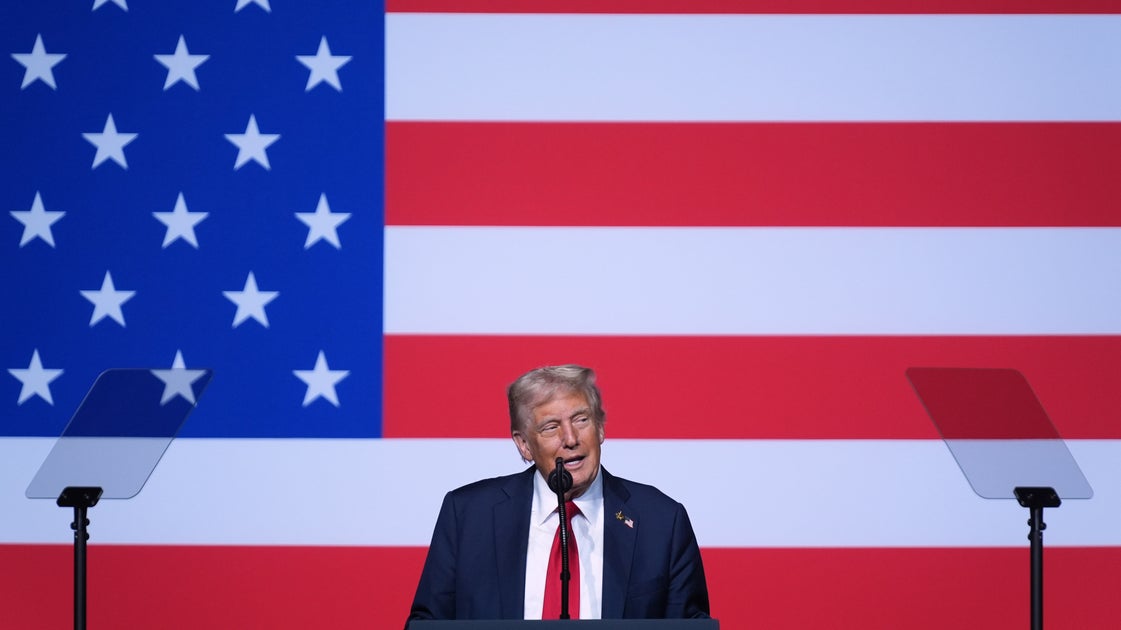
Last week, the Supreme Court wrapped up its term, issuing several major decisions that accomplished long-held conservative goals. The President was given the ability to fire the head of numerous independent agencies; the scope of the Voting Rights Act was diminished; states were given the power to ban trans women from sports; and the executive was given the power to deport hundreds of thousands of immigrants, as well as limit other immigrants’ ability to apply for asylum. While many of these decisions were 6–3, along the typical ideological split, the Trump Administration did suffer losses in cases where some of the six Conservative members—usually Chief Justice John Roberts and Justice Amy Coney Barrett—voted with the liberals. These include a decision limiting the President’s power to impose tariffs, and another that carved out an exception for the Federal Reserve by blocking Trump from ousting Fed governor Lisa Cook. (The Court also voted to preserve birthright citizenship, but only five Justices affirmed birthright citizenship as a Constitutional right.)While the Supreme Court is now often characterized as hopelessly political, some legal commentators reject such a wholesale analysis of the Justices. One of them is Elie Honig, a CNN senior legal analyst, who recently wrote a column for New York magazine on this term. Honig calls the labelling of the Court as political “one of the easiest taglines in our current public discourse,” and says that while five of the Justices can easily be labelled political, four that often receive that criticism (Roberts, Barrett, Brett Kavanaugh, and Neil Gorsuch) are the only ones who “have shown any ability to dispassionately assess the law and—surprisingly often in cases with massive stakes—to reach real-world outcomes that don’t jibe with their own ideology.” I recently spoke by phone with Honig. Our conversation, edited for length and clarity, is below.How would you summarize this most recent Supreme Court term?Trump lost some very big cases, and he won some big ones. But if I had to speak in overarching terms, the cases he lost are mostly one-offs, whereas the cases he won will give Donald Trump himself, but also the Presidency more broadly, more power moving forward. So if we look, for example, at two of his biggest, most high-profile losses—tariffs and birthright citizenship—both of those were major policy initiatives of Donald Trump himself. They were struck down by cross-ideological Supreme Court majorities. Well, both of those policies are now dead and gone, and really, there’s no lasting impact on the executive power of the Presidency, other than you can’t run totally wild with an executive order.Tariffs aren’t totally dead and gone, but yes.The tariffs from the International Emergency Economic Powers Act (IEEPA) are, but, right, there are other ways to do them. On the flip side, if we look at two of the biggest wins that the Administration and conservatives got this term, you’ve got the redistricting case, which gutted the last remnants of the Voting Rights Act, and opened the door to dissolution of intentionally created majority-Black voting districts. This is going to permanently change the way that we redistrict and draw congressional lines, and move power to Republicans in a more systematic way. And then you have the President’s ability to fire independent agency heads. That is a structural game changer, because now, the President has complete discretion to fire these quasi-independent agency members for any reason or no reason at all. Whereas before this, Congress had limited that, and said you can only fire them for cause. Well, the Supreme Court basically said, To heck with you, Congress, your little law here has no impact.Now, they carved out the Fed, and I’ve seen that portrayed as Trump wins one and loses one. But that, to me, is not the most accurate read. The Fed decision does not at all preclude him from firing Lisa Cook. It simply says you have to show cause. And you have to go through some sort of process. You can’t just fire her by tweet, essentially. So, the win is far, far broader and far more impactful than the loss.Why do you think some conservatives joined with the liberals and carved out the Fed as an exception?To hear them tell it in their decisions, it’s because the Fed has a different Constitutional structure. It was established directly by Congress. But I think the real reason, and this is in Kavanaugh’s opinion, is just, as a policy matter, those conservatives and the liberals realize you just don’t want the President messing with the Fed. It’s too disruptive to the economy and to international markets. Kavanaugh essentially says this part out loud, but I think they just realized that if you allow the President to tweak the National Labor Relations Board, no big deal. But if you allow the President to go in and do what he wants with the Fed, now you’re messing with commerce, now you’re messing with international finance, and I think the Justices are wary of that.And possibly messing with Republican electoral outcomes. I do not want to say that this is the only reason that this happened–I don’t know. Maybe. Perhaps. That’s reading a bit into it, yeah.I’m just saying, when you say you’re messing with markets, that stuff matters to politics. But anyway, you wrote this piece downplaying the idea that the four least conservative of the six conservative Justices were acting politically the way the other five Justices were, and you seemed dismissive of people who describe the Court as political. So how would you describe something like the Fed decision?My argument is that the Court is neither entirely political nor that it is entirely apolitical. I think we have to be a little more nuanced in the way we go about this. First, how do we define political? I think, generally speaking, that criticism means this is a 6–3 conservative supermajority, and when push comes to shove on all the big things, they’re just gonna go 6–3 for Trump. I think what we all basically mean when we say a Justice is being political is that they’re starting from the bottom line. They’re starting from the political or policy or real-world outcome, and then reverse-engineering the legal analysis, the math calculation, to give them the desired result. And I think what we mean when we say that Justices are being nonpolitical is they’re just doing some faithful version of the math equation, and living with the result, whether it aligns with their ideology or not.Thomas and Alito, on all the major cases, somehow come to a result that’s pro-Trump or pro-conservative. Not once in any major decision this whole term did they reach a decision that gave us a liberal outcome, or that harmed Trump, or that was against the Administration. And essentially, the exact opposite applies to the three liberal Justices. The only real exception is that they gave a split ruling on the transgender athletes case, where all three liberal Justices agreed with the conservatives that state laws banning transgender athletes comply with Title IX, but dissented on whether it complies with equal protection.I’m not saying that the other four are perfect paragons of judicial impartiality, and that ideology never factors in. I am saying that, on a substantial number of very high-stakes cases, we saw two or more of those four Justices reaching results that go against their conservative ideology, that yield nonconservative, anti-Trump, pro-liberal outcomes. I don’t think there’s any way to ignore that. If all nine Justices just did what I accused the five political Justices of doing, the world would look very different right now. Like, this isn’t just an academic argument. We would have more tariffs in place, and have a substantially narrowed version of birthright citizenship. We’d have no allowance for mail-in ballots coming in after the date of the election. We’d have National Guard on the streets in Chicago and perhaps elsewhere. We’d have very limited access to mifepristone. So, it really does make a difference.In your piece, you say those four are the only ones who’ve shown “any ability to dispassionately assess the law.” And you used some of the cases that you just mentioned to me as examples. It seemed to me, when you described the Fed case, that the Justices in the majority were not dispassionately assessing the law. I thought that you were saying they were making a political decision, maybe a smart political decision, maybe a reasonable political decision, but a political decision.My argument is not that Kavanaugh, Barrett, and Roberts never take politics into account. Kavanaugh does explicitly take policy into account in that Lisa Cook decision, which I think is an outlier. I’m not saying Justice Kavanaugh is a perfect paragon of judicial neutrality. All nine Justices let policy considerations animate and drive them to differing degrees, and I think what was unusual about that is that Kavanaugh said it out loud. There are other cases, though, where Justice Kavanaugh clearly comes out in ways that are not conservative, right? And look, the liberal Justices, too, are often explicit about how a decision would yield terrible policy.I’m definitely not arguing that the liberals are not political, too. Isn’t it possible that someone like Justice Roberts is making political decisions, but he’s just not the extreme conservative that Donald Trump or Clarence Thomas is? So he could be making his decisions based on his ideology, and, as one lawyer said to me when I was talking to him before this interview, his politics are those of the Reagan Justice Department in the nineteen-eighties, which was conservative and political but not exactly MAGA. And so he’s making decisions based on that ideology, and that means he votes with Clarence Thomas most of the time, but not always. But that can still be political, right?Well, that’s interesting. I’m just trying to think about which example would work best here.I’m sure John Roberts thinks tariffs are a stupid economic policy.I don’t know, but I guess here’s what I would say. I have no doubt that John Roberts is animated by institutional concerns on top of everything else, right? John Roberts plainly does not want to go down as the Chief Justice under whom this Supreme Court became hopelessly divided, with the automatic 6–3, the automatic pro-conservative outcome. And he has gone out of his way to broker outcomes within the Court to wheel and deal.Aren’t you describing politics?Yeah, listen, don’t get me wrong, I am not saying Roberts, Barrett, and Kavanaugh are pure beings who never consider politics. But I think there’s a difference between institutional politics and engineering policy-real-world outcomes, right? Institutional politics happens every day between and among all nine Justices, right? But look, if Roberts’s goal was to undermine the wide perception that this is just a hopelessly, ideologically split 6–3 Court, I think he made progress in that. I think he’s got several powerful exhibits he can point to. Now, whether his motivation was simply to calm the Court’s critics, or to do something else, I don’t know.There is also the additional political issue of when you look at his decision helping to save Obamacare, or his compromise on the Dobbs abortion case, he seems like someone who’s wheeling and dealing, yes, but also, I think, in a more cynical way, doing things that are almost always helpful to Republicans. Getting rid of Obamacare would have been bad for Republicans. The Dobbs decision was bad for Republicans. Allowing Trump to declare insane levels of tariffs would have been really bad for the economy and bad for Republicans. I think Trump getting control of the Fed would have been bad for Republicans.That’s an interesting view, and I think the dividing line between what you and I are arguing is that there’s a distinction, but an important one, between being political and being policy- or outcome-focussed, right? So, the way you’re defining political is what’s gonna be best for this party. What’s gonna harm them least. I wasn’t looking at it through that lens. I’m looking at it through who is voting reflexively, automatically, and essentially one hundred per cent of the time for whatever real-world policy outcomes suit their preferences. And if you use that lens, I think the other four can actually point to cases and say, Well, look, here, here, here, and here, we came out in a way that yielded a result that was against the Administration. But I think you’re sort of looking at it at a next level and saying, yes, but when they’ve done that, that’s been to help or save or rescue or protect the Republican Party, which may be fair, and may be valid.What would be cases where you think Kavanaugh and Barrett voted against their preferences?Barrett crossed over, so to speak, on the tariffs case, the National Guard case, the mail-in ballots case, and the mifepristone case.Why do we think these cases are necessarily against her political views?She’s a staunch, longtime conservative.Of course. But I can find conservatives who hate tariffs and think the Federal Reserve should be independent, right? Or who think that Trump is being stupid on mail-in ballots.All of those opinions are certainly against the position of either the Trump Administration, the R.N.C., or the Republican powers that be. And by the way, I would add, birthright, of course, to that as well, yeah.That’s the reason I brought up the nineteen-eighties Reagan Justice Department. That could be the type of conservatives they are.It may well be.What did you make of the birthright-citizenship decision? That seemed like the type of case that recently might have been 9–0 or 8–1 on the constitutional question, and instead it was 5–4. How does legal conventional wisdom, in this case among a lot of conservatives, shift like that?I had the same view of the birthright case, especially after listening to the oral argument. I thought it would be at least 7–2, maybe 8–1. I even thought there was an outside shot it would be unanimous, and then it ended up being 6–3, although there’s even some dispute about the basis for Kavanaugh’s ruling, and you can argue it was really 5–4, although he’s not in a dissent anywhere. But your question is, like, if there’s a shift on the Court, how does that happen? Like, what’s that process? What does that look like? Justices, like any other public figures or political beings, sometimes see their ideologies and policy preferences evolve over time.If you had to take a broad view, I think Roberts has moved somewhat to the left of where he was when he was nominated back in 2005. You could probably say Barrett has slid to the left, just if you were evaluating their outcomes, right? It’s silly, and it’s over the top, and it’s inflammatory, but there’s a reason why so many conservatives and Trump supporters are so outraged at Amy Coney Barrett in particular. They feel betrayed. They don’t have a right to feel like she owes them anything, especially given my view that, for the most part, she’s trying to apply the law and live with whatever the result is.Justices wear robes, and they always try to act like they’re above the fray and live in this bubble, but the reality is they’re human beings, and they are definitely aware of what the world is saying about them. And they are sensitive to that, and at times can respond to that. I don’t want to name names, but I’ve had various times when I’ve met Justices, not all of them, but some of the ones whom I’ve met have made it quite clear, right away, that they are well aware of things that I’ve written or said in the media. And as much as they will tell you and act like they are above that, I promise you they’re not. ♦
How Political Is This Supreme Court?
The legal commentator Elie Honig thinks that the Trump-appointed Justices are getting unfair criticism.
2,643 words~12 min read