Show Caption
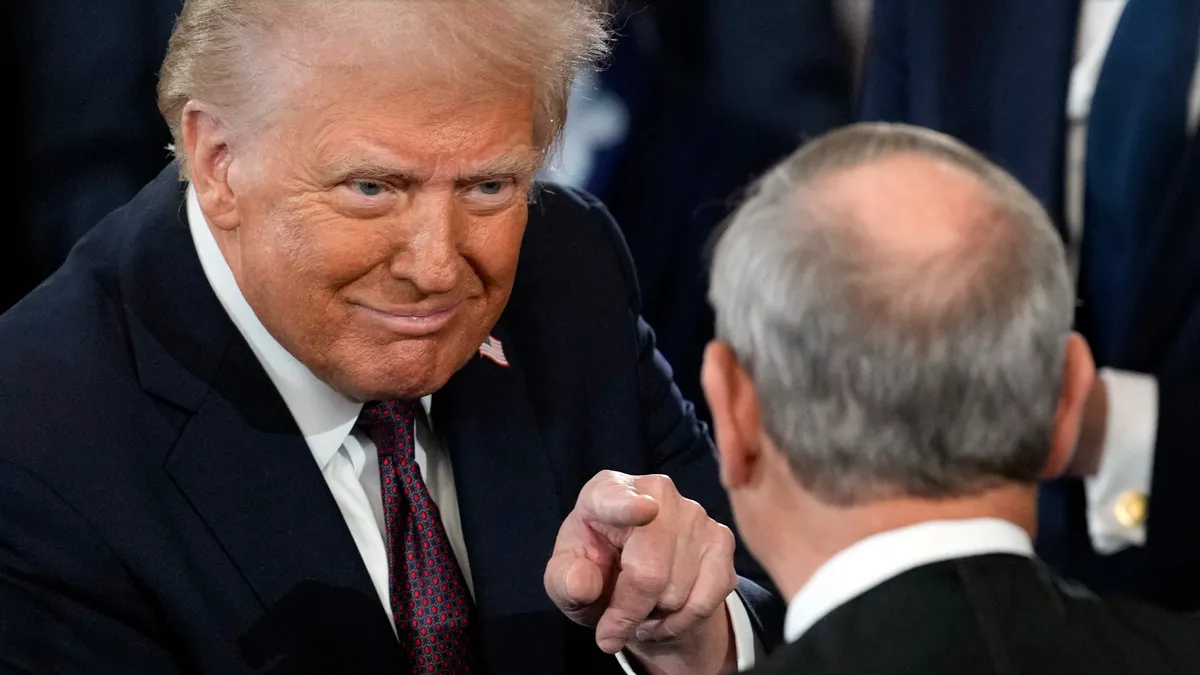
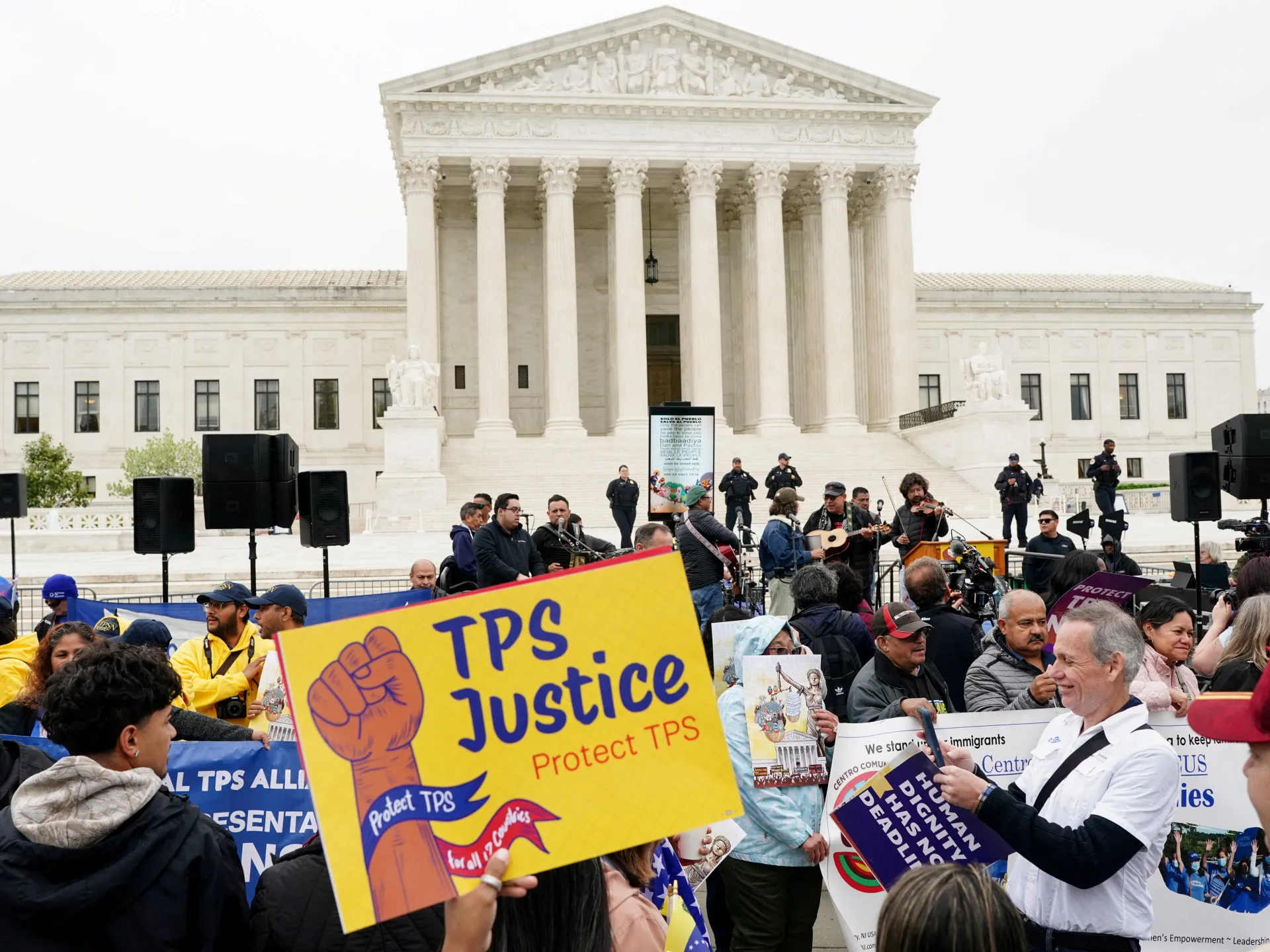
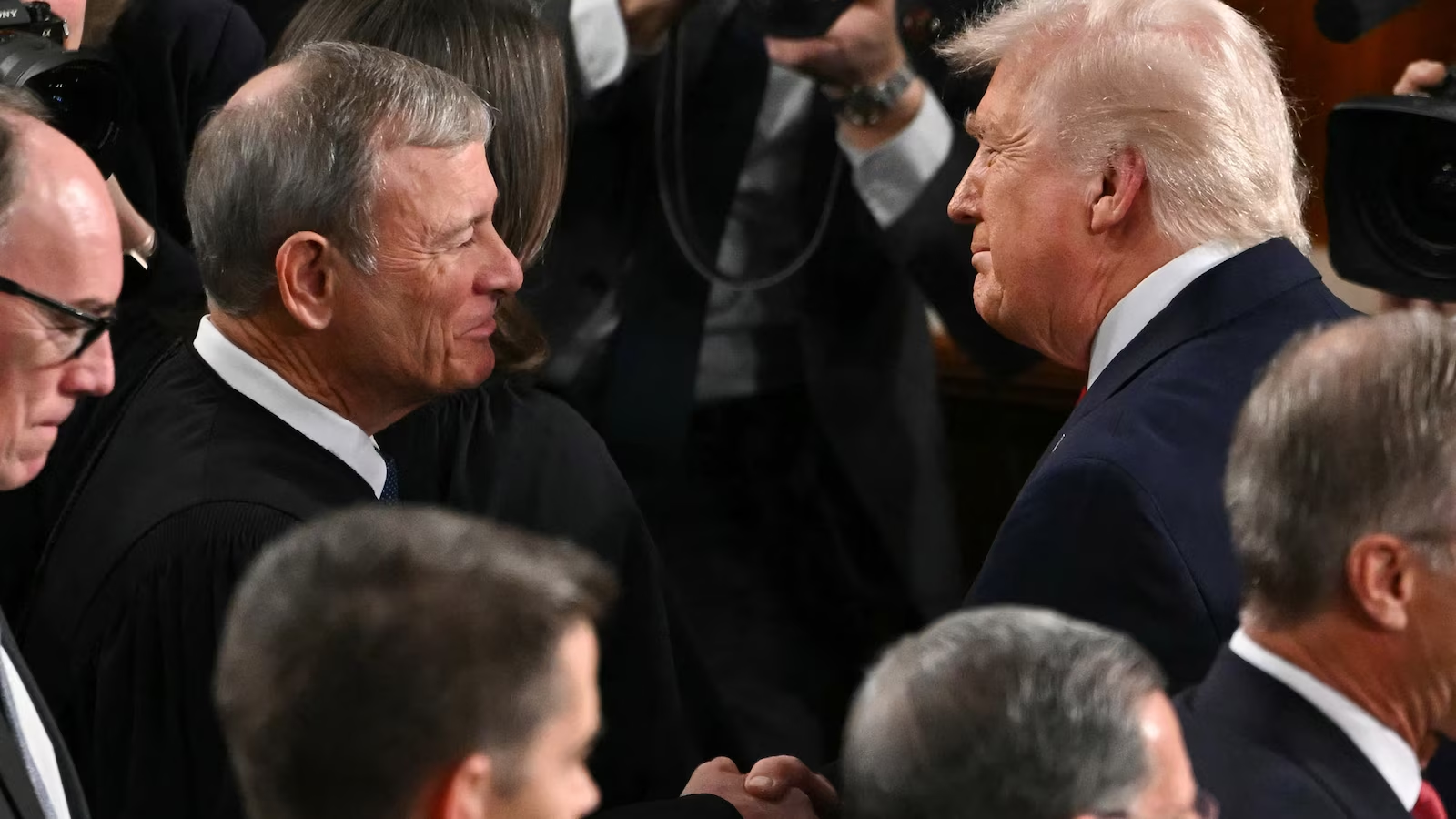
WASHINGTON − By many measures, it was the Trump term.When the Supreme Court returned to the bench in October, a major question was how the justices would rule on the president’s priorities.The answer?Over nine months of decisions that the 6-3 conservative court handed down through June, the justices expanded presidential authority − but also ruled against President Donald Trump on some of the cases he cared most about, particularly birthright citizenship and tariffs.Trump was pleased with most of the court’s decisions on election-related cases, including the blockbuster ruling limiting the reach of a landmark civil rights law. Some GOP-led states immediately took advantage of the decision to impose new election maps that will boost Republicans' chances in this fall's midterm elections.And Trump declared victory on the biggest culture war decision of the term, allowing states to ban transgender women and girls from competing on female sports teams.Here are the highlights of the court’s biggest cases.Expanding presidential power − but only so farTrump’s attempt to fire leaders of agencies that Congress intended to be independent allowed the court to advance a “unitary executive theory” that conservatives have pushed for years. Under that theory, the Constitution gives presidents complete control over executive functions, which must include the power to remove agency leaders for any reason.But while the court applied that reasoning when allowing Trump to dismiss Democratic members of the Federal Trade Commission, a majority blocked the president from firing a Federal Reserve governor. Chief Justice John Roberts wrote that Congress limited the president's power to remove Federal Reserve governors "for good reason."The court also said Trump couldn’t change the longstanding understanding of birthright citizenship with the stroke of a pen and couldn’t use an emergency statue to impose sweeping tariffs. Conservative court watchers said that mixed bag shows court critics are wrong to say the conservative justices won't stand up to Trump.But liberal legal expert Erwin Chemerinsky, Berkeley’s law school dean, summarized the outcomes − including many wins Trump got in emergency appeals throughout the term − as "awful, but it could've been worse."Big immigration decisionsWhile Trump may have lost on birthright citizenship − a centerpiece of his hardline approach to immigration – the court’s other immigration rulings have largely allowed Trump to decide who can enter the United States and who must leave.One cleared the way for Trump to end a humanitarian program for Haitians and Syrians living temporarily in the country. Another allowed him to turn away refugees seeking asylum at the border. A third permitted more scrutiny of green-card holders returning from abroad.Those opinions, along with hundreds of policy changes that have not been contested at the high court, affect millions of people.Courts have traditionally given presidential administrations of both parties wide discretion over immigration policy, even if the justices drew the line at letting Trump redefine who is an American through an executive order.GOP mostly won election-related casesRepublicans won nearly all of their challenges in election-related cases with the biggest victory - a ruling that gutted a key section of the landmark 1965 Voting Rights Act.That decision in a case about Louisiana’s congressional districts makes it very difficult – if not nearly impossible – for racial minorities to argue that legislative maps unfairly dilute their voting power.Republicans also successfully challenged one of the last remaining restrictions on money in politics, a rule aimed at preventing wealthy donors from bypassing limits on what they can give federal candidates by funneling money through political parties.And the court sided with Republicans in a ruling that will make it easier for candidates to challenge election laws.But the court rejected a GOP challenge to grace periods for mail-in ballots that are postmarked by election day and arrive after, a loss for Trump’s effort to restrict voting by mail.Precedents overturnedOver the objections of the court’s three liberals, the six conservative justices overturned several precedents this term.Ditching a 90-year-old decision, the court said restrictions Congress placed on a president’s ability to remove members of independent agencies like the Federal Trade Commission encroached on presidential power. The court also scrapped a quarter-century-old decision upholding limits on how much political parties can spend in coordination with candidates.The court’s liberals complained that the majority’s ruling restricting challenges to legislative districts as unfair to minority voters essentially overturned a previous decision – even if the opinion didn’t say so.Justice Sonia Sotomayor made a similar charge in a ruling making it much more difficult for foreigners to bring lawsuits in U.S. courts alleging serious violations of international law.Sotomayor said the majority overturned a previous decision, “without even acknowledging that it is doing so.”More legal setbacks for transgender AmericansAfter an unexpected 2020 victory that protected transgender employees from workplace discrimination, transgender Americans have been on a losing streak at the high court.This term, the justices rejected Colorado’s ban on "conversion therapy" for young people. The court said the ban infringed on the free speech rights of a Christian counselor.The court also backed efforts in more than half the states to prevent transgender women and girls from competing on female sports teams.Those setbacks followed last year’s ruling that states can ban gender-affirming care for transgender minors.Next term, the court will take up the issue of parents’ rights to be involved in a child’s gender identity transition in a case about laws in Washington state protecting transgender runaway children.String of losses in LBBTQ+ cases from ColoradoThe court’s ruling for the Christian counselor in the conversion therapy dispute was just the latest LGBTQ+ case that originated in Colorado, a pioneering state for gay rights.In previous years, the court sided with a website developer and a cake baker opposed to providing some services to gay customers because of their religious beliefs.Next term, the justices will decide whether Catholic preschools in Colorado must admit LGBTQ+ families if they want to participate in the state’s tuition-free program.Gun rights advocates win more challengesThe justices are continuing to limit gun regulations as they apply the court’s landmark 2022 ruling that firearm regulations must be “consistent with this nation’s historical tradition of firearm regulation.”This term, the court struck down a Hawaii law that required gun owners to get permission before bringing a firearm into a store or other private property that’s open to the public. The justices also limited the application of a decades-old federal law that bars firearms possession by certain drug users.An even bigger case is coming next term. Before adjourning for the summer, the justices announced that they will decide whether bans on semiautomatic rifles like the AR-15 are constitutional.Such bans have been passed in response to mass shootings, but gun rights advocates argue that millions of Americans own AR-15s for self-defense.