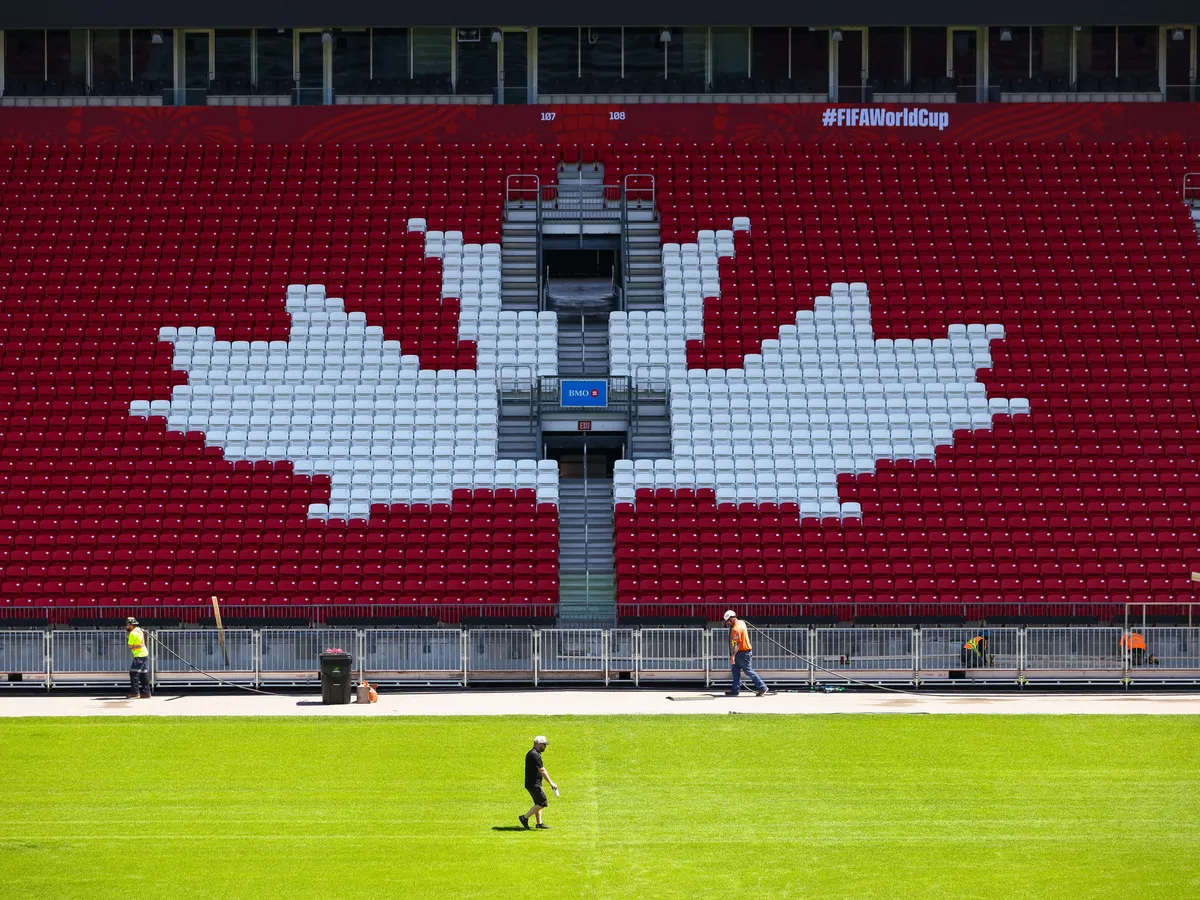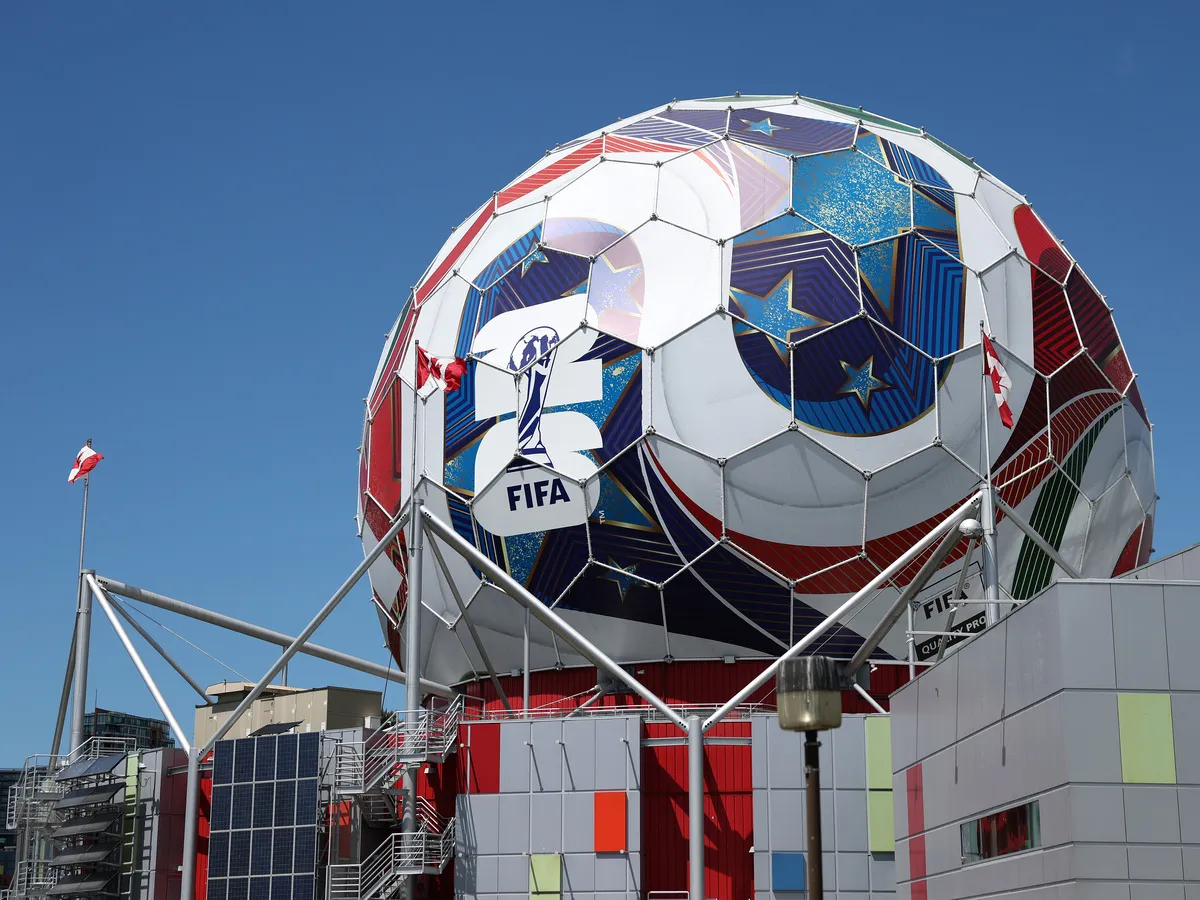
Skip to Content News Archives Economy Energy Oil & Gas Renewables Electric Vehicles Mining Commodities Agriculture Real Estate Mortgages Mortgage Rates Finance Banking Insurance Fintech Cryptocurrency Work Wealth Smart Money Wealth Management Investor Personal Finance Family Finance Retirement Taxes High Net Worth FP Comment Executive Women Puzzmo Newsletters Financial Times Business Essentials More Innovation Information Technology FP500 Podcasts Small Business Lives Told Tails Told Shopping Financial Post Store Obituaries Place a Notice Advertising Advertising With Us Advertising Solutions Postmedia Ad Manager Sponsorship Requests Classifieds Place a Classifieds ad Working Profile Settings My Subscriptions Saved Articles My Offers Newsletters Customer Service FAQ News Economy Energy Mining Real Estate Finance Work Wealth Investor FP Comment Executive Women Puzzmo Newsletters Financial Times Business Essentials HomeFP CommentJack Mintz: Don’t expect a World Cup economic bounceA recent study suggests growth expectations may rise slightly after a competition but the effect, when it does occur, isn't bigLast updated 26 minutes ago You can save this article by registering for free here. Or sign-in if you have an account.Vancouver and Toronto co-hosting the World Cup might boost sales and expectations about a better Canadian economy. But will this year’s GDP be higher because we hosted the World Cup? Photo by Emilee Chinn/Getty ImagesThe World Cup not only entertains fans of football, or as Canadians have traditionally known it, soccer. It also provides megabucks for FIFA, retailers, service providers and even manufacturers.Subscribe now to read the latest news in your city and across Canada.Exclusive articles from Barbara Shecter, Joe O'Connor, Gabriel Friedman, and others.Daily content from Financial Times, the world's leading global business publication.Unlimited online access to read articles from Financial Post, National Post and 15 news sites across Canada with one account.National Post ePaper, an electronic replica of the print edition to view on any device, share and comment on.Daily puzzles, including the New York Times Crossword.Subscribe now to read the latest news in your city and across Canada.Exclusive articles from Barbara Shecter, Joe O'Connor, Gabriel Friedman and others.Daily content from Financial Times, the world's leading global business publication.Unlimited online access to read articles from Financial Post, National Post and 15 news sites across Canada with one account.National Post ePaper, an electronic replica of the print edition to view on any device, share and comment on.Daily puzzles, including the New York Times Crossword.Create an account or sign in to continue with your reading experience.Access articles from across Canada with one account.Share your thoughts and join the conversation in the comments.Enjoy additional articles per month.Get email updates from your favourite authors.Create an account or sign in to continue with your reading experience.Access articles from across Canada with one accountShare your thoughts and join the conversation in the commentsEnjoy additional articles per monthGet email updates from your favourite authorsSign In or Create an AccountorThis quadrennial burst of spending has encouraged sports-minded economists to see if big football tournaments have any impact on the economy. A slew of studies has shown mixed results, ranging from nil to a three per cent increase in consumer spending.Underwhelming results shouldn’t really be surprising. People who spend more on World Cup tickets, merch and services will likely spend less on other consumption goods, assuming their household budgets remain the same. The only way for consumption to increase overall is for incomes to grow as demand for services to support World Cup activities pushes up wages.Get the latest headlines, breaking news and columns.By signing up you consent to receive the above newsletter from Postmedia Network Inc.A welcome email is on its way. If you don't see it, please check your junk folder.The next issue of Top Stories will soon be in your inbox.We encountered an issue signing you up. Please try againBut what about the idea that tournaments like the World Cup improve business confidence and lift an economy that way? Jonas Hennrich and Klaus Wohlrabe of German’s Ifo Institute for Economic Research published a well-timed paper in June that tries to answer that question.John Maynard Keynes is credited for the idea that “animal spirits” are an important factor in business decisions. As he wrote in his 1936 classic, The General Theory of Employment, Interest and Money, “Most, probably, of our decisions to do something positive … can only be taken as a result of animal spirits — of a spontaneous urge to action rather than inaction, and not as the outcome of a weighted average of quantitative benefits multiplied by quantitative probabilities.” What’s key are the expectations and emotions consumers and businesses harbour when making decisions.Hennrich and Wohlrabe test business sentiment and expectations using the comprehensive business survey Ifo has been running since 1949. They look at whether business sentiment about the state of the economy and people’s expectations about what’s going to happen to the economy vary during football championships.Their data set runs from 1991 to 2024, covering eight World Cups and nine European Cups. It includes almost 18,000 European companies that appear in the survey for at least 24 months. In total, that gives them 2.2 million observations for analysis, which is massive.Their most important result is that business sentiment does not change in the months surrounding a tournament. But expectations do. In the six months before a tournament, expectations are slightly more pessimistic, as companies have not yet anticipated the tournament’s impact. This finding includes host countries, which bear most of the costs and disruption of a tournament. Two months before the event, however, animal spirits pick up and a better economy is predicted. But the effect is short-lived: six months after the tournament, expectations are back to their original level.European Cup events actually have a stronger effect on these European businesses than World Cups do, which may not be all that surprising. Both current sentiment and expectations improve. The responses are greater for manufacturing firms rather than those engaged in trade or services. The biggest expectations jump occurred when Germany hosted the 2006 World Cup and when it won the 2014 World Cup even though that event took place in Brazil. Germany having gone out quickly in the first round this year, losing to Paraguay, expectations may be deflating.Animal spirits aren’t just affected by football tournaments, of course, they also depend on macroeconomic conditions. The authors find that the subdued macro environment of 2024 muted sentiment and expectations from Germany’s hosting of that year’s European Cup.The study’s bottom line is that firms’ assessments of their current business situations rarely respond to tournaments though expectations or animal spirits do improve for a time after the tournament.Closer to home, Toronto and Vancouver helping host the World Cup might boost sales and expectations about a better Canadian economy. But will this year’s GDP be higher because we hosted the World Cup? If the German study is right, the economic gains, if there are any, will be slight. So enjoy Saturday’s Canada-Morocco elimination game for the spectacle and excitement of it, not because GDP will be going up. Join the Conversation This website uses cookies to personalize your content (including ads), and allows us to analyze our traffic. Read more about cookies here. By continuing to use our site, you agree to our Terms of Use and Privacy Policy.
Jack Mintz: Don’t expect a World Cup economic bounce
A recent study suggests growth expectations may rise slightly after a competition but the effect, when it does occur, isn't big. Read here
1,195 words~5 min read