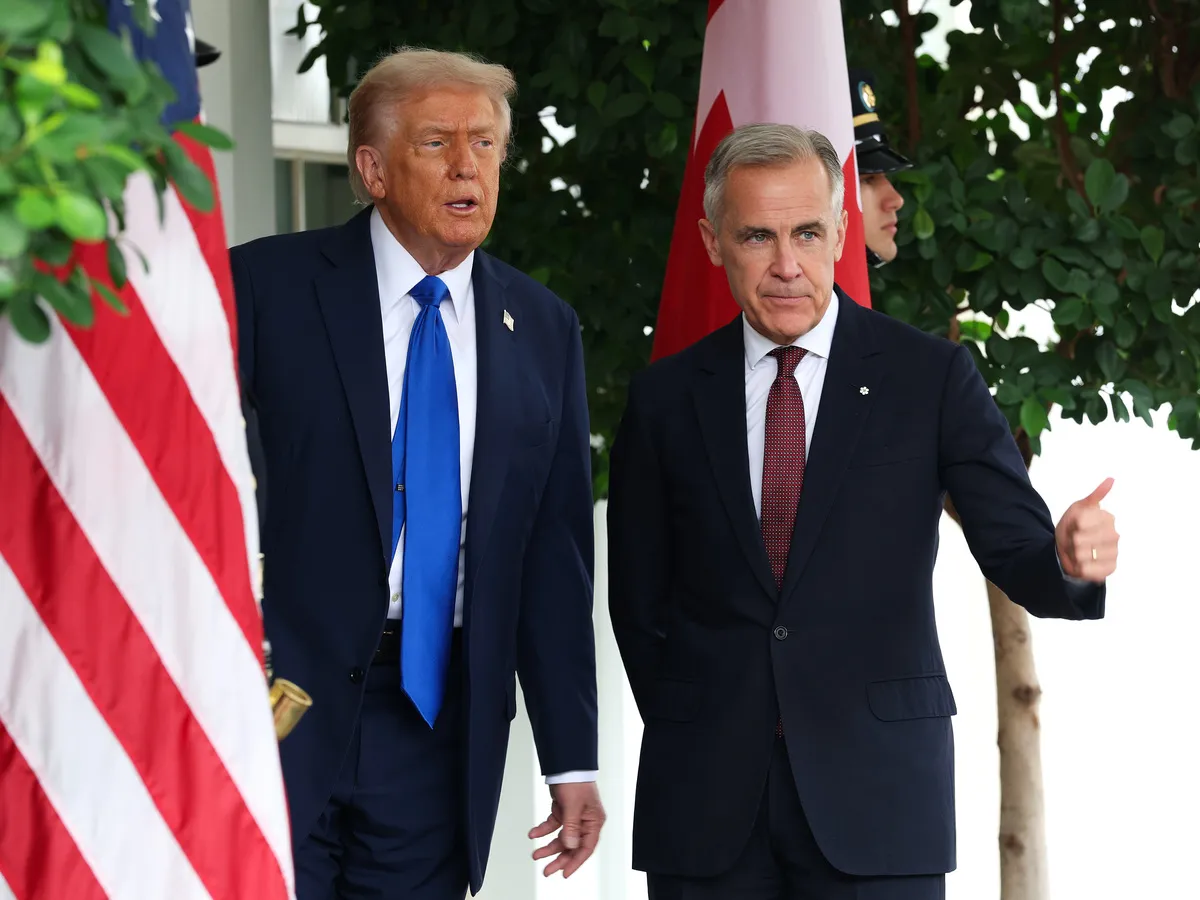
Skip to Content News Archives Economy Energy Oil & Gas Renewables Electric Vehicles Mining Commodities Agriculture Real Estate Mortgages Mortgage Rates Finance Banking Insurance Fintech Cryptocurrency Work Wealth Smart Money Wealth Management Investor Personal Finance Family Finance Retirement Taxes High Net Worth FP Comment Executive Women Puzzmo Newsletters Financial Times Business Essentials More Innovation Information Technology FP500 Podcasts Small Business Lives Told Tails Told Shopping Financial Post Store Obituaries Place a Notice Advertising Advertising With Us Advertising Solutions Postmedia Ad Manager Sponsorship Requests Classifieds Place a Classifieds ad Working Profile Settings My Subscriptions Saved Articles My Offers Newsletters Customer Service FAQ News Economy Energy Mining Real Estate Finance Work Wealth Investor FP Comment Executive Women Puzzmo Newsletters Financial Times Business Essentials HomeFP CommentJack Mintz: Life with the U.S. ain’t easy these daysWe need to lower our elbows and, as soon as possible, shake hands on whatever reasonable trade deal we can getLast updated 1 hour ago You can save this article by registering for free here. Or sign-in if you have an account.U.S. President Donald Trump, left, welcomes Prime Minister Mark Carney outside the West Wing of the White House on Oct. 7, 2025 in Washington, D.C. Photo by Anna Moneymaker/Getty Images filesWe shouldn’t be surprised to see new Trump tariffs coming down the pike despite the harm they do to the American economy. The U.S. Supreme Court having disallowed most of Trump’s second-term tariffs, the administration is adopting new ones to replace April’s 10 per cent tariffs on most imports, which expire today.Subscribe now to read the latest news in your city and across Canada.Exclusive articles from Barbara Shecter, Joe O'Connor, Gabriel Friedman, and others.Daily content from Financial Times, the world's leading global business publication.Unlimited online access to read articles from Financial Post, National Post and 15 news sites across Canada with one account.National Post ePaper, an electronic replica of the print edition to view on any device, share and comment on.Daily puzzles, including the New York Times Crossword.Subscribe now to read the latest news in your city and across Canada.Exclusive articles from Barbara Shecter, Joe O'Connor, Gabriel Friedman and others.Daily content from Financial Times, the world's leading global business publication.Unlimited online access to read articles from Financial Post, National Post and 15 news sites across Canada with one account.National Post ePaper, an electronic replica of the print edition to view on any device, share and comment on.Daily puzzles, including the New York Times Crossword.Create an account or sign in to continue with your reading experience.Access articles from across Canada with one account.Share your thoughts and join the conversation in the comments.Enjoy additional articles per month.Get email updates from your favourite authors.Create an account or sign in to continue with your reading experience.Access articles from across Canada with one accountShare your thoughts and join the conversation in the commentsEnjoy additional articles per monthGet email updates from your favourite authorsSign In or Create an AccountorThe U.S. Trade Representative proposes general tariffs at 10 per cent on 13 major trading partners, including Canada, and 12 per cent on dozens of other countries on the pretext that they export products using slave labour in their supply chains. Another set of tariffs may follow next month based on “overproduction” by China and a dozen other countries.What’s most surprising this week are new tariffs starting Aug. 19 that single out Canada. Under a never before used part of the U.S. trade law — Section 338 of Tariff Act of 1930 — the administration is accusing Canada of discriminating against U.S. exports in dairy, autos and alcohol. A 50 per cent tariff will be applied to roughly US$19 billion of imports from Canada ranging from wine and dairy products to hockey equipment — this last maybe in a hint of disdain for Carney’s “elbows-up” strategy? Despite our still-existing free trade agreement with the U.S. and Mexico, the tariffs will apply to US$2 billion in imports that would have been CUSMA-exempt.Get the latest headlines, breaking news and columns.By signing up you consent to receive the above newsletter from Postmedia Network Inc.A welcome email is on its way. If you don't see it, please check your junk folder.The next issue of Top Stories will soon be in your inbox.We encountered an issue signing you up. Please try againSection 338 tariffs will probably be challenged in court. But the Trump administration likely is using them to cudgel Canada to the table to renegotiate CUSMA so they may be withdrawn before judges can rule on their legality. The cudgelling certainly seems to be working. Reacting to the new tariffs, Prime Minister Mark Carney announced that the U.S. and Canada will now intensify negotiations. Mexico has already had two negotiating sessions and is soon having a third.So, how should Canada now deal with Trump? I see four main possibilities.1. Tit-for-tax: Canadians should fight back rather than cave to U.S. pressures. Tit-for-tat can lead to co-operation if both sides feel they have more to lose from continuing a dispute. Retaliation works less well, however, when a 90-pound weakling is up against a Sumo wrestler. Last year’s retaliatory tariffs raised the consumer prices of goods that were subject to them by six per cent, making life less affordable for Canadians. Tit-for-tat did work well in some cases. Banning American alcohol went smoothly because Canadians seemed willing to substitute domestic and foreign products for California wines and Kentucky bourbon. But in most cases retaliation hurts us, not the Americans.2. Let CUSMA die: No agreement is better than a bad one. If the U.S. won’t co-operate, we should start serious diversification of the three-quarters of our merchandise trade that’s currently with it. Creating new supply routes takes time but there are abundant opportunities to increase oil and gas exports to Asia and Europe. On the other hand, let’s not kid ourselves. Given that the U.S. is so close to us, and our trade and security ties with the world’s largest and most dynamic market are well-established, the cost of losing access to the U.S. economy would be enormous.3. Keep stalling for time: The new tariffs hit only five per cent of Canadian exports to the U.S. so panic still isn’t justified. Better to wait for Donald Trump to leave in 2028 rather than negotiate with a fickle president. And with affordability at the top of American voters’ concerns, U.S. tariffs may well be reduced in advance of the upcoming midterm elections. If the Republicans lose control of the House of Representatives, and maybe even the Senate, Trump may be constrained by a more hostile Congress. On the other hand, he will continue to control the trade policy agenda as long as he remains in office. And even if a Democrat replaces him, he or she may well keep the tariffs on for both revenue and industrial policy reasons. Canadian businesses facing trade uncertainty for three or more years may shift more investment to the faster-growing U.S. economy, as has already been happening.4. Negotiate the best outcome now: Carney’s decision to intensify trade negotiations rather than stall or retaliate was the right one. We need to come to the table with a realistic set of proposals that are also in our own interest. Supply management should have been eliminated years ago. It imposes higher prices for dairy, poultry and eggs that many Canadians can ill afford. It has also discouraged the export of processed products and hurt trade negotiations with other countries. If the Trump administration pushes for 50 per cent U.S. content in auto production, Canada will be little affected, unlike Mexico. We can’t tolerate 50 per cent tariffs for long, even if getting relief from them means agreeing to a low general tariff rate on a broad set of products. When negotiating a new deal, we also need to quit poking the bear by trying to embrace America’s most important rival. China is not a free-trader. Its goal is to protect Chinese industries and subsidize exports to the detriment of jobs in other countries.It’s time to admit our current strategy hasn’t worked. We need to lower our elbows and, as soon as possible, shake hands on whatever reasonable deal we can get. Join the Conversation This website uses cookies to personalize your content (including ads), and allows us to analyze our traffic. Read more about cookies here. By continuing to use our site, you agree to our Terms of Use and Privacy Policy.
Jack Mintz: Life with the U.S. ain’t easy these days
We need to lower our elbows and, as soon as possible, shake hands on whatever reasonable trade deal we can get with the U.S. Read more.
1,400 words~6 min read