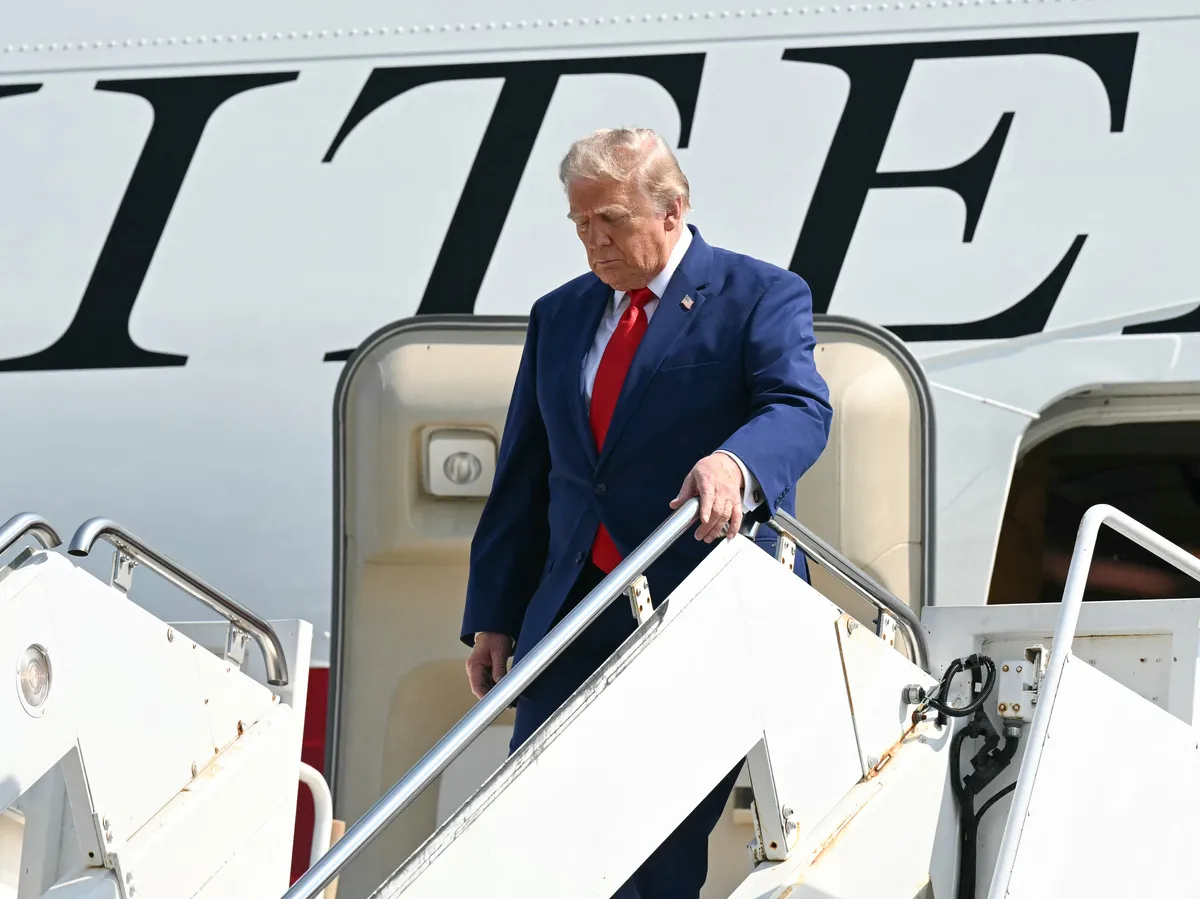
Skip to Content News Archives Economy Energy Oil & Gas Renewables Electric Vehicles Mining Commodities Agriculture Real Estate Mortgages Mortgage Rates Finance Banking Insurance Fintech Cryptocurrency Work Wealth Smart Money Wealth Management Investor Personal Finance Family Finance Retirement Taxes High Net Worth FP Comment Executive Women Puzzmo Newsletters Financial Times Business Essentials More Innovation Information Technology FP500 Podcasts Small Business Lives Told Tails Told Shopping Financial Post Store Obituaries Place a Notice Advertising Advertising With Us Advertising Solutions Postmedia Ad Manager Sponsorship Requests Classifieds Place a Classifieds ad Working Profile Settings My Subscriptions Saved Articles My Offers Newsletters Customer Service FAQ News Economy Energy Mining Real Estate Finance Work Wealth Investor FP Comment Executive Women Puzzmo Newsletters Financial Times Business Essentials HomeFP CommentWilliam Watson: Let’s make a deal All the palliative measures Ottawa has responded to Trump's tariffs with are damaging to the economy in ways that will be hard to un-doLast updated 1 hour ago You can save this article by registering for free here. Or sign-in if you have an account.U.S. President Donald Trump speaks to reporters after stepping off Air Force One on Aug. 11, 2026 in Joint Base Andrews, Maryland. Photo by Anna Moneymaker/Getty Images filesThe unnamed media manipulators at the top of the federal government have let leak that they and the United States Trade Representative plan to get a draft Canada-U.S. trade deal to Donald Trump’s desk by early next week. Trade deal, that is, plus North American Trump Coin rights agreement, plus fighter-jet purchase and maybe a Canadian golf course or two thrown in.Subscribe now to read the latest news in your city and across Canada.Exclusive articles from Barbara Shecter, Joe O'Connor, Gabriel Friedman, and others.Daily content from Financial Times, the world's leading global business publication.Unlimited online access to read articles from Financial Post, National Post and 15 news sites across Canada with one account.National Post ePaper, an electronic replica of the print edition to view on any device, share and comment on.Daily puzzles, including the New York Times Crossword.Subscribe now to read the latest news in your city and across Canada.Exclusive articles from Barbara Shecter, Joe O'Connor, Gabriel Friedman and others.Daily content from Financial Times, the world's leading global business publication.Unlimited online access to read articles from Financial Post, National Post and 15 news sites across Canada with one account.National Post ePaper, an electronic replica of the print edition to view on any device, share and comment on.Daily puzzles, including the New York Times Crossword.Create an account or sign in to continue with your reading experience.Access articles from across Canada with one account.Share your thoughts and join the conversation in the comments.Enjoy additional articles per month.Get email updates from your favourite authors.Create an account or sign in to continue with your reading experience.Access articles from across Canada with one accountShare your thoughts and join the conversation in the commentsEnjoy additional articles per monthGet email updates from your favourite authorsSign In or Create an AccountorAnd you know that’s not going to be the end of it. The president will insist on making final adjustments to whatever’s brought to him. And his last-minute adjusting has a way of dragging on. The 14-point peace deal he signed with Iran in June has got bogged down in i-dotting, t-crossing, and the small matter of both sides still hurling explosives on each other.Get the latest headlines, breaking news and columns.By signing up you consent to receive the above newsletter from Postmedia Network Inc.A welcome email is on its way. If you don't see it, please check your junk folder.The next issue of Top Stories will soon be in your inbox.We encountered an issue signing you up. Please try againDiscounting for the fact that the secret sources we’re hearing from have a strong interest, as part of the spin strategy for selling any eventual deal, in minimizing talk about how much we may have to give up, it doesn’t sound as if the U.S. is asking for the world. Or even a minor province or two.Putting U.S. wine and liquor back on the shelves in provincial liquor stores, i.e., going back to the status quo ante, would restore Canadians’ choice set — a good thing — without reducing our ability to boycott U.S. products, as a surprising number of us are still doing. (It would be interesting to know how the constabulary-tolerated shoplifter cartels plaguing so many of the country’s liquor stores would react to the return of U.S. bottles to the shelves. Maybe the stores could post helpful signs: “Steal this booze first.”)Stocking U.S. drink but then not re-ordering it if demand really has dried up would be perfect. If individual Canadians keep elbows-up by not going bottoms-up with U.S. booze, the U.S. can hardly insist on minimum bulk purchases Canadian consumers won’t buy. Can it?One thing Canadians clearly are demanding but can’t currently find on store shelves is cottage cheese, which is having a COVID t.p. moment, thanks in part to social-media influencers. You wouldn’t suppose difficulty getting a dairy product — a “national cottage cheese shortage,” one expert calls it — has anything to do with our national policy of supply limitation in dairy products?If we do have to make concessions on dairy as part of a Trump deal, they’re most likely to involve loosening up quota rules and allocations. The industry may not like that but in how many other economic sectors do Canadians automatically and unthinkingly defer to business interests? I don’t doubt that dairy farmers are fine people but, like all of us, they pursue their own betterment, which may not line up exactly with national betterment. Our dairy products supposedly are safer than American, but death from cottage cheese isn’t actually that common in the U.S. If Canadians were to decide their need for cheese was greater than their desire to poke Trump in the eye, that’s a decision we should respect.But, people say, dairy is especially sensitive in Quebec, where some politicians are thinking about separating (not cream from milk but Quebec from Canada). Of course, many of the same people say Albertans are crazy to threaten separation over such a small thing as a pipeline. Cottage cheese is so much more serious!Maybe the best reason for making a deal with Trump is the damage short-term measures to parry his attacks are doing to our economy. Forget that short-term measures have a way of morphing into long-term ones. Ottawa got into wheat marketing in 1935, during the Great Depression, but didn’t get out of it until 2012, more than 75 years later.The latest short-term remedy is that Ottawa is going to cover half the cost of shipping steel within Canada — supposedly only up to an expenditure of $100 million, though anyone care to guess what happens when that runs out?Canada is a very large country, you see, and though the building of the CPR in the 19th century reduced shipping costs a lot compared to ox-pulled Red River carts, per-mile costs do still add up, there being so many miles. So in addition to imposing steep tariffs of our own on foreign steel, Ottawa will encourage domestic steel-making, which takes place mainly in central Canada, by encouraging steel-buyers in the further, less-Liberal reaches of the country to believe they’re 50 per cent closer to central Canada than they actually are, which will induce them to Buy Canadian. (Recently overheard in Tuscany: “Honey, I shrunk the country!”)The price relief is only for steel, however, which means the industry will now have an advantage in commandeering rail and ship capacity even though there are other industries, such as grains, that Ottawa also wants shipped quickly and reliably.Which means Ottawa will now have to devote ministerial time to policing disputes between steel-makers and grain-growers (Hamilton vs. Saskatchewan, like in the CFL) and making sure the railways don’t grab the new subsidies for themselves — even though our rail sector is supposed to have been deregulated.The sooner we get a deal and stop all the damage the palliative measures are doing, the better. Join the Conversation This website uses cookies to personalize your content (including ads), and allows us to analyze our traffic. Read more about cookies here. By continuing to use our site, you agree to our Terms of Use and Privacy Policy.
William Watson: Let’s make a deal
All the palliative measures Ottawa has responded to Trump's tariffs with damage the economy in ways that will be hard to un-do. Read on.
1,381 words~6 min read