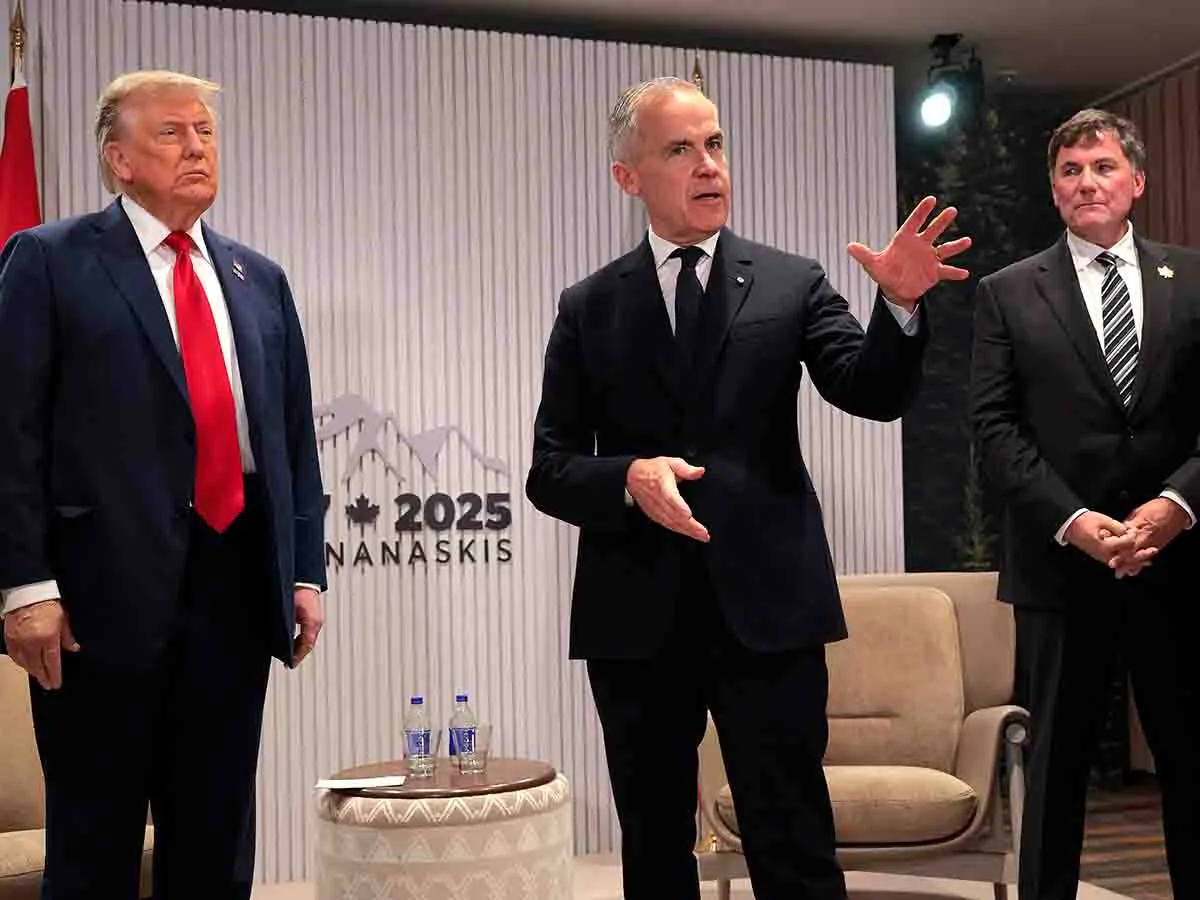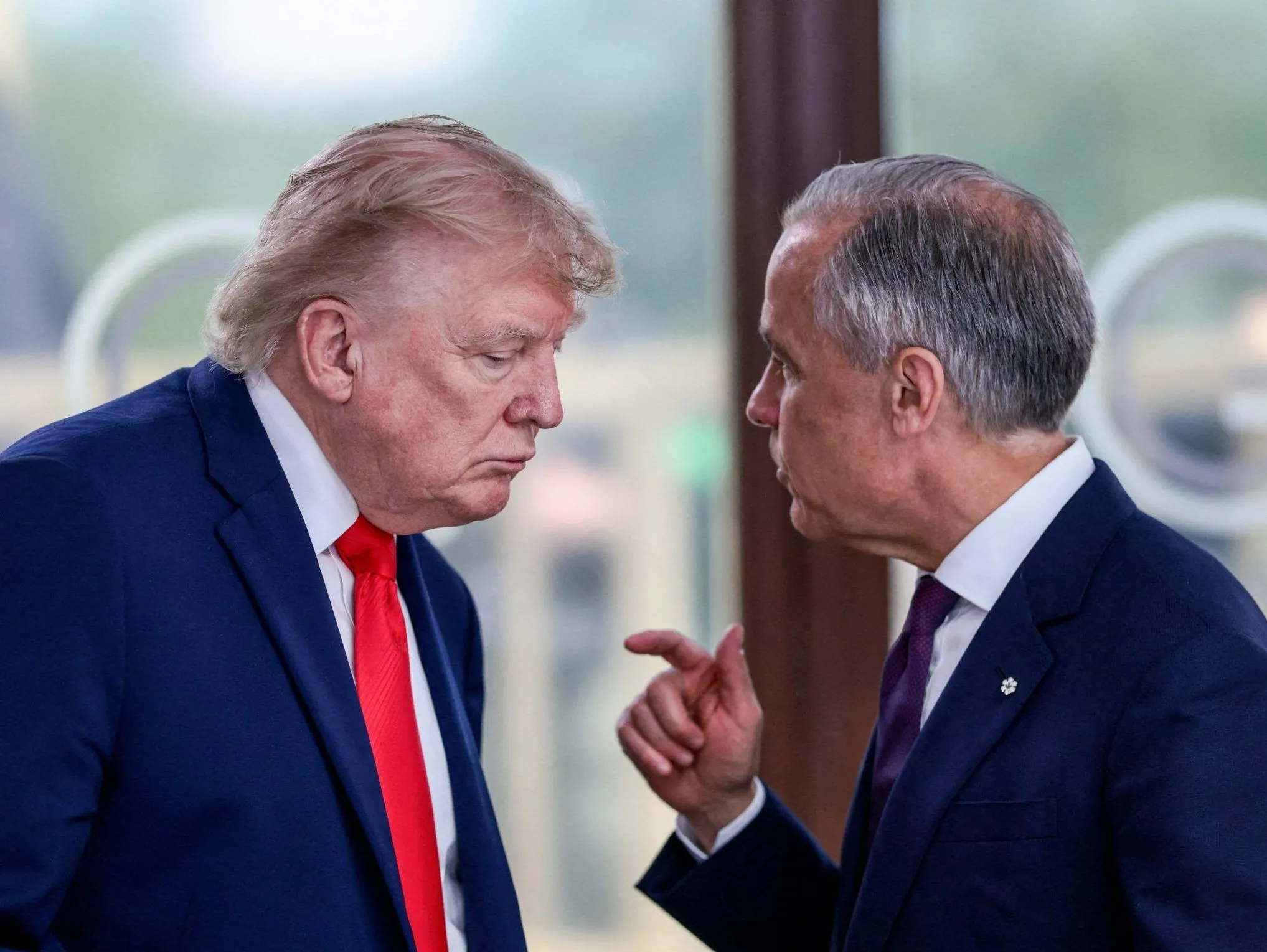
Skip to Content News Archives Economy Energy Oil & Gas Renewables Electric Vehicles Mining Commodities Agriculture Real Estate Mortgages Mortgage Rates Finance Banking Insurance Fintech Cryptocurrency Work Wealth Smart Money Wealth Management Investor Personal Finance Family Finance Retirement Taxes High Net Worth FP Comment Executive Women Puzzmo Newsletters Financial Times Business Essentials More Innovation Information Technology FP500 Podcasts Small Business Lives Told Tails Told Shopping Financial Post Store Obituaries Place a Notice Advertising Advertising With Us Advertising Solutions Postmedia Ad Manager Sponsorship Requests Classifieds Place a Classifieds ad Working Profile Settings My Subscriptions Saved Articles My Offers Newsletters Customer Service FAQ News Economy Energy Mining Real Estate Finance Work Wealth Investor FP Comment Executive Women Puzzmo Newsletters Financial Times Business Essentials HomeNewsWhy Trump’s CUSMA threats worry Canadian businessesAnalysts warn lengthy reviews and unresolved tariffs could prolong economic uncertainty.Last updated 1 hour ago You can save this article by registering for free here. Or sign-in if you have an account.US President Donald Trump speaks with Canada's Prime Minister Mark Carney during a work lunch as part of the G7 summit in Evian, eastern France, on June 16, 2026. (Evelyn Hockstein/POOL/ AFP via Getty Images)United States President Donald Trump has floated the idea of walking away from the Canada-U.S.-Mexico Agreement (CUSMA) twice in the past two weeks, leaving some Canadian businesses in a bind.Subscribe now to read the latest news in your city and across Canada.Exclusive articles from Barbara Shecter, Joe O'Connor, Gabriel Friedman, and others.Daily content from Financial Times, the world's leading global business publication.Unlimited online access to read articles from Financial Post, National Post and 15 news sites across Canada with one account.National Post ePaper, an electronic replica of the print edition to view on any device, share and comment on.Daily puzzles, including the New York Times Crossword.Subscribe now to read the latest news in your city and across Canada.Exclusive articles from Barbara Shecter, Joe O'Connor, Gabriel Friedman and others.Daily content from Financial Times, the world's leading global business publication.Unlimited online access to read articles from Financial Post, National Post and 15 news sites across Canada with one account.National Post ePaper, an electronic replica of the print edition to view on any device, share and comment on.Daily puzzles, including the New York Times Crossword.Create an account or sign in to continue with your reading experience.Access articles from across Canada with one account.Share your thoughts and join the conversation in the comments.Enjoy additional articles per month.Get email updates from your favourite authors.Create an account or sign in to continue with your reading experience.Access articles from across Canada with one accountShare your thoughts and join the conversation in the commentsEnjoy additional articles per monthGet email updates from your favourite authorsSign In or Create an Accountor“I’m thinking about maybe we won’t be able to make a deal,” he said last Wednesday in Paris following the Group of Seven summit. “I’d rather leave it unsigned; I’d rather have it terminated. I would rather not have the agreement, but I may sign it.”The Canadian government, however, has sought to project patience and confidence, with Prime Minister Mark Carney expressing optimism that progress is being made in ongoing talks with U.S. representatives.Breaking business news, incisive views, must-reads and market signals. Weekdays by 9 a.m.By signing up you consent to receive the above newsletter from Postmedia Network Inc.A welcome email is on its way. If you don't see it, please check your junk folder.The next issue of Posthaste will soon be in your inbox.We encountered an issue signing you up. Please try againWhether Trump’s comments are posturing or a negotiating tactic, many industry watchers agree the chances of the trilateral trade agreement being renewed ahead of its July 1 deadline are for all intents and purposes zero.If that happens, CUSMA will enter a period of annual reviews for 10 years before expiring if not renewed, a process analysts say could be equally or more damaging to the Canadian economy than the past year and a half.“The longer it takes to do this deal, the greater the uncertainty it creates for the Canadian economy, and uncertainty is not good for the Canadian economy, which is why our growth has been suppressed the last two quarters,” said Mahmood Nanji, a policy fellow at the Ivey Business School at Western University.He pointed to Honda Canada Inc.’s decision in April to indefinitely suspend its planned $15-billion investment in an electric vehicle and battery manufacturing complex in Alliston as an example of the toll trade tensions are taking on investment in Canada. Extended CUSMA negotiations would only worsen those effects, he said.Unifor estimates trade tensions have already led to nearly 6,500 job losses across Canada’s auto manufacturing sector, which is largely concentrated in southwestern Ontario.“Getting a deal sooner rather than later is really, really important in terms of reducing uncertainty,” said Nanji, a former associate deputy minister of finance under Ontario premier Kathleen Wynne.Lucas Malinowski, chief executive of Global Automakers of Canada, an umbrella group representing foreign automakers including Toyota Canada Inc., Kia Canada Inc. and Mercedes-Benz Canada Inc., said one silver lining of CUSMA undergoing annual reviews is that the vast majority of goods entering the U.S. would continue to do so tariff-free during the review period, which would help keep the Canadian economy afloat.But he said a deal that fails to remove sector-specific levies imposed under Section 232 of the Trade Expansion Act of 1962 would do little to revive Canada’s auto manufacturing sector.“That’s the most important thing because if we get into a long-term deal, but the 232 tariffs remain, then we haven’t addressed the core issue for the auto industry on both sides of the border,” he said.Automakers have been willing to absorb some of the additional costs created by tariffs, but that becomes more difficult the longer negotiations drag on, Malinowski said.“Automakers don’t want to pass on the cost to the consumers wherever possible and maintain vehicle affordability, but there will come a point where we’ll probably start to see more of that,” he said.Analysts are also divided on how long working through some of the “trade irritants” between Canada and the U.S. will take.Douglas Porter, chief economist at Bank of Montreal, is among those who believe CUSMA could remain in review limbo for some years.While he takes Trump’s comments with a grain of salt and believes “there’s quite a bit of negotiation going on,” Porter also believes Trump genuinely questions the value of CUSMA.“He is very skeptical of free trade in general, and I think he is showing his true feelings,” Porter said. “I hope I’m wrong . . . but I think that what Trump wants and what Canada is willing to give up are not close enough to reach a complete agreement this year.”Though some countries have also opted to strike trade deals with the U.S. by accepting some tariffs in exchange for some certainty, Porter called the prospect of even modest levies on Canadian products troubling and “a hard pill” to swallow for a country that has enjoyed free trade with the U.S. for decades.“That’s not a terribly favourable environment for auto investment if we are faced with somewhat permanent tariffs, even though there is certainty,” he said. “It would be a challenge for any company to invest in Canada or Mexico, for that matter, knowing that you’re going to face tariffs going into the U.S.”With files from The Financial Post and Bloomberg News Join the Conversation This website uses cookies to personalize your content (including ads), and allows us to analyze our traffic. Read more about cookies here. By continuing to use our site, you agree to our Terms of Use and Privacy Policy.
Why Trump’s CUSMA threats worry Canadian businesses
Analysts warn lengthy reviews and unresolved tariffs could prolong economic uncertainty.
1,272 words~6 min read