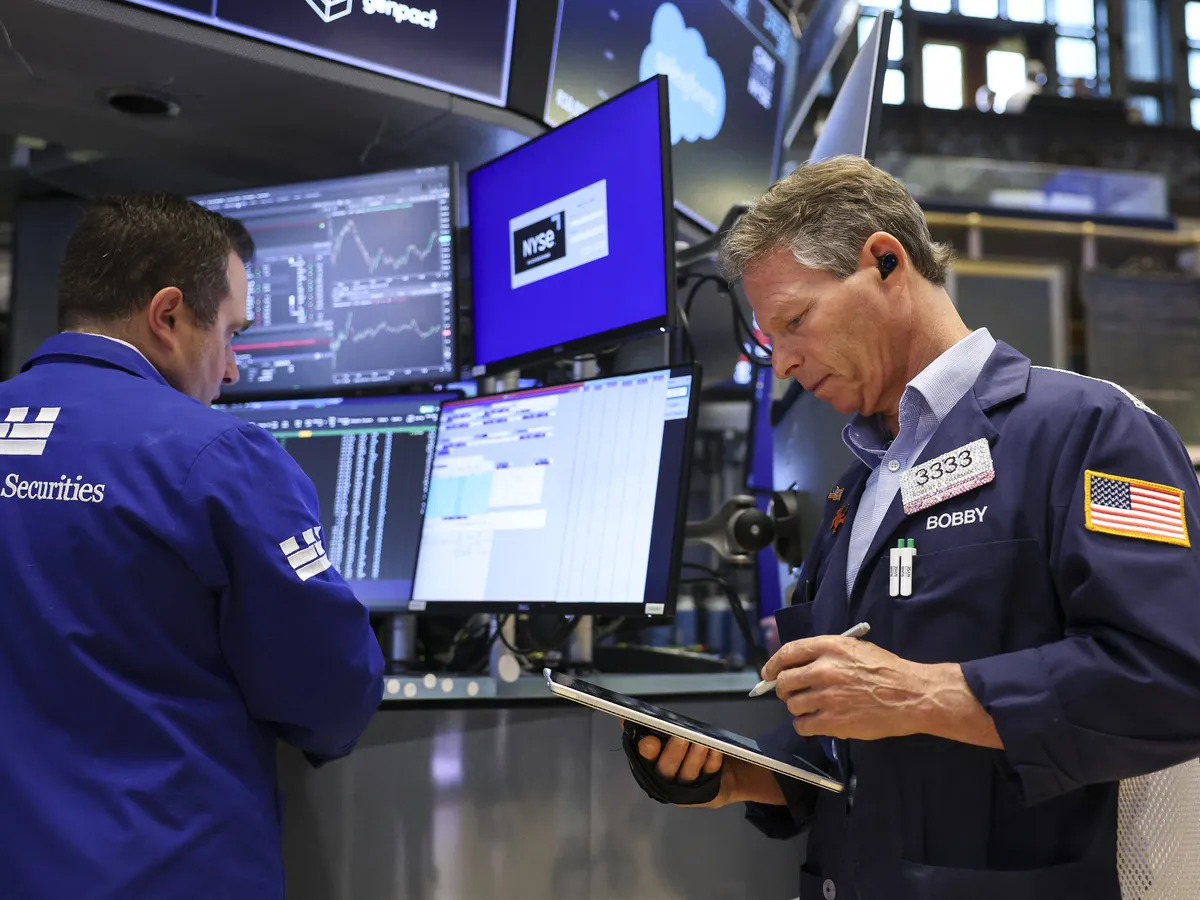
Skip to Content News Archives Economy Energy Oil & Gas Renewables Electric Vehicles Mining Commodities Agriculture Real Estate Mortgages Mortgage Rates Finance Banking Insurance Fintech Cryptocurrency Work Wealth Smart Money Wealth Management Investor Personal Finance Family Finance Retirement Taxes High Net Worth FP Comment Executive Women Puzzmo Newsletters Financial Times Business Essentials More Innovation Information Technology FP500 Podcasts Small Business Lives Told Tails Told Shopping Financial Post Store Obituaries Place a Notice Advertising Advertising With Us Advertising Solutions Postmedia Ad Manager Sponsorship Requests Classifieds Place a Classifieds ad Working Profile Settings My Subscriptions Saved Articles My Offers Newsletters Customer Service FAQ News Economy Energy Mining Real Estate Finance Work Wealth Investor FP Comment Executive Women Puzzmo Newsletters Financial Times Business Essentials HomeFinancial TimesInvestorMohamed El-Erian: The U.S. stock market decoupling from the global gloom has limitsThe gap between market performance and global economic realities means seeing U.S. advantages in the light of mounting challengesAuthor of the article: You can save this article by registering for free here. Or sign-in if you have an account.The U.S. may have decoupled from the global gloom for now but there are domestic limits to the economy's resilience and agility. Photo by TIMOTHY A. CLARY/AFP via Getty ImagesA string of record highs for the United States stock market might have seemed unlikely to many investors at the start of the year if they had known what was coming —a military conflict in the Middle East, a surge in global energy prices, serious disruptions to maritime supply chains and a mounting risk of global recession.Subscribe now to read the latest news in your city and across Canada.Exclusive articles from Barbara Shecter, Joe O'Connor, Gabriel Friedman, and others.Daily content from Financial Times, the world's leading global business publication.Unlimited online access to read articles from Financial Post, National Post and 15 news sites across Canada with one account.National Post ePaper, an electronic replica of the print edition to view on any device, share and comment on.Daily puzzles, including the New York Times Crossword.Subscribe now to read the latest news in your city and across Canada.Exclusive articles from Barbara Shecter, Joe O'Connor, Gabriel Friedman and others.Daily content from Financial Times, the world's leading global business publication.Unlimited online access to read articles from Financial Post, National Post and 15 news sites across Canada with one account.National Post ePaper, an electronic replica of the print edition to view on any device, share and comment on.Daily puzzles, including the New York Times Crossword.Create an account or sign in to continue with your reading experience.Access articles from across Canada with one account.Share your thoughts and join the conversation in the comments.Enjoy additional articles per month.Get email updates from your favourite authors.Create an account or sign in to continue with your reading experience.Access articles from across Canada with one accountShare your thoughts and join the conversation in the commentsEnjoy additional articles per monthGet email updates from your favourite authorsSign In or Create an AccountorAfter all, conventional wisdom dictates that such “geoeconomic” dislocations undermine corporate earnings expectations, increase investor risk aversion and suck capital out of stocks and into “safe assets” such as government bonds, gold and cash. Instead, we find ourselves in the opposite situation, a twilight zone of sorts.While the time horizons for a resolution of the war continue to be pushed out and the Strait of Hormuz remains essentially shut, U.S. stock market indices have gone from record to record on the back of — wait for it — higher corporate earnings and greater risk appetite. In the process, the start-of-year consensus trade has been negated.Canada's best source for investing news, analysis and insight.By signing up you consent to receive the above newsletter from Postmedia Network Inc.A welcome email is on its way. If you don't see it, please check your junk folder.The next issue of Investor will soon be in your inbox.We encountered an issue signing you up. Please try againA commonly held view among investors and analysts in January was that there would be a pivot in 2026 away from “expensive” U.S. equities towards the “value” found in the rest of the world, particularly Europe. After all, the valuation gap between the S&P 500 and the Stoxx Europe 600 has dramatically widened.This thesis was derailed by the harsh reality of geoeconomics. The Middle East war laid bare the structural vulnerabilities of the European economy. The region has a heightened sensitivity to the energy shock, not just a price surge but also the threat of physical supply shortages. That and vulnerability to other disrupted supply chains transformed attractive valuations into more of a value trap. Meanwhile, the U.S. emerged as a market of choice as investors rewarded the economy’s relative energy independence and longstanding structural strengths.The increasing tech dominance of the U.S. economy has been equated by many to its robust macro fundamentals. In addition to breathtaking tech innovations that deliver productivity gains, America continues to benefit from a unique combination of corporate and labour market flexibility, deep capital markets, significant fiscal support and a central bank more hesitant to raise rates. The seemingly abundant availability of risk capital enhances the economy’s dynamism, allowing its corporate sector to navigate disruptions more effectively.The concentration of market leadership in a handful of tech groups has provided the broader market indices with a shield. These companies are not just growth plays; a few of them are also cash flow machines with fortress balance sheets that make them appear less like cyclicals and more like essential infrastructure for the modern economy. Their ability to generate earnings growth regardless of the geopolitical climate has decoupled the broader U.S. indices from the malaise affecting the rest of the world.Yet what results in relative dominance need not guarantee the continuation of a record-breaking run in absolute terms. There is a geoeconomic ceiling to even this market rally, and we will get there if the war is not resolved.Already, we are approaching the point where the price and availability of energy will breach thresholds in an increasing number of economies unable to comfortably absorb them. Meanwhile, the upcoming reduction in investible capital from the Gulf countries will temporarily sap U.S. markets from a previously large supplier of sophisticated funding.Then there is the risk of “valuation fatigue.” The U.S. premium has reached a point where even minor misses in earnings or slight delays in the AI rollouts and its broad diffusion could trigger a significant repricing.The current gap between market performance and geoeconomic realities requires a delicate balance between acknowledging the advantages that the U.S. offers while also remaining aware of the mounting challenges to economic wellbeing.The U.S. may have decoupled from the global gloom for now but there are domestic limits to the economy’s resilience and agility. Moreover, in a still interconnected world, total economic and financial insulation is an impossibility. While the U.S. is undeniably the cleanest shirt to pick from in the laundry of advanced economy markets, even that eventually will show signs of wear if the geoeconomic environment remains harsh.Mohamed El-Erian is the Rene M Kern professor of practice at Wharton School, chief economic adviser at Allianz and chair of Gramercy Funds Management© 2026 The Financial Times Ltd Join the Conversation This website uses cookies to personalize your content (including ads), and allows us to analyze our traffic. Read more about cookies here. By continuing to use our site, you agree to our Terms of Use and Privacy Policy.
Mohamed El-Erian: The U.S. stock market decoupling from the global gloom has limits
The gap between market performance and global economic realities means seeing U.S. advantages in the light of mounting challenges. Read on
1,232 words~6 min read