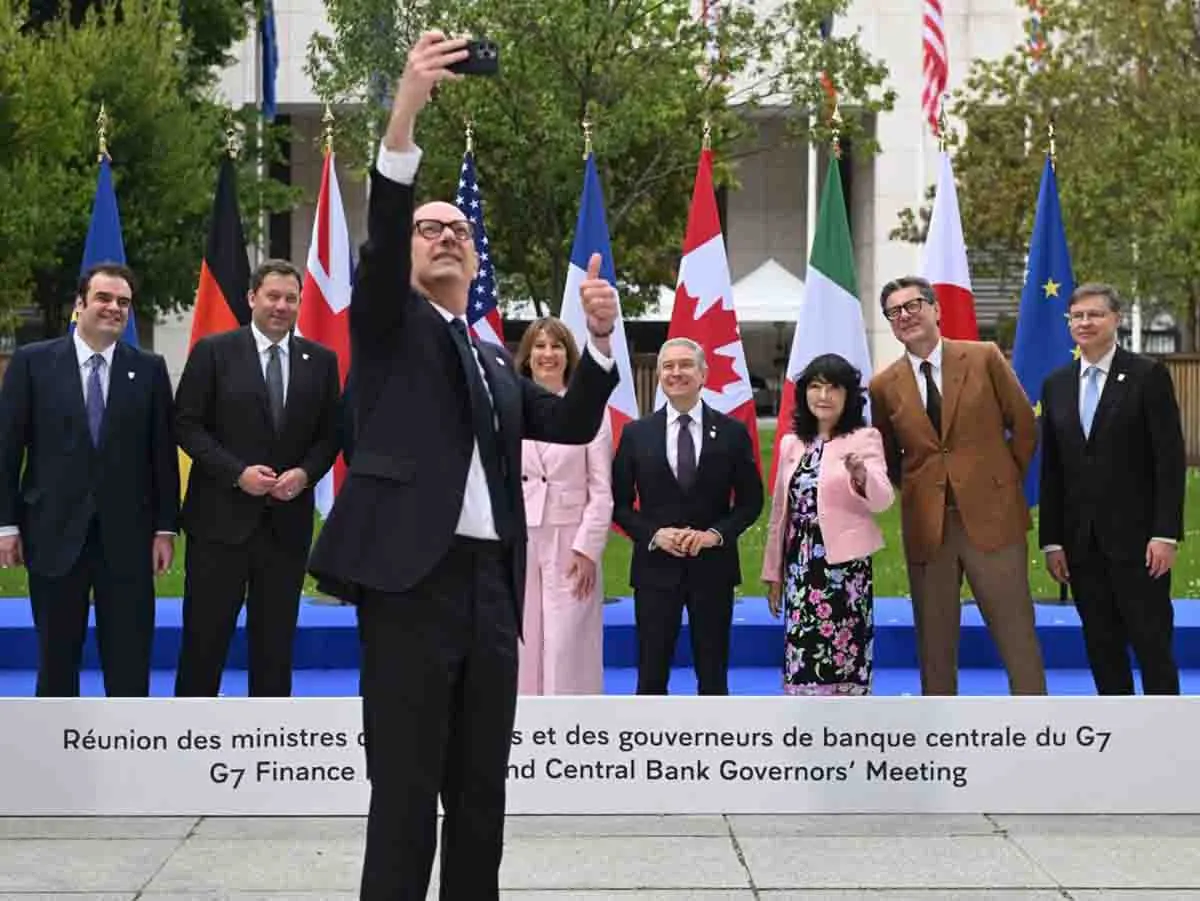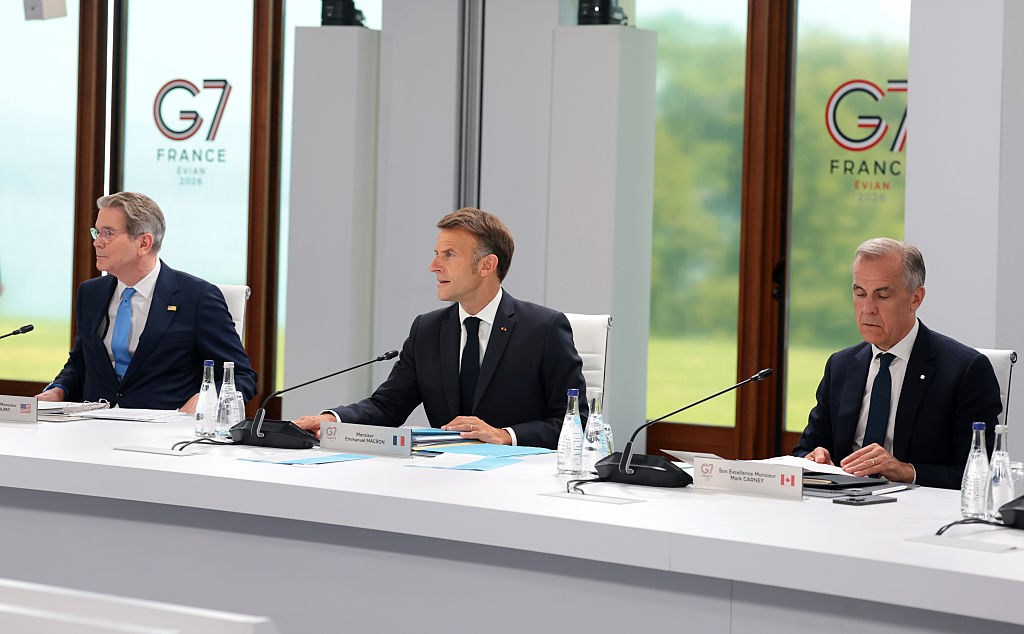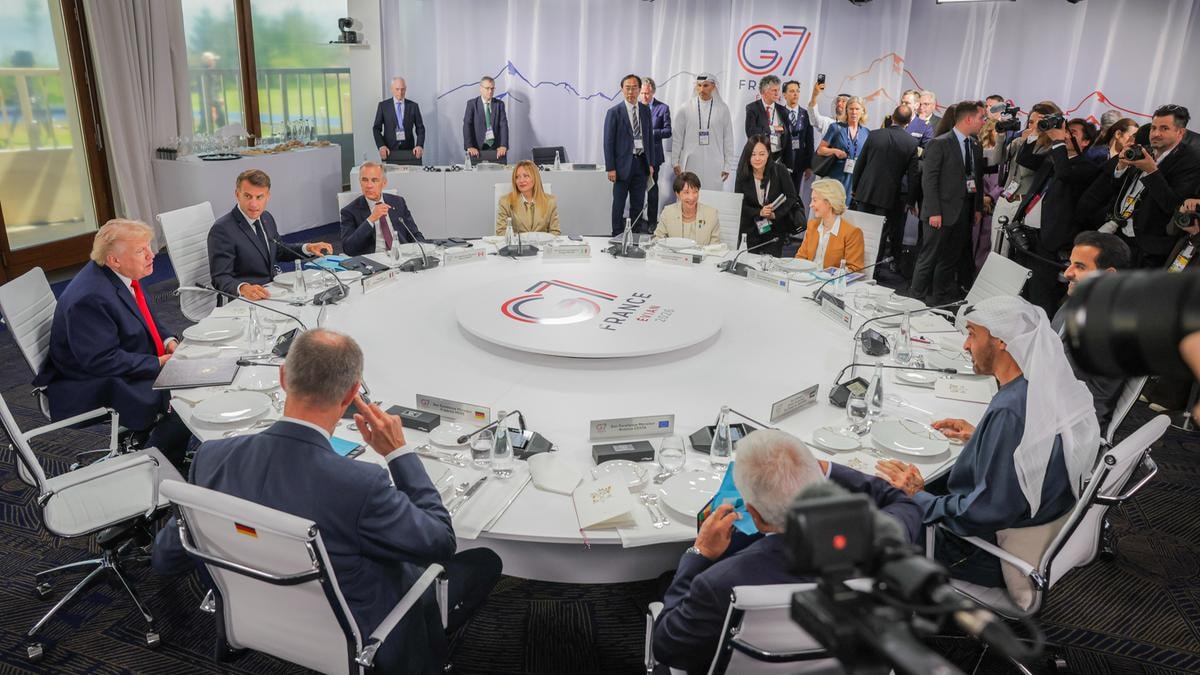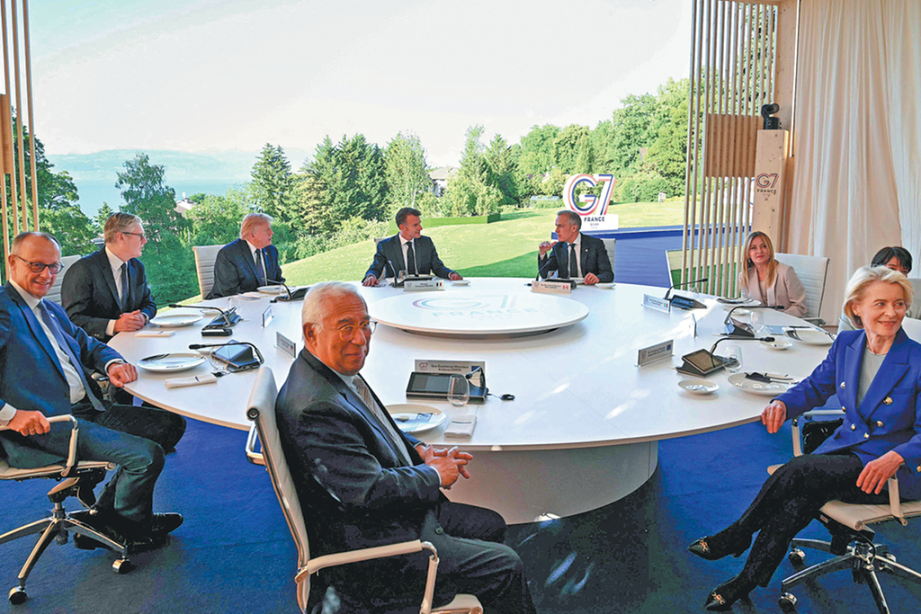
Skip to Content News Archives Economy Energy Oil & Gas Renewables Electric Vehicles Mining Commodities Agriculture Real Estate Mortgages Mortgage Rates Finance Banking Insurance Fintech Cryptocurrency Work Wealth Smart Money Wealth Management Investor Personal Finance Family Finance Retirement Taxes High Net Worth FP Comment Executive Women Puzzmo Newsletters Financial Times Business Essentials More Innovation Information Technology FP500 Podcasts Small Business Lives Told Tails Told Shopping Financial Post Store Obituaries Place a Notice Advertising Advertising With Us Advertising Solutions Postmedia Ad Manager Sponsorship Requests Classifieds Place a Classifieds ad Working Profile Settings My Subscriptions Saved Articles My Offers Newsletters Customer Service FAQ News Economy Energy Mining Real Estate Finance Work Wealth Investor FP Comment Executive Women Puzzmo Newsletters Financial Times Business Essentials HomeFP CommentJack Mintz: America's G7 partners need to up their gameIn the 1970s the G7 countries produced almost two-thirds of world GDP. Their share has fallen sharply as has their influenceLast updated 1 hour ago You can save this article by registering for free here. Or sign-in if you have an account.Unless Europe, Japan and Canada can up their economic and military games, the G7 may well be eclipsed as Trump and the U.S. looks for different global arrangements. Photo by Dominique JACOVIDES/POOL/AFP via Getty ImagesBefore this week’s G7 shindig in France, United States President Donald Trump irritated his fellow leaders by floating the idea of ditching the G7 and holding a G2 summit with China. China shows no interest, but Trump’s remark reminded European leaders, if they needed reminding, that China and the U.S. are now the world’s biggest economic and military powers.Subscribe now to read the latest news in your city and across Canada.Exclusive articles from Barbara Shecter, Joe O'Connor, Gabriel Friedman, and others.Daily content from Financial Times, the world's leading global business publication.Unlimited online access to read articles from Financial Post, National Post and 15 news sites across Canada with one account.National Post ePaper, an electronic replica of the print edition to view on any device, share and comment on.Daily puzzles, including the New York Times Crossword.Subscribe now to read the latest news in your city and across Canada.Exclusive articles from Barbara Shecter, Joe O'Connor, Gabriel Friedman and others.Daily content from Financial Times, the world's leading global business publication.Unlimited online access to read articles from Financial Post, National Post and 15 news sites across Canada with one account.National Post ePaper, an electronic replica of the print edition to view on any device, share and comment on.Daily puzzles, including the New York Times Crossword.Create an account or sign in to continue with your reading experience.Access articles from across Canada with one account.Share your thoughts and join the conversation in the comments.Enjoy additional articles per month.Get email updates from your favourite authors.Create an account or sign in to continue with your reading experience.Access articles from across Canada with one accountShare your thoughts and join the conversation in the commentsEnjoy additional articles per monthGet email updates from your favourite authorsSign In or Create an AccountorSince its inception in 1975 the annual G7 summit has enabled major democracies to co-ordinate economic policies and, in later years, foreign and security policies. This year’s summit focused on the confrontation with Iran but also included discussion of the Russia-Ukraine war, global trade, critical minerals, energy security and AI. Other countries are usually invited, including Brazil, India and South Korea. As a talk shop, the G7 serves its purpose. But it is no longer made up of the largest economies in the world.Get the latest headlines, breaking news and columns.By signing up you consent to receive the above newsletter from Postmedia Network Inc.A welcome email is on its way. If you don't see it, please check your junk folder.The next issue of Top Stories will soon be in your inbox.We encountered an issue signing you up. Please try againThis is in contrast to 1975 when the six leading countries — the U.S., France, West Germany, Italy, Japan and the United Kingdom — created the G6 in reaction to the 1973 OPEC oil price shock and the collapse of the Bretton Woods monetary agreement that had fixed currencies to the U.S. dollar.The G6 countries ranged in size from the United States (with a GDP in 1976 U.S. dollars of $1.7 trillion) to Italy ($228 billion). Canada was the seventh largest ($175 billion), which gave it the economic credibility to join the elite group one year later as a counterweight to Europe. After the fall of the Soviet Union, the Russian Federation was added in 1997, thus creating the G8, which lasted until 2014 when Russia was kicked out for annexing Crimea.Fifty years ago, the G7 countries produced 62 per cent of world GDP, making them the world’s most influential economic powers. They were also hefty military spenders although the U.S. alone accounted for over half of NATO spending, while Canada and Italy were laggards.Today, according to 2026 IMF projections, the U.S. is still at the top of the economic heap, with a GDP of $32.4 trillion in today’s U.S. dollars. But China is second ($20.9 trillion), and the two together represent 42 per cent of the world economy, which means Trump was not wrong about who has economic power these days.As for the middle countries, Germany ($5.5 trillion), Japan ($4.4 trillion) and the U.K. ($4.3 trillion) are the next three largest economies, as they were in 1975. But India ($4.2 trillion) is now fifth, followed by France ($3.6 trillion) and Italy ($2.7 trillion). Our GDP of $2.5 trillion puts us all the way down at 11th, behind Russia ($2.7 trillion) and Brazil ($2.6 trillion). If the G7 were reconstituted with only the largest economies, India and China would be at the table while Canada and Italy would be serving wine.The U.S. still dominates the G7, both economically and militarily. It produces more than a quarter of the world’s GDP and continues to grow faster than the EU, Canada and Japan. It is by far the dominant military spender. Its almost $1 trillion in spending in 2024 exceeded China’s ($315 billion) and Russia’s ($150 billion) combined. Germany and India spend less than $90 billion each. Canada ranks 16th in military spending at under $30 billion.Trump’s rumination about a G2 summit was prompted by his annoyance that European countries did not support the U.S.-Israel war with Iran. France and the U.K. having since declared their willingness to escort oil tankers through the Strait of Hormuz, though “independent” of U.S. military command, likely has not reduced his pique.The other G7 members have committed themselves to raising military spending, but if their economies continue growing at a snail’s pace the cost will be high. Some economists suggest military spending will boost their economies but the OECD argues effects are short-term and multipliers range from 0.6 to 1. In the long run, military spending won’t boost the economy if it draws resources away from more innovative sectors. On balance, military spending will crowd out social spending and either raise deficits and inflation or force taxes up — which voters have not been told about yet.The strain from military spending is already beginning to show. Defence-company stocks fell this week over concerns about government support. U.K. defence secretary John Healey resigned, saying Keir Starmer’s Labour government was not spending enough. Germany cancelled its agreement with France to build a joint fighter jet — the largest defence project in the EU — because of industrial infighting and disagreements over operational needs.Unless Europe, Japan and Canada can up their economic and military games, the G7 may well be eclipsed as the U.S. looks for different global arrangements. Join the Conversation This website uses cookies to personalize your content (including ads), and allows us to analyze our traffic. Read more about cookies here. By continuing to use our site, you agree to our Terms of Use and Privacy Policy.
Jack Mintz: America's G7 partners need to up their game
In the 1970s the G7 countries produced almost two-thirds of world GDP. Their share has fallen sharply as has their global influence. Read on
TL;DRAI
G7 economic share collapsed from 62% (1975) to minority status; U.S.-China duopoly now controls 42% of global GDP. Tech strategy pivots on this divide: AI governance, supply chains, and infrastructure standards now bifurcate into competing Western and Chinese ecosystems.
1,305 words~6 min read