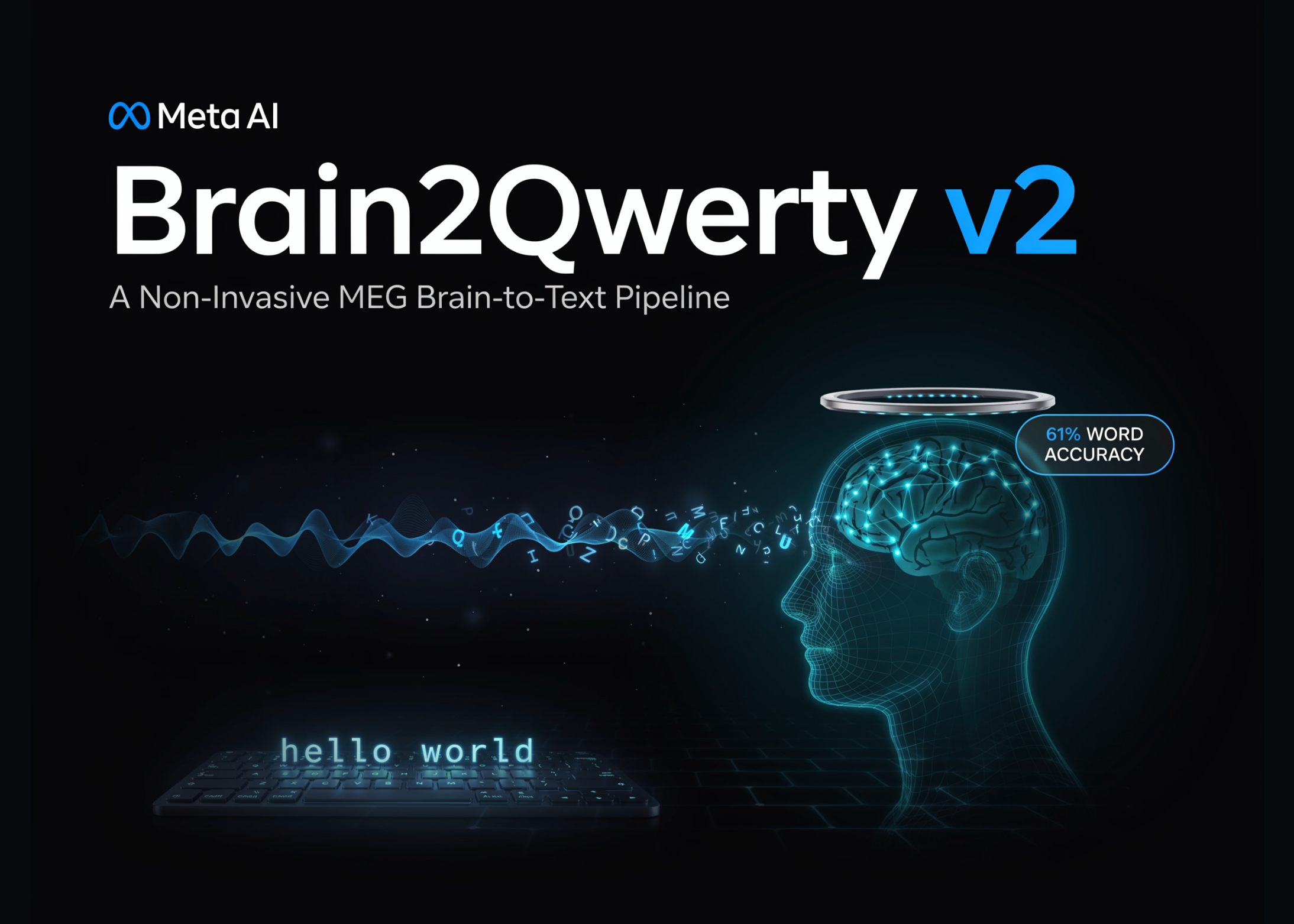
Meta just demonstrated that reading someone’s mind, or at least their typing intentions, no longer requires drilling into their skull. The company’s new AI system, Brain2Qwerty v2, translates brain activity into text using entirely non-invasive techniques, achieving an average word accuracy of 61%.
The best-performing participants in the study hit 78% decoding accuracy. To appreciate how significant that is, consider that prior non-invasive methods managed roughly 8% accuracy. That’s the difference between a system that produces gibberish and one that produces mostly coherent sentences.
How it works, minus the neuroscience degree
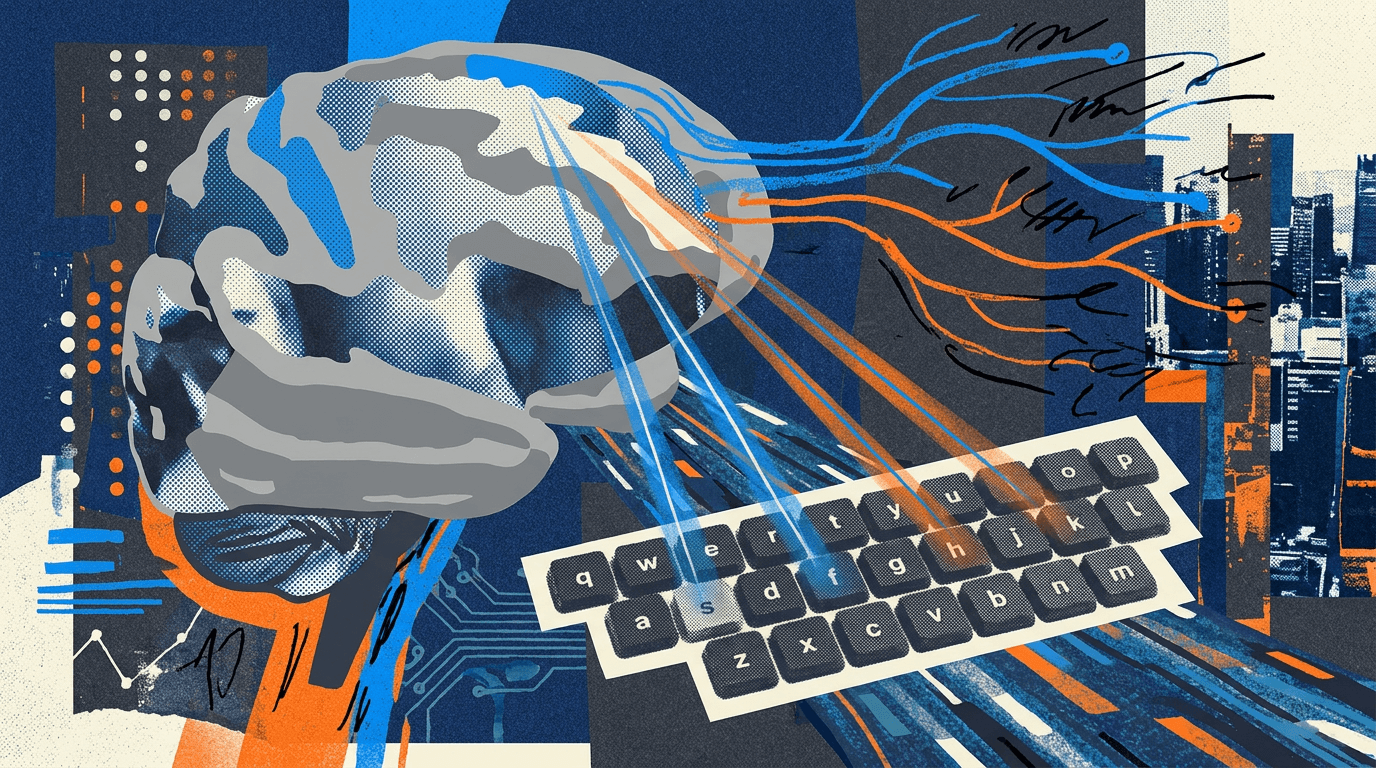
Think of it like this: when you type on a keyboard, your brain fires specific electrical patterns for each key you intend to press. Brain2Qwerty v2 captures those patterns using two established brain-scanning technologies, magnetoencephalography (MEG) and electroencephalography (EEG), and then feeds that data through a sophisticated AI pipeline to reconstruct what you were trying to type.
Neither MEG nor EEG requires surgery. MEG measures magnetic fields generated by neural activity, while EEG uses electrodes placed on the scalp to detect electrical signals.