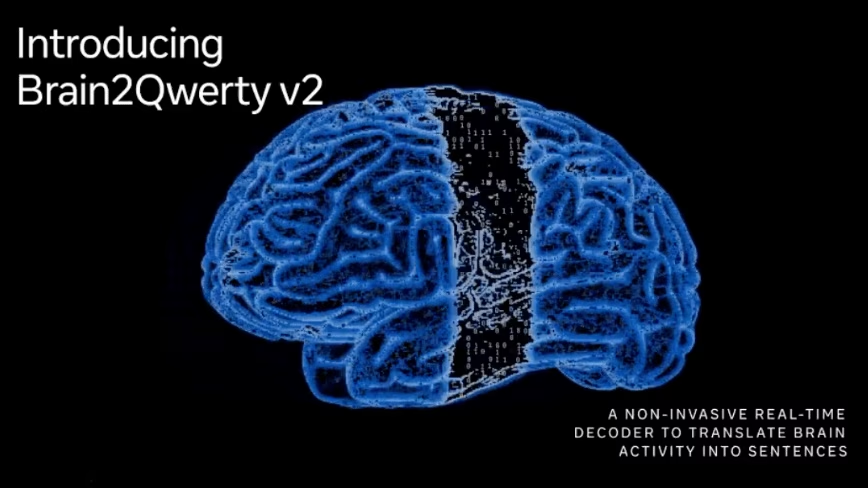
Most of us have at one point or another had a dream in which we were unable to speak or move; to wake up from such a nightmare—and to recall what it’s like to be able to freely use your voice—feels like a liberation. Now, Meta says it’s getting closer to helping people who actually live with this paralyzing condition to communicate through the use of brainwave-decoding AI. On Monday, the company introduced Brain2Qwerty v2, its latest effort to translate noisy brain activity into coherent text: think of it like a rudimentary form of algorithmically mediated mind-reading. While the research is still in its early stages, it offers a glimpse of a perhaps not-so-distant future in which patients suffering from anarthria, locked-in syndrome, amyotrophic lateral sclerosis (ALS), and other paralyzing neurodegenerative disorders are able to communicate via thought without the need for neuroprosthetics, which typically require extremely invasive, complex, and expensive brain surgery. “We believe this research has the potential to make a real difference for the millions of people who suffer from brain lesions that prevent them from communicating,” Meta wrote in its announcement. The underlying code for Brain2Qwerty v2, as well as that of its predecessor, v1, have been made available online. “Our hope is that this work, done in the open, advances neuroscience to identify, diagnose, and treat neurological disorders faster than in siloes,” the company wrote, echoing a burgeoning movement within the AI industry to provide scientists with access to open source AI in the name of accelerating the pace of discovery.
Meta's AI Is Getting Better at Reading Your Thoughts—Without Cracking Open Your Skull
The company’s Brain2Qwerty v2 system can translate brainscans into coherent sentences, no invasive surgery required.
757 words~3 min read