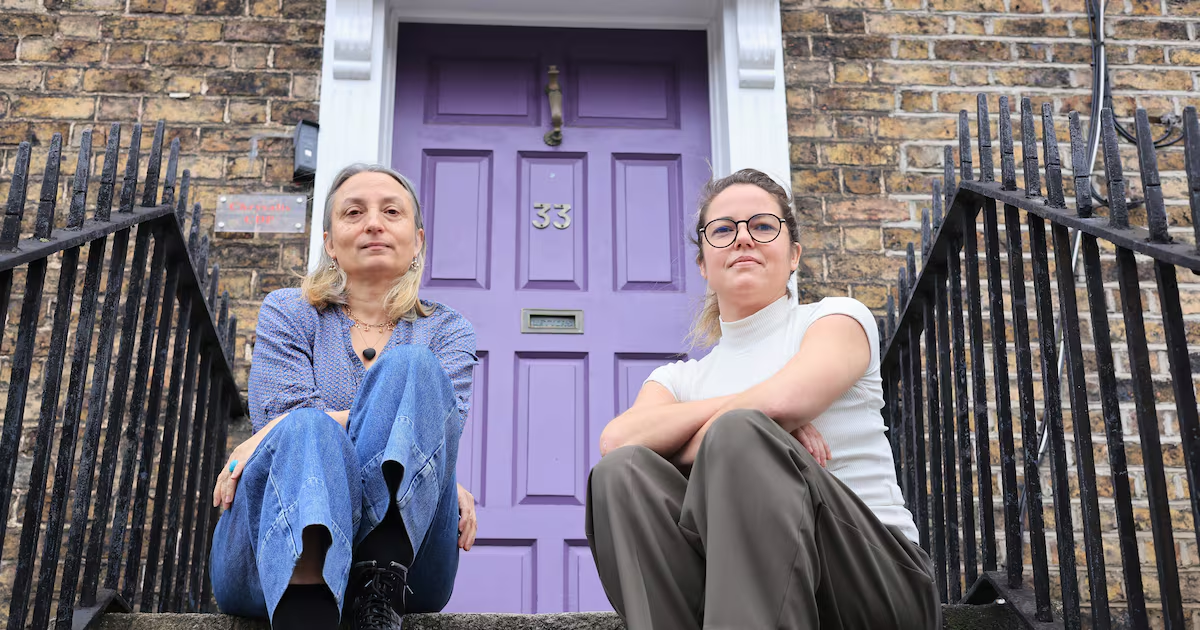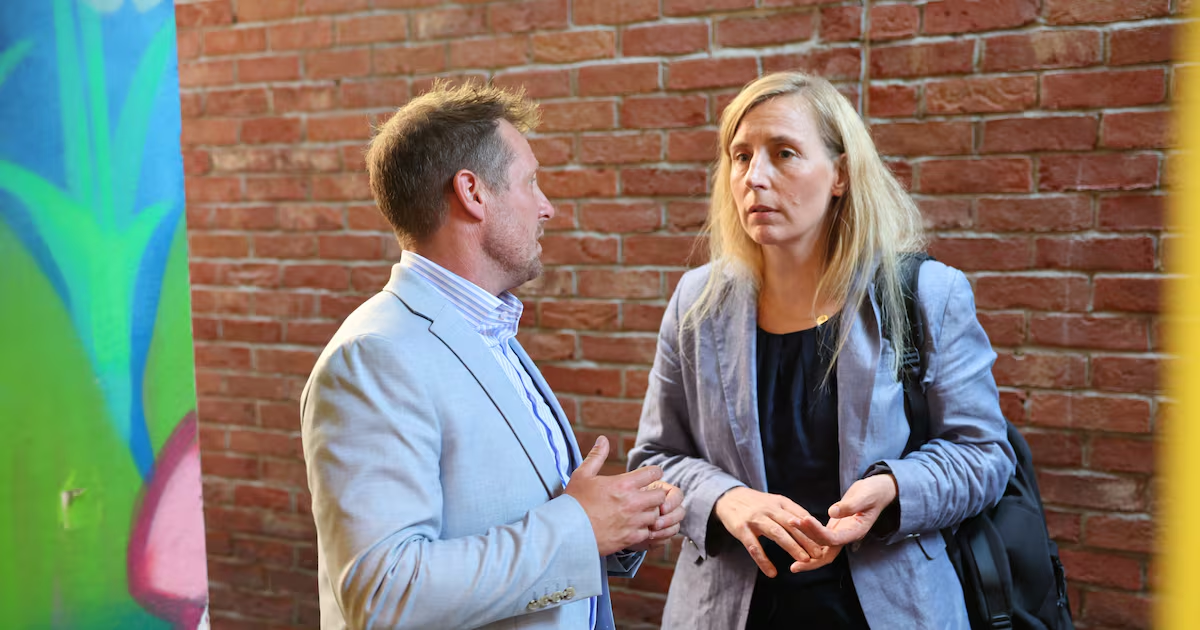
People “should not be criminalised” for having drugs for personal use or for “having a disease like addiction”, the World Health Organisation’s lead on drugs, alcohol and addictive behaviours said. Anja Busse was in Dublin on Thursday, where she visited a cafe and drop-in centre for people who are homeless and have addiction issues. Busse met staff, volunteers and services users at the Lighthouse on Pearse Street. The facility is operated by the Tiglin charity founded by Senator Aubrey McCarthy, which provides rehabilitation, supported housing and education to recovering drug users. Busse said she had not had an opportunity to read a report from the Oireachtas Committee on Drugs Use, published on Wednesday, which recommended legislation criminalising the possession of drugs for personal consumption be repealed. “But usually we are advocating for public health to be the first entry door [for people who use drugs]. People shouldn’t be criminalised for having a disease like addiction, or for [having drugs for] personal use, personal consumption.” [ Is decriminalisation of drug possession on the way?Opens in new window ]There were “international frameworks for alternatives” to treating drug-possession as a criminal offence. “There are a lot of ways to [move] over from the justice system so people get contact ... to public health services. “It is clear, people who use drugs, people who are addicted, who are marginalised, need health and social services.” Decriminalisation of drugs does not mean their legalisation. Drugs would remains illegal but possession in small quantities would no longer be an offence. Busse, from Germany, works closely on forming and promoting WHO policy on drugs that explicitly recommends decriminalisation and regards drug dependency as a complex physical and mental health issue. Among service users she met on Thursday evening was Tracy O’Connor (39) from Cabra. Busse was struck by O’Connor’s praise for the charity. “She told me she was treated as a human, with dignity and respect here. That has to be the basis for everything we do in this area.”O’Connor said she had lived in a tent for six months and until recently was a daily crack-cocaine smoker. “If I didn’t have here I’d be lost. It’s someone to talk to – they listen and then they help you out in different ways. They link in and help out no matter what level you are at.”Off drugs for four months she says she had to leave emergency accommodation to remain drug-free. “It is hard in the hostels when you are being put in with other users and they are bullying you. I am much happier back in a tent. I am safe. I get fed here. There is a place around the corner where you can have a shower.” Staff, many of whom have been through the charity’s recovery programme, described the increasing demand for its services. [ Decriminalising illicit drugs for personal use recommended by Citizens’ Assembly in final reportOpens in new window ]Stephen Flood, who also works with addicts in groups across the south inner-city, said while cocaine users could often maintain jobs and relationships “crack cocaine is a different beast altogether” with users harder to reach and leading more chaotic lives. “Crack, it’s really hitting this city very aggressively.”Busse was in Ireland for publication of a progress report on WHO policies on reducing alcohol harm. An event in Dublin marking publication of the report, titled Implementing what works in alcohol policy: Progress report on the Safer initiative, happened on Friday simultaneously with events in Uganda and Nepal on Friday. Safer is an acronym for measures the WHO wants member countries to introduce: to strengthen restrictions on alcohol availability; advance and enforce drink-driving countermeasures; facilitate access to treatment; enforce bans or restrictions on alcohol advertising, sponsorship and promotion; and raise prices on alcohol through taxes and minimum pricing policies.
People ‘should not be criminalised’ for having drugs for personal use, WHO lead says
Anja Busse, who was in Dublin this week, says health and social services must be a priority for users
633 words~3 min read