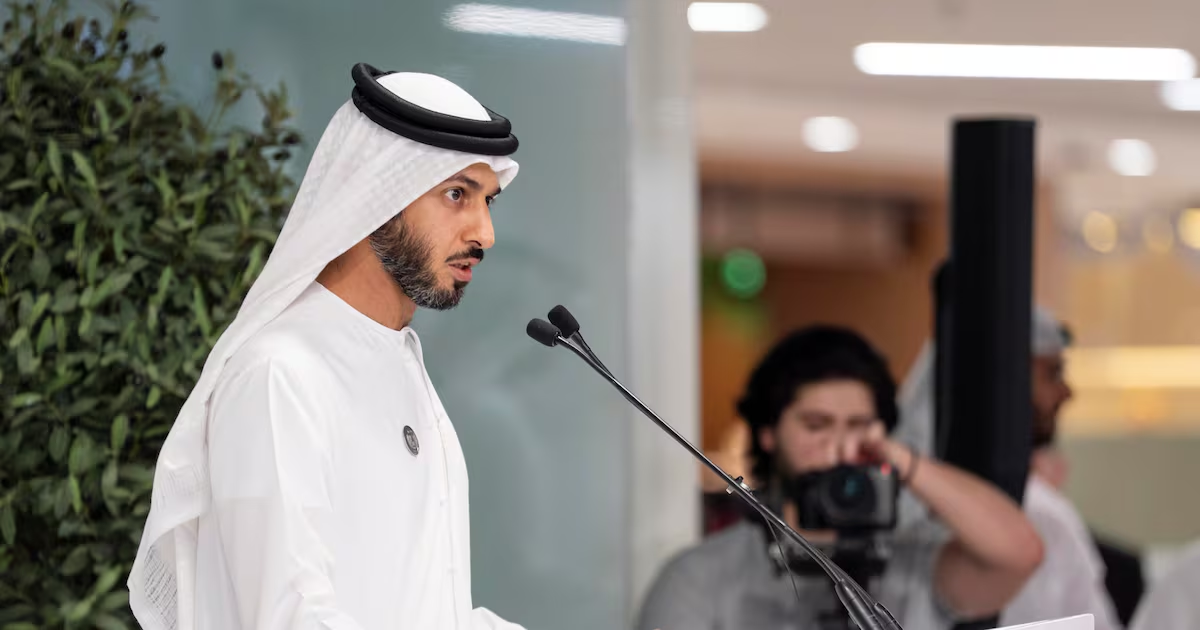
The launch of the UAE's national anti-drug campaign has been welcomed by clinicians, school leaders and university officials. But they stressed it was vital to address the psychological roots of addiction and ensure support is available.The campaign, United as One to Eradicate the Threat, was announced in Dubai last week by Sheikh Zayed bin Hamad, chairman of the National Drug Enforcement Authority."The fight against drugs is not the responsibility of a single entity, but rather a shared national and civic duty that requires public awareness, solidarity and collaboration," Sheikh Zayed said at the launch of the campaign. “Safeguarding our people is the foundation for any nation's progress and stability.” Sheikh Zayed bin Hamad bin Hamdan, chairman of the National Drug Enforcement Authority. Photo: National Drug Enforcement AuthorityInfoHe acknowledged that while authorities remain vigilant, evolving criminal methods are creating new challenges for authorities. The response must shift from reaction to proactive prevention, he added. For those working at the front lines of prevention and treatment, the initiative has sharpened an already pressing conversation about what sustained, effective action must look like.Dr Sara Elawady, a specialist psychiatrist at Sage Clinics in Dubai, said the campaign was an important opportunity to direct families and individuals towards underutilised services. “For individuals struggling with addiction, and for families supporting a loved one, it is important to know that help is available,” she told The National. Dr Sara Elawady of Sage Clinics in Dubai. Photo: Sage ClinicsInfo“The national campaign plays an important role in raising awareness, reaching young people through social media, reducing stigma and encouraging those in need to seek help.”Across the country, there are several addiction treatment and rehabilitation services, including residential rehabilitation centres, day-care programmes and specialised clinics. Helplines are also available to provide guidance, support and to connect people with suitable care.“Treatment is tailored to each person’s needs and may include medication-assisted or substitution therapy when clinically appropriate, alongside harm-reduction approaches that help reduce risks and support recovery,” Dr Elawady added.At the root of the issueDr Alexandre Machado, senior clinical neuropsychologist and advanced neuromodulation specialist at Medcare Royal Speciality Hospital, said no campaign could succeed without confronting more difficult questions about why young people turn to substances in the first place. "The clinical truth that has emerged from decades of working in many countries with patients, from rigorous military contexts to cosmopolitan elites, is simple yet profoundly disturbing. Despite prohibition being fundamental, addiction is not about the availability of the substance or behaviour, but about a state of mind," he said.He added that people are not addicted to substances such as drugs and alcohol, but they are "addicted to escaping reality".But a feeling of material comfort does not translate into emotional stability, he said. "Economic prosperity can paradoxically create an existential void in the younger generation. Without solid references, clear values, or transcendent purpose, young people seek belonging where they can find it, often in deviant groups," he said.Going beyond ‘say no’Effective policies must transcend prohibition, Dr Machado said. "We need to create support structures that promote critical self-reflection and confidential, easily accessible support systems," he added. "Ideally, a young person in crisis should be able to immediately access psychological support through discreet, stigma-free channels."Shalini Nair, head of the office of student affairs at Manipal Academy of Higher Education in Dubai, said campaigns need to do more than “simply telling people to say no”."Effective awareness efforts should focus on reducing stigma so individuals feel safe seeking help before a crisis develops, educating families to recognise early warning signs, and improving access to treatment and recovery support,” she told The National. “Awareness alone may not change outcomes unless it is supported by practical pathways to help. Treating addiction solely as a moral failing or a criminal issue can discourage people from seeking the support they need."Schools in the UAE are part of the push to tackle addiction. Richard Drew, principal of Jumeira Baccalaureate School, said efforts to improve drug awareness "is an ongoing conversation that develops throughout a child's education"."Our aim is not simply to tell young people what to avoid, but to equip them with the confidence, knowledge and critical thinking skills to make positive choices," he added. "By creating an environment where students feel informed, supported and able to ask questions openly, we help build the resilience that enables them to navigate challenges both inside and outside school."Simon Jodrell, principal of Jebel Ali School, said his school moved to provide mandatory specialist training for every staff member. "Creating a safe and healthy environment for young people requires a proactive approach that combines education, awareness and strong partnerships between schools, families and the wider community," he said. Simon Jodrell, principal of Jebel Ali School. Photo: Taaleem GroupInfo"This year, all academic and administrative staff completed specialist drug and alcohol misuse awareness training and reviewed the UAE Ministry of Education's Guide to Drugs Prevention in School Environments. These initiatives strengthen our ability to identify concerns early, respond appropriately and provide timely support where needed."Dr Elawady said seeking help was the first step on the way to recovery. "Addiction treatment is not only about stopping substance use, it is about restoring health, strengthening relationships and improving overall quality of life," she said. "Taking the step towards treatment is a valuable investment in oneself and the future."
'Prevention must go beyond saying no': Clinics and schools look to bolster UAE anti-drug campaign | The National
United as One to Eradicate the Threat initiative must be backed up with treatment and support, experts say
881 words~4 min read