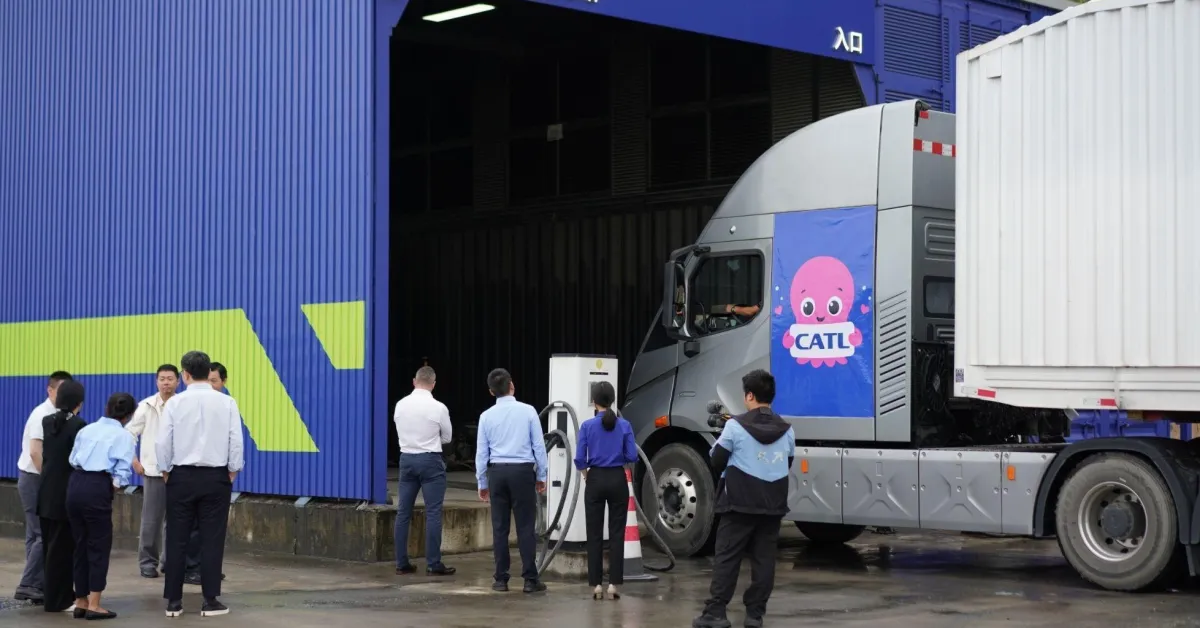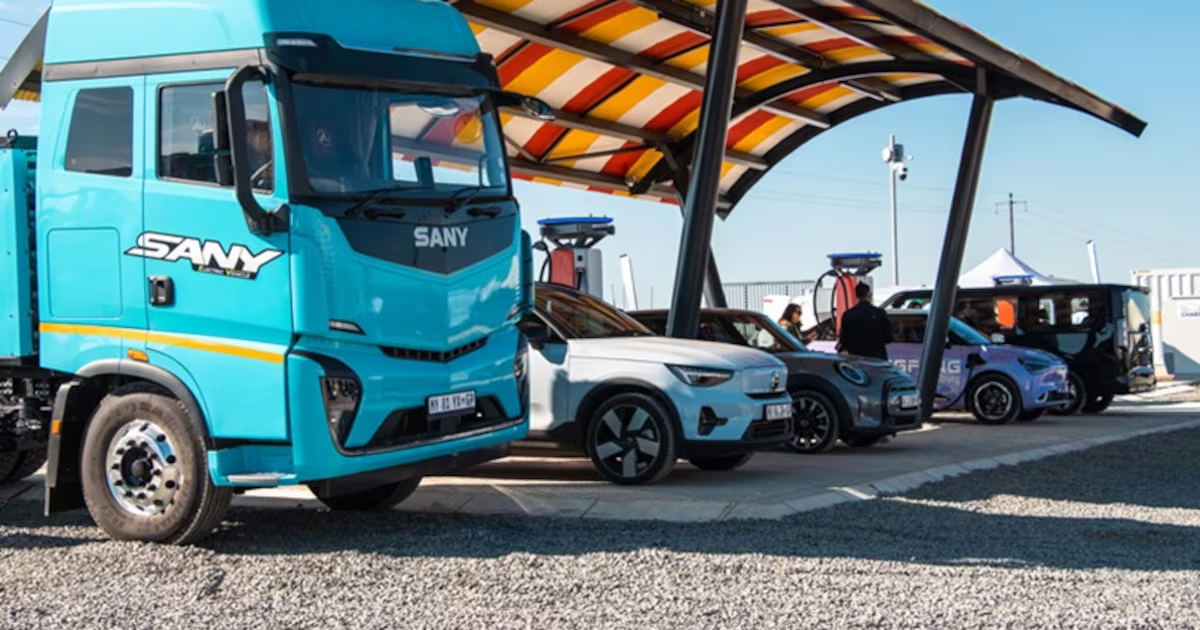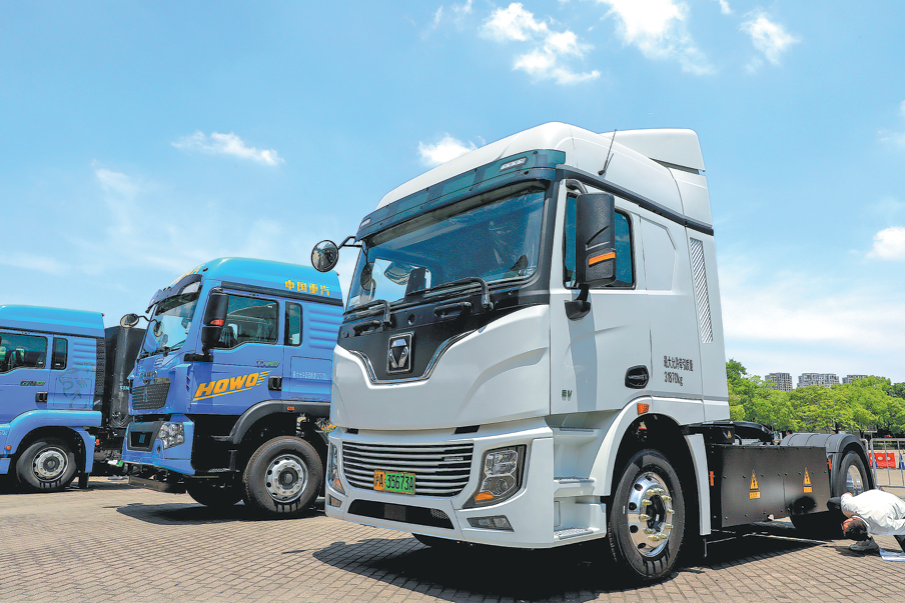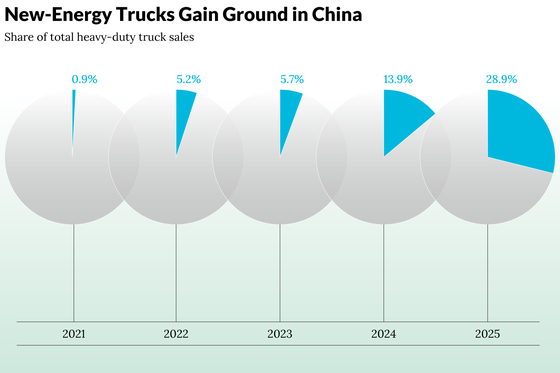
1. In Paris, Volvo Group Chief Technology Officer Jens Holtinger stated that Europe can learn from China’s approach to electrifying heavy trucks. He argued that Europe’s biggest obstacle is no longer vehicle technology but the supporting energy infrastructure, including weak grid capacity and an insufficient charging network. [para. 1][para. 4]2. Holtinger explained that battery-electric trucks are approaching cost parity with diesel models, but widespread adoption depends on whether governments can quickly expand electricity grids, charging networks, and renewable energy generation. [para. 2][para. 5]3. China has achieved close to 28% to 29% battery-electric heavy-duty commercial vehicle sales, a figure Holtinger cited as something Europe can learn from. He noted that China takes a very holistic approach to electrification. [para. 3]4. In China, the annual operating cost of a diesel heavy truck is 797,000 yuan ($117,400), compared with 620,000 yuan for an electric model, according to a 2024 estimate by market research firm CIC. [para. 6]5. Beijing recently set a target for new-energy heavy trucks to account for 40% of new sales by 2030. A blueprint from 11 government agencies calls for more than 1.6 million new-energy heavy trucks on China’s roads by the end of the decade, representing about 20% of the country’s heavy-truck fleet. [para. 7]6. Holtinger said Volvo continues to pursue multiple technology pathways, including battery-electric trucks, hydrogen fuel-cell vehicles, and hydrogen-powered combustion engines. He noted that the energy infrastructure will drive which technology is used, and that hydrogen could play a larger role if renewable electricity needs to be stored over longer periods. [para. 8][para. 9]7. In China, Volvo Group produces buses, engines, and construction equipment in its Shanghai factory, and owns 45% of Dongfeng Commercial Vehicles Co. Ltd. through a joint venture with Dongfeng Motor Corp., giving it exposure to one of China’s largest truck manufacturers. [para. 10]8. Volvo holds a 12.3% market share in China’s heavy-duty truck market in 2025, down 1 percentage point from the previous year. Net sales across its businesses in China were 11 billion Swedish krona ($1.1 billion), a 28.3% decrease year-on-year. [para. 11]9. Last June, Volvo Construction Equipment sold its 70% stake in Shandong Lingong Construction Machinery Co. Ltd. while acquiring Swecon’s operations in Sweden, Germany, and the Baltics, marking a step back from the Chinese market due to a prolonged property crisis slowing the construction sector. Holtinger acknowledged the slowdown in excavators and concrete pumps. [para. 12][para. 13]10. Despite the challenges, Holtinger described China as strategically important and a global technology leader whose manufacturing ecosystem is increasingly difficult to ignore. He noted a shift from earlier decades when European companies primarily transferred technology into China; now, in certain technologies like batteries and their ecosystem, the knowledge transfer may need to go in the opposite direction. [para. 14][para. 15][para. 16]11. Chinese commercial-vehicle makers are expanding aggressively overseas, intensifying competition. Holtinger said Volvo welcomes competition as long as there is a level playing field, and that the company must develop faster, studying the speed of product development in China’s automotive ecosystem while building on its own customer relationships and engineering strengths. [para. 17][para. 18]AI generated, for reference only
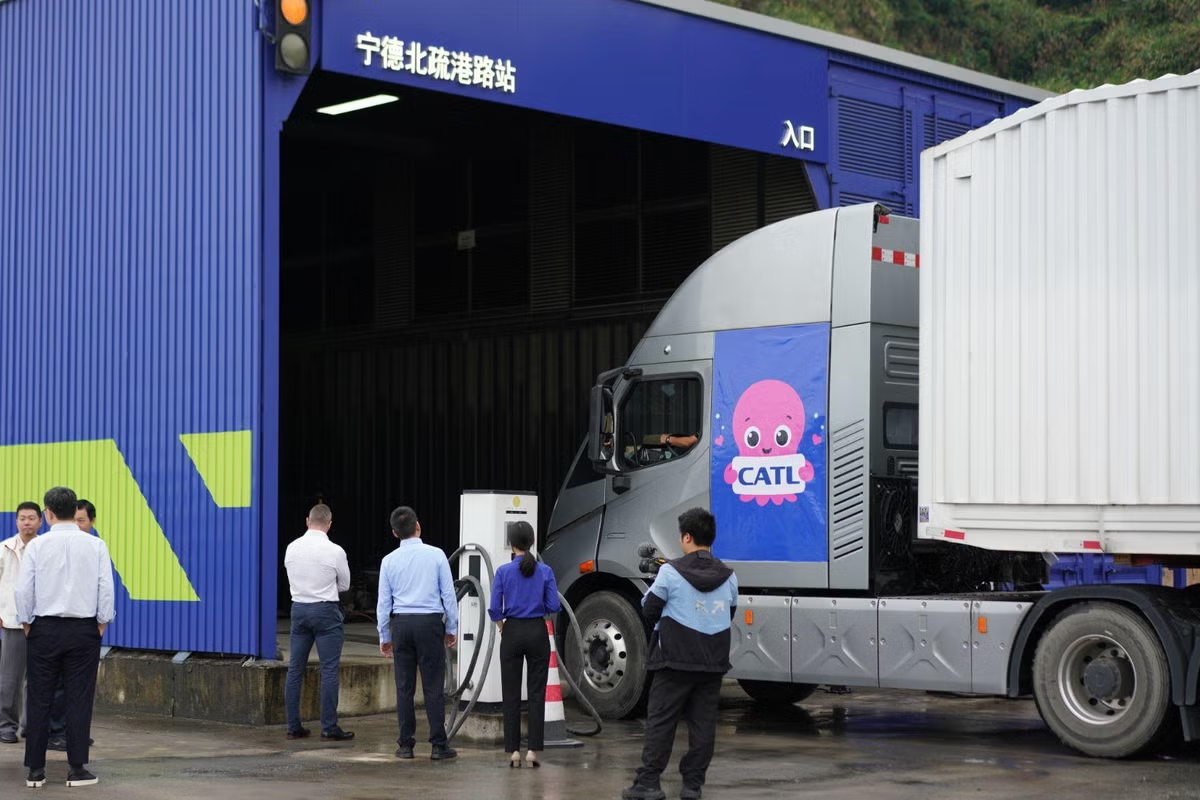
Europe Has a Lot to Learn From China About Electric Trucks, Volvo CTO Says
Jens Holtinger says the continent’s biggest obstacle is no longer vehicle tech, but how it lags behind the country in expanding power grids and charging networks
516 words~2 min read