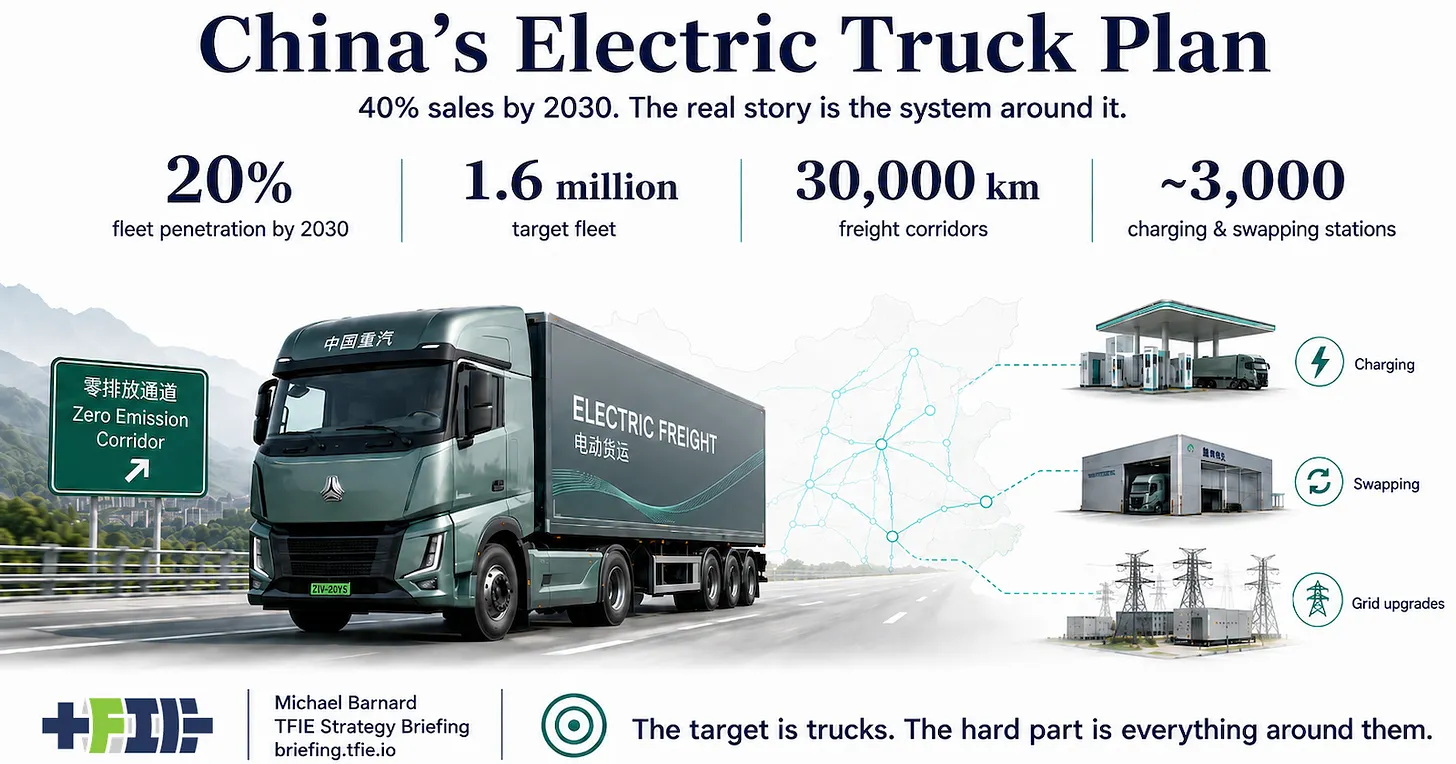
China’s electric heavy-truck plan treats freight electrification as corridors, depots, charging, swapping and grid infrastructure, not just vehicle sales.
Support CleanTechnica's work through a Substack subscription or on Stripe.
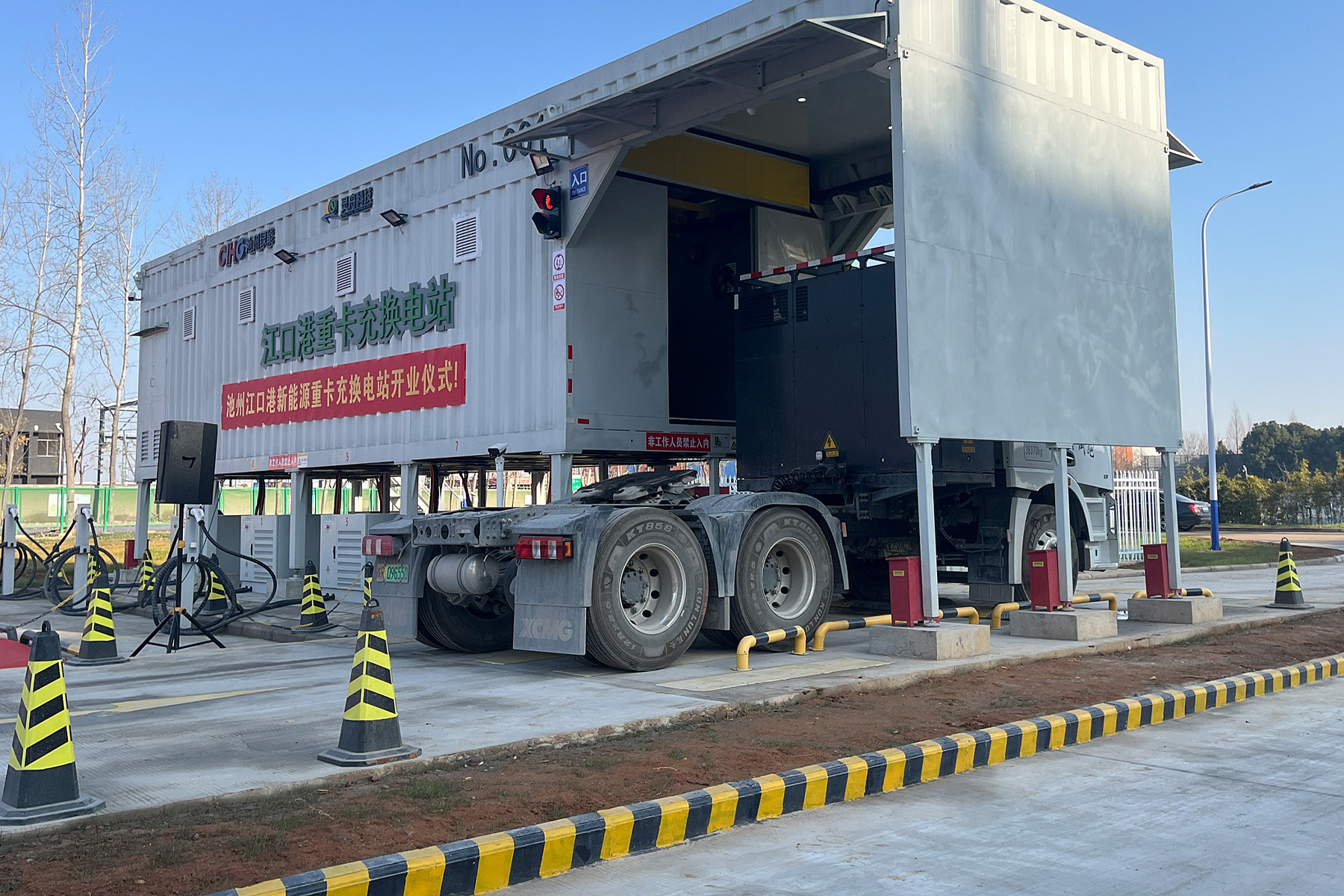
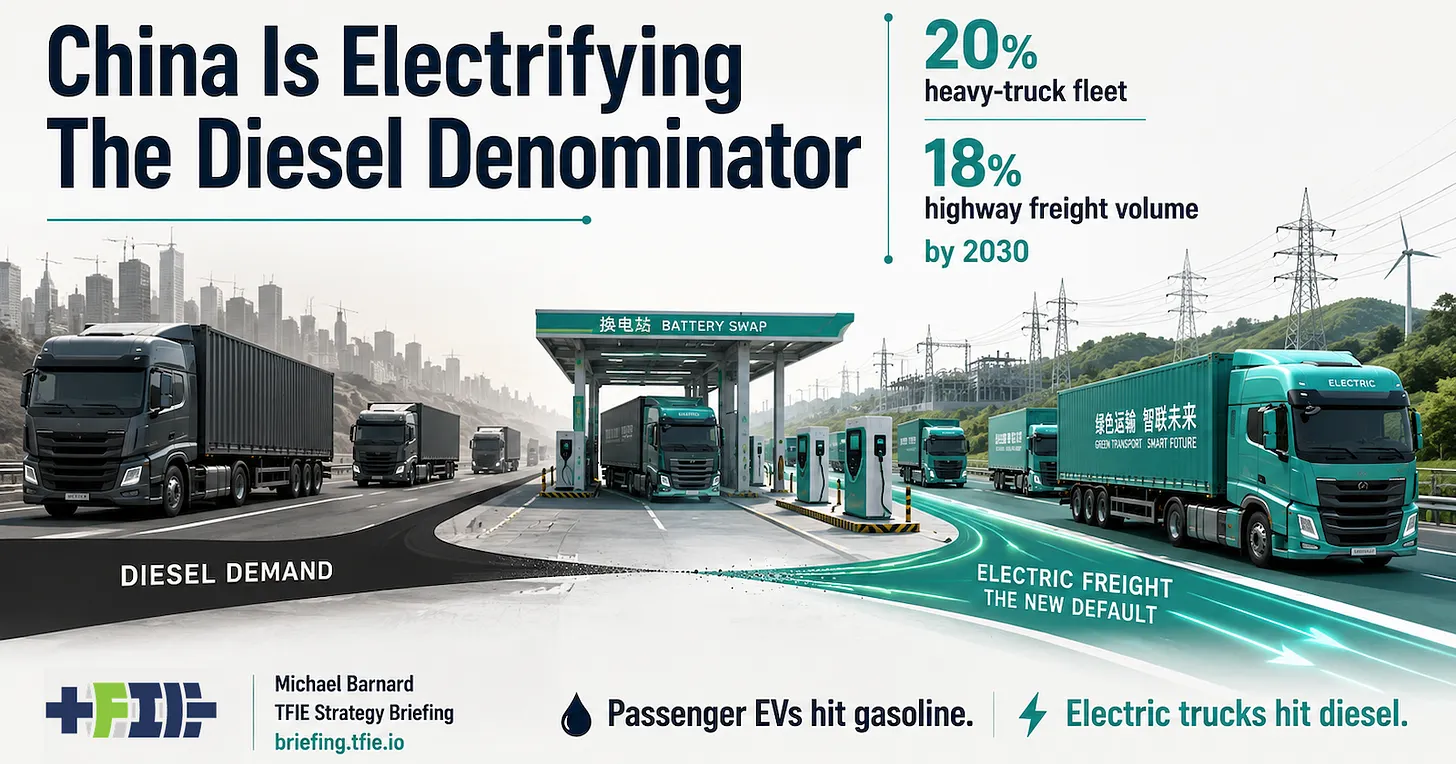
China’s new electric heavy-truck target is not interesting because another government wrote down a 2030 number. It is interesting because the target is tied to the system around the truck. The Ministry of Transport plan points to 40% of new heavy-truck sales being electric by 2030, 20% of the total heavy-truck fleet being electric, or about 1.6 million vehicles, and 3,000 charging and battery-swap stations as part of a zero-carbon highway push. On selected short-haul routes around Beijing, the target rises to 80%.
Those are freight-system numbers, not just vehicle numbers. A battery-electric heavy truck only matters if the route, depot, charging point, grid connection, maintenance model, logistics contract and financing structure line up. A charger in the wrong place is a stranded asset. A truck without the right charging window is a procurement error. Heavy-freight electrification moves when the vehicle and the operating system around it are built together.
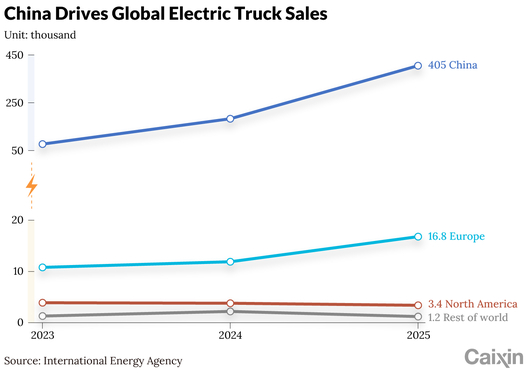
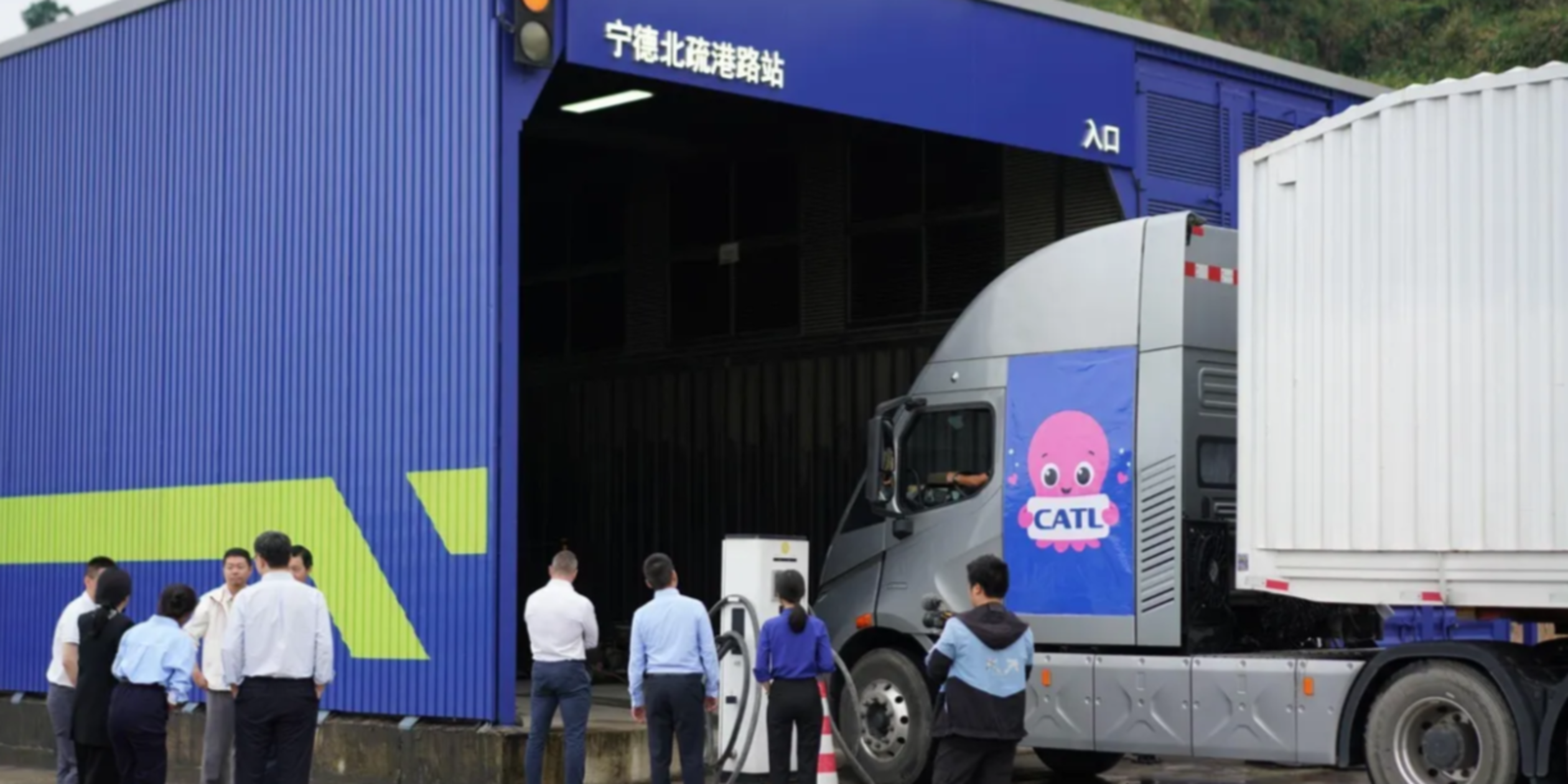
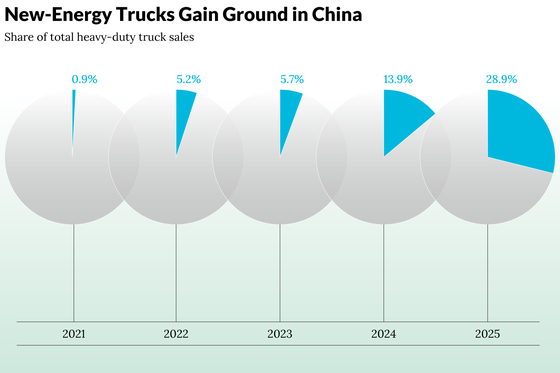
China is already far enough along that the targets are not science fiction. Reuters reports that electric models made up nearly a third of China’s new heavy-truck sales in 2025, after growing quickly from a niche position over the previous two years. CATL has said that as many as half of China’s heavy-truck sales could be electric by 2028. That may prove optimistic, but it is the kind of optimism that comes from a fast-moving supply chain, not from a stranded pilot program asking for another grant.