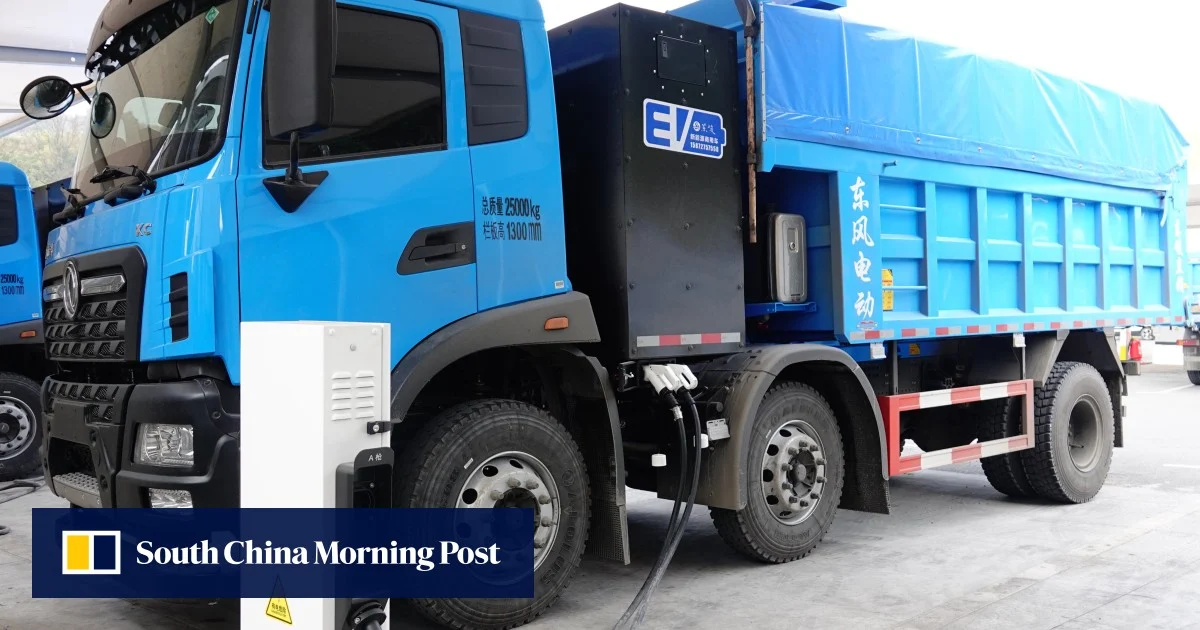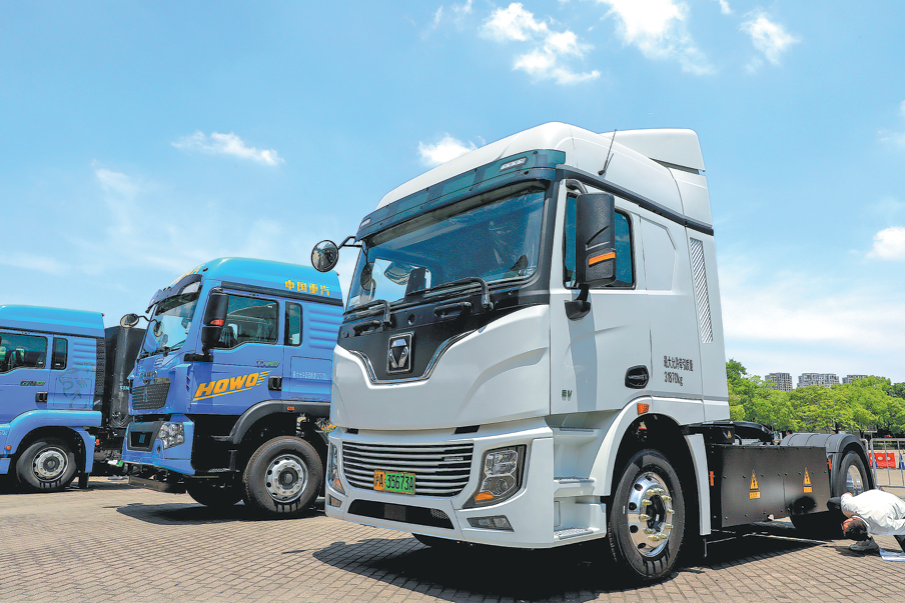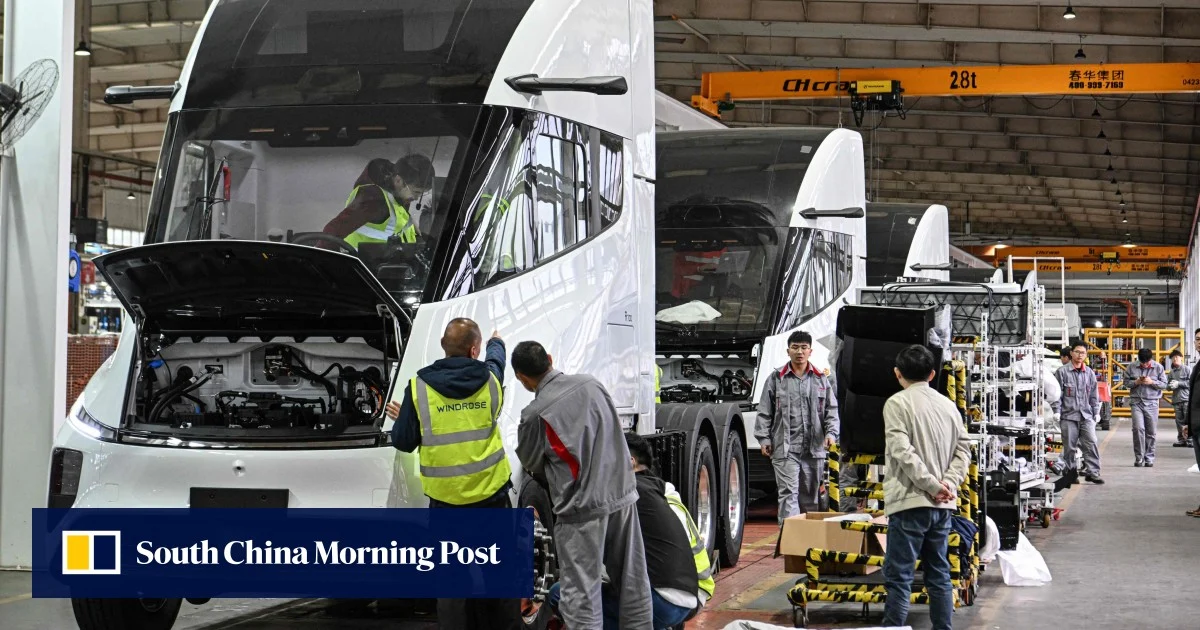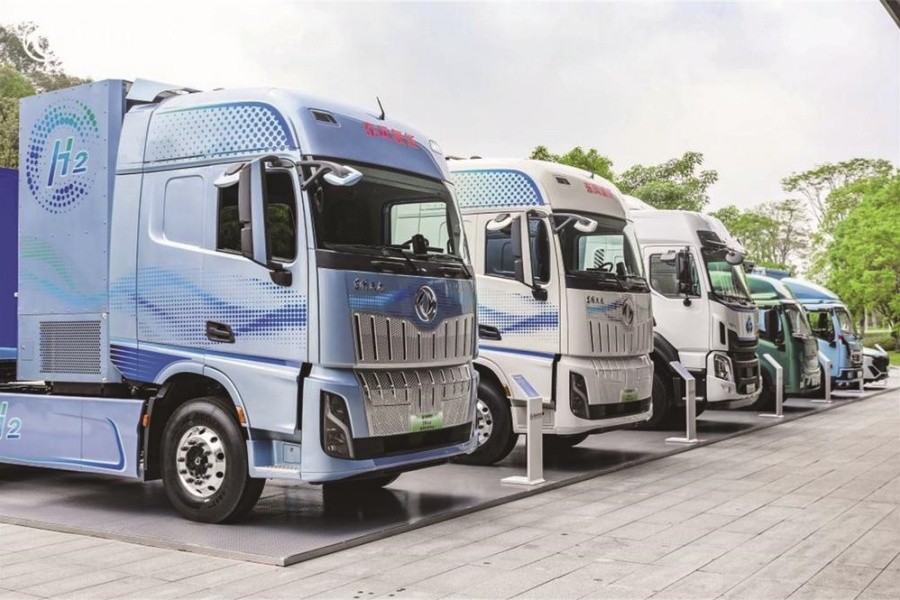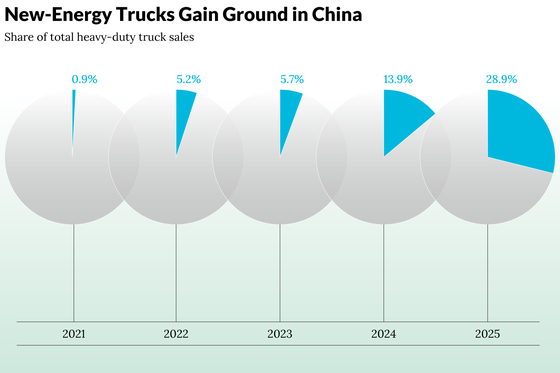
1. At an industry event in April, Sany Truck Chairman Liang Linhe predicted that new-energy heavy-duty trucks will fully replace conventional ones as Beijing advances "dual carbon" goals [para. 1]. Industry data shows 29% of heavy-duty trucks sold in China last year were new-energy, up from 0.9% in 2021 [para. 2]. Wan Jun of Baidu-backed DeepWay Technology echoed this, forecasting acceleration from falling battery prices and efficient tech [para. 3].2. Electric trucks are currently limited to short-haul due to battery density but are expanding via battery-swapping and hydrogen for longer routes [para. 4]. Improved range benefits autonomous vehicles for long-haul, reducing costs, accidents, and addressing driver shortages as fewer youth enter trucking [para. 5].3. Electric trucks gained cost edge from government support and battery advances [para. 7]. In 2024, annual ownership cost was 620,000 yuan ($90,700) for electric vs. 797,000 yuan for diesel, per CIC report including purchase, energy, insurance, maintenance [para. 8]. Gap stems from diesel's 30%+ fuel costs and frequent engine maintenance [para. 9].4. Battery innovations boosted range from 100km to 400km; price war cut costs [para. 10]. Early 2025 oil prices: diesel 2.5 yuan/km vs. electric 1 yuan/km [para. 11]. Subsidies favor new-energy: up to 140,000 yuan for replacements vs. 110,000 yuan conventional [para. 12].5. Firms build infrastructure: CATL's 2023 swapping system compatible with 10+ makers, 305 stations by end-2025, targeting 80% trunk routes by 2030 [para. 14]. Huawei's ultra-fast charging cuts time to 20 minutes; alliance developing compatible models [para. 15]. NDRC plans 10,000km low-carbon corridor by 2030 for new-energy vehicles (electrics, hybrids, hydrogen), powered by renewables [para. 16][para. 17].6. Range anxiety spurs alternatives: hydrogen fuel-cell trucks travel 800km, refuel <5 minutes, produce only water [para. 19][para. 20]. But scaling awaits cheaper, simpler production [para. 22]. Methanol trucks suit medium/long-haul with high density; Geely's Li Shufu proposes stations on corridors, ideal for cold north >400km routes [para. 23]. Methanol uses pipelines, easy station retrofits; green version from electrolysis H2 + captured CO2 [para. 24][para. 25][para. 26].7. Electrics suit autonomy better [para. 28]. CIC: driverless freight to 3.2 yuan/km by 2030 vs. current 5.6 yuan/km [para. 29]. Lidar prices drop at 100,000-unit production; 24/7 ops cut costs [para. 30]. Jan. 14 regs mandate assisted driving like AEB [para. 31]. Such tech cuts big-rig crashes 80%, reduces fatigue, needs fewer drivers [para. 32]. Autonomous electrics now in ports, full maturity distant [para. 33].(Word count: 498)AI generated, for reference only
In Depth: China’s Truck-Makers See an Electric Takeover of Big Rigs
While heavy-duty EVs have been mostly relegated to short routes, plummeting battery costs and immense investments in swapping infrastructure look set to make green, long-distance freight a reality
401 words~2 min read