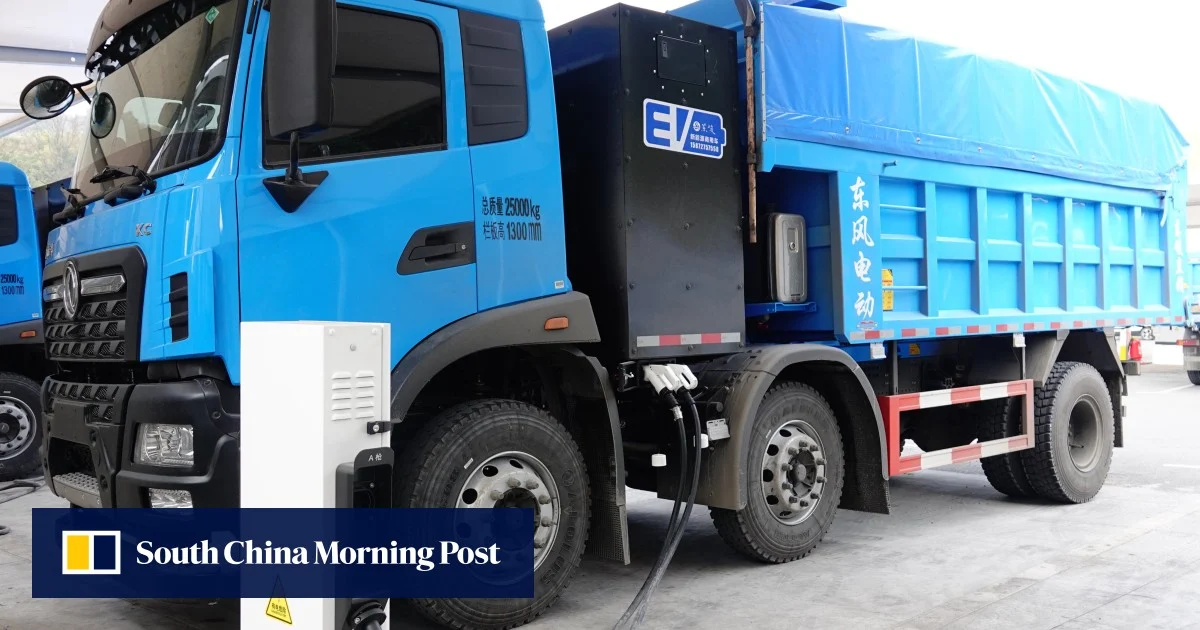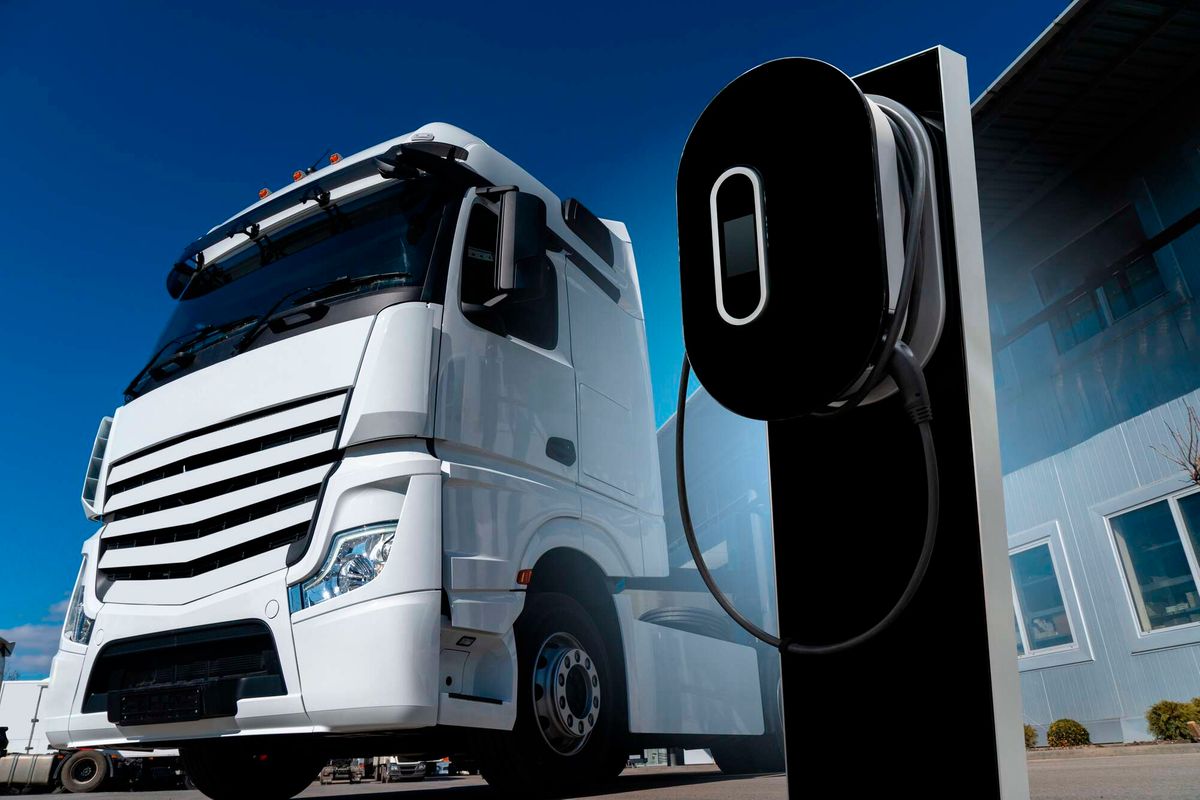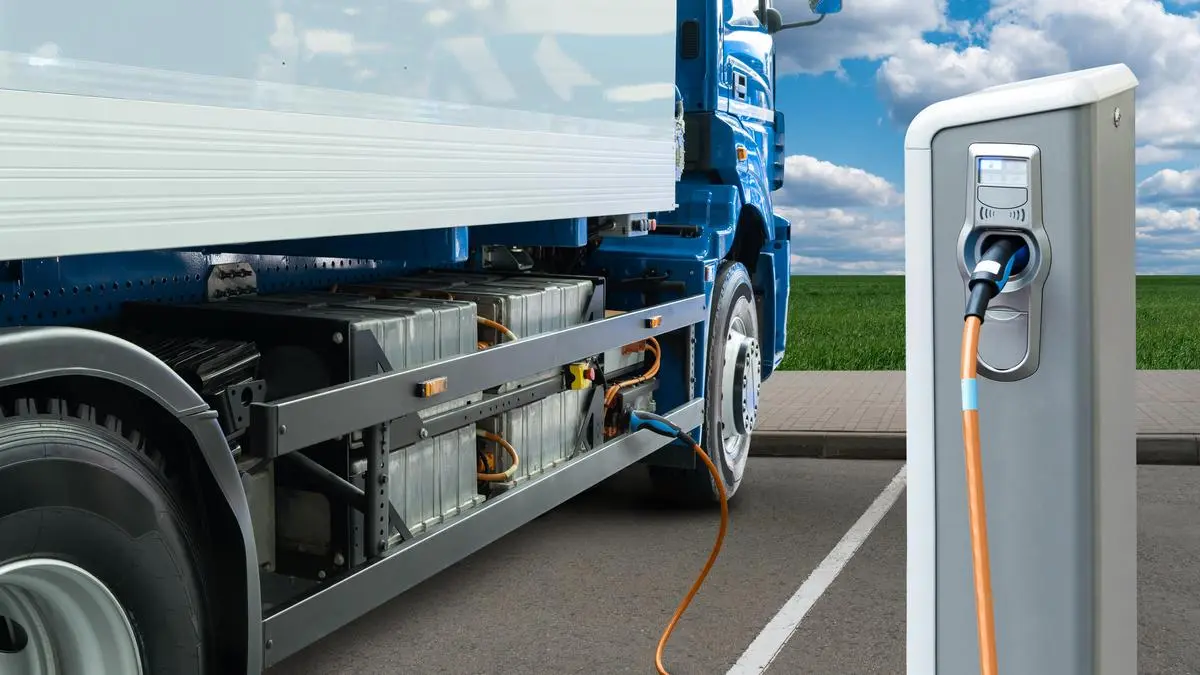
India’s freight runs largely on diesel, leaving the economy vulnerable to global oil-price shocks and exchange-rate volatility. India meets about 88 per cent of its crude oil needs through imports, and the annual crude import bill has exceeded $120 billion in recent years ($174 billion in FY26).Heavy-duty trucks are only a small share of India’s vehicle stock, but account for about 40 per cent of on-road vehicle fuel use and emissions, making them an obvious priority for electrification.To accelerate this transition, Prime Minister Electric Drive Revolution in Innovative Vehicle Enhancement (PM E-DRIVE), the ₹10,900-crore national EV programme, has carved out ₹500 crore for electric trucks, largely as vehicle-adoption incentives, and ₹2000 crore for charging infrastructure. A separate financing scheme of ₹10,000 crore scale for private buses and trucks is reportedly under consideration.These initiatives provide important momentum for the sector, but scaled adoption will ultimately hinge on whether truck operators can rely on cheap, reliable, high-power charging where freight actually moves — not on vehicle subsidies alone.Why won’t the market build the chargers on its own? Because the early market faces two compounding barriers. The first is a coordination problem. A charging operator will not invest without confidence that enough trucks will use the stations; fleet operators will not buy electric trucks without confidence that reliable charging will exist. Neither side can justify the commitment without some assurance the other will show up.Private contracts between fleets and charging companies can sometimes break such deadlocks, but here the capital requirements are too large and early fleets too small to anchor a business case. The second problem compounds the first.A MW-scale station — land, a major grid connection, high-power equipment, installation — carries very high fixed costs that only pay off above a threshold of heavy, sustained use. The trucks won’t come until the infrastructure exists; the infrastructure can’t pay for itself until the trucks come.Three strengthsTo resolve this impasse, India can harness three proven, complementary strengths from the power sector. First, it has used large, standardised auctions to create scale, bankable offtake, and a deep reduction in the cost of renewable electricity.Second, it has a nationally integrated grid that can move power seamlessly across regions.Third, open-access and captive-procurement rules allow large consumers to contract clean electricity on long-term, fixed-price terms, reducing exposure to the fuel-price volatility inherent to fossil fuels, especially imported crude oil and diesel.The economics of renewable electricity is now strong enough to make these advantages count. Our analysis of the recent solar-plus-storage auctions suggests that 24x7 clean power with 95 per cent availability can be delivered at ₹6/kWh, significantly below industrial tariffs in many States.Policy movesThree policy moves can unlock the transition to freight electrification.First, create the scale of demand for charging that the market might be unable to coordinate on its own. The initial wave of electric trucking should focus on use cases where the economics are easiest to prove: closed-loop operations with predictable routes, high utilisation, and repeat charging needs.These include cement, steel, chemicals, mining, ports, industrial parks, and short-haul container movement. A central agency or public-sector platform can pool demand from large fleet operators and logistics firms and auction long-term charging-service contracts. A payment-security mechanism can backstop early volumes and taper as utilisation rises. Fleet operators that subscribe to guaranteed charging volumes would, in effect, commit to deploying electric trucks. The same contract therefore de-risks both sides of the market.This is exactly what auctions and long-term contracts did for solar: turn uncertain demand into bankable offtake, and bankable offtake into falling costs. This, in turn, will require businesses to commit to electrification of their fleets which today is confined mostly to light commercial vehicles and last-mile delivery trucks and not heavy or long-haul freight.Second, deployment of charging infrastructure should begin where land availability, grid readiness, and economic activity already converge. Industrial clusters, logistics parks, export hubs, and strategic stretches of the Golden Quadrilateral are well positioned to lead the transition. These locations are more likely to sit near high-voltage grid capacity, have land that can be assembled, and generate the utilisation needed to bring charging costs down. Any publicly supported infrastructure should use interoperable technical protocols and streamlined approval process, accept common payment, meet uptime standards, and allow any compliant truck to charge.Third, simplify access to cheap, clean electricity for fleets — and turn the power utility into a partner, not an obstacle. Fleet operators get the cheapest power by contracting directly with renewable energy producers, bypassing the utility.Standardise normsBut today that means navigating a different, confusing set of rules in every State — too complicated for most operators to manage. The fix is a single, standardised system: common contracts, pre-approved procedures, and one point of contact, so any new charging hub can plug in and start buying cheap solar or wind power right away, instead of starting from scratch each time.The utility need not sell the electricity itself. It can earn a regulated fee for carrying power over its wires. Its larger opportunity lies in building and owning the upgraded power lines, substations and connections that charging hubs need.Treating these as regulated infrastructure — the same way utilities already earn a guaranteed return on the poles and wires they own today — gives them a steady income, while private companies build and run the chargers themselves. Smart pricing can also nudge trucks to charge at midday, when solar power is cheap and plentiful. So even when it isn’t the one selling the power, the utility has every reason to support this infrastructure, not resist it.Government support for charging infrastructure needs to therefore become much more than an add-on to purchase subsidies. It needs to anchor India’s first national electric-freight infrastructure programme.The market is unlikely to build such a network on its own, because the first charging stations and the first trucks must arrive together.India electrified its power ambitions through auctions, scale, contracts and grid planning. It can electrify freight the same way — by making the cheapest kilometre the electric one.Abhyankar is Associate Adjunct Professor at the Goldman School of Public Policy of the University of California, Berkeley and Co-Faculty Director of the India Energy and Climate Center; Rajagopal is Professor, Institute of Environment and Sustainability, UCLA; Shiledar is a principal at RMIPublished on July 2, 2026
A roadmap for electric trucks
Charging infra and cheap, reliable clean electricity are critical, for electrifying freight at scale
1,042 words~5 min read