China’s electric-truck buildout targets the high-use freight diesel market oil forecasts still rely on.
Support CleanTechnica's work through a Substack subscription or on Stripe.
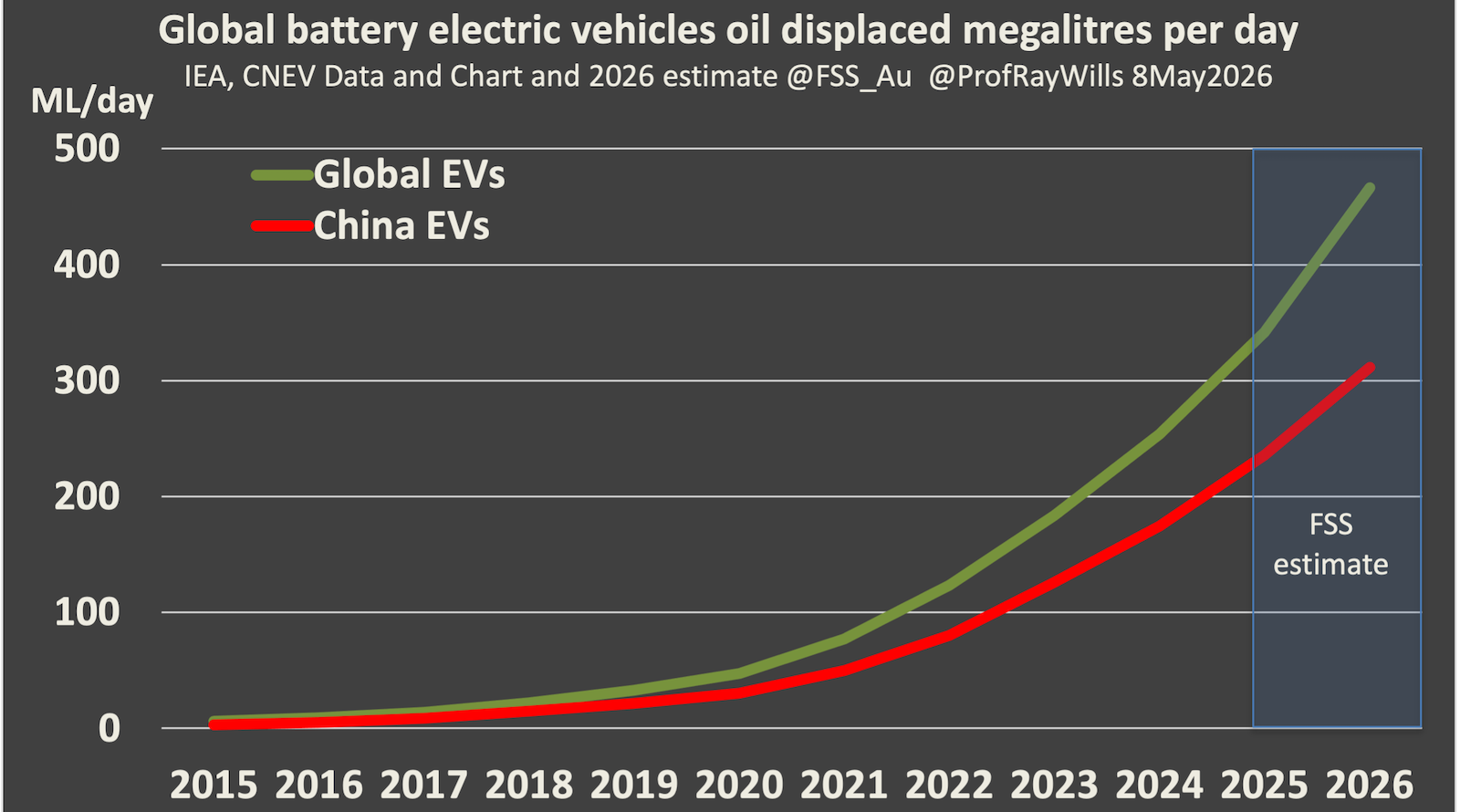
Oil forecasts that still depend on sustained Chinese road-fuel growth now have a heavy-truck problem. Passenger electric vehicles have already weakened the gasoline story, but freight diesel is the more important system denominator. Commercial trucks operate for longer hours, carry heavier loads and burn far more fuel per vehicle than passenger cars. Electrifying a minority of the most intensively used trucks can therefore remove a disproportionately large share of diesel demand.
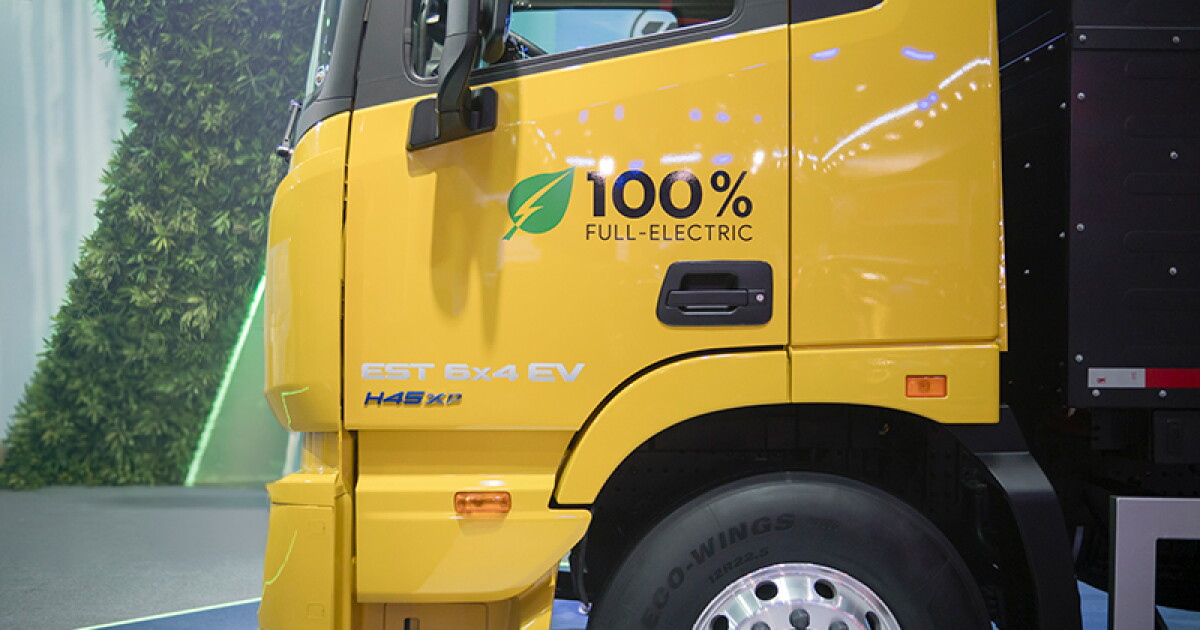
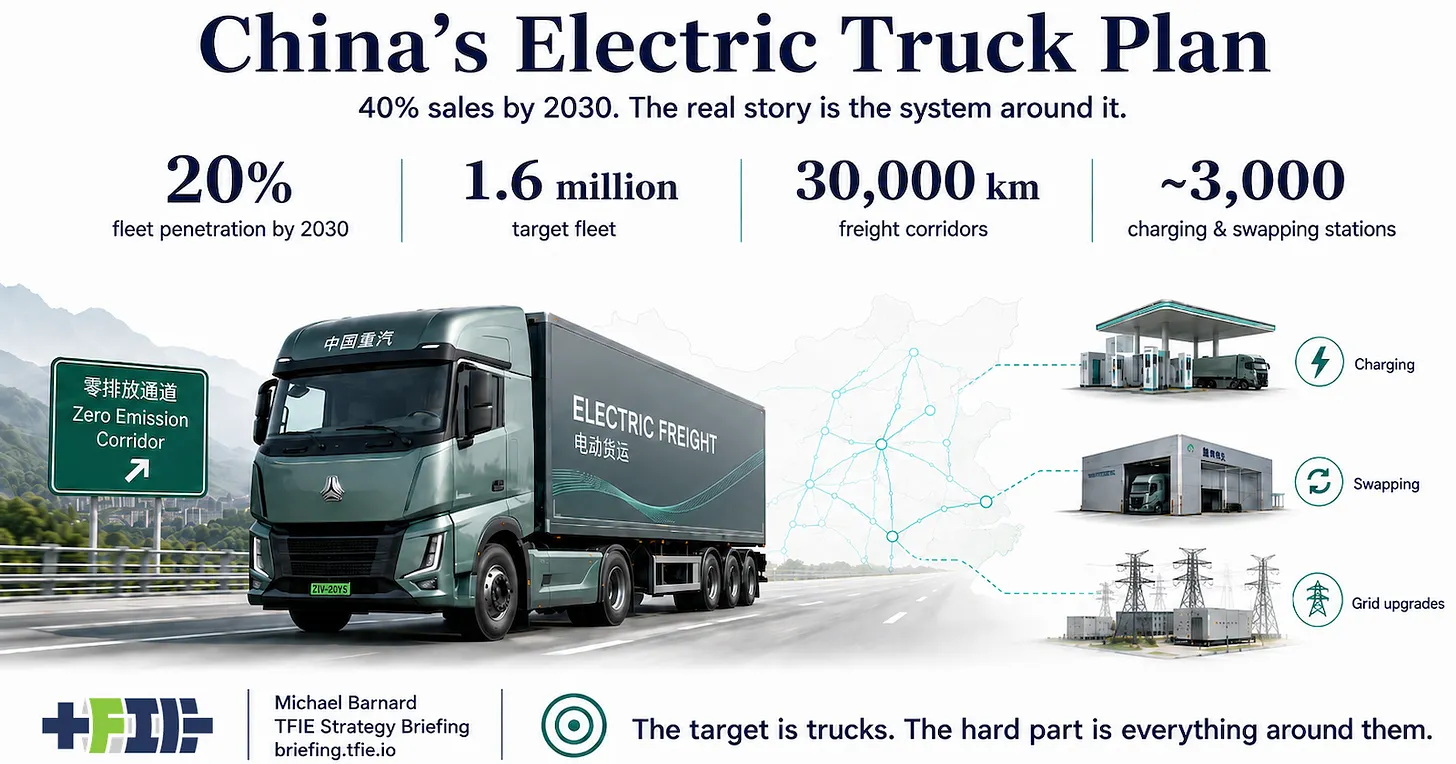
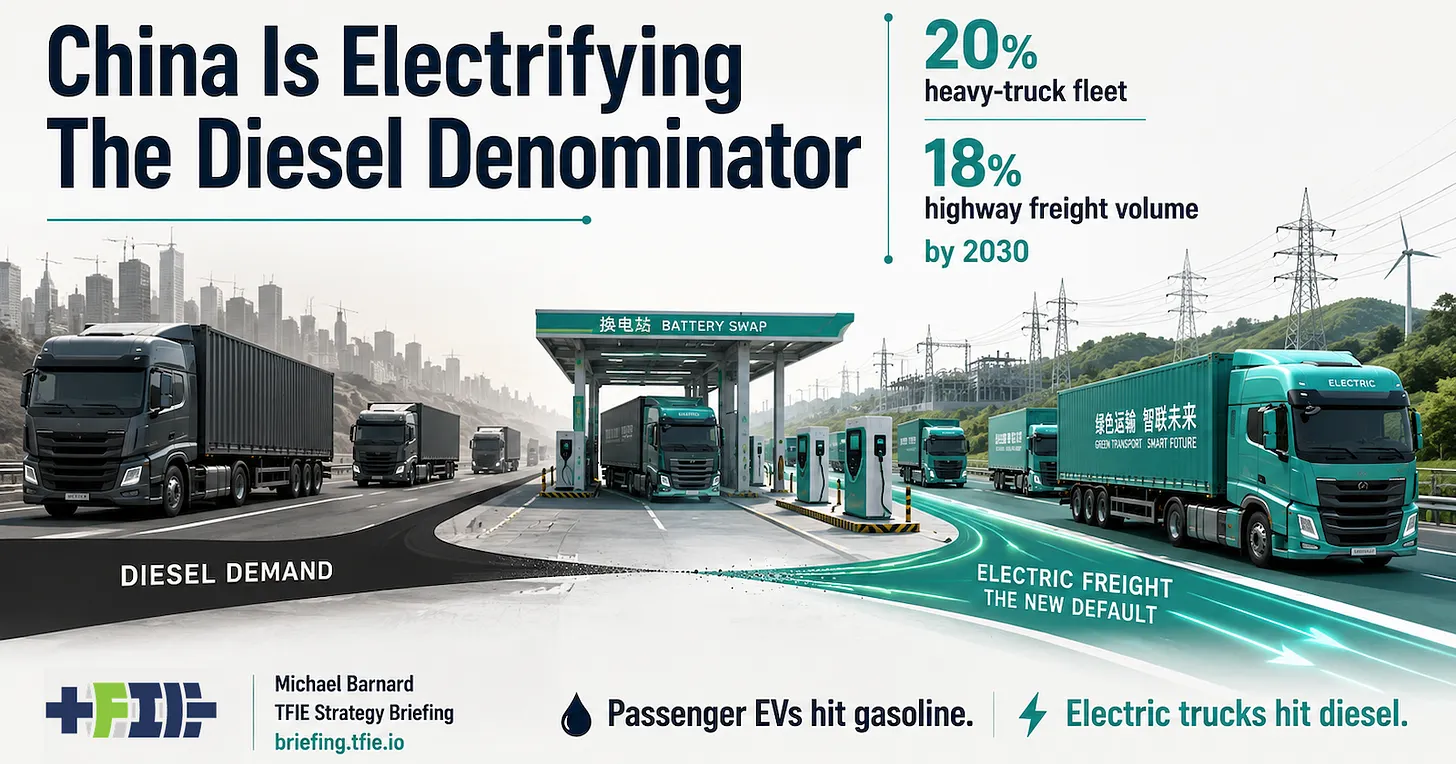
China’s heavy-truck electrification programme targets 40% new-energy heavy-truck sales by 2030, more than 1.6 million vehicles in operation and roughly 20% of the national heavy-truck fleet. The plan also targets 18% of highway freight volume, which is the more revealing number. China is not merely trying to put electric drivetrains into one-fifth of its trucks. It is concentrating them in commercially active fleets and high-volume freight operations.
The programme is being built as a freight system rather than a vehicle-sales mandate. It includes approximately 30,000 kilometres of zero-carbon highway freight corridors and about 3,000 heavy-truck charging and battery-swapping stations. Trucks are being connected to depots, logistics parks, ports, mines, highway service areas, repair networks, insurance and distribution-grid planning. Grid companies are being instructed to include truck charging and swapping demand in their investment plans.