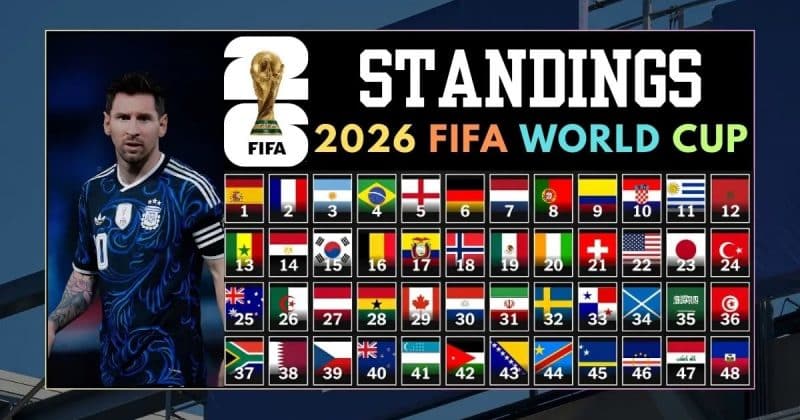
The 2026 FIFA World Cup is already reshaping competitive balance in ways we didn't anticipate. With 96 matches instead of the traditional 64, spread across 16 three-team groups instead of eight four-team groups, the tournament structure itself has become a mathematical disadvantage for underdog nations. The early results validate this theory: through the first week of group play, we're seeing historically predictable outcomes that suggest the expanded format may have fundamentally altered upset dynamics.
Let me walk you through the data.
The Structural Problem: Three-Team Groups Are Mathematically Conservative
The shift from four-team to three-team groups creates a critical statistical shift. In traditional four-team groups, the third-place team has a legitimate chance at advancement if results break the right way—remember South Africa 2010, when Uruguay's group stage dominance meant Mexico's 1-0 loss still advanced them? In three-team groups, advancement is brutally deterministic: only the top two teams advance, period.
This changes the game theory entirely. With 96 teams competing and only 32 advancing (33% advancement rate), the mathematical margin for error has compressed.