A new study from Cornell researchers has revealed an unexpected obstacle to improving charge transport in hybrid perovskites, a promising class of semiconductor materials used in energy conversion and electronic devices.
Published June 17 in Advanced Energy Materials, the research shows that certain conjugated organic molecules which have long been thought to enhance electrical conductivity in layered perovskites can instead trap charge carriers and dramatically reduce conductivity. The findings could help guide the design of next-generation perovskite materials for applications ranging from thermoelectric energy conversion to optoelectronics.
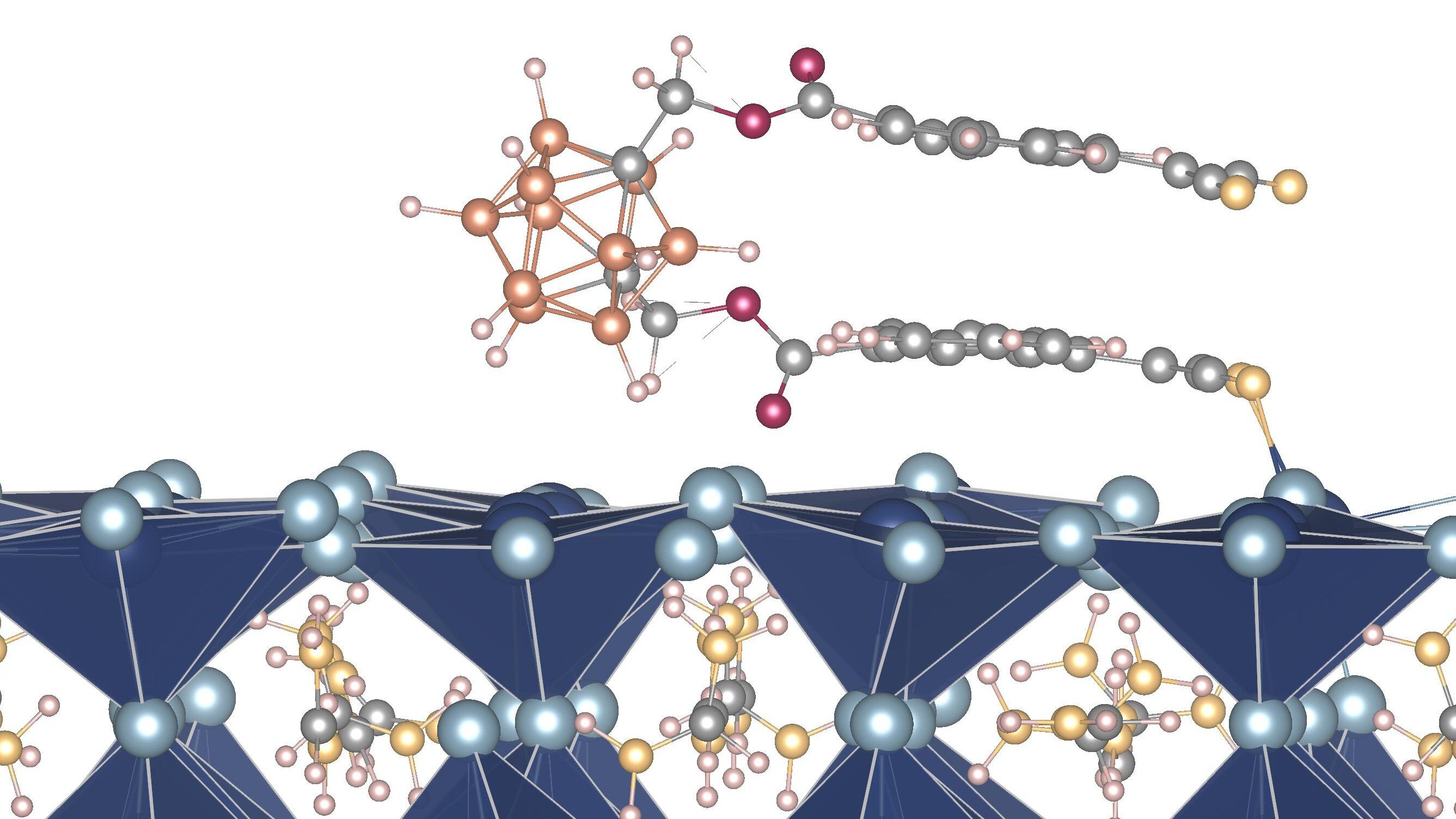
The paper’s first author is Prithwish Biswas, a postdoctoral researcher in the lab of Zhiting Tian, professor in Cornell’s Sibley School of Mechanical and Aerospace Engineering. Biswas, Tian and colleagues investigated how the molecular structure of organic ligands – molecules whose electrons can move relatively freely – influences charge transport in two-dimensional hybrid organic-inorganic perovskites, materials composed of alternating inorganic semiconductor layers and organic molecular layers.
Scientists have increasingly explored the use of conjugated organic ligands because they are expected to improve conductivity by allowing electrical charges to travel more easily through a material. In theory, these ligands should outperform conventional insulating ligands by reducing the barriers that impede carrier movement.