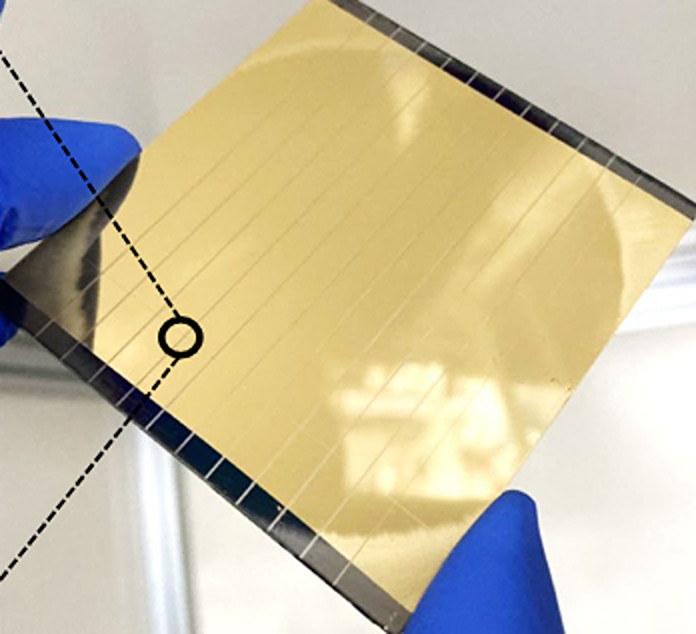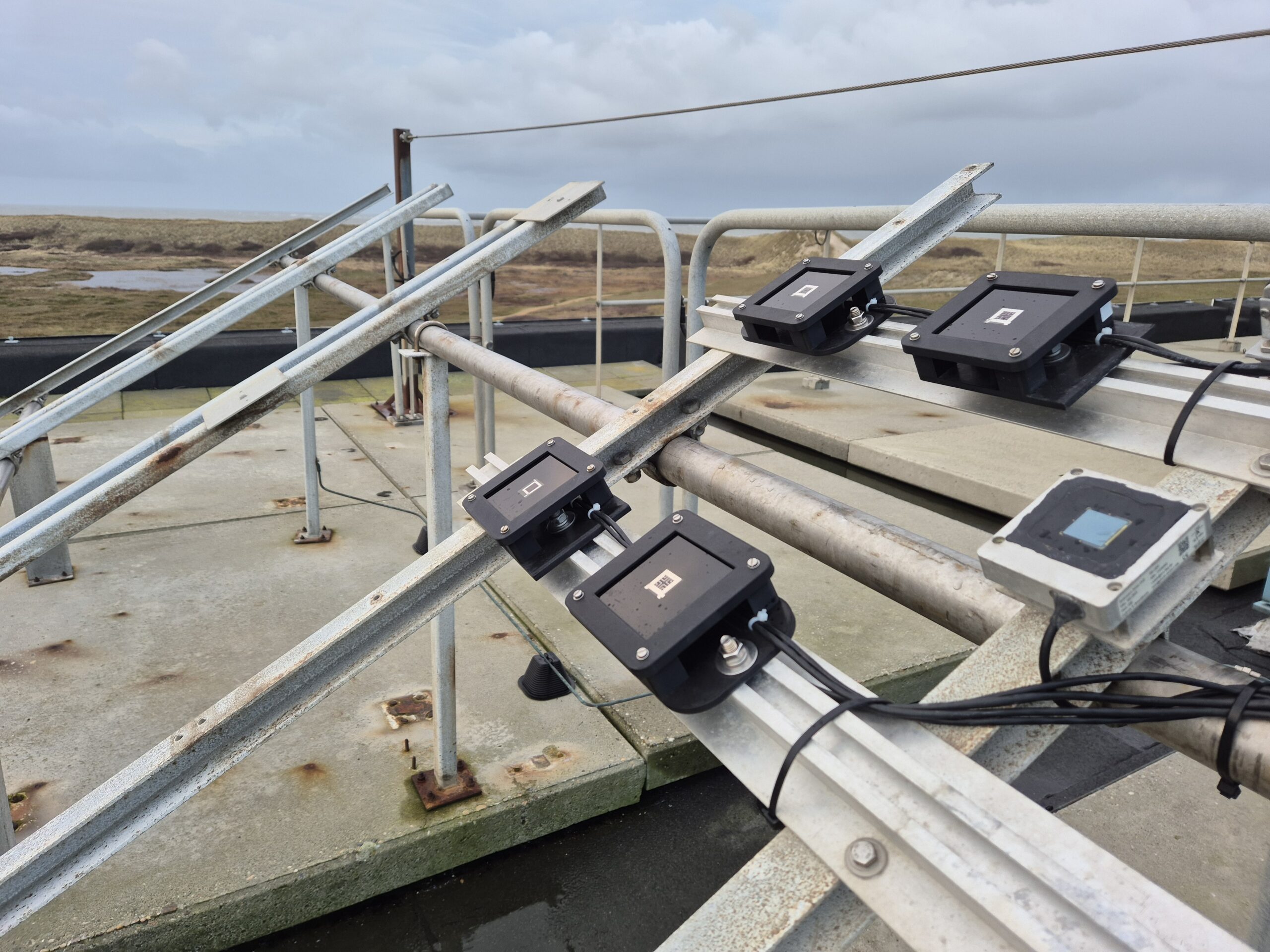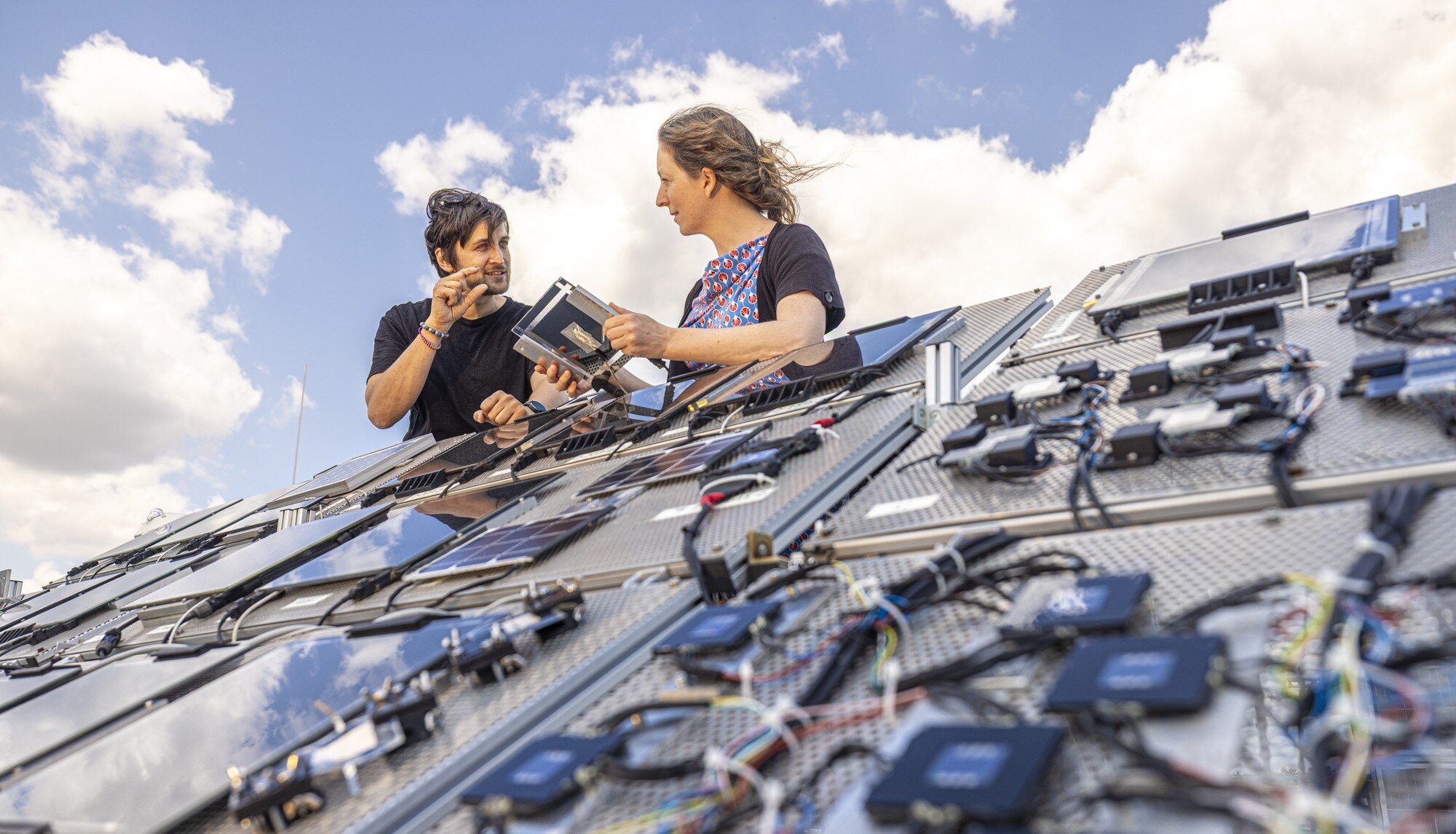
The HZB-team runs an outdoor laboratory in Berlin where a great variety of solar cells are exposed for months and years to real-world conditions. Credit: Industriefotografie Steinbach/ HZB
Perovskite solar cells (PSCs) could conquer the mass market within a few years, perhaps even being produced in Europe. Their large-scale production is highly cost-effective, and unlike silicon solar cells, their production is less energy-intensive. However, perovskite solar cells ideally need to achieve decades-long warranties, which remains a challenge.
To assess their long-term stability, various test methods are used to accelerate aging. But how accurately do these methods reflect the actual degradation processes? A new study in Joule by a team led by Dr. Carolin Ulbrich (HZB) and Andreas Bartelt (HTW Berlin) now answers this question.
Natural degradation mechanisms
In the study, naturally aged perovskite solar cells were compared with "artificially aged" perovskite solar cells. First, the team identified three key degradation mechanisms in PSCs that had undergone 20 months of natural aging in HZB's outdoor laboratory in Berlin under real-world conditions. The most significant of these is phase segregation, whereby compositional changes in perovskite material lead to the formation of circular domains a few micrometers in diameter.