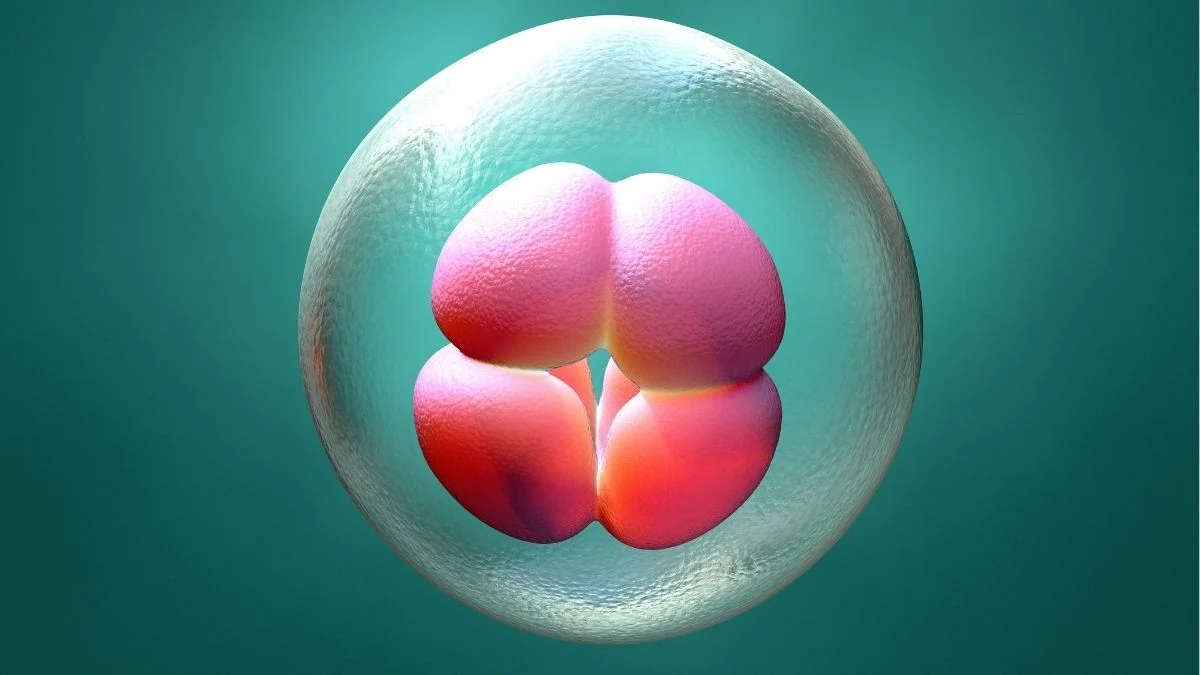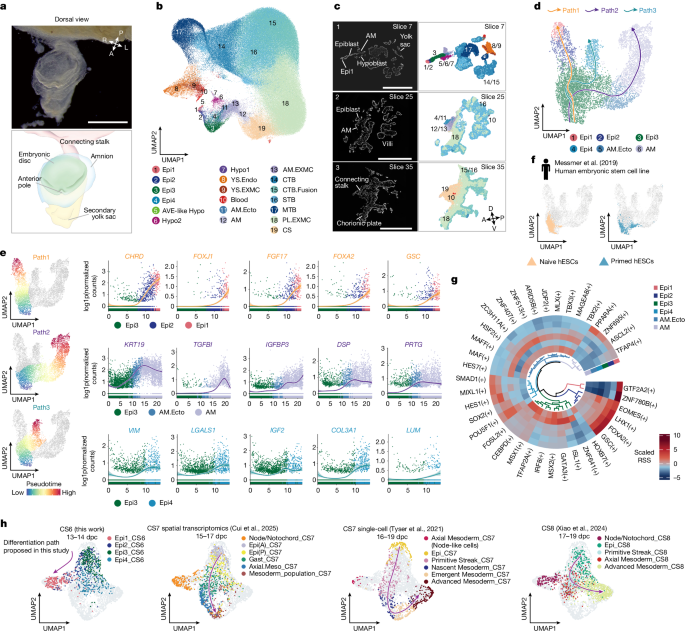
Men have nipples because embryos are sexually neutral for their first six weeks. A biologist unpacks the developmental blueprint behind one of anatomy's most overlooked mysteries.gettyAmong the more curious features of mammalian anatomy is one that most people encounter early in life and rarely think about again: the male nipple. It serves no function in adult males. It produces no milk. By the conventional logic of natural selection, which tends to eliminate structures that carry cost without conferring benefit, its persistence across virtually all male mammals, from rodents to cetaceans to humans, demands an explanation. That explanation lies not in adaptation but in the deep architecture of embryonic development, and in the limits of what evolution can and cannot undo. The Blueprint Of The Human NippleThe answer to the abovementioned question begins not in adulthood, but in the first few weeks after fertilization. Human embryos don’t start development as male or female. They start as neither. For roughly the first six weeks of gestation, every embryo follows the same developmental blueprint, regardless of whether it carries XX or XY chromosomes. This period is sometimes called the indifferent stage, which research describes as a window of biological neutrality during which the basic architectural features of the human body begin to take shape.Nipples are among the structures that form during this window. The tissue that will eventually become breast or chest develops along what's known as the mammary ridge, which is a pair of thickened lines of cells running from the armpit region toward the groin. In most mammals, the majority of this ridge regresses, leaving behind only the nipple tissue that will eventually develop fully. This happens early, before the embryo’s genetic sex has had any meaningful effect on its body plan. In other words, the nipple is already there, already sketched in, before any signal arrives to differentiate a male body from a female one.Sex Hormones Arrive Later Than The NippleAround the sixth week, the Y chromosome, if present, triggers the production of testosterone and other androgens. These hormones begin sculpting a distinctly male body: they shape the testes, the external genitalia and downstream anatomical features. But by this point, the nipple tissue is already established. The hormonal wave arrives after the architectural decision has been made.This is the key insight: development doesn’t erase features that were laid down before sexual differentiation began. Instead, it simply builds on top of them. In that sense, male nipples are a remnant of a shared developmental program, the biological equivalent of a foundation that was poured before the floor plan was finalized.MORE FOR YOUBiologists describe this as a consequence of developmental constraint, or the idea that evolution doesn’t redesign bodies from scratch with each generation. It works with the architecture it has. Removing nipples from male mammals would require rewiring a developmental sequence that is ancient, deeply conserved and intertwined with other systems. The cost of doing so, in terms of the mutational and developmental complexity required, far outweighs any marginal benefit of their absence.Why Natural Selection Overlooks The Male NippleThis brings up a subtler point about how evolution actually works. Natural selection is powerful, but it can only act on variation that exists and that meaningfully affects survival or reproduction. Male nipples, in the vast majority of cases, are neither harmful nor helpful enough to drive strong selection in either direction. They don’t cost much to maintain, neither do they kill anyone. And so they persist, because there's no meaningful pressure to eliminate them.The technical term for this is spandrel, a concept introduced by Stephen Jay Gould and Richard Lewontin in their 1979 paper arguing that not every biological feature is an adaptation. Some features are byproducts of other adaptations. In other words, they are structural side effects that come along for the ride. Male nipples are a textbook example of a spandrel: a byproduct of the shared developmental program that, in female mammals, produces a genuinely functional and reproductively critical structure. The spandrel concept is a useful corrective to the instinct to assume that everything in biology must be “for” something.In rare cases, male nipples can produce milk — a phenomenon called galactorrhea, most often triggered by hormonal imbalances, certain medications or specific medical conditions involving elevated prolactin levels. This isn’t common, but it underscores the point neatly: the underlying machinery is largely intact in male bodies, and isn’t switched on under normal hormonal conditions.Some male mammals do lactate more readily. Male Dayak fruit bats (Dyacopterus spadiceus), a species native to Southeast Asia, are among the most well-documented cases of male lactation in the wild, according to a 1994 study published in Nature. Whether this represents a functional adaptation or an incidental hormonal overlap remains an open question among researchers. It illustrates that the line between “functional” and “vestigial” in male mammary tissue is blurrier than it first appears, and that the biological distance between the two isn't as vast as our intuitions suggest.What the nipple question really illuminates is how deeply shared the mammalian body plan is beneath its apparent diversity. Male and female bodies look quite different by adulthood, but they’re built from the same raw materials, following the same early instructions and guided by the same ancient genetic programs. The divergence happens relatively late in development and incompletely, leaving traces of the shared blueprint scattered throughout the adult body.This is a pattern that shows up across mammalian biology. The same bones that form the human hand form the wing of a bat and the flipper of a dolphin. The same early neural architecture underlies brains of vastly different sizes and capabilities. Evolution is deeply conservative at the level of developmental programs, even as it produces remarkable diversity at the level of the finished organism.Curious how much you actually know about the body’s evolutionary quirks such as the male nipple? Find out with this science-backed test: Human Anatomy IQ Test
A Biologist Explains Why Men Have Nipples. Hint: Blame Your First Weeks As An Embryo
Men have nipples because embryos are sexually neutral for their first six weeks. Here's the developmental blueprint behind one of anatomy's most overlooked mysteries.
981 words~4 min read