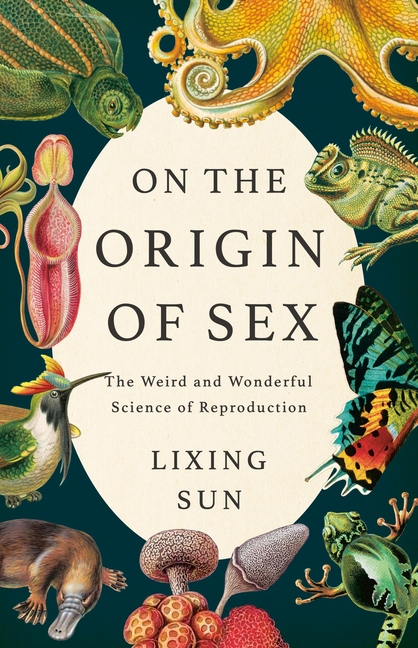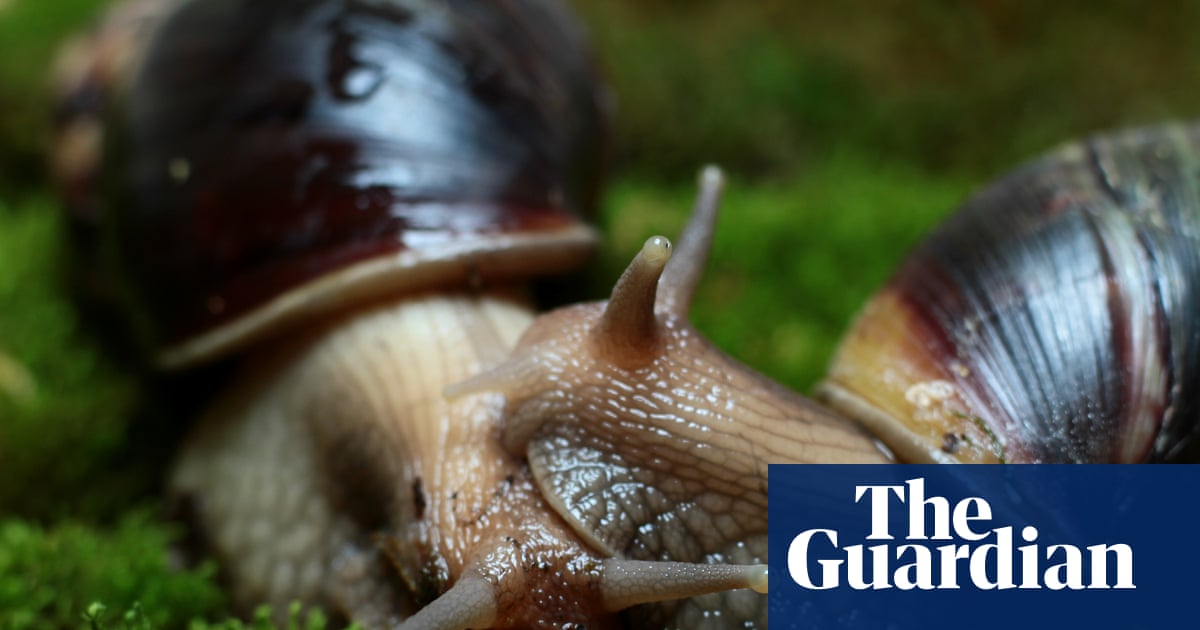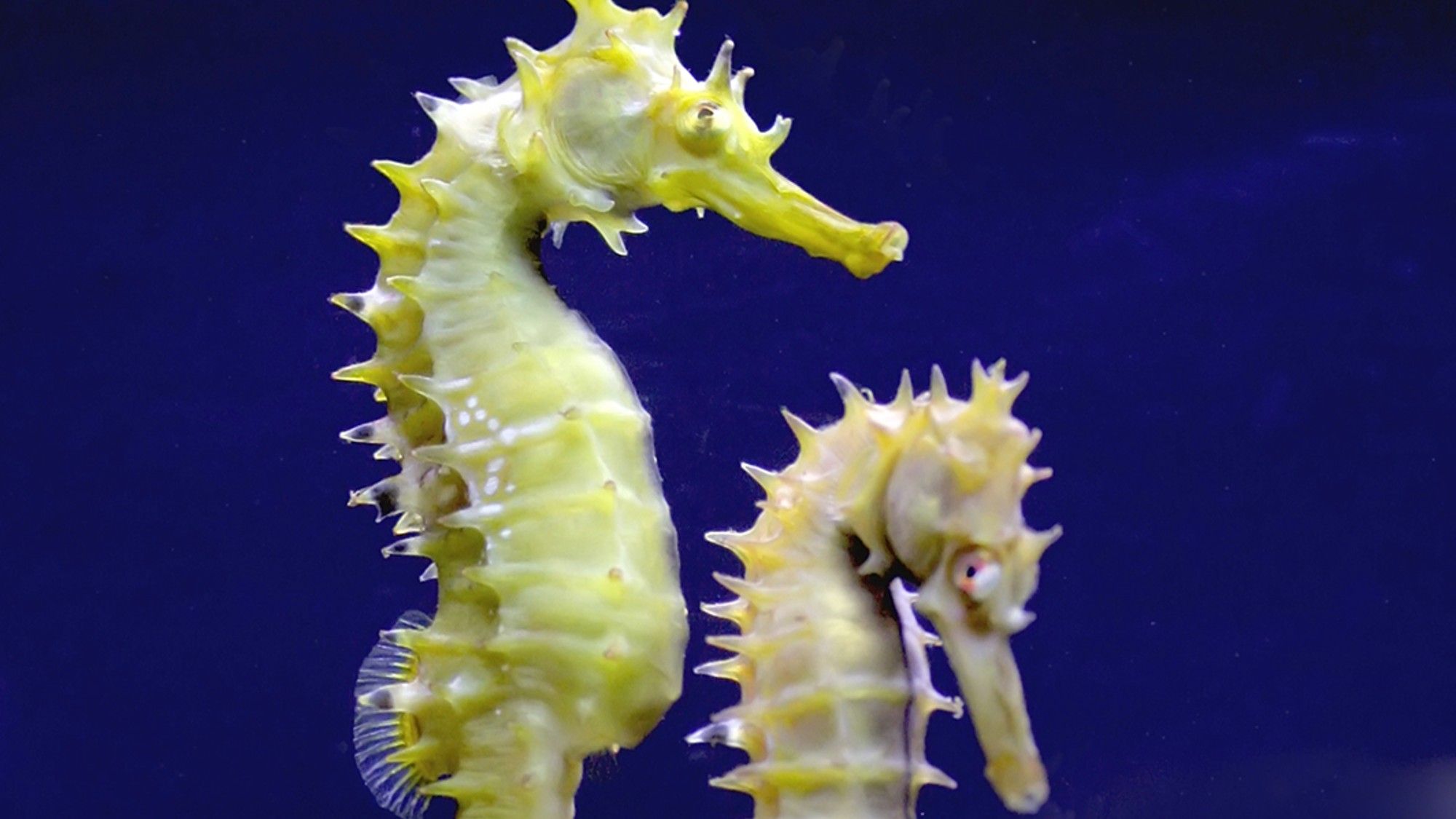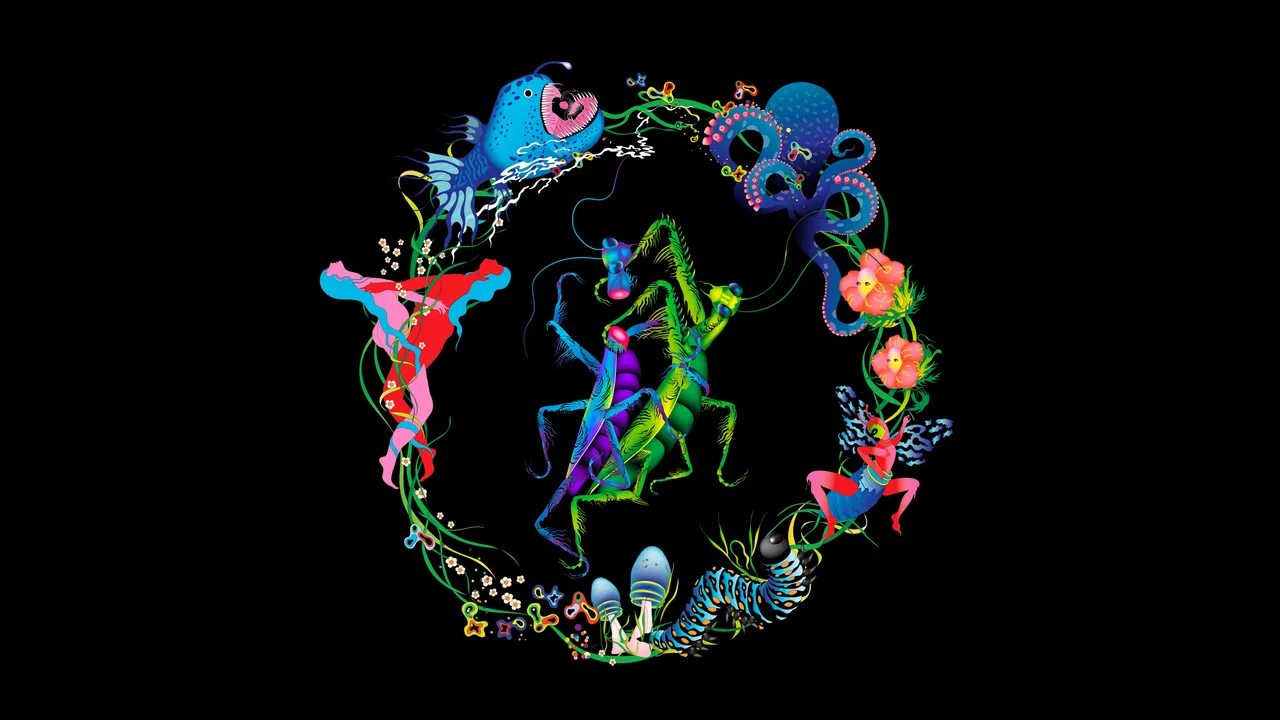
The world’s life-forms reproduce sexually in a bewildering variety of ways, even though scientists still aren’t sure why they bother.June 22, 2026Across the natural world, reproduction takes forms that are ingenious, perplexing, and often brutal. Nature is long on precedent, and short on moral instruction.Illustration by Lydia Ortiz and Patrick RafananDarwin found sex a mystery. He was perplexed not by the practice—he and his wife, who also happened to be his cousin, had ten children—but by the point of it. Darwin spent the last part of his life experimenting with plants, and he was particularly intrigued by cowslips, whose flowers come in two very different forms. Each form can fertilize itself, yet each requires the services of the other in order to be, in Darwin’s words, “perfectly fertile.” Why should nature insist on such “intercrossing of distinct individuals?” he asked. And why bother with sex at all, when, via processes like budding or fission, it was evidently possible to multiply without it? “We do not even in the least know the final cause of sexuality,” Darwin lamented in a paper he published on cowslips in 1862. “The whole subject is as yet hidden in darkness.”In Darwin’s day, of course, the processes by which gametes are formed and then fused had yet to be discovered. As more was learned about genes, chromosomes, and meiosis, the mystery of sex only deepened. In the nineteen-seventies, the British evolutionary biologist John Maynard Smith wrote an entire book about the puzzle. In it, he proposed a thought experiment. Suppose a chance mutation in a species granted a random female the ability to reproduce all on her own, through parthenogenesis. (Many lizards do, in fact, reproduce this way.) This single mom would give birth only to daughters, who would produce only daughters, and so on. By dispensing with sons and lovers, the tribe of sexless females would double its rate of reproduction and so, quite quickly, take over. Maynard Smith labelled this the “twofold advantage of parthenogenesis”; it’s often, more provocatively, referred to as the “twofold cost of sex.” Given the math, sex must confer some important advantage. But what is it?Among the possibilities Maynard Smith considered is Muller’s ratchet, a theory named for the Nobel Prize-winning geneticist Hermann Muller. According to Muller’s ratchet, sex persists because it counters the buildup of damaging mutations. Another theory—the Red Queen hypothesis—argues that the big advantage of sex is that it helps species stay one step ahead of their parasites. The so-called tangled-bank hypothesis holds that sex allows for a more efficient use of resources: genetically diverse offspring have broader tastes and so don’t all compete with one another. The wonderfully named Vicar of Bray hypothesis posits that the genetic mixing that comes with sex enables species to adapt more quickly to environmental change. All of these theories have a certain appeal, yet all have been found wanting. Maynard Smith confessed that, like Darwin, he was flummoxed: “On the most fundamental questions—the nature of the forces responsible for the maintenance of sexual reproduction and genetic recombination—my mind is not made up.”Recently, the study of sex has undergone a sexual revolution of its own. Sex’s history, its forms, and its uses all turn out to be far stranger and more various than biologists had imagined. And what’s been learned about the birds and the bees (not to mention the baboons and the beetles) has, in turn, given rise to a new sort of natural-history book, one so racy that it would have made Darwin raise a bushy eyebrow.“On the Origin of Sex: The Weird and Wonderful Science of Reproduction” (Basic), by Lixing Sun, is among the latest entries into this indecorous yet edifying genre. Sun, who is a biologist at Central Washington University, begins his story with a protozoan called Tetrahymena thermophila. T. thermophila are tiny—just a twentieth of a millimetre long—yet can reproduce two different ways: by splitting themselves in half or, when they’re starving, by engaging in a kind of proto-sex called conjugation, in which two cells briefly fuse and swap genetic material. The protozoa come in seven distinct “mating types,” which means that there are twenty-one possible pairings. “That’s one wildly complicated dating pool for a single-celled organism!” Sun observes. He includes a photo of two T. thermophila caught in the act; the creatures, magnified many times, look like hairy jelly beans that have started to melt into each other.Lots of organisms engage in conjugation, and not a few of them enjoy multiple erotic options. The common white-button mushroom—the sort found on grocery shelves—comes in eighteen mating types, the fairy inkcap mushroom a hundred and forty-three, and the split-gill mushroom an astonishing twenty-three thousand three hundred and twenty-eight. In organisms that reproduce via the union of types—this group also includes yeasts and slime molds—partners are functionally equivalent and the exchange of genetic material is symmetrical, an arrangement called isogamy.The way Sun tells it, the shift from isogamy to sex as we know it began with a cheat. Some “crafty” creature figured out a way to game the system by skimping on its reproductive contribution. A two-sided scramble ensued. On the one hand, an edge could be gained by pumping out ever smaller, nimbler gametes; on the other, there was an advantage to be had in manufacturing fewer, larger gametes for the small fry to vie for. Eventually, Sun writes, “a minor size gap” turned into an “uncrossable divide.” The “go-smallers” evolved into sperm-makers; the “go-largers” into egg-bearers. (In humans, an egg has something like ten million times the volume of a sperm; among large birds, like ostriches, the ratio can run to the hundreds of billions.)Evolutionarily speaking, organisms serve their gametes rather than the reverse. Since eggs represent a big investment, it stands to reason that females should be picky about their partners. For males, the difficult part is gaining access to eggs, which are always going to be in short supply. Here it helps to be flashy or aggressive or both, a pressure that’s widely expressed across the taxa. Male cardinals sport bright-red feathers, male three-spined sticklebacks bright-red bellies. In any number of species—elephant seals, red deer, rattlesnakes—the privilege of mating is settled by a fight. In some species—lions, for instance—only one male and his closest buddies get the chance to sire offspring. When the alpha is dethroned, his replacement typically does in his predecessor’s cubs so that the females in the pride will breed again. Mountain gorillas behave similarly; when a new male takes charge, he frequently kills the babies fathered by the previous silverback. Infanticide, Sun writes, is “surprisingly common, especially among carnivores and primates, often driven by the brutal logic of mate competition.”Sun lays out the pattern, but he is at least as interested in those species in which the stereotypical sex roles are flipped. Take, for example, jacanas, also known as Jesus birds, which are waders found in the tropics. In most species of jacana—there are eight in all—the males sit on the eggs and the females do the murdering. Not infrequently, a female jacana will kill another bird’s chicks, mate with the male who was tending them, and leave him to raise a new clutch. “Cold?” Sun writes. “Absolutely. Effective? You bet.”Neotrogla is a genus of bark lice native to Brazil. The lice live in dry caves and feed predominantly on bat guano. Male Neotrogla produce capsules of sperm, known as spermatophores, which also contain a protein-rich fluid. Even for a louse, it’s tough to make a go of it off bat shit. And so female Neotrogla have evolved a penis-like appendage, which they poke into their mates and use, like a straw, to suck up spermatophores, thereby combining sex and snacking. There is so much competition for spermatophores among females, Sun reports, that it “often leaves males with little time between copulations.”Nathan H. Lents is a biologist who teaches at John Jay College, in New York. In “The Sexual Evolution: How 500 Million Years of Sex, Gender, and Mating Shape Modern Relationships” (Mariner), he reads the long history of coupling as a fable for our time. Specifically, he contends, the current surge in sexual experimentation among humans is best seen as a biological throwback, a “rediscovery of the much more expansive relationship with sex” that “other animals enjoy.”Lents opens with the example of clown fish, of “Finding Nemo” fame. Clown fish, which hide out among the tentacles of sea anemones, live together in tight-knit, highly regimented groups known as queues. Every queue has exactly one female, who is the biggest fish in the group and runs the show. Next in line is her mate. He’s the second-largest fish and the group’s only sexually mature male. The rest of the fish are stuck, Peter Pan-like, in a state of arrested development. If a queue loses its female, it rearranges itself. Her partner undergoes a sex change and takes on the role of the breeding female. His position is assumed, in turn, by the largest of the immature fish, who, thanks to the tragedy, finally gets to grow up. Were “Finding Nemo” true to life, when Nemo’s mother is eaten by a barracuda, his father, Marlin, would begin to transition. By the time Marlin and Nemo are, at long last, reunited, the change would be complete, and, in the absence of a larger male, Nemo would mate with his now-female father. “It’s probably a good thing that Pixar wasn’t striving for biological accuracy,” Lents observes.Clown fish, which are known as sequential hermaphrodites, obviously challenge the notion that sex is fixed. So, too, do simultaneous hermaphrodites, a collection of creatures that includes most species of land snails, slugs, and earthworms. When two earthworms hook up, they arrange their body parts for mutual insemination—the annelid version of sixty-nining. The sex can last for hours, and though it may be fun for all involved, it’s also a test. Sometimes, a worm will offer sperm but refuse to accept it, presumably because it has found that partner wanting. (Why waste valuable eggs on a vermicular loser?) “One might have thought that one giant annoyance that hermaphrodites are exempt from is the ‘battle of the sexes,’ ” Lents writes. But, “alas, they are not so lucky.”There is no generally accepted definition of gender in the biological sciences, so Lents crafts his own, adapting ideas first proposed by Joan Roughgarden, a professor emerita at Stanford and the author of “Evolution’s Rainbow” (2004). Animal genders, Lents suggests, are “patterns of behavior” that are “tied to reproduction.” By this definition, a great many species exhibit some version of gender fluidity.Consider the sunfish. Bluegill sunfish are common to lakes east of the Rocky Mountains. They are about ten inches long, with flat bodies, dark eyes, and angry, underslung jaws. According to the heteronormative version of bluegill courtship, mating season begins when males start building nests—basically, bowl-like depressions in the lake bed. When a female spots a nest she fancies, she rubs up against the nest-builder and deposits her eggs. While she’s laying, he squirts sperm in the eggs’ direction. He then defends the nest until his offspring are ready to swim off.“All I do is wake up, play word games on my phone, go to work, and go to sleep. Then the games reset, and I wake up and do it all again.”Cartoon by Ali SolomonBut not all bluegills swing the same way. Rather than build a nest to attract a female, some males woo other males who have already built nests. The process involves a writhing dance that looks a lot like the dance that male and female sunfish perform with each other prior to breeding. Once two males are bonded, they hang out together until a female shows up. If she’s game for a throuple, she releases her eggs and both males release sperm. “Given two nests of equal quality, females actually prefer to mate with a partnered duo over a male who is working alone,” Lents reports. There is yet another kind of male, known among ichthyologists as a “sneaky mater.” This type dispenses altogether with nest-building and partnering and simply darts around squirting. By Lents’s reckoning, bluegill sunfish come in four genders, one of which is female and the other three male. “This rainbow of reproductive diversity is part and parcel of what it means to be a sunfish,” he writes. He believes that sunfish, whose habits have been well studied, are closer to exemplary than exceptional: “The general trend in animal behavior is that every species that we observe thoroughly is way more complicated than it appears at first blush.”“Poking the Squid: What We Can Learn from Animal Sex” (Norton) might be described as a work of graphic graphic nonfiction. Its author, Perrin Roosevelt Ireland, is an artist and an environmentalist (and also a great-granddaughter of F.D.R.). She opens her opus with a drawing of herself gazing through binoculars. Nearby, two spotted hyenas go at it. “Well, would you look at that,” Ireland quotes herself saying.Spotted hyenas long baffled naturalists. Aristotle debated whether they were hermaphrodites, though, in fact, there are no hermaphrodites among mammals. The confusion was due to the hyena’s anatomy. Females sport elongated clitorises that look like penises, and fused labia that resemble testicles. In order to have sex, a female must retract her clitoris into her body. “Think about turning a sock inside out,” Ireland writes, quoting a Canadian biologist named Carin Bondar. Lacking a vagina, hyenas use their clitoris as a birth canal. Studies have shown that up to ten per cent of first-time mothers die in childbirth, as do more than sixty per cent of firstborn cubs.“Poking the Squid” captures many species engaged in sex, the more outré, the better. Bedbug intercourse is technically known as “traumatic insemination.” Male bedbugs don’t bother with vaginal penetration; using a sabre-like appendage called an aedeagus—the arthropod equivalent of a penis—they simply stab females in the abdomen. Male fruit flies use their aedeagi to pierce their mates’ vaginal wall and inject peptides into their bloodstream, possibly to reduce their interest in other mates. Dragonfly males are so importunate that some females play dead to avoid their advances. Others change coloration to look male, becoming a kind of third sex. “The percentage of the population that has the third sexual type has to remain below a certain threshold, otherwise the males catch on,” Jessica Ware, an entomologist at the American Museum of Natural History, tells Ireland.Darwin comes in for a good deal of ragging in the panels of “Poking the Squid.” He is chided for his opinions on race and for believing that women have less brainpower than men. Ireland proposes that Darwin’s views—and the views of the many male biologists who followed him—skewed the study of sex for more than a century. “Science is never outside of culture,” she observes. For her part, Ireland relies almost exclusively on women scientists. Often, the work she cites shows that, as with the color-changing dragonflies, females have evolved ingenious ways of resisting male aggression. Mallard drakes, for example, are notorious rapists: even though the ducks pair up for mating season, up to forty per cent of their sexual encounters are coercive. Male mallards have long, corkscrew-shaped penises; in response, females have developed vaginas with cul-de-sacs into which unwanted sperm can be shunted. Even if female mallards “are being forced to copulate,” Patricia Brennan, a biologist at Mount Holyoke, says, “they have evolved a system to maintain sexual autonomy.”Just as biologists long overlooked (or downplayed) female agency, so they overlooked (or downplayed) widespread evidence of queerness. Same-sex behavior has by now been observed in species as varied as field crickets, Humboldt squids, garter snakes, and Japanese macaques. Ireland reports that at least fifteen hundred species are known to engage in same-sex behavior, often shortened to S.S.B., and probably this says more about how many species have been closely observed than it does about the prevalence of the behavior. Of the twenty-two mammalian species that are the subjects of long-term field research, S.S.B. has been observed in eighty per cent.From a narrow Darwinian perspective, same-sex behavior appears at least as perplexing as sex itself. To the extent that it’s genetically encoded, it would seem hard to pass on, and if all the members of a species engaged exclusively in S.S.B., then that species would, in short order, cease to exist.But seen through a wider lens, S.S.B. is a lot easier to explain. A growing body of research shows that animals have many reasons to have sex with one another besides procreation. They do it to promote social cohesion, to fool rivals, to gain favors, and—surprise, surprise—for the sheer joy of it. A 2019 paper in the journal Nature Ecology & Evolution which Ireland cites argues that the prevalence of S.S.B. across the phyla suggests it must have emerged as early as sperm and eggs. The authors of the paper propose that the very first male and female animals engaged in “indiscriminate sexual behaviour,” and that this anything-goes attitude proved adaptive enough to persist through the ages.One of the ways that people have tried to police sex is by labelling some acts “natural” and others the opposite. In the English-speaking world, “crimes against nature” were long understood to include oral and anal sex, along with bestiality. For centuries, such infractions carried heavy penalties; in England, well into the eighteen-hundreds, “the vice of buggery” was, on paper, punishable by death. (The last execution for the vice, of James Pratt and John Smith, took place at Newgate Prison in 1835.) Today, statutes outlawing “crimes against nature” remain on the books in several American states, though these laws are now unenforceable in cases involving consenting adults.It is hard to read “On the Origin of Sex,” “The Sexual Evolution,” and “Poking the Squid” and still believe that there are forms of sex that offend nature. If there’s a configuration you can think of, almost certainly some other species has beaten you to it, and there are many creatures out there whose sex lives test the limits of the imagination. Take, as a final example, the triplewart seadevil anglerfish. When a triplewart seadevil male locates a female, he burrows into her flank and hijacks her circulatory system. From this point on, he will not leave her side. Having nowhere to go and no reason for sight, he will slowly go blind. Quite literally, he and his mate will become one.To varying degrees, Sun, Lents, and Ireland are writing against the sex police. The vast array of mating strategies that have evolved, Sun observes, provide “a wealth of evidence” for “breaking down biases.” Ireland closes her book with a drawing of herself in a submersible, surrounded by sea creatures, including an anglerfish, who, in word bubbles, say things like, “You, too, have a role to play in pushing back against harmful, reductionist rhetoric about what’s ‘natural.’ ” Lents writes, “Since diversity wins is one of the overarching lessons of life on Earth, who are we to argue?”Lents takes the diversity thesis one step further in a long and fascinating section devoted to the mating habits of Homo sapiens. Here, too, the range of behaviors is stunning. The Kreung people of northeastern Cambodia build huts for their adolescent daughters to use for erotic liaisons and encourage them to have as many of these as possible before choosing a husband. The Simbari people of Papua New Guinea’s eastern highlands separate boys from their mothers around the age of nine. The boys spend the next several years interacting only with the tribe’s men, on whom they are expected to perform fellatio repeatedly. (The Simbari, Lents writes, “believe that boys are not born with semen but instead must imbibe it.”) In some parts of the Himalayas, parents marry off their oldest son; then, when his younger brothers come of age, they join the marriage and share the wife. No one knows which brother is the biological father of any child that results from these unions, and, it seems, no one particularly cares.From this great variety of sexual practices, Lents draws the altogether reasonable conclusion that, when it comes to sex, humans are singularly flexible. “We are diversity-generating machines,” he writes. Still, Darwin’s question—why bother, when budding will do?—hangs out there. The new natural histories map the forms of sex in lavish detail without resolving why there is any.Meanwhile, there remains the matter of moralizing. If the problem with the sex police is the way they selectively invoke nature to back up their prejudices, a similar criticism could be levelled against Lents et al. Presumably, the Kreung and the Simbari don’t see themselves as sexual adventurers, and it seems more than likely that they would bridle at being invited to switch customs. In the United States, even at this moment of heightened sexual experimentation, there aren’t a lot of people who are going to speak up for fellatio from nine-year-olds. And the problem grows only more acute when we look to the animal kingdom. For every charming story of sex and gender fluidity among other taxa, there are any number of stories involving rape, harassment, incest, traumatic sex, and infanticide. The natural world may be mesmerizing, but it doesn’t offer a reliable guide to what is—or should be—socially acceptable. While copulating, female praying mantises often kill their mates and eat them. I understand the impulse, but I try to stop myself. ♦A scientist with a Ph.D. from Harvard fatally shot three of her colleagues. Then revelations about her family history came to light.
What’s the Point of Sex, Anyway?
The world’s life-forms reproduce sexually in a bewildering variety of ways, even though scientists still aren’t sure why they bother.
3,582 words~16 min read