Story audio is generated using AI
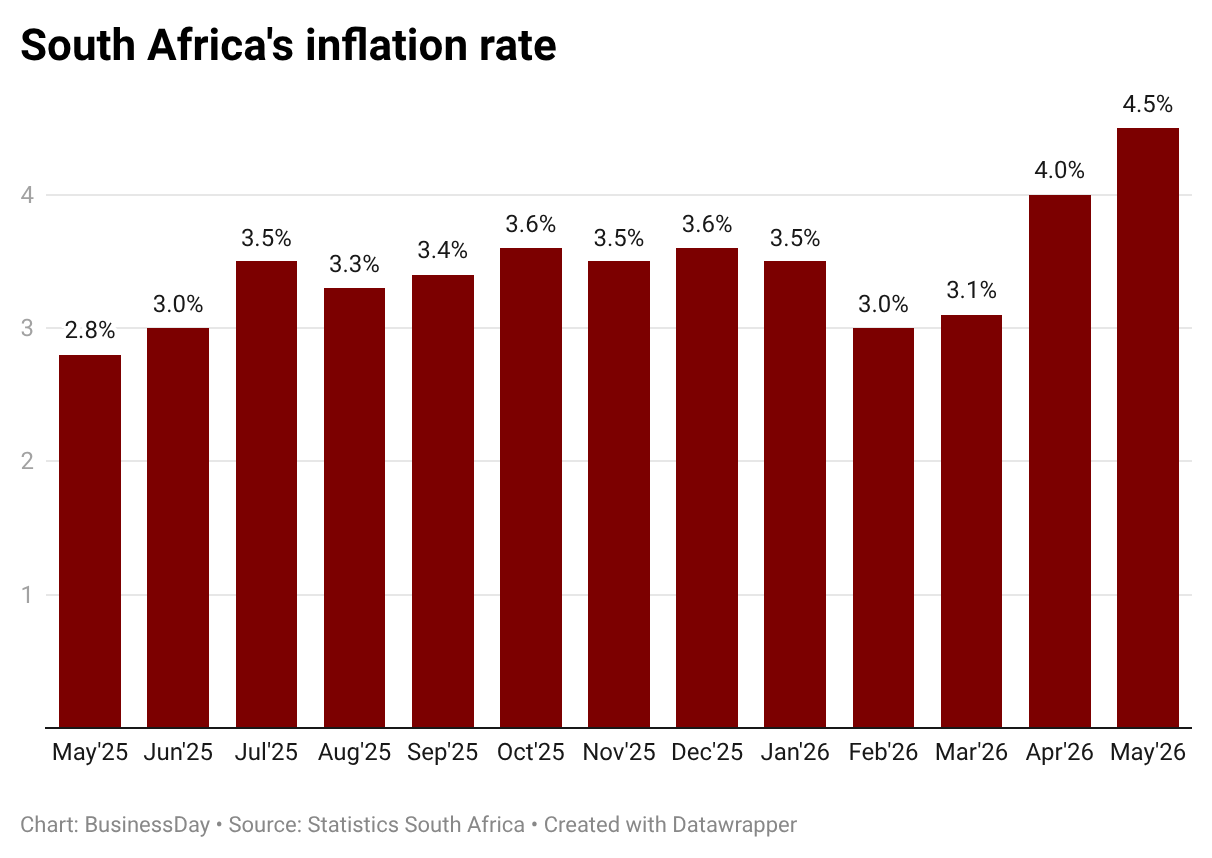
Stats SA’s producer inflation data for May will headline this week’s economic calendar, while the consumer confidence index for the second quarter of 2026 will indicate how households are responding to last month’s interest rate hike aimed at stemming inflation triggered by higher global oil prices.Economists are expecting inflation at the factory gate to spike from 4.8% year on year in April to 6.4%-7% in May, reflecting an increase in fuel prices during the month which fed into production costs.“This increase will likely continue to be driven by the coke and petroleum products category, particularly by higher fuel costs,” Nedbank said in its weekly economic monitor. “Fuel prices rose sharply over the period and with petrol increasing by around 14% year on year and diesel surging by more than 60%, reflecting elevated global oil prices amid the continued closure of the Strait of Hormuz,” Nedbank said.A sharp acceleration in producer inflation, which should translate to consumer prices down the line, would keep the door open for another interest rate increase next month after a lower-than-expected consumer price index (CPI) print for May led to hope that the South African Reserve Bank could hold its fire on further hikes.The central bank raised the benchmark policy rate to 7% at its May meeting, after data showed consumer inflation quickened to 4% in April from 3.1% in March, breaching its new 3% target adopted last year.The Bank’s composite leading business cycle indicator for April will kick off the economic week on Tuesday.The index — one of three composite business cycle indicators analysed by the central bank to establish whether a reference turning point has occurred in the business cycle — climbed by 2.4% month on month in March. This followed an upwardly revised 0.6% increase in the previous month. The March figure marked the strongest expansion since May 2021.Tuesday will also see the publication of the consumer confidence index for the second quarter of 2026, produced by First National Bank and the Bureau for Economic Research.While still in negative territory, the index staged a recovery in the first three months of the year, reaching the strongest level in more than a year due to stronger sentiment among high-income earners.Second-quarter consumer confidence reading is projected to have fallen to around minus 14, after improving somewhat at the beginning of the year, Investec economist Lara Hodes said.“The oil price shock caused by the war in the Middle East has led to an increase in inflation and monetary tightening, weighing on household finances. Uncertainty was also more elevated in Q2.26 as a result of the war, with the economic outlook less favourable,” Hodes said.On the global stage, the Bank of International Settlements will on Tuesday publish the first instalment of its annual economic report, with the theme “Anchoring trust in money: innovation beyond stablecoins”.