Story audio is generated using AI
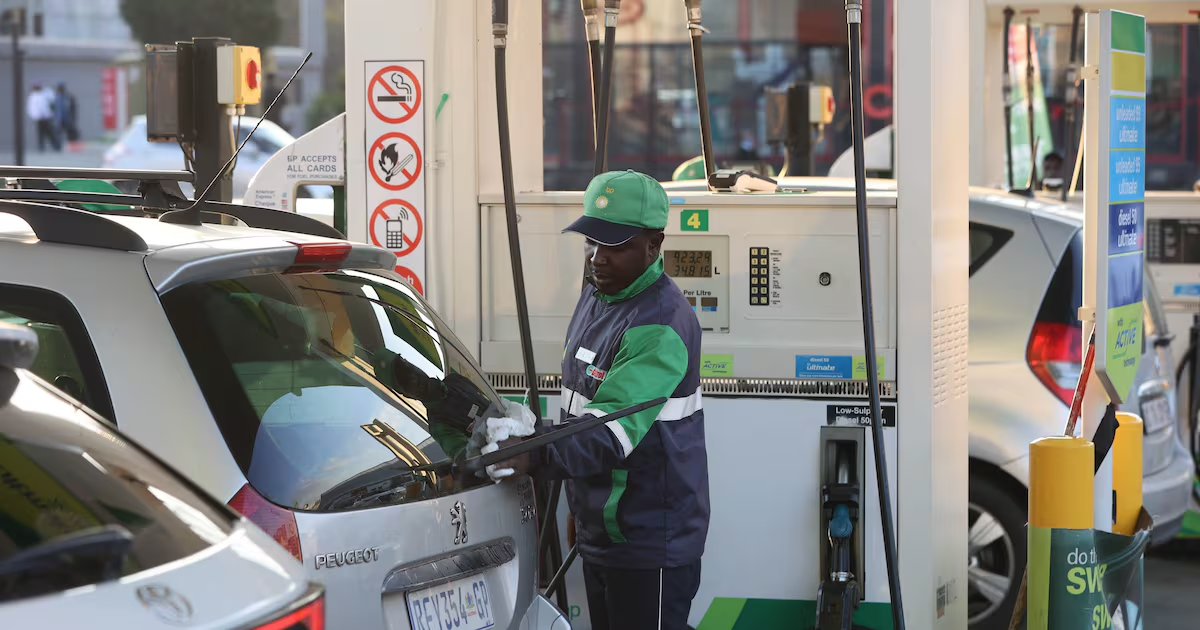
The inflation expectations survey for the second quarter of 2026 of the Bureau for Economic Research (BER) will kick off the data calendar this week and provide crucial guidance for the South African Reserve Bank’s monetary policy committee (MPC) when it decides on interest rates next month.Due to the Middle East conflict and its impact on oil prices, the domestic inflation outlook has deteriorated significantly since the BER’s first quarter survey, when the average inflation expectation for 2026 among analysts, business managers and trade union leaders eased to 3.6% from 3.8%.The Reserve Bank raised its benchmark policy rate by 25 basis points to 7% in May, after data showed inflation accelerating to 4% in April, hitting the top of the 2%-4% tolerance band for its 3% target adopted last year.The latest BER survey was carried out from May 18 to June 4 and will largely not take into account that oil prices have since pulled back notably on hopes of a permanent resolution to the war pitting the US and Israel against Iran.“Thus, the Q2 inflation expectations data could be somewhat backward-looking,” banking group Absa said in its economics weekly report.“However, we believe that any material drift higher in inflation expectations would be seen as an unwelcome development for the MPC, especially in the context of the recently adopted 3% inflation target.”Quarterly bulletinOn Tuesday the Bank will publish its June quarterly bulletin, providing insight into South Africa’s economic performance in the first quarter of the year, including household finances, which, according to Nedbank, “appear to have remained firm on the back of lower interest rates and rising disposable income, even though weak employment continued to constrain”.Later on Tuesday, the South African Revenue Service will publish its trade balance for May. In April the country’s surplus nearly halved to R15.2bn as imports rose at a higher pace than the increase in exports.“The trade surplus is likely to narrow in May. Though global oil prices began to ease during the month, the earlier run-up probably continued to filter through to the domestic economy, keeping the overall import bill high,” Nedbank said in its weekly monitor.“Meanwhile, exports are expected to remain resilient, supported by moderate global demand and steady prices for some of the country’s key commodities.”Also on Tuesday, the department of mineral & petroleum resources will announce the latest monthly adjustment for domestic fuel prices, with the cost of diesel and petrol expected to ease in line with lower global oil prices.Read: Producer inflation soars, suggesting another rate hikeOn Wednesday, Absa will publish its purchasing managers’ index (PMI) for June for the manufacturing sector. Factory sentiment eased by 1.8 points to 50.8 in May. At the time the BER, which conducts the survey, said manufacturers had benefitted in April from demand being brought forward in anticipation of further cost increases, an effect which faded in May.Also on Wednesday, the motor industry association Naamsa will release the new vehicle sales numbers for June as a key indication of how consumer appetite has held up against rising price pressures and the May interest rate hike.On Friday S&P Global, a financial services company, will publish its own PMI, encompassing South Africa’s entire private sector.