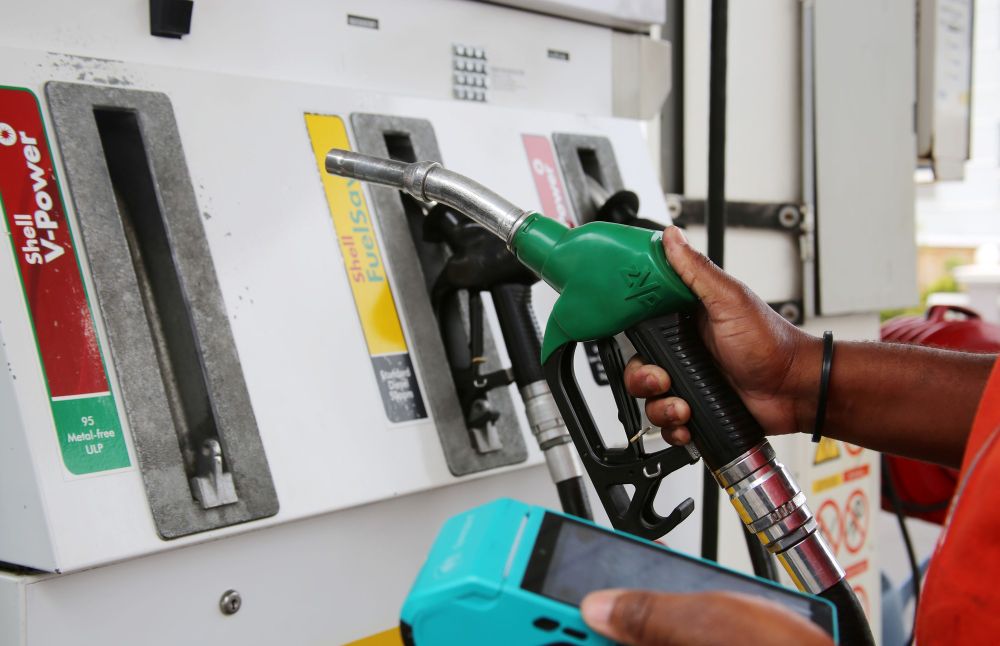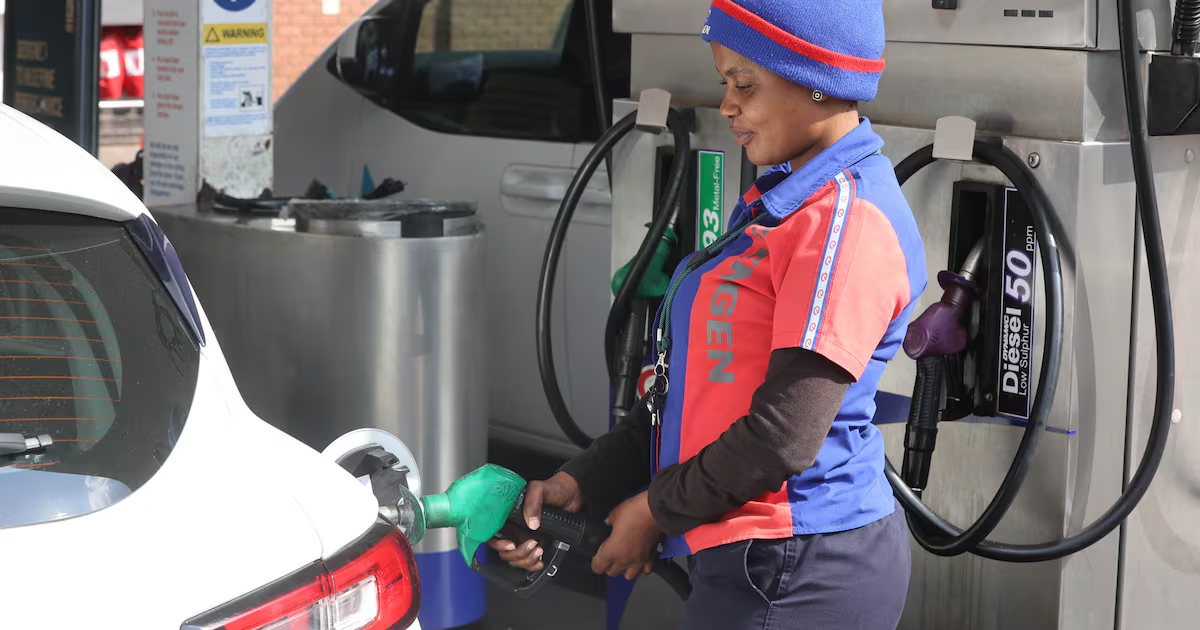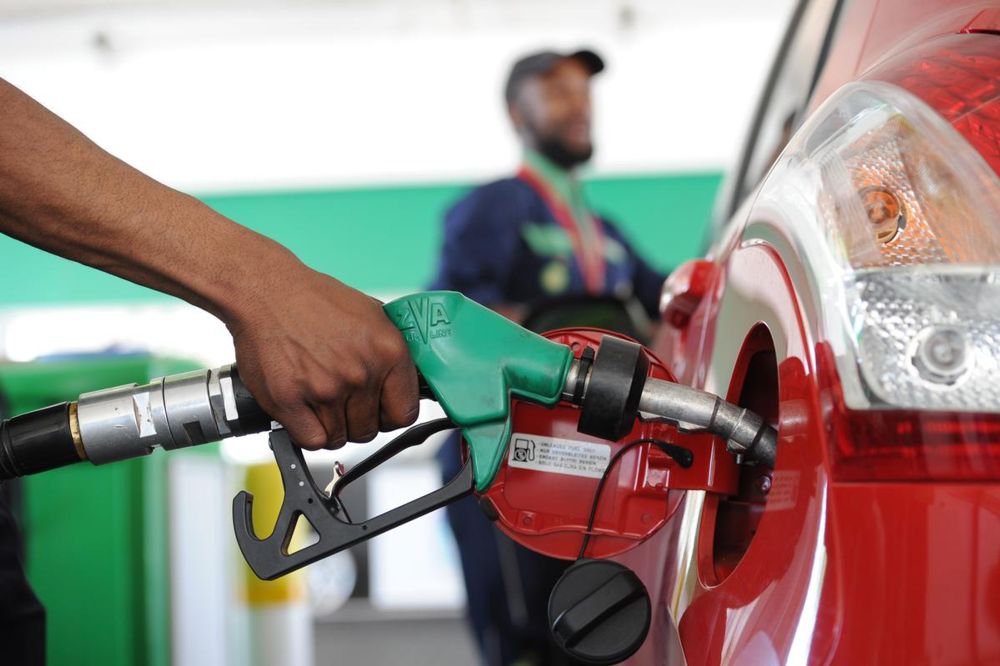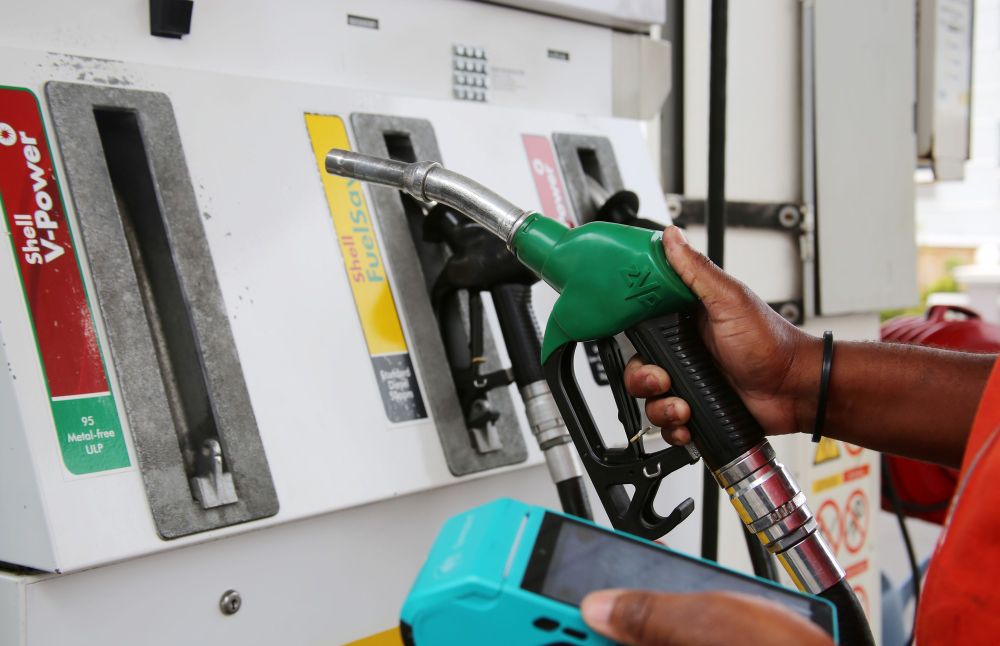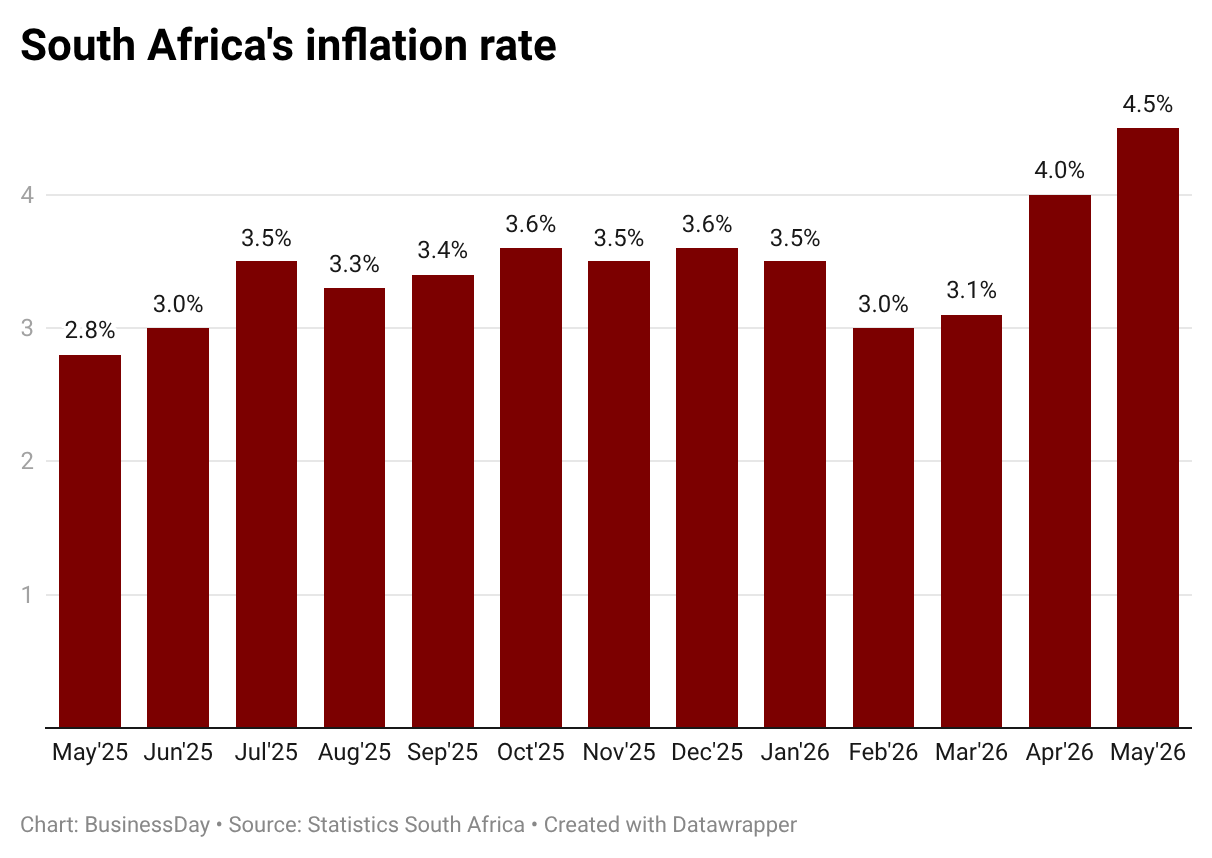
South Africa’s annual inflation rate accelerated to its highest level in almost two years in May, driven primarily by soaring fuel costs linked to escalating tensions in the Middle East and higher domestic electricity tariffs.
Consumer inflation rose to 4.5 percent in May from 4.0 percent in April, marking the third consecutive monthly increase and the highest reading since July 2024, according to data released by Statistics South Africa (SSA) on Wednesday. The figure came in below the 4.7 percent forecast by economists surveyed by Bloomberg.
On a monthly basis, consumer prices increased by 0.7 percent, compared with a 1.1 percent rise.
The rise in inflation for the continent’s biggest economy was largely concentrated in transport and housing-related costs. Transport inflation surged to 9.4 percent from 4.9 percent in April, while housing and utilities inflation edged higher to 5.3 percent from 5.2 percent, reflecting the pass-through effects of rising fuel prices and Eskom’s latest electricity tariff increase.
Core inflation, which excludes food, non-alcoholic beverages, fuel and energy, climbed to 3.8 percent from 3.6 percent, its highest level in more than 18 months, indicating broader underlying price pressures.