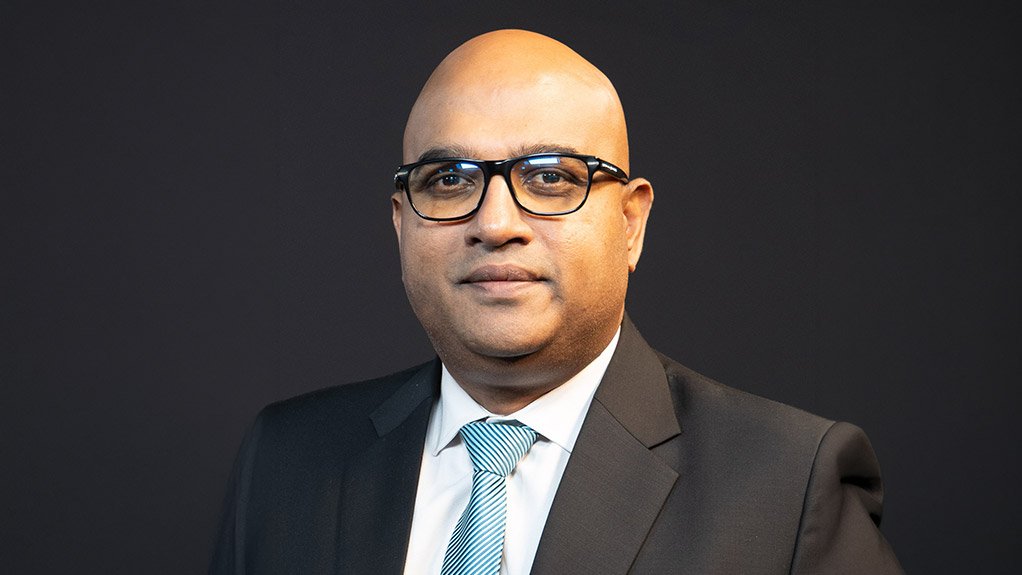
Africa’s energy transition is attracting capital at a scale that would have seemed improbable a decade ago. Renewable energy pipelines are expanding, development finance institutions are committing larger tranches, and commercial banks are deepening their energy and infrastructure books across the continent. About the author: Lulu Molemong is associate principal: Energy Finance at Nedbank Corporate and Investment Banking. (Nedbank) And yet, for all the momentum, the harder question lingers quietly beneath the headline numbers: who, exactly, is this transition being built for?The answer has a structural shape, and that shape is uncomfortable. The parties benefitting from Africa’s industrial growth story are those that can secure reliable, predictable power and absorb whatever it costs to get it. Large corporates, mining houses and heavy industrial users anchor most bankable offtake arrangements because they provide the long-term offtake and their credit strength can absorb the tariff. These are sound credit principles but ones that tend to exclude smaller participants, leaving the communities that host the infrastructure with limited long-term benefits. The small manufacturer, small and medium-sized business, and township entrepreneur whose revenue disappears and margins compress the moment load reduction and tariff increases kick in sit outside the bankable universe almost by definition. This disconnect raises a fundamental challenge: how to structure an energy transition that is not only investable but inclusive. This is not solely a question of financing. It is a system design challenge, requiring coordinated action across governments, financiers, developers, and communities. Building an energy transition that benefits allWithout an enabling environment, even well-capitalised projects struggle to move from pipeline to execution.Governments play a critical role in establishing the necessary frameworks, including clear policy direction, robust procurement structures, and sustained investment in transmission and enabling infrastructure. Equally important is the design of procurement models that balance between affordability, localisation, and participation. Without this alignment, the transition risks favouring lowest-cost outcomes at the expense of domestic value creation. This is critical so that every African benefits from the energy transition.From a banking perspective, the transition demands a shift in how capital is deployed. Traditional project finance has primarily supported utility-scale generation, which remains necessary. However, these models often do little to expand access or participation beyond large offtakers. A more inclusive approach begins with how projects are structured. Industrial demand will continue to anchor transactions, but there is increasing scope to broaden participation. This includes aggregating demand across smaller users, supporting embedded generation within industrial clusters, and integrating decentralised solutions such as mini-grids. Blended finance structures — where concessional capital is combined with commercial funding — also have a critical role to play. By absorbing certain risks, these structures can enable smaller developers and local businesses to participate in project value chains that would otherwise remain inaccessible. Expanding energy access to households and underserved communities is equally important, not only as a social imperative but also as an economic one. Electrified communities drive demand, enable entrepreneurship, and support human capital development.An inclusive transition requires looking beyond generation and across the entire value chain.Developers and sponsors also influence outcomes through project design. Current models often prioritise speed, cost efficiency, and bankability. While necessary, these priorities can inadvertently limit localisation and long-term participation. A more deliberate approach would include investing in local supply chains, partnering with small and medium enterprises across the value chain, and embedding skills transfer and training into project delivery. The objective is not to slow down deployment, but to ensure that projects create sustained economic activity beyond construction. When policy, capital, project design, and participation align, Africa’s energy transition begins to take on a different character— Lulu Molemong, associate principal: Energy Finance at Nedbank Corporate and Investment BankingMeaningful community consultation and active participation ensure that the needs and priorities of stakeholders are embedded in both policy and project design. This delivers a dual benefit: it reinforces the principle that no one is left behind while also building grassroots-level trust and social licence for the transition, both of which are critical to long-term sustainability.When these elements align — policy, capital, project design, and participation — the transition begins to take on a different character. It becomes less about isolated infrastructure projects and more about building interconnected systems that support long-term growth. Momentum builds not only through investment volumes, but through institutional capacity, skills development, and trust.That same gap is harder to close at the municipal level. Given the structure of most power systems, the final layer of connectivity typically sits with municipalities, which are responsible for delivering energy to communities and linking them to the broader grid. In this context, what role can municipalities play in ensuring the provision of clean, reliable power? Many South African municipalities have launched energy procurement programmes over the years, but relatively few have progressed at scale. High debt levels and the absence of national guaranteed structures similar to those supporting Eskom and the National Transmission Company South Africa continue to make municipal energy projects difficult to finance on standard terms. Addressing this will require innovation in financing models, as well as greater alignment between national and local frameworks. Banks, including Nedbank Corporate and Investment Banking, are exploring alternative structures to make municipal procurement programmes more bankable.Turning investment into impactThe scale of Africa’s energy and industrialisation challenge is significant, requiring substantial capital mobilisation. In this context, banks must evolve beyond traditional lending roles to become strategic enablers of transformation.Inside Nedbank Corporate and Investment Banking’s project finance work, that tension between bankability and broader participation shapes how transactions are structured. The opportunity, increasingly, is to use that combined positioning to embed stronger community outcomes from the outset of each transaction. For banks, the opportunity and responsibility is clear: to finance not only infrastructure, but also outcomes; to support not only projects, but also ecosystems. In doing so, the continent can move beyond being a supplier of raw materials to becoming a global hub of industrial innovation and value creation — powered by energy systems that are as inclusive as they are transformative.For banks, the opportunity and responsibility is clear: to finance not only infrastructure, but also outcomes; to support not only projects, but also ecosystems— Lulu Molemong, associate principal: Energy Finance at Nedbank Corporate and Investment BankingAchieving any of that requires deliberate choices. It requires moving beyond a project-by-project approach towards an alignment across policy, finance, and industrial strategy. Thus the energy transition can become a catalyst for inclusive industrialisation.The energy transition is gathering pace across the continent. The question is whether in 20 years it will look like genuine industrialisation or like another round of investment that left most of the continent watching from the outside.Done well, Africa’s energy transition can become more than a decarbonisation pathway. It can be the foundation of a more competitive, resilient, and inclusive economy — one where energy does not simply power growth, but enables it to be shared.The 2026 Africa Energy Forum is on in Cape Town until June 19.This article was sponsored by Nedbank Corporate and Investment Banking.
LULU MOLEMONG | Power without participation is just infrastructure
SPONSORED | Capital is flowing into Africa’s energy transition, but inclusion is not guaranteed by investment alone. Shared growth starts with how projects are structured
1,161 words~5 min read