By Nedbank Corporate and Investment Banking Divisional Executive of Trade Niron Rampersad
Africa's renewable energy transition is most often framed in terms of capital: how much has been committed, how much more is needed, and what financing structures might bridge the gap. That framing captures part of the picture. What it leaves out is the operational reality that follows financial commitment. Capital secures a development, but execution determines whether energy is actually delivered.
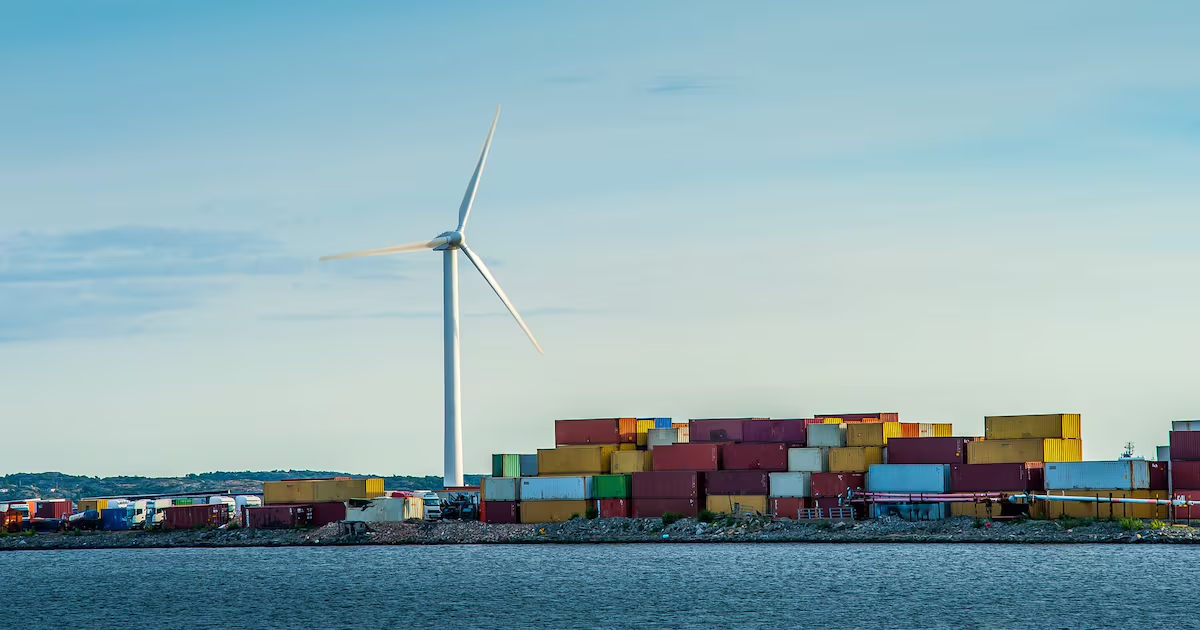
Between financial close and first generation lies a demanding execution sequence that receives far less scrutiny than the capital mobilisation that precedes it. Equipment must be manufactured to order, exported from supplier countries, insured at multiple points in transit, cleared through customs, and delivered to the site in line with construction schedules that allow little tolerance for slippage. Each stage compounds the one before it. Most developers know this but few structure their financing around it.
Recent disruptions to maritime corridors, notably along the Red Sea and Suez route and at the Strait of Hormuz, have made this harder still, driving freight rates higher, tightening insurance terms, constraining vessel availability, and extending lead times for cross-border cargo. The immediate pressure falls on hydrocarbon markets, but renewable energy equipment moves through the same congested ports and elevated-cost logistics networks.