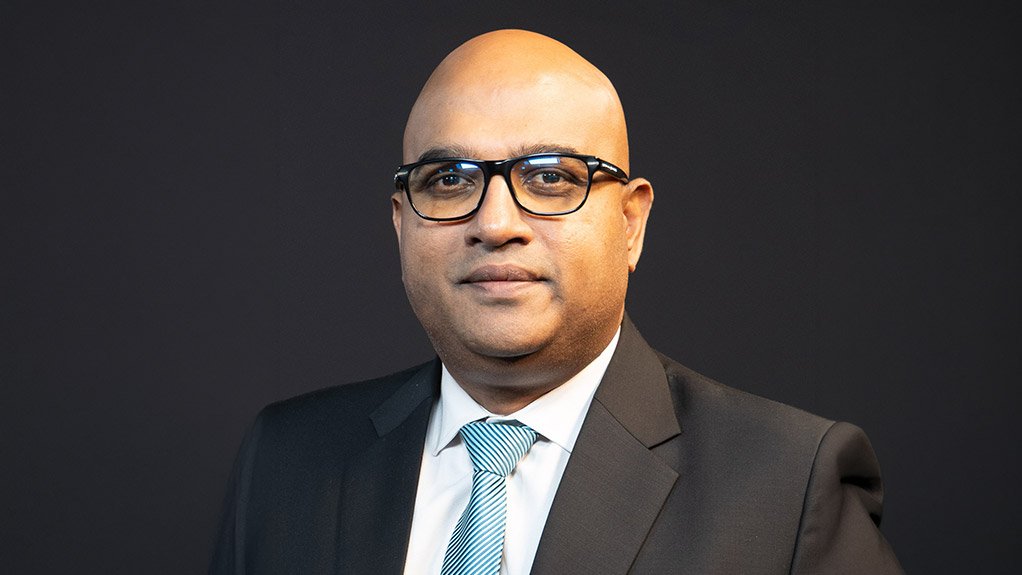
Energy has a way of making itself felt before it appears in a budget line. When a mine loses shifts to power cuts, or a manufacturer is running diesel generators as a primary source for the third quarter running, the conversation changes. It stops being about tariffs or grid policy and becomes about survival, margin and whether the business can stay competitive in a global economy. About the author: Shiraz Mohideen is associate principal: Energy Corporate Finance at Nedbank Corporate and Investment Banking. (Nedbank) That shift is what has been driving energy mergers and acquisitions (M&A) across South Africa and the broader African market, and it explains why the deals being structured today look materially different from those of five to 10 years ago.The forces at work are structural rather than cyclical, and that changes how capital behaves. South Africa’s constrained grid and the sustained pressure of load-shedding forced a reset: energy supply could no longer be treated as a utility cost passed on to Eskom. For mining houses, manufacturers and large commercial users, it became a strategic input that had to be controlled directly, with contracted supply across multiple sites and limited dependence on the state utility. The removal of the licensing threshold for embedded generation opened the market to private capital that had largely been sitting on the sideline, unlocking a transaction pipeline that had been quietly building for years.Market participants and their strategiesDifferent buyers have arrived with different strategic objectives, and it is worth being clear about the distinctions. Corporates are acquiring to protect margins and secure supply, full stop. For a mine operating at the thin edge of its cost curve, reliable power at a contracted price is not an infrastructure question — it is a commercial one; and, in some cases, an existential one. Independent power producers and utilities are consolidating to build scale, lower their cost of capital, and diversify their generation mix. A platform with diversified generation is a fundamentally better credit than a single asset.Infrastructure and pension funds are after something different again. The ability to deploy capital repeatedly into a single vehicle, rather than managing a fragmented portfolio of individual assets, changes the economics of participation considerably. International investors, meanwhile, are coming in through the acquisition of local developers rather than attempting to build from scratch, because execution capability in African energy markets is genuinely scarce and takes years to develop. The volume of capital interest has grown, but so has the sophistication of how it is being expressed.Increased activity does not guarantee every deal will hold. Long-term contracted cash flows are still the defining feature of assets that attract durable capital. A bankable power purchase agreement with an offtaker, or a private offtake arrangement, changes the financing options available and the kind of capital structure an asset can support. Without that revenue certainty, even technically sound projects struggle to attract competitive debt. The deals that tend to hold up are the ones where risk allocation is clear, the capital structure can absorb volatility, and stakeholder alignment has been built in from the outset.Technology, bankability and where capital is flowingIn terms of where capital is going, the market has shifted. Operating wind and solar remain the core, but battery storage is no longer optional. Grid instability has made dispatchable capacity essential rather than supplementary, and buyers are pricing that into their acquisition logic. Across Africa more broadly, interest extends to captive power, gas-to-power, and grid infrastructure, particularly where intermittency makes a mixed-portfolio approach more valuable than any single-technology position. What cuts across all of it is bankability: assets that are executable, scalable and grounded in demonstrated performance rather than development-stage projections.In South Africa, those effects are already visible. Private power acquisitions have stabilised operations for mines and industrial users that were genuinely exposed, and M&A has accelerated delivery in ways that organic development cannot easily replicate. Bringing balance sheet strength and development expertise together in a single transaction is faster than negotiating that combination over time. Across the rest of Africa, platform acquisitions are enabling roll-out at a pace that fragmented, single-project development cannot match. Capital discipline and deal durabilityStrategic capital allocation is now one of the decisive factors in closing Africa’s energy gap, and where private capital is willing and able to move, getting the structures right carries tangible economic stakes.Most client conversations today are less about finding the next opportunity and more on whether the structures being put in place today will still hold when assumptions shift, because they always do. That means pressure-testing offtake credit quality, understanding where currency exposure actually sits, and confronting refinancing risk at the end of a construction facility early rather than pushing it out. It also means recognising that an energy deal in South Africa carries a risk profile genuinely different from that of a comparable transaction elsewhere in Africa, even when the technology is identical.Africa’s energy investment story spans decades, and the underlying demand will persist for a long time to come. The capital deployed over the coming years will shape productive capacity across the continent in ways that extend well beyond power generation. For investors, developers and bankers, the question is whether they have the discipline and structural rigour to hold positions through the parts of the cycle that test them. That’s ultimately where real value gets separated from noise.The 2026 Africa Energy Forum takes place in Cape Town from June 16 to 19.This article was sponsored by Nedbank Corporate and Investment Banking.
SHIRAZ MOHIDEEN | Strategic capital is reshaping Africa’s energy landscape
SPONSORED | Bankability and risk allocation are central to how energy deals are structured across the continent
912 words~4 min read