Africa is investing heavily in infrastructure. Across the continent, governments, development finance institutions, private investors, and sovereign funds are financing power plants, transmission networks, industrial parks, transport corridors, refineries, ports, data centres, and renewable energy projects. Discussions about infrastructure financing have become increasingly sophisticated. We debate blended finance, project preparation facilities, public-private partnerships, sovereign guarantees, local currency financing, and the role of institutional capital in closing Africa’s infrastructure gap.
Yet listening to the richly convened discussions at a recent Technical and Vocational Education and Training (TVET) summit in Lagos, meticulously organised by GIZ and the Lagos State government, with support from development partners including Switzerland and Germany, I found myself thinking about a question that rarely appears in investment memoranda: what and who will keep these assets working 20 years from now? Not who will finance them. Not who will build them. Who will operate them, maintain them, troubleshoot them, upgrade them, and eventually replace them?
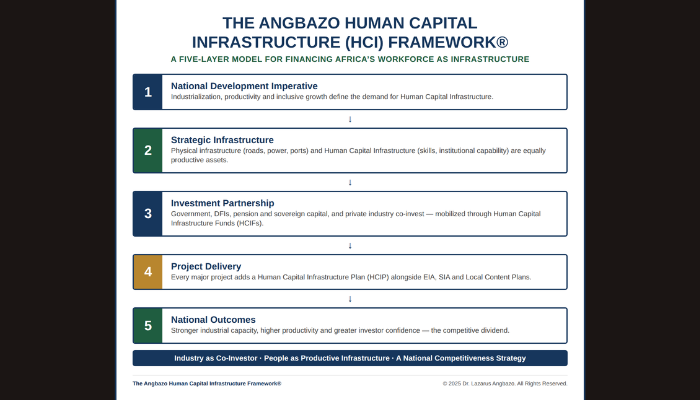
The question may sound obvious. Yet it sits at the centre of one of the most overlooked development challenges facing many African economies today. We have become increasingly effective at discussing how to finance infrastructure. We have been far less deliberate about financing the development of skills and competences required to sustain it.