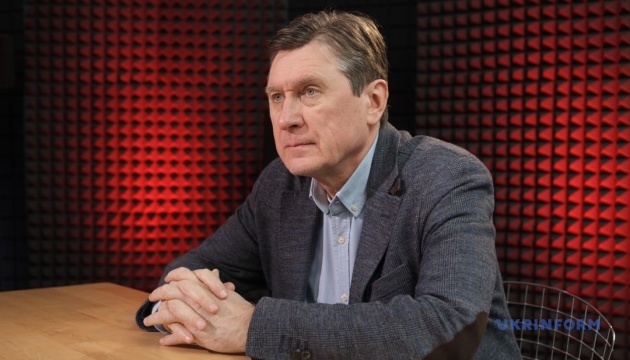
While Russia continues to show no intention of ending the war, Europe is searching for new ways to strengthen its security amid growing challenges, and NATO is preparing for a new phase of internal transformation. At the same time, the political landscape of the post-Soviet region is evolving rapidly—from Moldova and Romania to the South Caucasus.
Can Europe assume greater responsibility for its own security, what decisions can be expected from the upcoming NATO summit in Ankara, and what avenues of European integration remain available to Ukraine?
In an interview with Ukrinform, Volodymyr Fesenko, head of the Penta Center for Applied Political Studies, discusses these issues and explains why the Kremlin is gradually losing influence in the South Caucasus, how NATO is changing under growing pressure from Washington, and what opportunities Ukraine should pursue on its path toward European integration.
THE KREMLIN ALREADY UNDERSTANDS IT CANNOT DEFEAT UKRAINE
UkrInform (UI): The leaders of the United Kingdom, France, and Germany recently met in London with the President of Ukraine. They outlined several key principles for a future peace settlement, including a ceasefire, the inadmissibility of changing borders by force, security guarantees for Ukraine and Europe, and the freezing of Russian sovereign assets until compensation is paid. Could these agreements become a genuine foundation for future negotiations?