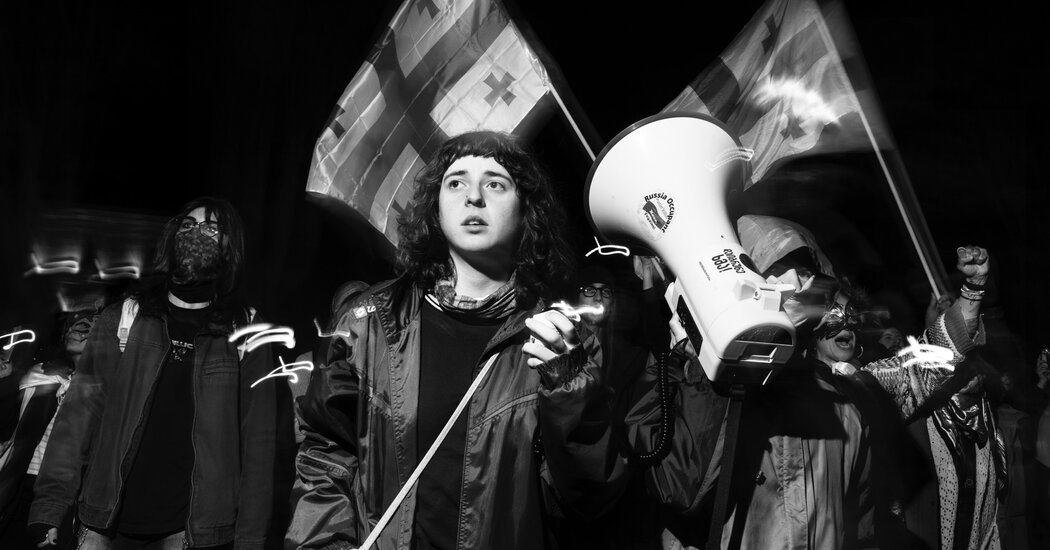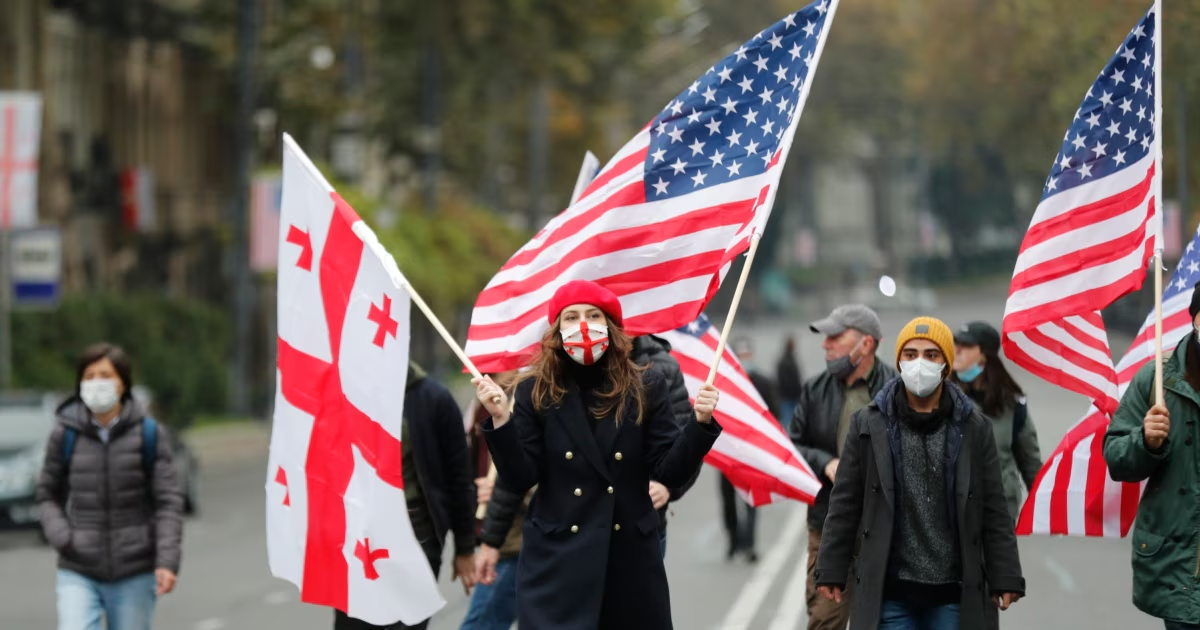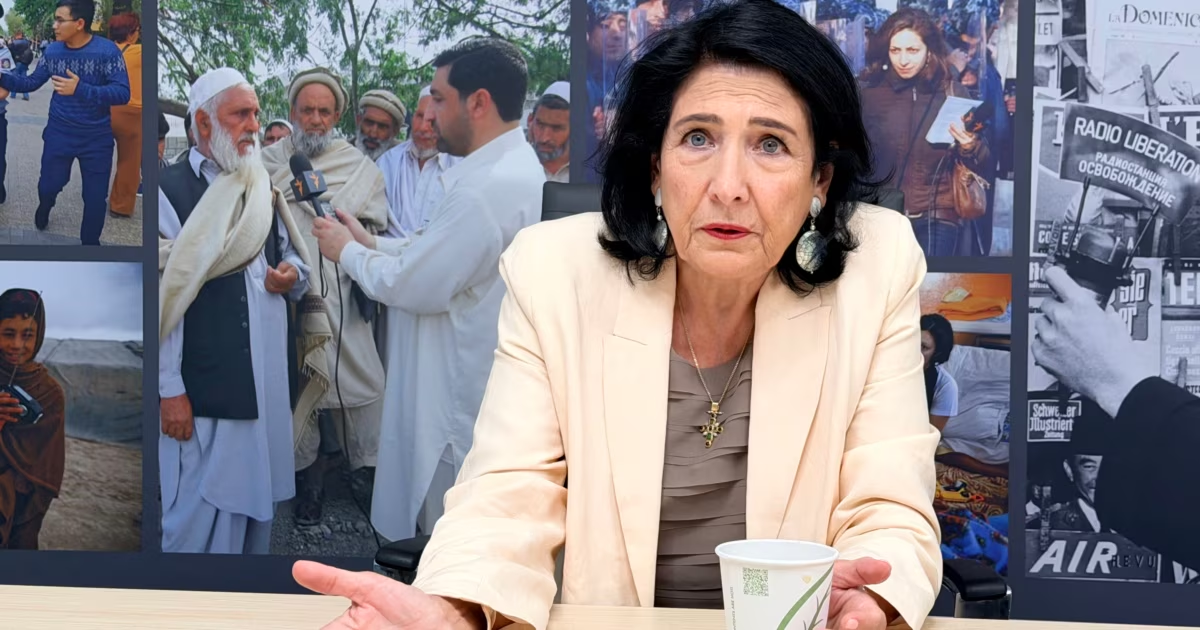
WASHINGTON -- As Washington looks for ways to push the threat of a wider confrontation with Iran into the diplomatic rearview mirror, Georgia -- a small but strategically pivotal country just north of Iran -- is making a renewed case that the Caucasus should not slip further down the West's agenda, as protesters mark more than 560 days in the streets against what many see as the country's democratic unraveling.For Georgia's embattled pro-democracy camp, any de-escalation in the Middle East could create space for Western allies to refocus on what they describe as an increasingly urgent political struggle at home: a slow-burning democratic crisis and Russia's expanding influence through Georgia's ruling establishment.In an interview with RFE/RL in Washington on June 16, Georgia's fifth president, Salome Zurabishvili, warned the West risks "giving away" Georgia to Moscow's interests through inattention, even as Tbilisi becomes increasingly central to the wider strategic balance across the Caucasus.Her warning came just hours after receiving Freedom House's 2026 Mark Palmer Prize, an award she said carried symbolic weight for Georgian civil society after nearly two years of sustained protests and intensifying repression. "I think it means that they are not forgotten," Zurabishvili said.That sense of being overlooked has sharpened as global crises multiply. But Zurabishvili argued that if tensions with Iran ease, Washington should see Georgia not as a peripheral democracy in trouble but as a central node in the next phase of regional competition. "America cannot just give away Georgia to Russia's interests," she said.Zurabishvili's term as president ended on December 29, 2024, amid a political crisis, after she rejected the results of October parliamentary elections and vacated the presidential palace on the day her successor was sworn in.
With Georgia Sliding Toward Russia, Former President Appeals For Renewed US Attention
In an interview with RFE/RL in Washington on June 16, Georgia’s fifth president, Salome Zurabishvili, warned that the West risks “giving away” Georgia to Moscow’s interests through inattention, even as Tbilisi becomes increasingly central to the wider strategic balance across the Caucasus.
1,021 words~5 min read