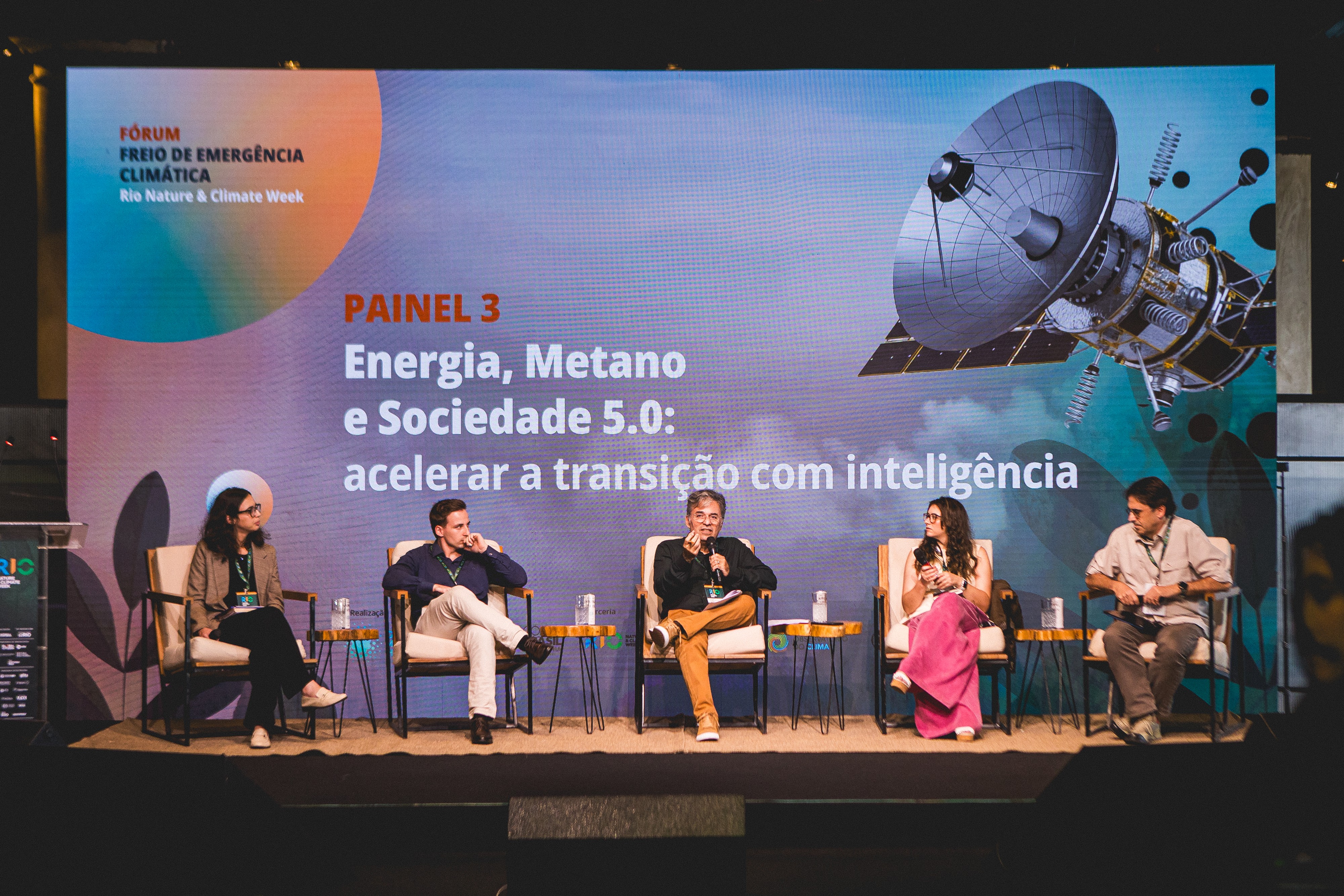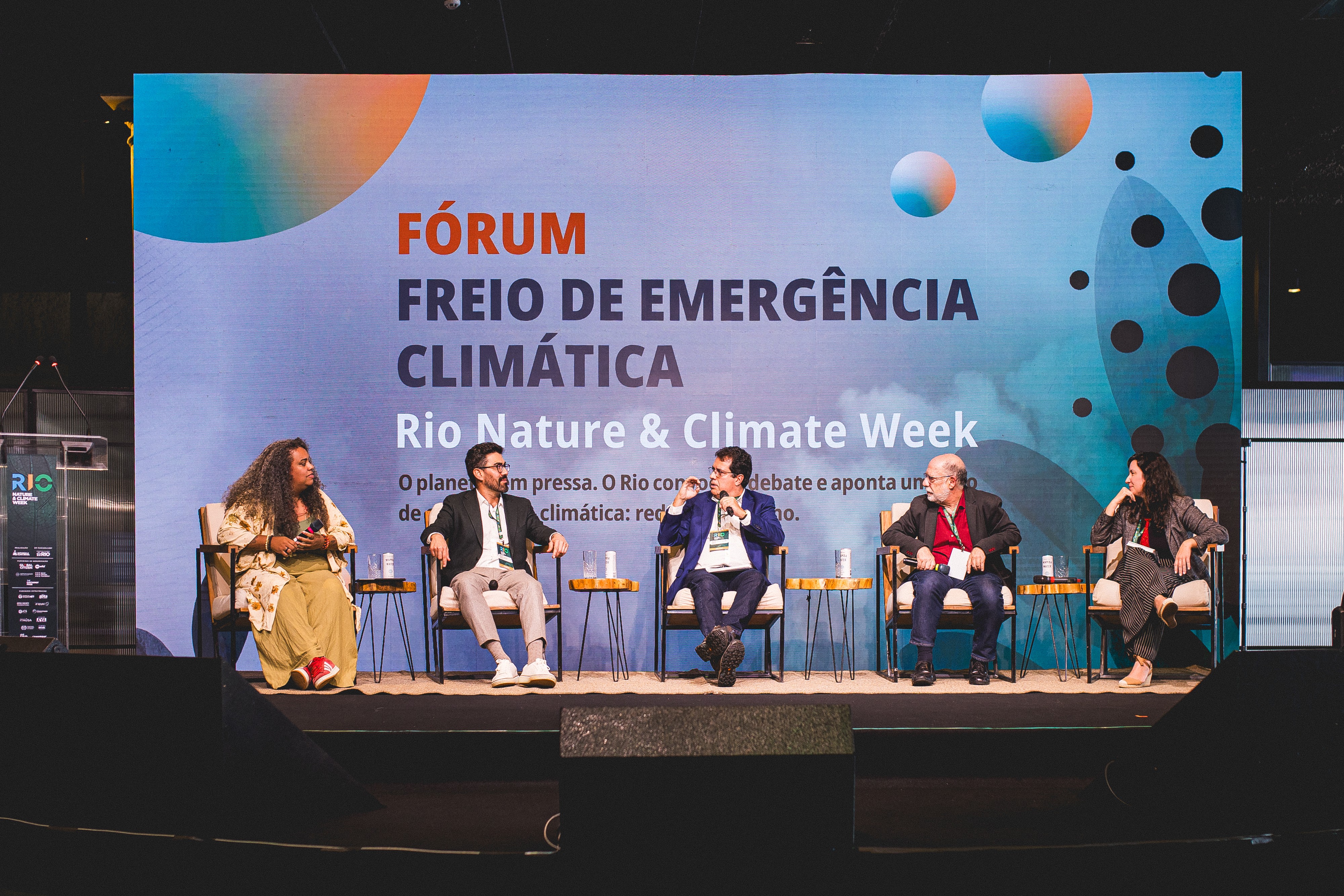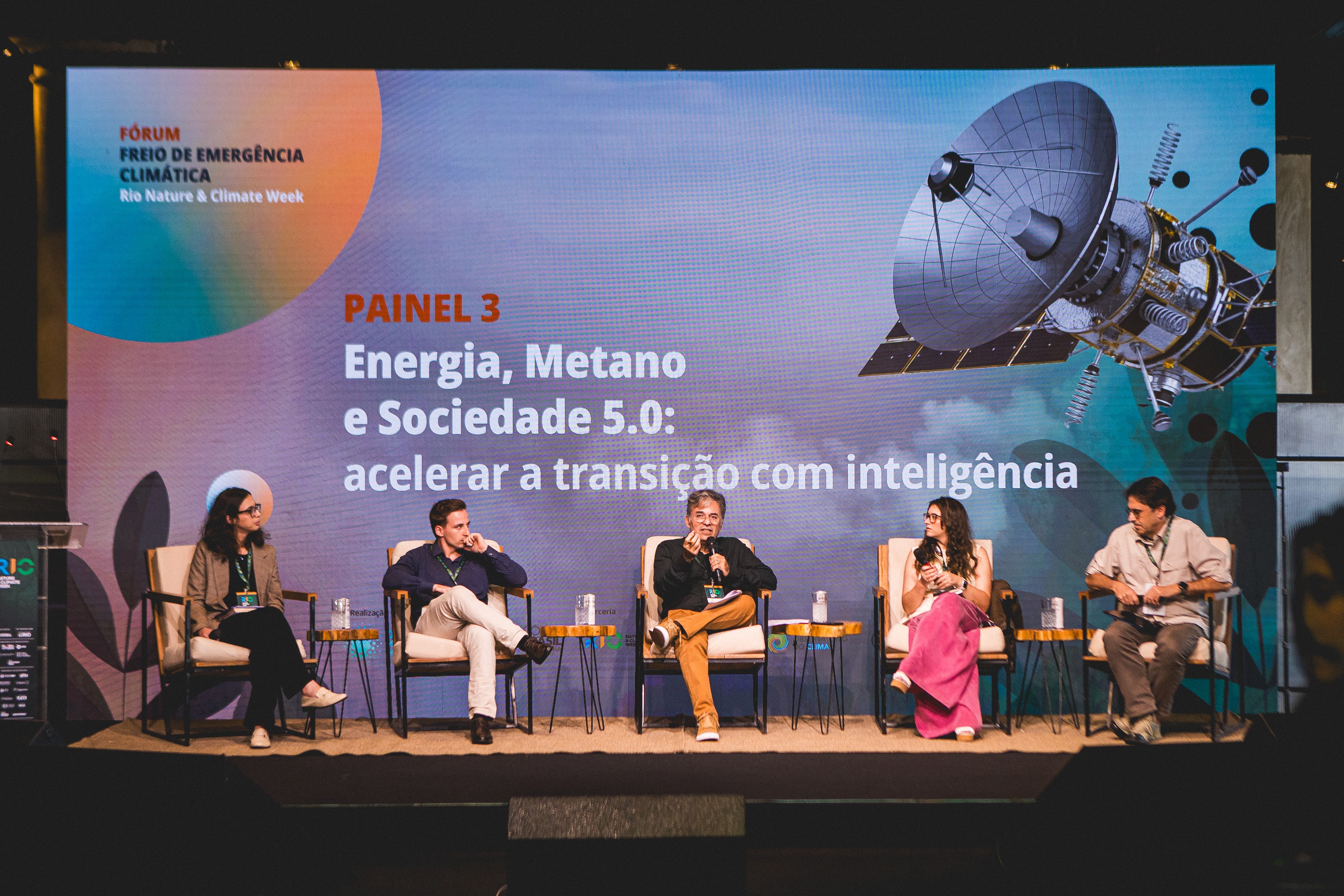
At a panel during Rio Nature & Climate Week, experts said Brazil has the technology needed to reduce emissions but still faces challenges in turning information into action. 0.5x 1x 1.25x 1.5x 2x 00:00 00:00 Helen Souza, Urias Bueno Neto, Marcelo Lins, Paula Garcia Holley, and Tasso Azevedo on a panel at the Emergency Climate Brake Forum during Rio Nature & Climate Week — Foto: Publicity photo In 2019, when only 5% of deforestation alerts led to any government action, those illegally clearing forests in Brazil had a 95% chance of facing no consequences. Six years later, the situation has changed significantly: today, the chances of impunity for committing the same crime have dropped to 35%. Experts attribute this transformation primarily to the systematic use of satellite monitoring—the very tool Congress attempted to limit as an environmental oversight instrument two weeks ago. - Last year, we had the lowest deforestation rate since 2019. It was also the first time we saw a decrease in deforestation across all biomes. This indicates that something is working - said Forest Engineer Tasso Azevedo, General Coordinator of MapBiomas, during a panel at the Climate Emergency Brake Forum at the Rio Nature & Climate Week (RNCW). - The key change that made this possible was the states and the Union using satellite-produced information. Therefore, I believe that the reaction against these tools is, to some extent, a consequence of the policy's success. According to the latest edition of the Annual Deforestation Report, released by MapBiomas in May, about 80% of all deforestation in Brazil in 2025 occurred on private properties registered in the Rural Environmental Registry. Although this seems substantial, it represents only 0.6% of the properties registered in the CAR, according to Azevedo. This means that 99.4% of Brazilian rural properties had no deforestation records in the past year. - In other words, this is not an issue affecting the vast majority of producers. In practice, we are facing a legislative decision that impacts a very small portion of properties and would only affect those engaged in illegal activities. It does not seem like the best way to conduct our environmental policy. Azevedo's assessment comes amid the progress in the Chamber of Deputies of a series of proposals to relax environmental protection regulations. Projects voted on during what was termed "agro week" include banning regulatory agencies from issuing fines based on satellite monitoring and changing protection rules for non-consolidated forest areas. The initiative raising the most concerns, however, is the one restricting the use of remote embargoes: satellite monitoring currently underpins two-thirds of all Ibama citations and increases enforcement efficiency by 14 times. - Having quality and transparent information is like a bridge between the fact, responsibility, and action. If you disrupt this bridge or hinder its practical consequences, you compromise the ability to turn information into action - said the expert, also criticizing the delay in mandating the disclosure of climate and sustainability information by companies, initially set to take effect in 2027. - By removing this requirement, opacity is created precisely in what we need to know about what is being done in important sectors. The forest engineer Tasso Azevedo, general coordinator of MapBiomas, at a panel during the Climate Emergency Brake Forum, at Rio Nature & Climate Week. — Foto: Publicity photo Concerns about transparency and monitoring are not limited to deforestation or Brazil. In the methane debate, specialists pointed out that the challenge of accurately measuring emissions and turning them into effective public policies remains a global issue. Paula Garcia Holley, Senior Policy Manager for Latin America at the Clean Air Task Force (CATF), stated that progress in regulations aimed at reducing methane emissions has encountered obstacles ranging from government changes to a lack of resources and institutional capacity to implement the approved measures. The forest engineer Tasso Azevedo, general coordinator of MapBiomas, at a panel during the Climate Emergency Brake Forum, at Rio Nature & Climate Week. — Foto: Publicity photo - There is also another dimension of inequality: I may have access to the data but not necessarily the ability to act on it. We need to enhance the ability to turn information into action. Knowing how much emissions could be reduced is of little use if we do not help decision-makers use this information practically. Thus, there is inequality in data access, information availability, and, above all, the capacity to implement actions based on it. Paula Garcia Holley, senior policy manager for Latin America at the Clean Air Task Force (CATF), speaks during the Emergency Climate Brake Forum at the Rio Nature & Climate Week. — Foto: Publicity photo Accurately measuring emissions is also a challenge. According to Urias Bueno Neto, Environmental Coordinator at the International Arayara Institute, recent reports from the International Energy Agency indicate that underreporting of fugitive emissions occurs on "practically every continent." He believes this happens because there is still no widespread mandate for using mechanisms capable of verifying methane emissions, one of the greenhouse gases most associated with short-term global warming. Paula Garcia Holley, senior policy manager for Latin America at the Clean Air Task Force (CATF), speaks during the Emergency Climate Brake Forum at the Rio Nature & Climate Week. — Foto: Publicity photo - We will only achieve concrete goals if we know exactly what the problem is and where we need to go. For that, we need high-quality data. We are internally working to understand if these emissions are being underreported in Brazil, especially in the oil and gas sector. In Brazil's case, Helen Sousa, Project Analyst at the Energy and Environment Institute (IEMA), warned of gaps that persist in monitoring emissions, especially in the North, where areas near refineries and oil installations continue to lack information that could enhance understanding of the problem. Additionally, another neglected dimension, she noted, concerns methane's impacts on public health and inequality. This is because, in addition to contributing to global warming, the gas is associated with ozone formation, a pollutant that affects air quality. - An important portion of emissions is related to the residential use of wood in inadequate equipment. We are talking about populations that do not have access to more modern and less polluting technologies. This impacts health. These devices usually lack proper filtering systems and often operate indoors, directly affecting the families who breathe that air daily. Despite the challenges, many of the necessary solutions to reduce emissions are already known. In the oil and gas sector, for instance, Holley cited priority measures such as implementing leak detection and repair programs, reducing associated gas flaring, replacing pneumatic equipment, and installing vapor recovery units—interventions capable of reducing millions of tonnes of methane annually. According to Azevedo, the main obstacle, therefore, is not the lack of technology. - We can continue producing, even in agriculture, but by adjusting how we produce. We can have cleaner, healthier energy while also making a concrete contribution to quickly reducing climate pressure and facilitating a broader economic transition. The data already shows that we are capable of doing this - he said. - It is not a technological problem. It's a matter of decision and action. The translation of this text into english was carried out by Project Irineu, O GLOBO's initiative to develop artificial intelligence tools. Here is the link to the original report.
As they come under scrutiny in Congress, satellite imagery and environmental data are defended as essential to the climate agenda
At a panel during Rio Nature & Climate Week, experts said Brazil has the technology needed to reduce emissions but still faces challenges in turning information into action.
1,240 words~6 min read